
Read More
EACC

IMF | The Oil Market Absorbed the War Shock, but Buffers Are Running Low

IMF Blog post | Less demand, more production, and inventory drawdowns prevented a larger price spike. A quick supply recovery is essential to avoid further damage to the global economy
 
The largest disruption to the global oil market in decades should have sent prices soaring. But after spiking at the start of the war in the Middle East, crude prices soon settled in a range of $90 to $100 per barrel, much lower than many had feared. Why didn’t prices climb higher? The answer is that a combination of factors helped cushion the initial blow. But much of that room has now been used up.
There are plenty of reasons why oil should have become cripplingly expensive. The war effectively closed the Strait of Hormuz, cutting off some 20 million barrels a day of crude oil and refined products, a fifth of global consumption. Gulf producers redirected what they could. Saudi Arabia sent oil through its pipeline to the Red Sea port of Yanbu. The United Arab Emirates pushed its Fujairah port, outside the strait, close to capacity. Even so, these workarounds offset only a fraction of lost Hormuz volumes.
Beyond crude, refined product output in the gulf region dropped significantly, hitting diesel and jet fuel hardest—products in which the region accounts for about 10 percent of global supply.

By the end of May, more than 1.1 billion barrels of crude—equivalent to about 10 days of typical global consumption—had not reached the market. At the same stage of the disruption, the shortfall exceeded those of the 1973 oil shock, the Iran-Iraq war, and the Gulf War.

Three shock absorbers
How did the global system absorb a disruption of this scale? In the days before the war, supply was running about 2 million barrels a day above demand, providing a head start. In the March-May period, three factors helped close the gap:

Demand compression did the heavy lifting, especially in Asia, as higher prices reduced consumption and economies turned to alternatives such as coal and renewables. Transportation demand proved stickier though, in part because of fuel price caps, subsidies, and tax rebates that contained the impact—but at a fiscal cost.
Production outside the gulf rose more than expected, by nearly 2 million barrels a day above 2025 levels. The United States led the way, with Venezuela, Guyana, and Russia also raising production.
Inventories did the rest. The estimated market deficit of about 4.0 million barrels a day in March–May was met almost entirely by drawing down global stocks, including commercial inventories in China and strategic reserves.

Recovery won’t be instant
Before the most recent escalation of tensions, the US-Iran framework agreement to reopen the strait sent prices sharply lower, in large part because stranded oil on tankers in the Gulf could rapidly return to the market. Still, much remains uncertain—including when freedom of navigation through the world’s most critical oil chokepoint will be effectively restored, and how quickly shipping, insurance, and operator confidence will follow.
Industry estimates suggest it will take two to three months before a significant share of oil flows can resume following a full reopening of the waterway. A longer-term concern is that prolonged production halts could cause permanent output losses, especially where financing to restart wells is scarce.
Whenever supply begins to recover, the oil deficit will close only gradually, drawing inventories closer to operational minimums—the level below which the physical system itself begins to bind.
Lessons for policymakers
Energy shocks still bite. What cushioned the initial blow this time is that energy markets had room to maneuver and absorb it. As tensions flare again in the Strait of Hormuz, that room is now smaller and shrinking further as spare capacity has been deployed, demand has compressed, and inventories have been drawn down. Unless inventories are replenished, the world will start from a weaker position when the next shock comes.
For policymakers, three lessons stand out:

Inventories matter. Rebuilding them is essential to prepare for future shocks.
A single chokepoint leaves the global economy heavily exposed. Diversifying energy sources—including renewables—is as important as diversifying routes.
Support to consumers should be targeted to the most vulnerable and temporary to protect government budgets and the price signals that encourage energy saving and efficiency.

Energy markets’ flexibility and prompt policy actions bought the global economy time. An enduring US-Iran agreement would create an opening to restore supply. But significant efforts are still critically needed to increase the resilience and diversification of energy supply and prevent oil shocks from destabilizing the global economy.
 
Authors:
Jean-Marc Natal,
Azim Sadikov
 
Compliments of the IMFThe post IMF | The Oil Market Absorbed the War Shock, but Buffers Are Running Low first appeared on European American Chamber of Commerce New York [EACCNY] | Your Partner for Transatlantic Business Resources.

EACC

ECB | How Banks Have Adjusted Their Lending in Response to Trade Tensions

Blog post | Changes in global trade policies and heightened trade tensions pose a challenge for euro area firms, particularly those operating internationally. For banks, these developments increase credit risk: the firms affected can face volatile demand, supply disruptions and squeezed margins, and may find it harder to service their debts.
This post looks at how euro area banks have responded to rising trade tensions since 2025, drawing on granular analyses of loan portfolios from AnaCredit and survey data from the euro area bank lending survey (BLS). It focuses on trade with the United States, which has been at the centre of recent policy shifts, including the broad-based tariffs imposed in 2025.[1]
Our findings show that banks have responded to these risks by stepping up their monitoring of exposed borrowers. They have also adopted a more cautious stance when lending to firms. These adjustments were more pronounced among the banks most heavily exposed to trade risks, particularly where such risks compounded existing corporate vulnerabilities. For firms, higher trade risks have not only led to tighter lending conditions, they have also dampened loan demand.
Uneven trade risk across euro area banks’ loan portfolios
Euro area banks’ exposure to trade risk depends on both the importance of trade for their corporate borrowers and the share of affected firms or sectors in their loan portfolios. We measure this exposure in two steps. First, we calculate the share of euro area value added consumed in the United States and the share of US value added embedded in euro area firms’ output. Second, we average these shares at bank level, weighting them by each individual bank’s exposure to specific countries and sectors.[2] This allows us to capture the exposure of euro area banks to trade with the United States through their loan portfolios, based on how reliant their corporate borrowers are on exports to and imports from the United States. Chart 1 shows how these exposures are distributed across banks.

Chart 1

Distribution of euro area banks’ exposures to trade with the United States

(y-axis: kernel density across banks, x-axis: trade exposure at bank level, percentage)

Sources: ECB (AnaCredit), European Commission (Figaro) and ECB calculations.
Notes: The chart shows euro area banks’ exposure to trade with the United States, calculated using value added in trade flows between the regions, including indirect links through other countries across value chains. Exports represent the share of euro area value added consumed in the United States, and imports represent the share of US value added embedded in euro area firms’ output. At the bank level, exposure is averaged based on the trade exposure of counterparties’ sectors, weighted by loan volumes. A kernel density chart estimates the distribution of a continuous variable with a smoothed curve; higher values indicate more common observations, and the total area under the curve equals 1. The chart combines 2023 trade data with December 2024 loan data to assess banks’ potential vulnerability to trade shocks in 2025.
Latest observations: December 2024 (AnaCredit) and 2023 (Figaro).

Three key insights emerge:[3]
First, euro area banks are more exposed to US export-related risks than to import-related risks. In Chart 1, the blue area (showing goods and services exported to the United States) is positioned further to the right, indicating higher overall exposure. Meanwhile, the yellow area (representing goods and services imported from the United States) is concentrated further to the left, reflecting lower exposure.
Second, export-related risks from trade with the United States vary from bank to bank, as indicated by the wide blue distribution, with many banks only moderately exposed. By contrast, import-related risks are concentrated in the low-exposure range, suggesting that most banks face limited risks from imports from the United States.
Third, a small number of banks are highly exposed to trade risks stemming from euro area exports to the United States, as shown by the long right tail of the blue distribution.
So how are these exposures affecting lending by euro area banks? In 2025, about half of the banks participating in the euro area BLS reported that trade risks were important, and expected similar levels of exposure in 2026.[4] High tariffs on EU exports to the United States and ongoing trade uncertainty may therefore influence banks’ credit conditions, as explored in the following section.
Trade tensions and tighter credit supply
Rising trade tensions are likely to have led to stricter lending conditions for firms, particularly those reliant on exports to the United States. To quantify this effect, we analyse the relationship between bank lending and banks’ exposure to trade risks in export markets. Since changes in lending can also reflect weaker loan demand, driven by a decline in investment owing to tariffs and uncertainty, we have used granular AnaCredit data to isolate the effect on bank loan supply.[5]
Chart 2 suggests that the banks most exposed to borrowers exporting to the United States have reduced their loan supply the most since April 2025. This decline coincided with heightened trade tensions, particularly the threat of tariffs. The dampening impact on loan supply is estimated to be have been most pronounced between April and October 2025, when US-EU trade disputes were at their peak. It then moderated later that year as trade sentiment improved following the preliminary US-EU trade framework agreement negotiated over the summer and as policy uncertainty eased.[6]
These findings highlight how a volatile trade environment and higher tariffs can influence banks’ risk assessment, leading to tighter credit supply.[7]
Chart 2
Relationship between bank loan supply and exposure to US-exporting borrowers

(impact of a one standard deviation increase in export exposure to the United States on supply-driven three-month loan growth (standard deviation, %))

Sources: ECB (AnaCredit), ECB Supervisory Reporting, Amiti and Weinstein (2018) and ECB calculations.
Notes: The chart shows the estimated effects of bank-level export exposure to the United States on supply-driven three-month loan growth. Loan supply is identified following Amiti and Weinstein (2018). The construction of the bank-level export exposure measure is described in the notes to Chart 1. Regressions include bank and time fixed effects and control for the interaction between bank size and time. Positive (negative) values indicate an expansion (contraction) in loan supply.

Data from the BLS bear this out.[8] Since mid-2025, several banks have reported changes in lending behaviour due to trade risks. While some banks opted to monitor the situation closely without altering credit standards, others tightened them, particularly for firms in sectors highly exposed to trade risks. In some cases (e.g. in the car industry) trade-related tightening compounded pre-existing structural vulnerabilities.
A net 11% of banks reported stricter credit standards in 2025 owing to changes in global trade policies and the associated uncertainty, with similar effects expected in 2026 (Chart 3). These decisions were driven by lower risk tolerance and concerns over credit quality, reflecting heightened prudence despite banks’ solid balance sheets overall. Meanwhile, trade tensions also dampened firms’ loan demand: a net -6% of banks reported a decrease in 2025, while a net -3% expected this decline to continue in 2026.[9]
Chart 3
Impact of changes in trade policies and related uncertainty on credit standards and firms’ demand for loans

(net percentages of banks reporting a tightening/easing impact on credit standards (+/-), a deterioration/improvement in banks’ situation (+/-) and a positive/negative impact on loan demand (+/-))

Sources: ECB (BLS).
Notes: Net percentages for credit standards (loan demand) refer to the difference between the percentage of banks reporting a tightening impact on credit standards (a positive impact on loan demand) and the percentage reporting an easing impact on credit standards (a negative impact on loan demand). For the impact of trade policies on banks’ situation, net percentages refer to the difference between the percentage of banks reporting a deterioration/tightening impact and the percentage of banks reporting an improvement/easing impact. “Credit quality” refers to the non-performing loan (NPL) ratio and other indicators of credit quality. Latest observations: 2025 (past) and 2026 (expected).

Conclusions
Overall, economic policy uncertainty has weakened credit dynamics.[10] Recent trade tensions have exacerbated this impact, not only by reducing loan demand but also by prompting the banks most exposed to firms exporting to the United States to further tighten their lending conditions. While euro area banks continue to maintain robust balance sheets, they have been forced to adjust their strategic planning regularly and adopt more cautious lending practices in order to navigate these trade-related risks.
The views expressed in each blog entry are those of the author(s) and do not necessarily represent the views of the European Central Bank and the Eurosystem.
 
Compliments of the European Central Bank.The post ECB | How Banks Have Adjusted Their Lending in Response to Trade Tensions first appeared on European American Chamber of Commerce New York [EACCNY] | Your Partner for Transatlantic Business Resources.

Read More
EACC

IMF | Financial Market Reforms Could Lift Europe’s Growth

IMF Blog post | Integrating and deepening banking and venture capital markets would boost output by at least 3 percent, and make business dynamism reforms more powerful
French startup Mistral AI’s recent financing round was led by ASML, a Dutch maker of semiconductor manufacturing equipment. Such cross-border investments—even when small relative to US deals—are not the norm in Europe. Far more often, good projects fail to scale. Among the reasons: Europe’s considerable savings are compartmentalized within national borders, and hard to connect to high-risk, high-return projects.
The main burden falls on Europe’s young and innovative companies, as we show in a new IMF Staff Discussion Note exploring how fragmented and shallow European financial markets continue to hold back their growth. For investors, especially individuals, this means less opportunity to diversify risks and insulate themselves from domestic turmoil by investing abroad. The note shows that differences in banking regulations, safety nets (notably deposit insurance) and insolvency regimes across countries impede cross-border bank lending. Meanwhile, rules that limit provision of risk capital by pension funds and insurers limit the scale of venture capital.
As this Chart of the Week shows, even a moderate reform effort that reduces barriers to cross-border banking could raise European Union GDP by about 2 percent in the long term. These gains would come from better allocating savings across countries and companies, as well as businesses being able to reach potential lenders, which would lower funding costs. Adding reforms to ease legal and tax-related impediments to cross-border venture capital investment, together with measures to expand long-term risk capital through pension and insurance reforms, could bring the estimated gain from financial reforms close to 3 percent.
These financial reforms reinforce significant gains that could come from boosting business dynamism and innovation. Making Europe a more dynamic place to start and grow new businesses—for example by improving the business environment, investing in skills, and supporting research and development—would raise the pool of projects with high potential returns. Combining financial and real economy reforms can lift the long-term GDP gain into double digits.

Europe needs action on three fronts:

Pressing ahead on the banking union by reducing regulatory and institutional differences, and harmonizing insolvency frameworks.  Completing the financial safety net, including through a European deposit insurance scheme, would reduce adverse sovereign-link bank feedback loops, supporting economic and financial resilience overall.
Strengthening venture capital and equity financing more broadly by expanding the pool of long-term risk capital, and easing cross-border investment frictions.
Improving the business environment so that this newly available capital finds more attractive projects to finance.

Innovation and finance go together: reforms that create more promising companies will go further when Europe’s savings can flow freely to fund them.
Authors:
Luis Brandão-Marques, Damien Capelle, Diego Cerdeiro, Rui C. Mano

 
Compliments of the IMFThe post IMF | Financial Market Reforms Could Lift Europe’s Growth first appeared on European American Chamber of Commerce New York [EACCNY] | Your Partner for Transatlantic Business Resources.

EACC

European Commission | Review Finds Foreign Subsidies Regulation Fit for Purpose, Commission Considers Targeted Changes

The European Commission’s first review of the Foreign Subsidies Regulation (FSR) has found that the regulation is fit for purpose to address distortions in the internal market caused by foreign subsidies. Its objective of maintaining a level playing field in the internal market is widely acknowledged and remains relevant.
The review of the first three years of FSR enforcement shows the instrument is working well in practice. The procedures for reviewing concentrations and foreign financial contributions in public procurement procedures are important components of the FSR framework, enabling the Commission to identify and address potentially distortive foreign subsidies before a merger is concluded or a high-value public contract is awarded. The Commission’s ‘ex officio’ powers provide an effective complementary framework to investigate and address potential distortive foreign subsidies in the internal market.
At the same time, the review shows certain concerns about complexity and administrative burden, so the Commission is looking into ways to simplify where possible.
Stakeholders confirm FSR’s relevance while calling for simplification
Feedback from most stakeholders through targeted consultations underlines that the FSR framework is overall fit for purpose.
In concentration cases, replies to consultations and early enforcement practice highlight the value of prenotification engagements, which improve clarity and efficiency in the notification process. Stakeholders have also welcomed the available exceptions to reporting obligations and the possibility of requesting waivers for certain information requirements.
In public procurement cases, the Commission successfully reviewed over 5,000 submissions, ensuring public authorities could secure essential goods and services without delays. While formal prenotifications remained low, the Commission proactively managed numerous requests from companies and public authorities to guarantee smooth and efficient procedures.
In ex officio cases, the recent opening of in-depth investigations in two cases, one concerning threat detection systems and the other in the wind sector, offers further insight into the Commission’s approach when assessing potentially distortive foreign subsidies.
At the same time, the review highlighted some areas of concern:

the administrative burden in the collection and reporting of data on foreign financial contributions (FFC);
the length and complexity of certain procedures linked to the investigations;
the uncertainty over the Commission’s call-in powers for below-threshold concentrations, despite their legitimate aim; and
the need for enhanced clarity regarding certain reporting obligations, as well as greater transparency in enforcement practice.

Commission to propose adjustments to FSR framework
Considering these findings, the Commission will launch initiatives to make some targeted adjustments to the FSR procedural framework. These adjustments may include, in particular:

Under the concentration chapter:

Increasing the turnover notification threshold through a delegated act;
Introducing a simplified notification possibility for specific cases or FFCs;
Moderately increasing the reporting thresholds for FFCs;
Introducing additional exemptions from reporting requirements for FFCs not categorised as foreign subsidies most likely to distort the internal market.

Under the public procurement chapter:

Introducing simplifications and clarifications in the forms used for notifications and declarations;
Revising the framework for companies to request waivers to limit the disclosure of information of certain FFCs;
Clarifying and limiting the reporting of FFCs not categorised as foreign subsidies most likely to distort the internal market;
Clarifying the rights and obligations of companies and the contracting authority, including for processing of confidential information, in the context of access to files.

These adjustments would reduce the administrative burden related to the number of submissions, streamline reporting requirements and ensure a focus on cases that are more likely to raise concerns, while preserving the effectiveness of the FSR.
The Commission has started work on the targeted adjustments. The draft targeted adjustments will be published in the autumn, giving stakeholders the possibility to submit comments. Based on the feedback and any additional evidence gathered, the Commission will adopt the targeted adjustments in 2027.
Background
Under Article 52(2) of the FSR, the Commission is obliged to review its practice of implementing and enforcing the rules every three years, and present a report to the European Parliament and the Council. This is to ensure that the regulation meets its objectives and remains effective in preventing distortions in the internal market caused by foreign subsidies.
The present review is based on a comprehensive analysis, including the assessment of 103 contributions received from two consultations, and on an independent study conducted by an external party. This input has helped the Commission assess the impact of the FSR and identify targeted adjustments to its framework.
 
Compliments of the European CommissionThe post European Commission | Review Finds Foreign Subsidies Regulation Fit for Purpose, Commission Considers Targeted Changes first appeared on European American Chamber of Commerce New York [EACCNY] | Your Partner for Transatlantic Business Resources.

EACC

USTR | Public Hearings on Proposed Responsive Action in the Section 301 Investigations Relating to Failures to Take Action on Trade in Forced Labor Goods

WASHINGTON – The Office of the United States Trade Representative (USTR) will hold public hearings starting on Tuesday, July 7 and continuing through Thursday, July 9, regarding proposed responsive action in the Section 301 investigations of the acts, policies, and practices, of 60 economies related to the failure to impose and effectively enforce a prohibition on the importation of goods produced with forced labor.
The hearings will be held at the U.S. International Trade Commission (500 E Street SW, Washington, DC) starting at 10:00 am ET.
Please consult the USTR website for the hearings schedule.
Note: The hearings are on the record but no external cameras or video recording will be allowed in the hearing room. The hearings will not be livestreamed. A full transcript of the hearings will be posted on ustr.gov after the hearings. Please contact media@ustr.eop.gov with questions or for more information on media arrangements.
 
 
Compliments of the Office of the United States Trade Representative The post USTR | Public Hearings on Proposed Responsive Action in the Section 301 Investigations Relating to Failures to Take Action on Trade in Forced Labor Goods first appeared on European American Chamber of Commerce New York [EACCNY] | Your Partner for Transatlantic Business Resources.

EACC

EU Commission | New EU Plan to Address the Risks and Opportunities of Advanced AI for Cybersecurity

The European Commission has presented a plan to address the risks and harness the opportunities of advanced artificial intelligence (AI) in cybersecurity.
While the AI can improve security, it can also be misused to identify vulnerabilities, automate attacks, and significantly increase the scale and speed of cyber incidents. The new plan will bring together EU countries, industry, and EU-level organisations to strengthen the cybersecurity of our digital landscape against the vulnerabilities posed by advanced AI.
Key actions

Evaluating AI models: The AI Act requires advanced AI models to be evaluated and their risks to be assessed before they are placed on the EU market. The Commission will help establish an EU evaluation capacity to strengthen third-party assessment of AI capabilities and risks globally, supporting the regulatory function of the AI Office.
Accessing advanced AI models: Europe needs clear and transparent conditions for accessing the most advanced AI systems. The Commission will work with the EU Agency for Cybersecurity to define a European blueprint for structured access to advanced AI capabilities for cybersecurity, supporting public and private organisations in accessing advanced AI models.
Testing AI for cybersecurity: The EU Agency for Cybersecurity and the Commission’s Joint Research Centre will create a secure platform to test AI for cybersecurity, including using simulated environments. This will bring know-how on the safe use of AI to operators in critical sectors.
Reinforcing the EU’s cybersecurity and fixing vulnerabilities: The EU must protect its critical infrastructure. In line with the EU’s cybersecurity rules, organisations should intensify cyber hygiene practices, risk management measures, and security by design principles. They should also start using available AI capabilities to fix vulnerabilities faster, as well as prevent and respond to cyberattacks. EU Agency for Cybersecurity will assist them in this transition, including guidance, recommendations, and best practices, as well as a campaign to secure critical open source software.
Scaling European AI capabilities for cyber: The EU must continue investing in its own advanced AI capabilities. For this, the AI Factories and future Gigafactories infrastructure and the European Tech equity capacity, announced in the Tech Sovereignty Package, are available. The Commission will also launch the EU Grand Challenge on AI for cybersecurity, bringing together companies, researchers, and organisations to develop AI solutions for cybersecurity and support the growth of the EU market.

The new plan aims to strengthen the EU’s cybersecurity framework. It builds on existing EU rules, including the AI Act, the Cyber Resilience Act, the Network and Information Systems Directive, and the Cyber Solidarity Act.
 
 
Compliments of the European Commission The post EU Commission | New EU Plan to Address the Risks and Opportunities of Advanced AI for Cybersecurity first appeared on European American Chamber of Commerce New York [EACCNY] | Your Partner for Transatlantic Business Resources.

EACC

European Parliament | MEPs Strengthen the EU’s Carbon Border Adjustment Mechanism and Close Loopholes

Long list of downstream products added to carbon border adjustment mechanism (CBAM)

Tougher anti-circumvention rules to prevent abuse

A temporary decarbonisation fund to protect EU firms in export markets

Environment Committee MEPs have backed extending the EU’s carbon border adjustment mechanism to downstream goods and setting up a fund to support industry’s low-carbon transition.

The Committee on the Environment, Climate and Food Safety adopted its position on proposed changes to the CBAM by 56 to 11, with 12 abstentions.
The MEPs agree with the Commission’s proposal to extend the scope of CBAM beyond basic materials to a long list of downstream products – finished steel and aluminium goods such as fasteners, wire, springs and household articles – but insist it must be based on transparent, quantitative methodologies. They also added an exemption for electricity flows from non-EU countries used by grid operators to keep networks stable.
Closing loopholes
On anti-circumvention rules, the MEPs clarified that the practice of “slightly modifying” goods must also cover slight processing and tightened the rule so it targets only arrangements set up purely to dodge CBAM, and not normal business decisions to lower a company’s costs.
They also empowered the Commission to apply the true country of origin’s default values where a pattern of circumvention is found. They deleted the Commission’s proposed safeguard that would have allowed goods to be removed from the scope in the event of price shocks.
The committee also wants new rules for online sales to close an online imports loophole. It recommends a single weight-based limit be applied to a seller’s shipments as a whole, rather than parcel by parcel, with new reporting duties, and retroactive liability for shipments that are split to stay under the threshold.
Finally, the MEPs propose simplified reporting for least-developed countries and a technical assistance framework, but removed the Commission’s option to count Paris Agreement Article 6 carbon credits against CBAM obligations, since this issue is likely to be discussed in the context of the upcoming revision of the EU emissions trading system (ETS).
Temporary decarbonisation fund
The Environment Committee also adopted their position on the related temporary decarbonisation fund (TDF) to protect EU producers on export markets, by 59 votes to 16, with 6 abstentions.
The MEPs want financial support from the TDF to run from 2027 to 2029 and not only from 2028 as proposed by the Commission. As fertilisers are a strategic input for food security, they also want to open the fund to fertiliser producers and downstream users facing higher carbon-related input costs, with products such as urea, ammonium nitrate and ammonium sulphate added to the list of eligible goods.
Finally, all downstream operators – firms that use CBAM-covered goods as inputs in their production – should be eligible for support from the fund, while leftover revenue could be redirected to the EU’s international climate finance commitments under the Paris Agreement instead of being returned to member states, as the Commission proposed.
Quotes
CBAM rapporteur Mohammed Chahim (S&D, NL) said: “This compromise makes the CBAM stronger, fairer and more resilient. We have closed important loopholes, strengthened enforcement against circumvention, and expanded the mechanism’s scope where it matters most. It is a balanced package that protects European industry as it decarbonises while safeguarding the environmental integrity of the mechanism.”
Rapporteur for the temporary decarbonisation fund Pascal Canfin (Renew, FR) said: “Today we have taken a big step towards making Europe a safe place for investment in decarbonisation: we are broadening product coverage to enhance the level playing field and we are setting out stronger anti-circumvention rules, notably against resource shuffling from China. We are also offering a more robust solution for our farmers hit by fertiliser costs, and an export scheme to protect our companies on export markets where their competitors do not pay a carbon price.”
Next steps
Parliament is scheduled to adopt its mandate for negotiations with EU member states on the final shape of the bill during the September plenary session.
Background
The EU’s carbon border adjustment mechanism is the EU’s tool to equalise the price of carbon paid for EU products operating under the ETS with that of imported goods, to reduce the risk of carbon leakage and to encourage greater climate ambition in non-EU countries. In 2025, Parliament adopted simplification measures to exempt 90% of importers from CBAM rules while still maintaining climate ambition, as 99% of CO2 emissions are still covered.


Compliments of the European Parliament The post European Parliament | MEPs Strengthen the EU’s Carbon Border Adjustment Mechanism and Close Loopholes first appeared on European American Chamber of Commerce New York [EACCNY] | Your Partner for Transatlantic Business Resources.

EACC

ECB | Interview with Christine Lagarde, President of the ECB

Interview with Les Échos conducted by Guillaume Benoit and Christophe Jakubyszyn on 24 June 2026

On 11 June, the ECB raised its key interest rates. Do you still think that was the right decision, given that just ten days later Iran and the United States agreed a 60-day ceasefire?
We are confident that we made the right choice. As early as April, a large majority of Governing Council members were already prepared to take a decision. But at that point we still didn’t have all the necessary information.
All the data we have received since then have confirmed our analysis. We are facing an external supply shock that is currently spreading to the rest of the economy and whose indirect effects we can already see. We are also keeping a close eye on the risk of second-round effects, even though they have not yet materialised.
What form are these tensions taking?
Inflation excluding energy and food is accelerating, rising from 2.2% to 2.5%. This is partly due to services prices, which have increased by 3.5% as compared with the 3% that was projected. When you have rising inflation, rising services prices and inflation projections of 3% for 2026, 2.3% for 2027 and 2% for 2028, the monetary policy decision seemed clear.
And this holds true even under the more favourable scenario (the war ending, the Strait of Hormuz reopening quickly, a fall in the oil price…), which we considered in addition to two other scenarios – adverse and severe – that we presented back in March.
Isn’t there a risk that this monetary tightening could slow the economy too much?
We only lowered our growth forecast by 0.1 percentage points, from 0.9% in March to 0.8% in June. The unemployment rate is close to its historic low and labour force participation continues to increase – more slowly, admittedly, but it is still increasing. The financial sector is robust, with well capitalised banks and no known risk of significant financial instability. I have to say that we considered lowering our growth forecasts a little more. But the national central banks, who contributed to the June economic projections, saw sufficient signs of growth in activity.
Should we expect further tightening at one of the upcoming meetings?
I honestly don’t know. At the end of each monetary policy meeting, during the press conference, I repeat the same line. We take a decision at each meeting, based on our assessment of the inflation outlook and the risks surrounding it, the incoming economic and financial data, the dynamics of underlying inflation and the strength of monetary policy transmission. As I have said before, I have a general sense of the direction we will take, but the facts will guide us within our monetary policy framework, which is very clear.
You said recently that the renminbi was undervalued. Do you think we’re on the cusp of a new currency war between China, the United States and the European Union?
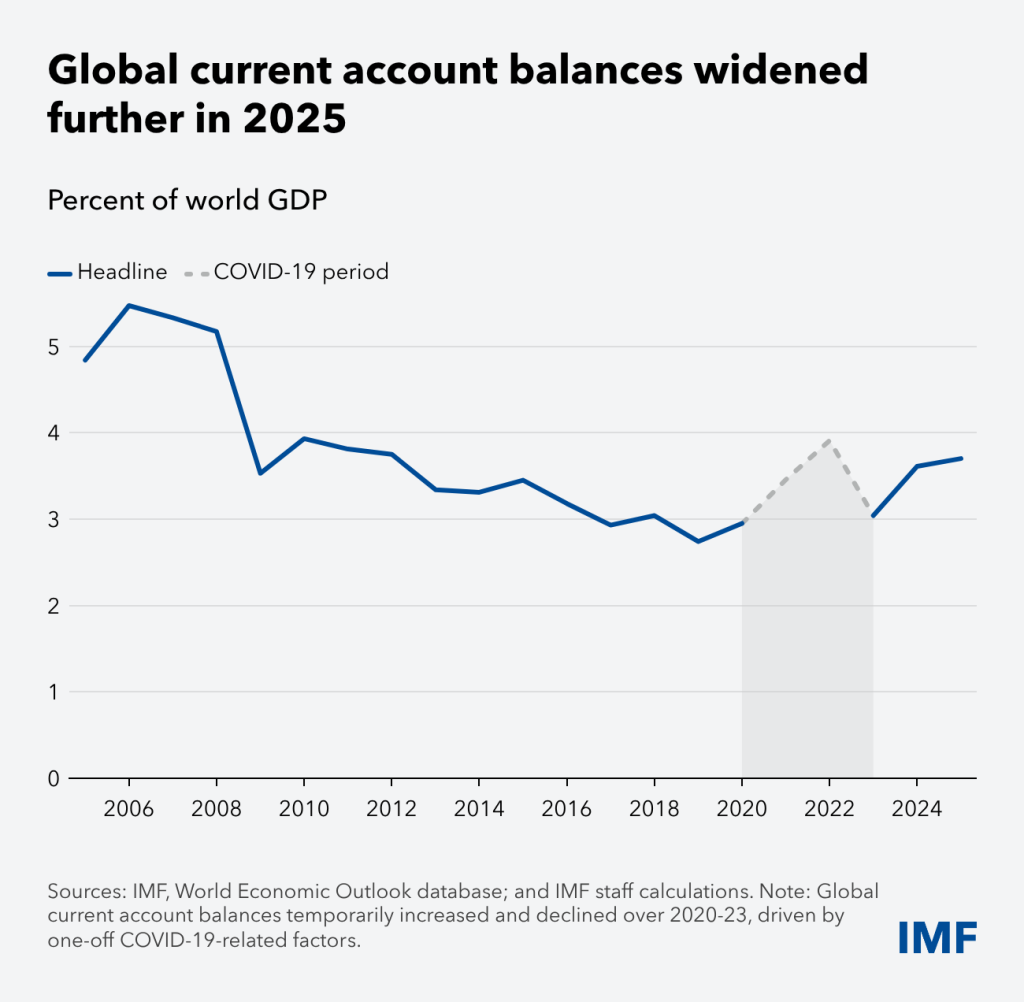
It’s certainly the case that there are excessive current account imbalances. That does not necessarily translate into a currency war. But when some estimates of the International Monetary Fund conclude that the renminbi is undervalued by around 16%, you have to take the issue seriously, even if these estimates are subject to a degree of uncertainty. If Heads of State or Government decide to address the problems of current account surpluses, the Chinese will inevitably have to be part of the discussion.
What role can Europe play between the Americans and the Chinese?
Europe is often still described as a giant with feet of clay, even though we are a large economy with 450 million consumers, 360 million of whom are in the euro area. We have untapped productivity reserves and innovative capacity that have yet to be fully exploited. And above all, we have significant amounts of dormant savings – around €35 trillion – far too little of which is being invested in Europe!
It’s imperative that we take action, rather than just enduring. If we act on the fifteen or so major reforms set out in the Draghi report, in combination with the Letta report – which aims to create a genuine internal market by removing as many barriers as possible – we will be much stronger.
The European Parliament’s Economic and Monetary Affairs Committee has given the green light to the digital euro. What will this mean for citizens?
Merchants, who typically pay a fee to the generally foreign-owned operators of international card schemes or other payment networks, will pay much less. Because the ECB, as a central bank, is not looking to make a profit.
And individuals will be able to use the digital euro at all points of sale, on all e-commerce sites, and even for person-to-person payments, just like euro coins and banknotes. Additionally, a foreign power won’t be able to deprive them of their means of payment! I’m thinking in particular of the French judge Nicolas Guillou, at the International Criminal Court, who can no longer use his payment cards operated by foreign companies, simply because the US Administration sanctioned him for authorising the arrest warrants against the Israeli Prime Minister, Benjamin Netanyahu.
Are there no reservations?
We have put a lot of effort into explaining it, and we must continue to do so, because this is a project that isn’t easy to grasp and populists won’t hesitate to exploit it. For example, they are claiming that your employer will have to pay your wages in digital euro, that the government will thus be able to monitor all your spending and that, with a “programmable” euro, you could be prevented from spending your money as you see fit. That’s science fiction, it’s Big Brother reinvented, but it’s not true!
The banks have called for a cap on digital euro holdings. Are they right to be concerned that it could drain the deposits that are essential to their monetary power?
Even assuming that everyone over the age of 14 had a digital euro account and was always at their holding limit – which has not yet been determined but is expected to be around €3,000, maybe higher – the total outstanding amount would be minimal compared with total deposits in bank accounts. And we should not forget that the mechanism we have designed requires the intermediation of banks. They are the ones who will offer you this “central bank” euro account, just as they offer card services or systems using the networks of major international operators.
Let’s talk about financial stability. Are you concerned about the levels of public debt?
Looking at the public debt of Member States – in my case focusing on the debt of the euro area – we are at around 88% of GDP. We are indeed not within the prescribed limits. And there are significant divergences between, on the one hand, countries such as Greece, Italy, Belgium and France, and, on the other, Luxembourg, Estonia and Ireland. Clearly, there are public debt and indebtedness trajectories within Member States that need to be monitored very closely – and, in some cases, corrected. But I take a consolidated view for the euro area. So no, I am not concerned, provided that commitments are honoured.
Do you think that France’s main handicap today is its fiscal situation?
It is above all its inability to reform. I am not saying that the fiscal situation is not serious, but the main challenge is being unable to carry out structural reforms, which, if successfully implemented, would improve the fiscal outlook.
Do you see any risks that are not being sufficiently taken into account at present?
Yes, I do. Artificial intelligence is a source of productivity gains and opportunities, but it also poses a major risk.
For about a decade now we have been talking about cybersecurity risks, hacking, data theft and so on. But with the acceleration and deepening of AI models, we are confronted with a much more serious risk. Because it is happening very, very quickly, and because the means of defence – and the funding required for them – have yet to be found.
Were you worried by the US Government’s provisional decision to make the Mythos 5 and Fable 5 systems available only to US nationals?
Europe is on the back foot: those who can test these tools gain a competitive advantage and are better able to protect themselves against their malicious use. We need an international framework, because one party’s vulnerability ultimately becomes everyone’s vulnerability.
At one point, you strongly advocated the view that monetary policy should also have a social and environmental component. Have you succeeded in this?
Yes, I believe that the European Central Bank, within the limits of its mandate and its roadmap, must urgently address the dual issue of climate change and biodiversity conservation.
Failing to take climate change into account when drawing up macroeconomic projections means that you miss out on factors that will be decisive for growth and inflation. Climate change is now incorporated into our macroeconomic projections and, accordingly, into the models we work with.
And secondly, we also need to incorporate this into risk management. When we allow banks to obtain funding from us and then to grant loans, we need to know the value of the claims they provide as collateral. In simple terms, if the collateral consists of a mortgage loan on a property located in a flood-prone area or on a cliff-edge, it is probably worth significantly less than its stated value. We now apply this type of haircut to new refinancing requests.
There has been a lot of conflicting information about your possible early departure. So, how long will you continue to serve as President of the ECB?
My term runs until October 2027. And I see my mission as ensuring price stability. Given that we are once again going through a turbulent period, I believe the captain of the ECB ship must stay on board.
Does this mean that if the waters calm down, you do not rule out the possibility of leaving earlier? For example, if you wish to take part in the French political debate in 2027?
It’s possible. I believe that a European voice needs to be heard in the French presidential debate.
If this debate were to reveal a more limited vision of France’s place within Europe, I think it would be necessary to explain why that would be a painful path for our country and for our fellow citizens.
You are not ruling out, in the coming months, in your capacity as ECB President, having a frank discussion with some of the candidates?
That is certainly possible.
What would you say to them?
I would speak with a French and a European voice, because I am profoundly both. I would tell them that France must play a decisive role in the economic future of our continent. And that without this European environment and anchoring, our economic prospects would, at the very least, be unclear.
France will have to take courageous decisions on difficult issues. Candidates in the presidential election have a duty to address these issues and to propose solutions. And, contrary to what I often hear from politicians, the French are fully aware of the situation, and they expect a candid discussion along with concrete solutions.
Given the political context, and the possibility of extremist parties gaining power, might you at some point consider getting involved in the campaign, to support a candidate, or even to stand yourself?
I will reflect on it.
You will reflect on it?
No, I’m joking. I don’t think that’s currently on the agenda.


Compliments of the European Central Bank The post ECB | Interview with Christine Lagarde, President of the ECB first appeared on European American Chamber of Commerce New York [EACCNY] | Your Partner for Transatlantic Business Resources.

EACC

IMF | Tokenization Can Change the World’s Financial Architecture

Policy choices will determine whether tokenized finance strengthens or fragments the financial system.
Tokenization is often described as a technological upgrade enabling faster settlement, cheaper payments, and programmable assets. But it is a lot more.
When financial assets and liabilities move onto shared digital ledgers, the structure of the financial system itself changes. Processes that today occur sequentially — execution, clearing, settlement —can now happen simultaneously, governed by software rather than institutional processes. Risk could migrate away from the balance sheets of institutions such as banks and investment funds towards the companies managing services and market infrastructures. The potential points of failure could change, so the policy frameworks must adapt accordingly.
Our research shows that policy choices made now will shape whether tokenization strengthens or fragments the financial system. Additional work goes deeper into new trends in payments and asset tokenization and how financial market infrastructures will evolve in a tokenized economy.
What really changes?
Payments, securities, and derivatives have been digital for decades, but they still run on centralized databases and sequential processes. Instructions are transmitted, trades are matched, settlements are delayed on purpose, and reconciliation follows. These frictions add cost and time but provide buffers, safety, and liquidity management, by allowing time for intervention in moments of stress or errors.
Tokenization goes a step beyond simple digitization by embedding ownership and transfer directly within the asset itself. When a tokenized asset changes hands, smart contracts can execute trades, transfer ownership, and move payments simultaneously — all on a shared ledger. Processes that once required days of clearing and reconciliation are now completed in moments.
Frictions disappear — but so do buffers. Liquidity demands materialize in real time, collateral calls can be automated, and failures can propagate faster than institutions or supervisors can respond.  Risk that once were borne by the balance sheet of individual institutions behind a transaction become increasingly concentrated in the platforms and code that govern these transactions.
This shift fundamentally challenges a system built around reconciliations, reporting cycles, and delayed settlement.
Settlement in a tokenized world
Every financial system depends on a core settlement asset. Traditionally, that role has belonged to central bank money — in particular, the risk-free reserves that financial institutions hold at the central bank. Tokenization reopens this question by enabling multiple forms of digital money to circulate on shared ledgers. Three forms are emerging.

Tokenized bank deposits are a new digital representation of an existing liability — the commercial bank deposit — and inherit its regulatory and institutional framework. Programmability enables atomic (simultaneous) settlement and more efficient liquidity management. But continuous settlement reduces banks’ ability to react to unforeseen circumstances, heightening the importance of real-time liquidity backstops.

Stablecoins offer programmability and global reach, but they rest on a promise: par convertibility with other forms of money. Maintaining that parity depends on reserve quality, market liquidity, and issuer resilience — and even fully backed stablecoins have been vulnerable under stress.

Tokenized central bank reserves eliminate credit risk in the settlement asset itself. But they require central banks to operate — or closely govern — new programmable infrastructures, extending their operational role well beyond traditional payment systems. How much functionality to embed in public platforms, and how much to leave to the private sector, remains an open and consequential design choice.

Banks will change, not disappear
Tokenization does not eliminate banks. It changes how they fund themselves, manage liquidity, and bear risk.
On the liability side, tokenized deposits unify payments, client settlement, and treasury functions on shared ledgers. On the asset side, tokenized lending allows rules — interest accrual, collateral triggers — to be embedded in smart contracts. Risk monitoring becomes continuous, allowing timely enforcement.
Capital markets face a similar transformation. Tokenized securities compress issuance, trading, settlement, custody, and compliance into integrated workflows. Counterparty risk declines, but liquidity demands become continuous. Automated redemptions and margining can improve efficiency in normal times—and accelerate stress in periods of market strain.
Collateralized markets may be among the earliest beneficiaries. High‑quality assets can be mobilized quickly and across platforms. But when infrastructure becomes the central hub, governance failures become systemic events.
Efficiency meets concentration
Permissioned shared ledgers concentrate activity on fewer platforms. This consolidation improves liquidity and efficiency, but amplifies the importance of operational resilience, cybersecurity, and crisis management.
Interoperability is equally critical. Fragmentation and fragile links between platforms could trap liquidity and reintroduce risk through the back door.
Instantaneous and 24/7 settlement is a defining feature of tokenization that challenges central banks’ and markets’ practices designed around business‑day cycles. Liquidity backstops may need to operate directly on tokenized infrastructures, at machine speed. Designing them raises complex questions about access, control, and moral hazard.
As financial logic moves into smart contracts, the rules governing transactions are increasingly written in code and procedures become automated.
Effective oversight must therefore extend beyond institutions to the code itself. Critical smart contracts could become too important to fail — requiring increased oversight and supervision, much as systemically important financial institutions do today.
Legal foundations matter just as much. Market participants must know whether tokenized records constitute definitive ownership, whether settlement finality is legally recognized, and which jurisdiction’s law applies. Without clarity, tokenization will remain fragmented and peripheral.
Heightened risks
For emerging and developing economies, faster and cheaper cross‑border payments, improved market access, and more efficient settlement could help overcome long‑standing inefficiencies. But the risks are equally significant.
Tokenized assets and money can move across borders almost instantaneously, bypassing the frictions that currently slow down capital flows and give policymakers time to respond. Volatile capital movements, rapid currency substitution, and erosion of monetary sovereignty become more likely — especially if privately issued global stablecoins become dominant means of payment.
Strong domestic policy frameworks remain the first line of defense. But international coordination is essential if tokenization is to support, rather than undermine, inclusion and stability.
Policy choices
The future of tokenized finance will be determined by a complex set of decisions that policymakers will have to make about issues such as the role of public and private money; the degree of interoperability; legal frameworks; code governance; liquidity backstops, and others. The best outcome would be of a system that provides elements of the required public goods such as risk-free settlement assets and internationally aligned oversight, while encouraging and enabling desirable features such as interoperability.
 
 
Compliments of the International Monetary Fund The post IMF | Tokenization Can Change the World’s Financial Architecture first appeared on European American Chamber of Commerce New York [EACCNY] | Your Partner for Transatlantic Business Resources.

EACC

OECD | The Research and Innovation Workforce Continues to Expand Across the OECD

Across the OECD area, the share of science and engineering professionals reached 3.7% of the workforce in 2024; information and communication technology (ICT) professionals grew to 3.1%. R&D personnel in turn rose to almost 1.6%.
The professional science, technology, engineering and mathematics (STEM)  workforce has continued to grow across OECD and EU economies, according to the latest data from the Research and Innovation Careers Observatory (ReICO). The share of science and engineering (S&E) professionals rose from 3.2 to 3.7% of total employment across OECD countries between 2017 and 2024. Information and communication technology (ICT) professionals, comprising software and applications developers and analysts as well as database and network professionals, rose from 2.0 to 3.1% on average across OECD economies.
ReICO, a joint OECD-EU initiative, charts the development, labour market footprint and circulation of the research and innovation (R&I) workforce across more than 50 countries. It views that workforce through two complementary lenses. One counts people by occupation: the STEM workforce of S&E and ICT professionals. The other counts by function: R&D personnel, the researchers, technicians and support staff who work on R&D whatever their occupation. The two overlap but do not coincide, since many STEM professionals do not work on R&D, and not all R&D personnel are STEM professionals. The 2026 ReICO hub update expands the set of indicators on the R&I workforce relative to the 2025 beta release, and for the first time includes measures of the professional STEM workforce, drawn from labour force and population census, alongside established and experimental indicators.
Large differences across countries in the size of the STEM workforce and the balance between S&E and ICT professionals
Combined, S&E and ICT professionals represent about 7% of total employment across OECD and EU economies. These occupations require high levels of scientific and technical expertise, and while not all of them directly perform R&D, they contribute to the capacity of economies to develop, adopt, apply and diffuse new knowledge and innovations. Differences across countries are wide. Among OECD Members, the combined share of S&E and ICT professionals exceeds 10% in Finland, Israel, Luxembourg, the Netherlands and Sweden, but falls below 3% in Colombia, Mexico and Türkiye. It is lower still across some partner economies covered by ReICO, below 2% in Argentina, India, Indonesia and Peru.
The same countries with the largest STEM workforce also tend to be the most ICT-intensive. On average in the OECD and EU, the share of S&E professionals still exceeds that of ICT professionals, but the reverse holds in a handful of economies, most markedly in Sweden and the United States, and also in Israel, Luxembourg and the Netherlands.

Steady expansion in R&D personnel and researchers

R&D draws on the STEM workforce, but only a fraction of STEM professionals works directly on R&D, and other occupations contribute to it as well, like lab technicians, product designers and administrative support staff. By 2024, the total workforce dedicated to R&D, measured in full-time equivalents (FTE), reached almost 1.6% of total employment on average across the OECD.
Following the Frascati Manual, OECD estimates of R&D personnel capture the sum of personnel under three functional categories: R&D researchers, R&D technicians and other R&D support staff. Researchers are not only scientific researchers but also R&D professionals, including managers and engineers, engaged in the design and oversight of R&D activities and projects across all sectors. From 2015 to 2024, the share of researchers increased from 0.8% to 1.1% in the average OECD country.

OECD R&D workforce statistics draw on official business and organisational surveys conducted by national statistical organisations, reported within the OECD Main Science and Technology Indicators (MSTI) and in more detail in the OECD R&D Statistics database. The STEM occupation measures draw on a different source: labour force and population census data, classified by the International Standard Classification of Occupations (ISCO). Unlike MSTI, the estimates presented above are based on unweighted averages across countries with available data, but where weighted averages can also be calculated the trends coincide and the differences between OECD and EU averages are negligible.

Differences in R&D personnel intensity and composition across countries

Differences in R&D personnel intensity, the share of R&D personnel in total employment, are almost as wide as differences in R&D expenditure intensity reported in the OECD Main Science and Technology Indicators, reflecting the importance of direct labour inputs to the R&D effort of firms and organisations. Among countries with data covering the whole economy, only five exceed 2% R&D personnel intensity: Austria, Belgium, Denmark, Finland and Korea.
The composition of the R&D workforce also varies. On average, researchers make up 68% of R&D personnel across the OECD and the EU, ranging from 88% in Sweden to 55% in Switzerland. Among the partner economies in the database, the People’s Republic of China (hereafter “China”) reports a share of 42%, the only economy in the database where researchers account for less than half of R&D personnel.

More indicators on the R&I workforce are available on the ReICO hub

The ReICO hub offers a broader picture of R&I workforce capacity, development and circulation across countries. The 2026 edition updates over 400 indicators from the 2025 beta release, widens coverage of the employment conditions of the most highly qualified, and adds new indicators on their quality of life. Further additions include expanded data on the financial resources available for R&D personnel across sectors, and new indicators on the education profile of persons employed in innovative firms.
Access the charts here.


Compliments of the Organisation for Economic Co-operation and DevelopmentThe post OECD | The Research and Innovation Workforce Continues to Expand Across the OECD first appeared on European American Chamber of Commerce New York [EACCNY] | Your Partner for Transatlantic Business Resources.