EACC

FTC alleges fraudsters used Walmart’s money transfer services to bilk consumers – while Walmart looked the other way

Millions of Americans look to Walmart as their go-to place to pick up essentials. According to a complaint filed by the FTC, among the people who have come to rely on Walmart for their day-to-day needs are fraudsters who have allegedly used the retail giant’s money transfer services to bilk consumers out of millions of dollars. The FTC lawsuit charges that Walmart’s practice of looking the other way in the face of massive fraud and illegal telemarketing transactions violates the law.
Whether it’s an IRS impersonation scam, a sweepstakes fraud, or one of those “Help, Grandma. I’ve been arrested!” rip-offs, the transfer of money is the lifeblood of con artists – and they depend on a seamless way to convert their cons into cold cash. According to the FTC, that’s where Walmart’s money transfer services come in.
In addition to its retail business, Walmart runs a thriving operation as a financial services provider. Walmart acts as an agent for multiple money transfer services, including MoneyGram, Ria and Western Union, and offers services under its Walmart2Walmart and Walmart2World brands.
There is a good reason why money transfers are a pet payment method for fraudsters. Once a transfer has been picked up, the transaction is almost impossible to reverse. The criminal is often home free while the consumer is left high and dry. The FTC has been sounding the alarm about the role that money transfer operators play in the flimflam ecosystem, resulting in law enforcement actions against MoneyGram and Western Union for their failure to protect consumers who used their services.
You’ll want to read the complaint for details about the FTC’s allegations against Walmart, but it boils down to this. According to the FTC, Walmart turned a blind eye to massive amounts of fraud perpetrated through its money transfer operations. What was in it for Walmart? First, financial services drive retail sales, but Walmart also makes millions of dollars in fees from fraudulent transactions run through its financial services.
The FTC alleges that for years it was Walmart’s policy to issue payouts even in the case of suspicious money transfers. The upshot: Scammers had to go no further than their neighborhood Walmart to pick up the proceeds of their crimes. What’s more, the complaint charges that Walmart’s failure to have a policy in place to spot fraudulent transfers – and when the company finally put a policy in place, its failure to follow its own procedures – greased the wheels for scammers. Other allegedly illegal practices the FTC cited in its complaint: Walmart’s failure to effectively train its staff, and Walmart’s failure to adequately warn its money transfer customers of the risk of fraud.
The FTC also alleges that despite an express provision in the Telemarketing Sales Rule that prohibits money transfers from being used to pay for telemarketing purchases, Walmart has failed to take steps necessary to comply with that ban.
Filed in federal court, the lawsuit seeks – among other things – money back for defrauded consumers, civil penalties, and top-to-bottom changes in how Walmart runs its money transfer operations. Even at this early stage, the message to other companies is that it’s bad business to turn a blind eye in the face of fraud.
Do you know someone who has lost money to a transfer scam? The FTC has resources to help them spot the tell-tale signs of a rip-off.
Compliments of the Federal Trade Commission.
The post FTC alleges fraudsters used Walmart’s money transfer services to bilk consumers – while Walmart looked the other way first appeared on European American Chamber of Commerce New York [EACCNY] | Your Partner for Transatlantic Business Resources.
EACC

OECD | Estonia: focus on structural reforms will underpin and boost recovery

A renewed focus on structural reforms would help drive stronger growth and sustain living standards in Estonia as rising inflation, exacerbated by Russia’s war of aggression against Ukraine has harmed its economic recovery and risks undermining its efforts to reduce poverty.
The latest OECD Economic Survey of Estonia sets out that double-digit inflation and labour shortages are slowing the pace of Estonia’s initially robust rebound from the COVID-19 crisis. Headline inflation stood at 20% year-on-year in May, with core inflation at 9%. Policy measures to better target social transfers to the most vulnerable, making use of Estonia’s highly advanced digital capacity, would help achieve the government’s important objective to reduce relative poverty from 21% in 2020 to 15% by 2023.
“Estonia’s economy rebounded strongly last year, after weathering the pandemic better than peer countries. Now, the economic impact of Russia’s war against Ukraine is hurting growth, fanning inflation and heightening poverty challenges. This makes structural reforms to reduce labour shortages, protecting labour market flexibility and addressing skills mismatches even more important and more pressing,” OECD Secretary-General Mathias Cormann said.
Estonia has made remarkable economic progress since independence, tripling per capita income over 30 years and steadily narrowing the income gap with advanced economies. Estonia enjoys solid institutions, strong public finances, high educational outcomes, a flexible job market, business-friendly regulations and world-class digital governance and innovation. At the same time, Estonia’s cost competitiveness was decreasing even before the pandemic and could fall further if labour market shortages cause wages to grow faster than productivity.
The Survey projects Estonia’s GDP growth at 1.3% in 2022 and 1.8% in 2023 after growth of 8.2% in 2021, as high inflation weighs on household purchasing power. Savings accumulated by consumers during the pandemic and the absorption of EU recovery funds will help support economic activity.
As well as making social transfers more effective and better targeted, the Survey recommends reducing employee social security contributions for low-wage earners, notably for young workers, to ease pressure on incomes. The survey also calls for additional action to reduce the gender pay gap, which remains significant despite impressive progress in recent years. This would help support vulnerable women such as single mothers, as well as raise work incentives for women.
Tax reforms could help Estonia to prepare for future challenges such as population ageing, which will increase health and pension spending. They would also help in addressing climate change, where carbon emission reductions and climate adaptation will require public investment. One option to increase tax revenues is to review the taxation of dividends, which is among the lowest in the OECD. Another option is to look at whether the review of land valuation under way in Estonia is an opportunity to also evaluate the stock of housing and business properties and potentially expand the property tax base beyond land.
See a Survey Overview with key findings and charts (this link can be used in media articles).
Contact:

For further information, journalists are invited to contact Catherine Bremer (catherine.bremer@oecd.org) in the OECD Media Office (news.contact@oecd.org)

Compliments of the OECD.
The post OECD | Estonia: focus on structural reforms will underpin and boost recovery first appeared on European American Chamber of Commerce New York [EACCNY] | Your Partner for Transatlantic Business Resources.

EACC

OECD Economic Outlook reveals heavy global price of Russia’s war against Ukraine

Watch the live webcast of the press conference
Russia’s invasion of Ukraine immediately slowed the recovery from the COVID-19 pandemic and set the global economy on a course of lower growth and rising inflation.
The OECD’s latest Economic Outlook projects global growth to decelerate sharply to around 3% this year and 2.8% in 2023, well below the recovery projected in the previous Economic Outlook last December.
The economic and social impact of the war is strongest in Europe, with many of the countries hardest hit in Europe, given exposure through energy imports and refugee flows.
High inflation is eroding household incomes and spending, hitting vulnerable households particularly hard. The risk of a serious food crisis remains acute for the world’s poorest economies because of the high risk of supply shortages and elevated costs.

Further increases in food and energy prices and persisting supply-chain bottlenecks are key factors causing consumer price inflation to peak at higher levels and remaining high for longer than previously projected. In some advanced economies, inflation is now expected to reach levels not seen since the 1970s. Cost pressures should start to ease with the impact of rising interest rates beginning to be felt through 2023. However, core inflation is still projected to remain at or above central bank target ranges in many major economies.
“Countries worldwide are being hit by higher commodity prices, which add to inflationary pressures and curb real incomes and spending, dampening the recovery,” OECD Secretary-General Mathias Cormann said during the presentation of the Outlook. “This slowdown is directly attributable to Russia’s unprovoked and unjustifiable war of aggression, which is causing lower real incomes, lower growth and fewer job opportunities worldwide.”
Uncertainty around the outlook is high, marked by prominent downside risks. We don’t know how much longer Russia’s war against Ukraine will last and how much worse it may get.
Many low-income and emerging‑market economies will be challenged even more by rising food and energy prices, slower demand growth in their export markets, and the potential for capital outflows as interest rates rise in the advanced countries.
Furthermore, the pandemic is not over – more aggressive or contagious variants may emerge, and zero‑Covid policies in China may continue to disrupt supply chains.
“The Outlook is sobering, and the world is already paying the price for Russia’s aggression,” said Chief Economist Laurence Boone said. “The choices made by policymakers and citizens will be crucial to determining how high that price will be and how the burden will be shared. Famine is not a price the world should pay.”
Greater international cooperation is essential to help avoid a food crisis. Curbing export restrictions, which drive up global prices, boosting efforts to transport commodities out of Ukraine and targeted direct aid would help countries hit by the current disruptions.
Protecting low-income households from the costs of the war must be an urgent priority for governments. However, the best policy option to provide such support to cushion the impact of higher prices is through temporary, well-targeted, means-tested fiscal measures.
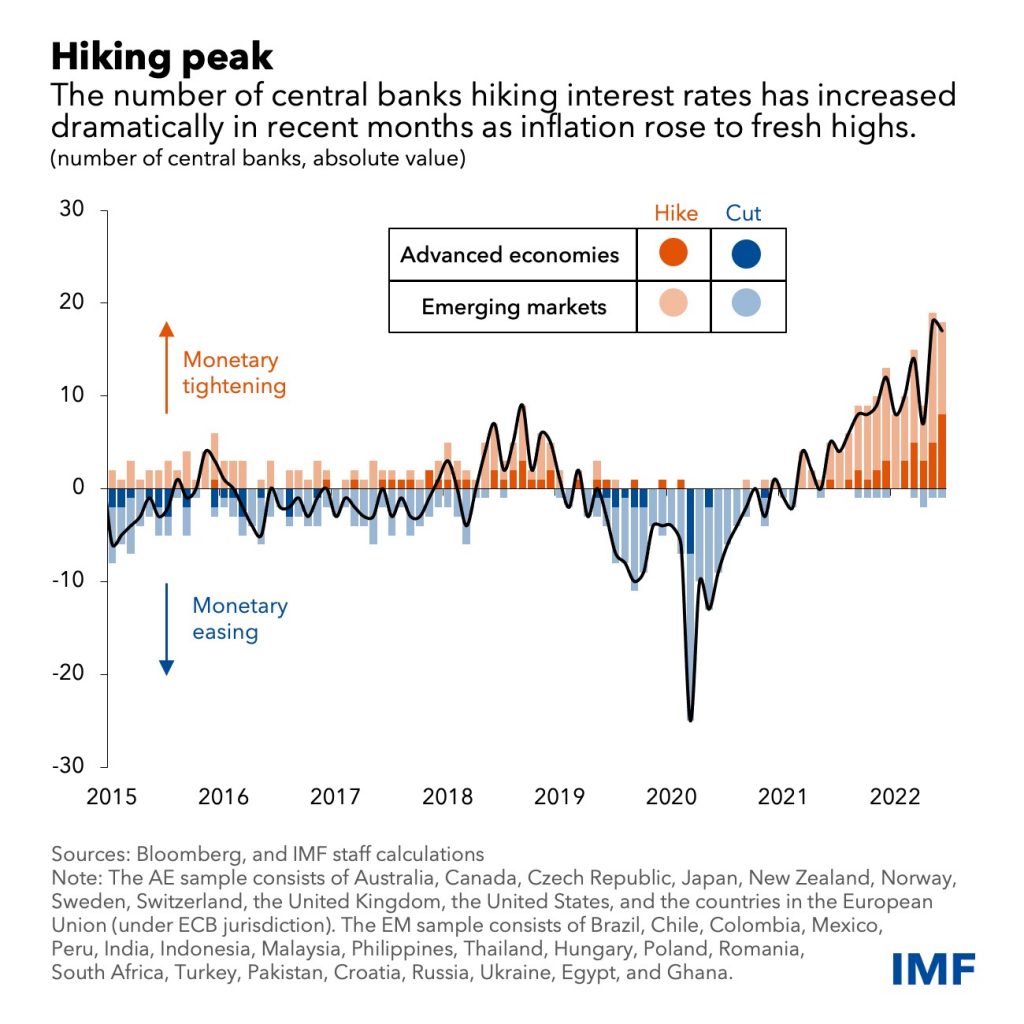
In most economies with healthy growth and employment, the level of inflation no longer warrants an accommodative monetary policy stance. The more widespread and entrenched inflation has become, the faster the removal should be. Further policy rate increases will likely be needed in many emerging-market economies, to help anchor inflation expectations and avoid destabilising capital outflows.
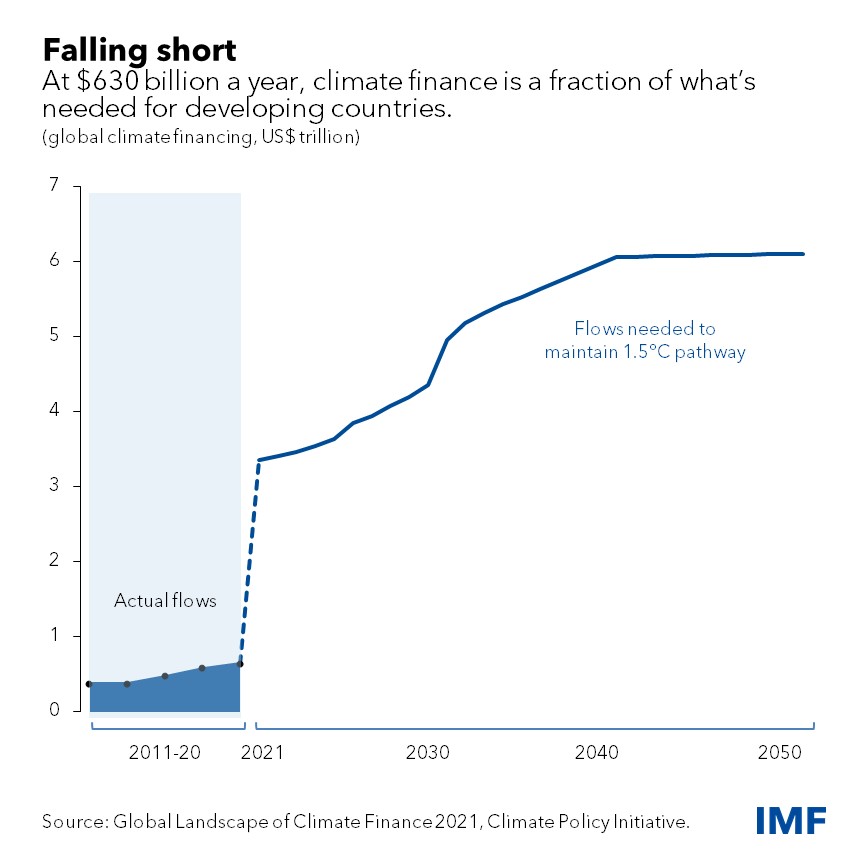
The war has again underscored the importance of energy security. Accelerating the green energy transition would both improve energy security and help lower carbon emissions. Regulatory and fiscal incentives can stimulate movement towards alternative energy sources, but large-scale renewable energy investments will require copper, rare earths and other materials that are concentrated in a few countries. Open international trade is therefore essential to achieve the transition and energy security.
Contact:

For the full report and more information, visit the Economic Outlook online. Media queries should be directed to the OECD Media Office: news.contact@oecd.org

Compliments of the OECD.
The post OECD Economic Outlook reveals heavy global price of Russia’s war against Ukraine first appeared on European American Chamber of Commerce New York [EACCNY] | Your Partner for Transatlantic Business Resources.
EACC

ECB | Price stability and policy transmission

The euro area is facing a complex mix of shocks which are reducing growth and pushing up inflation, says President Christine Lagarde. In this environment, it is imperative for policymakers, within their respective mandates, to address the risks to the economic outlook.
Speech by Christine Lagarde, President of the ECB, at the ECB Forum on Central Banking 2022 on “Challenges for monetary policy in a rapidly changing world” in Sintra, Portugal | Sintra, 28 June 2022 |

Inflation in the euro area is undesirably high and it is projected to stay that way for some time to come. This is a great challenge for our monetary policy.
In response to the changing inflation outlook, we have consistently followed the path of policy normalisation since December last year, sequentially adjusting our policy stance.
Net asset purchases under our various programmes will come to an end this week. In July we intend to raise our policy rates for the first time in 11 years. And we have provided some guidance for our September policy meeting and the rate path we envisage taking thereafter.
We will continue along this normalisation path – and we will go as far as necessary to ensure that inflation stabilises at our 2% target over the medium term.
As Victor Hugo is said to have remarked, perseverance is the “secret of all triumphs”.
At the same time, the euro area differs from some other major economies for two key reasons and the path of normalisation has to be managed accordingly.
First, inflation in the euro area today is being driven by a complex mix of factors that reflect, in part, our economic structures and strategic dependencies. This creates uncertainty about how quickly inflation will return to our medium-term target.
In this setting, we need to act in a determined and sustained manner, incorporating our principles of gradualism and optionality. This means moving gradually if there is uncertainty about the outlook, but with the option to act decisively on any deterioration in medium-term inflation, especially if there are signs of a de-anchoring of inflation expectations.
Second, the euro area has a unique institutional set-up, built around 19 not yet fully integrated national financial markets and 19 national fiscal policies, with limited coordination. This presents the risk of our monetary policy stance being unevenly transmitted across the union.
And this is why we have emphasised all along that flexibility is integral to the process of normalising our monetary policy. It is essential to allow us to deliver the necessary policy stance and protect price stability in an environment where inflation is too high.
Today, I would like to outline how a combination of shocks is currently hitting the euro area economy; how our monetary policy stance should react to the challenges these shocks create; and how we can preserve the transmission of this stance throughout the euro area.
The shocks hitting the euro area economy
Broadly speaking, inflation in the euro area is being driven by two different types of shock.
First, the original source of inflation is an extraordinary series of external shocks.
Global supply chain disruptions coupled with surging global demand have pushed up prices sharply for industrial goods along the pricing chain.[1] Mismatches between supply and demand in global energy markets have led to rising energy prices for the euro area. And the Russia-Ukraine war has amplified both of these factors while also driving up global food prices.
Given its energy dependence, the euro area is experiencing these shocks acutely.[2] The current levels of food and industrial goods inflation have not been seen since the mid-1980s.[3] And the increase in the relative price of energy in recent months is much higher than the individual spikes that occurred in the 1970s.
Together, energy, food and industrial goods account for around 80% of the overall inflation rate seen since the start of this year.
The second factor driving up inflation – and one which has intensified in recent months – is the recovery in internal demand as the economy has reopened after the pandemic.
Spending is rotating from goods back to services as restrictions are being lifted, while pent-up demand for tourism and leisure activities is proving unexpectedly strong. This rebound in spending has seen services inflation rise to 3.5% in May – the highest rate since the mid-1990s – with the highest price increases in contact-intensive sectors.
These shocks, in particular the surge in energy prices, are driving up short-term inflation to very high levels. They are also leading to significant upward revisions to our medium-term inflation forecasts. The June Eurosystem staff projections saw inflation above 2% for the whole projection horizon, converging back to slightly above our medium-term target in 2024.
The persistence of inflation
But the size and complexity of these shocks are also creating uncertainty about how persistent this inflation is likely to be.
We are not facing a straightforward situation of generalised excess demand or economic overheating, in which case the trajectory of medium-term inflation would have been clearer. Despite the bounceback in services, private consumption in the euro area is still more than 2% below its pre-pandemic level. And investment remains subdued.
Although there have been some signs of above-target revisions in recent months, longer-term inflation expectations currently stand at around 2% across a range of measures. This supports our baseline projection for inflation to converge back towards our medium-term inflation target.
At the same time, inflation pressures are intensifying and broadening through the domestic economy. Almost four-fifths of items in the consumption basket had annual price increases above 2% in April, and this is not only a reflection of high import prices. A new ECB indicator of domestic inflation – which removes items with a high import content – currently stands above 3%.[4]
In this environment, it is important to understand how persistent domestic price pressures are likely to become. There are several factors worth considering here.
First, inflation is starting to take root in the services sector, which is the “stickiest” component of inflation and has a higher weight than goods.[5]
Second, unemployment in the euro area is at a record low[6], labour shortages are broad-based across sectors and indicators of labour demand remain strong. This tightening of the labour market, together with the catch-up effect triggered by the high inflation environment, suggests that wage growth will pick up. Our latest forecasts see wage growth[7] above 4% in 2022 and 2023 and at 3.7% in 2024 – almost double the historical average before the pandemic.
Third, these factors combined have led us to project core inflation at 2.3% in 2024 – and, in the euro area, core inflation tends to be an indicator of headline inflation over the medium term.
We are also seeing signs that the supply shocks hitting the economy could linger for longer. While it is reasonable to assume that global supply chain disruptions will gradually be resolved, the outlook for energy and commodities remains clouded.
There is not yet an end in sight to the Russia-Ukraine war, and we still face the risk of cuts to supply that could keep energy prices high. That could contribute to inflation directly – if it leads to further rises in energy costs – or indirectly, if a higher level of energy prices makes some production uneconomic and leads to a durable loss of economic capacity.
The war is also likely to accelerate Europe’s green transition as a way to enhance our energy security. In the long term, this should lead to lower energy costs in Europe. But in the meantime, it could lead to price increases for rare minerals and metals,[8] higher costs for the investment needed in clean technologies, and an expansion of carbon-pricing schemes.[9]
Uncertainty about growth
That said, these shocks also have implications for growth and, as such, they can weigh on the medium-term inflation outlook. So what are we seeing in this regard?
The external supply shocks hitting the euro area are affecting spending. Rising import prices represent a terms of trade “tax” which reduces the total income of the economy.
Households are seeing their real income being squeezed. Real wage growth has been negative for two consecutive quarters. And consumer surveys suggest that households are expecting their real income and consumption to decline further over the next year.
Firms are trying to protect their margins by raising prices, but this uncertain environment is also leading them to delay investment decisions. And sales growth now appears to be decelerating. The latest Purchasing Managers’ Indices point to no further growth in new business, and business expectations in a year’s time have reached their lowest level since October 2020.
At the same time, spending is being supported by the boost to demand from the full reopening of the services sector. And consumption is being buffered by the large stock of household savings built up during the pandemic, fiscal support measures and the continued strength of the labour market, which is helping to sustain labour income overall.
But if supply shocks drag on and inflation continues to exceed wage growth by a wide margin, losses in real income could intensify and the excess savings buffer could be eroded. The resulting hit to demand could test the resilience of the labour market and possibly temper the expected rise in labour income.
In this setting, we have markedly revised down our forecasts for growth in the next two years. But we are still expecting positive growth rates due to the domestic buffers against the loss of growth momentum.
The path ahead for rate normalisation
Based on the overall outlook, the process of normalising our monetary policy will continue in a determined and sustained manner. But given the uncertainty we still face, the pace of interest rate normalisation cannot be defined ex ante.
As I laid out in a recent blog post[10], the appropriate monetary policy stance has to incorporate our principles of gradualism and optionality.
Gradualism allows policymakers to assess the impact of their moves on the inflation outlook as they go, which can be a prudent strategy in times of uncertainty. Optionality ensures that policy can react nimbly to the incoming data on the economy and inflation expectations and, if uncertainty decreases, re-optimise the policy path as necessary. Indeed, there are clearly conditions in which gradualism would not be appropriate. If, for example, we were to see higher inflation threatening to de-anchor inflation expectations, or signs of a more permanent loss of economic potential that limits resource availability, we would need to withdraw accommodation more promptly to stamp out the risk of a self-fulfilling spiral.
These two elements of the monetary policy stance underlie the Governing Council’s decisions at our meeting on 9 June.
Consistent with moving gradually, we announced that we will end net asset purchases under our asset purchase programme on 1 July and intend to raise our three key interest rates by 25 basis points at our next meeting on 21 July.
But we also announced that we expect to raise the key interest rates again in September, and “if the medium-term inflation outlook persists or deteriorates, a larger increment will be appropriate at the September meeting.”
This reflects the optionality principle. If the inflation outlook does not improve, we will have sufficient information to move faster. This commitment is, however, data dependent.
This conditional approach to the pace of interest rate adjustment should not be confused with delaying normalisation. As our policy stance rests on a clear reaction function, interest-rate expectations and risk-free rates can adjust in advance.
Our policy adjustment is already working its way through the euro area economy. The €STR forward rate ten years out is around 240 basis points above its pre-pandemic level, without policy rates having yet moved. One-year forward real rates, one-year ahead and five-year forward real rates, five-years ahead are around 100 and 140 basis points higher, respectively.
Beyond September, the Governing Council has agreed that a “gradual but sustained” path of further rate increases will be appropriate. The starting point at each meeting will be an assessment of the evolution of the shocks, their implications for the outlook and the degree of confidence we have in inflation converging to our medium-term target.
Transmitting the policy stance
For these changes in our monetary policy stance to be effective, we need to preserve the orderly transmission of our stance throughout the euro area.
The ECB is conducting monetary policy in an incomplete monetary union, in which its policy has to be transmitted through 19 different financial and sovereign bond markets. The yields on those sovereign bonds provide the benchmark for pricing all other private sector assets in the 19 Member States – and ultimately also for ensuring that our monetary policy impulse reaches individual firms and households.
If spreads in some countries respond in a rapid and disorderly way to an underlying change in risk-free rates, over and above what would be justified by economic fundamentals, our capacity to deliver a single monetary policy is impeded. In this situation, a change in the policy stance can be followed by an asymmetric response of financing conditions, regardless of the credit risk of individual borrowers.
In such conditions – when we have what we describe as unwarranted fragmentation – preserving policy transmission is a precondition for returning inflation to our target.
The normalisation of our monetary policy will naturally lead to rising risk-free rates and sovereign yields. And, as euro area sovereigns are starting from different fiscal positions, it can also lead to a rise in spreads.
But in order to preserve the orderly transmission of our policy stance throughout the euro area, we need to ensure that this repricing is not exacerbated and distorted by destabilising market dynamics, leading to a fragmentation of our original policy impulse. That risk of fragmentation is also affected by the pandemic, which has left lasting vulnerabilities in the euro area economy. These vulnerabilities are now contributing to the uneven transmission of the normalisation of our policy across jurisdictions.
The Governing Council is therefore acting in two ways.
First, we will use flexibility in reinvesting redemptions coming due under the pandemic emergency purchase programme (PEPP) to preserve the functioning of the monetary policy transmission mechanism. In other words, those redemptions can, as appropriate, be invested within the Eurosystem in bond markets of jurisdictions where orderly transmission is at risk. We have decided to apply this flexibility in reinvesting redemptions coming due in the PEPP portfolio as of 1 July.
Second, we have decided to mandate the relevant Eurosystem committees, together with the ECB services, to accelerate the completion of the design of a new instrument for consideration by the Governing Council. The new instrument will have to be effective, while being proportionate and containing sufficient safeguards to preserve the impetus of Member States towards a sound fiscal policy.
This decision lies squarely within the ECB’s tradition. In the past, the ECB has made use of separate instruments to target inflation and to preserve the functioning of the monetary policy transmission mechanism. Measures to preserve transmission could be used at any level of interest rates – so long as they were designed not to interfere with the monetary policy stance.
At times when inflation fell too low, it made sense to shift from “separation” to “combination” so that all tools reinforced the required policy easing. That is why, for example, we linked asset purchases tightly to forward guidance on rates. But with high inflation now being the main challenge, there are merits in separating policy tools again.
Preserving policy transmission throughout the euro area will allow rates to rise as far as necessary. In this sense, there is no trade-off between launching this new tool and adopting the necessary policy stance to stabilise inflation at our target. In fact, one enables the other.
Conclusion
Let me conclude.
The euro area is facing a complex mix of shocks which are reducing growth and pushing up inflation. In this environment, it is imperative for policymakers, within their respective mandates, to address the risks to the economic outlook.
Fiscal policymakers have to play their part in reducing these risks by providing targeted and temporary support while, over the medium term, following a rules-based framework that underpins both debt sustainability and macroeconomic stabilisation.
We are unwavering in our commitment to ensure that inflation returns to 2% over the medium term. We have designed a strategy to normalise our policy that allows us to respond nimbly to the high inflation environment.
And we will ensure that the orderly transmission of our policy stance throughout the euro area is preserved. As Leonardo da Vinci said, “every obstacle yields to stern resolve”. We will address every obstacle that may pose a threat to our price stability mandate.
Compliments of the European Central Bank.

Kalemli-Özcan, S., di Giovanni, J., Silva, A., Yıldırım, M. (2022), “Global supply chain pressures, international trade and inflation”, paper presented at the ECB Forum on Central Banking, Sintra, 27-29 June 2022.

Bjørnland, H. (2022), “The effect of rising energy prices amid geopolitical developments and supply disruptions”, paper presented at the ECB Forum on Central Banking, Sintra, 27-29 June 2022.

Based on historical Consumer Price Index data series for euro area countries.

Fröhling, A., O’Brien, D. and Schaefer, S. (2022), “A new indicator of domestic inflation for the euro area”, Economic Bulletin, Issue 4, ECB.

For the increasing importance of services in the Harmonised Index of Consumer Prices, see Baldwin, R. (2022), “Globotics and macroeconomics: Globalisation and automation of the service sector”, paper presented at the ECB Forum on Central Banking, Sintra, 27-29 June 2022.

However, 1.1% of workers are still enrolled in job retention schemes.

Compensation per employee.

International Energy Agency (2022), “The Role of Critical Minerals in Clean Energy Transitions”, revised versin, March.

Kuik, F., Morris, R. and Sun, Y. (2022), “The impact of climate change on activity and prices – insights from a survey of leading firms”, Economic Bulletin, Issue 4, ECB; Bua, G., Kapp, D., Kuik, F. and Lis, E. (2021), “EU emissions allowance prices in the context of the ECB’s climate change action plan”, Economic Bulletin, Issue 6, ECB.

Lagarde, C. (2022), “Monetary policy normalisation in the euro area”, The ECB Blog, 23 May.

The post ECB | Price stability and policy transmission first appeared on European American Chamber of Commerce New York [EACCNY] | Your Partner for Transatlantic Business Resources.
EACC

European Council, 23-24 June 2022

On 23-24 June 2022, the European Council adopted conclusions on Wider Europe, Ukraine, the membership applications from Ukraine, the Republic of Moldova and Georgia, Western Balkans, economic issues, Conference on the Future of Europe and external relations.

European Council conclusions, 23-24 June 2022
Remarks by President Charles Michel following the second session of the European Council, 24 June 2022

Ahead of the European Council meeting, EU and Western Balkan leaders met in the morning of 23 June 2022 in Brussels.

EU-Western Balkans leaders’ meeting, 23 June 2022

Main results
Wider Europe
The European Council held a strategic discussion on ‘Wider Europe’, concerning the EU’s relations with its partners in Europe. In this context, EU leaders also discussed a proposal to launch a European political community.
The discussion was guided by the questions ‘what, who and how?’. The aim of ‘Wider Europe’ is to offer a platform for political coordination to countries in Europe with which the EU has close relations. This will help foster cooperation and address issues of common interest to strengthen security, stability and prosperity in Europe.
Such a framework would not replace existing EU policies and instruments, including EU enlargement, and will fully respect the EU’s decision-making autonomy.
EU leaders will return to this issue.
Russia’s aggression against Ukraine
The European Council reiterated that it stands firmly with Ukraine and that the EU will continue to provide strong support for Ukraine’s overall economic, military, social and financial resilience, including humanitarian aid.
Safety of civilians and war crimes
EU leaders resolutely condemned Russia’s indiscriminate attacks against civilians and civilian infrastructure, and reiterated that international humanitarian law must be respected.
Leaders stressed that Ukrainians, notably children, who have been forcibly removed to Russia, must immediately be allowed to return safely.
They underlined that Russia, Belarus and all those responsible for war crimes and the other most serious crimes will be held to account for their actions in accordance with international law.

EU response to Russia’s invasion of Ukraine (background information)

Sanctions against Russia
The European Council said that the work on sanctions will continue, including efforts to strengthen implementation and prevent circumvention.
EU heads of state or government called on all countries to align with EU sanctions, in particular countries that are candidates for EU membership. They also stressed that work on the Council decision adding the violation of restrictive measures to the list of EU crimes should be swiftly finalised.

EU restrictive measures against Russia over Ukraine (background information)

Solidarity with Ukraine
EU leaders highlighted that the EU remains strongly committed to providing further military support to help Ukraine exercise its inherent right of self-defence against Russian aggression and defend its territorial integrity and sovereignty.
To this end, they called on the Council to swiftly work on a further increase of military support.
The European Council noted that the European Commission would soon present a proposal to grant Ukraine new exceptional macro-financial assistance of up to €9 billion in 2022.
EU heads of state and government called on the Commission to swiftly present its proposals on EU support for the reconstruction of Ukraine, in consultation with international partners, organisations and experts.

EU solidarity with Ukraine (background information)

Food security
The European Council addressed the global food crisis. EU leaders urged Russia to immediately stop targeting agricultural facilities and to unblock the Black Sea ports to permit the export of Ukrainian grain and enable commercial shipping operations to resume. Leaders supported the efforts of the United Nations Secretary-General to this end.

Russia, by weaponising food in its war against Ukraine, is solely responsible for the global food security crisis it has provoked.
European Council conclusions, 23 June 2022

EU leaders underlined that EU sanctions against Russia allow the free flow of agricultural and food products and the delivery of humanitarian assistance.
Leaders expressed strong support for the ongoing work on the solidarity lanes, which are facilitating food exports from Ukraine via land routes and EU ports.
Building on the FARM initiative as well as UN and G7 initiatives, they called on the Commission and EU member states to step up efforts to:

help developing countries reorient their supply chains, where necessary
accelerate work on the Team Europe initiatives aiming to support Africa’s sustainable agri-food production capacities

support the development of input manufacturing capacity in developing countries, in particular sustainable fertilisers

Impact of Russia’s invasion of Ukraine on the markets: EU response (background information)
Food security and affordability (background information)

EU membership applications
The European Council recognised the European perspective of Ukraine, Moldova and Georgia and reiterated that the future of these countries and their citizens lies with the EU.
EU leaders granted candidate status to Ukraine and Moldova. In this context, the leaders invited the European Commission to report to the Council on the fulfilment of the conditions specified in the Commission’s opinions on the respective membership applications. The Council will decide on further steps once all of these conditions are fully met.

The European Council has just decided EU candidate status to Ukraine and Moldova. This is a historic moment. Today marks a crucial step on your path towards the EU. Our future is together.
European Council President Charles Michel, 23 June 2022.

EU enlargement: Ukraine (background information)
EU enlargement: Moldova (background information)

The European Council is ready to grant candidate status to Georgia once the priorities specified in the Commission’s opinion on Georgia’s membership application have been addressed.

EU enlargement: Georgia (background information)

Each country’s progress will depend on its own merits in meeting the Copenhagen criteria, and also on the EU’s capacity to accept new members.

EU enlargement (background information)

Western Balkans
Ahead of the European Council, EU leaders met Western Balkan leaders in the morning of 23 June 2022. During the meeting the leaders discussed:

progress on EU integration
how to advance the EU enlargement process
the consequences of Russia’s war of aggression against Ukraine in the region
geostrategic issues

The leaders also took stock of progress on key investments under the Economic and Investment Plan for the Western Balkans.

EU-Western Balkans leaders’ meeting, 23 June 2022
The EU: main trading partner and investor for the Western Balkans (infographic)

Accelerated enlargement process

The European Union expresses its full and unequivocal commitment to the EU membership perspective of the Western Balkans and calls for the acceleration of the accession process.
European Council conclusions, 23 June 2022

Building on the revised enlargement methodology, the European Council invited the European Commission, the High Representative and the Council to further advance the gradual integration between the EU and the Western Balkans during the enlargement process in a reversible and merit-based manner.
In this regard, the European Council recalled the importance of reform in the following areas:

rule of law
independence and functioning of judiciary
the fight against corruption

The European Council also called on the partners to guarantee the rights and equal treatment of minorities.

EU enlargement (background information)

Political dialogues and agreements
The European Council was informed of the latest developments on the discussions between Bulgaria and North Macedonia and called for a swift resolution of the last remaining issues so that accession negotiations can be opened without delay.

EU enlargement: The Republic of North Macedonia (background information)

The European Council reaffirmed the urgency of making tangible progress in resolving outstanding bilateral and regional disputes, particularly the Belgrade-Pristina Dialogue on the normalisation of relations between Serbia and Kosovo*.
The European Council welcomed the political agreement reached on 12 June 2022 by the leaders of Bosnia and Herzegovina, which is vital for the stability and full functioning of the country. It called on all political leaders of Bosnia and Herzegovina to swiftly implement the commitments set out in the agreement and finalise the constitutional and electoral reform in order to allow the country to advance on its EU path in line with the priorities outlined in the Commission’s opinion.
The European Council is ready to grant candidate status to Bosnia and Herzegovina. To that end, EU leaders invited the European Commission to report without delay to the Council on the implementation of 14 key priorities set out in its opinion in order for the European Council to revert to decide on the matter.

Political agreement on principles for ensuring a functional Bosnia and Herzegovina that advances on the European path (press release, 12 June 2022)
EU enlargement: Bosnia and Herzegovina (background information)

*This designation is without prejudice to positions on status, and is in line with UNSCR 1244/1999 and the ICJ Opinion on the Kosovo declaration of independence. 
Economic issues
European Semester 2022: country-specific recommendations endorsed
The European Council endorsed the country-specific recommendations, thus allowing the 2022 European Semester to be concluded.

European Semester 2022: country-specific recommendations agreed upon (press release, 17 June 2022)
Timeline: European Semester in 2022 (background information)
European Semester (background information)

Enlargement of the euro area: Croatia
The European Council welcomed the fulfilment by Croatia of all of the convergence criteria as set out in the Treaty. It endorsed the Commission’s proposal that Croatia adopt the euro on 1 January 2023 and invited the Council to adopt the relevant Commission proposals without delay.

The euro is the monetary expression of our shared destiny and has been part of our European dream. Now the dream comes true for Croatia.
European Council President, 24 June 2022

Energy prices
Referring to the Versailles Declaration and recent European Council conclusions, EU leaders reiterated the invitation to the Commission to explore with international partners ways in which to curb rising energy prices, including the feasibility of introducing temporary price caps where appropriate.

The Versailles Declaration, 10-11 March 2022
European Council conclusions, 21-22 October 2021
European Council conclusions, 24-25 March 2022
European Council conclusions, 30-31 May 2022

In the face of the weaponisation of gas by Russia, the European Council invited the Commission to urgently pursue efforts to secure energy supply at affordable prices.
The European Council also invited the Council, together with the Commission, to take any appropriate measures to ensure closer energy coordination between EU member states.

Energy prices and security of supply (background information)
Impact of Russia’s invasion of Ukraine on the markets: EU response (background information)

Conference on the Future of Europe
EU leaders took note of the proposals outlined in the final report of the Conference on the Future of Europe, which was presented to the three co-Presidents during the closing ceremony on 9 May 2022.
The Conference has been a unique opportunity to engage with European citizens, and the EU institutions should ensure that there is an effective follow-up to the final report, each within the institutions’ own spheres of competence and in accordance with the Treaties.
The European Council took note of the work already undertaken and recalled the importance of ensuring that citizens are informed on the follow-up to the report.

Conference on the Future of Europe (background information)

External relations
Eastern Mediterranean
The European Council expressed deep concern about recent repeated actions and statements by Turkey. Turkey must respect the sovereignty and territorial integrity of all EU member states. Recalling its previous conclusions and the statement of 25 March 2021, the European Council expects Turkey to fully respect international law, to de-escalate tensions in the interest of regional stability in the Eastern Mediterranean, and to promote good neighbourly relations in a sustainable way.

EU enlargement: Turkey (background information)
Statement of the members of the European Council, 25 March 2021

Belarus
Leaders reiterated that the Belarusian people have a democratic right to new, free and fair elections.
In this regard, EU leaders stressed the importance of:

upholding human rights
democracy
rule of law

The European Council reiterated its call to end repression and release political prisoners.

EU relations with Belarus (background information)
Restrictive measures against Belarus (background information)

Euro Summit
On 24 June 2022, EU leaders met in Brussels for a Euro Summit in inclusive format. They discussed the current economic situation and efforts for further strengthening the banking union and the capital markets union.

Euro Summit, 24 June 2022

Compliments of the European Council.
The post European Council, 23-24 June 2022 first appeared on European American Chamber of Commerce New York [EACCNY] | Your Partner for Transatlantic Business Resources.

EACC

ESMA publishes results of its Call for Evidence on ESG ratings

The European Securities and Markets Authority (ESMA), the EU’s securities markets regulator, today publishes a letter to the European Commission (EC) providing its findings from the Call for Evidence to gather information on the market structure for ESG rating providers in the European Union (EU).
Key findings
ESMA received a total of 154 responses and found 59 ESG rating providers currently active in the EU. The analysis of the responses further indicated several characteristics and trends as follows:

ESG rating providers – the structure of the market shows that there is a small number of very large non-EU providers, and a large number of significantly smaller EU entities. While the legal entities of respondents are spread out across almost half of the EU Member States, a large number of these are clustered in a small number of Member States;
Users of ESG ratings are typically contracting for these products on an investor-pays basis from several providers simultaneously. Their reasons for selecting several providers are to increase coverage, either by asset class or geographically, or in order to receive different nature of ESG assessments. The most common shortcomings identified by the users were a lack of coverage of a specific industry or a type of entity, insufficient granularity of data, and a lack of transparency around methodologies used by ESG rating providers. However, the provision of ESG ratings on an issuer-pays basis was also evidenced and more prevalent than anticipated; and
Entities covered by ESG ratings dedicate at least some level of resourcing to their interactions with ESG rating providers, although the amount largely depends on the size of the rated entity itself. Most respondents highlighted some degree of shortcoming in their interactions with the rating providers, most notably on the level of transparency as to the basis for the rating, the timing of feedback or the correction of errors.

The feedback received is indicative of an immature but growing market which, following several years of consolidation, has seen the emergence of a small number of large non-EU headquartered providers.
Next steps
ESMA will continue supporting the EC in their assessment of the need for introducing regulatory safeguards for ESG ratings.
Compliments of the European Securities and Markets Authority.
The post ESMA publishes results of its Call for Evidence on ESG ratings first appeared on European American Chamber of Commerce New York [EACCNY] | Your Partner for Transatlantic Business Resources.

EACC

Joint Statement by President von der Leyen and President Biden on European Energy Security

Following the further invasion of Ukraine, Russia continues to use natural gas as a political and economic weapon. Russia’s energy coercion has put pressure on energy markets, raised prices for consumers, and threatened global energy security. This was most recently demonstrated by the politically motivated acute disruptions of gas supplies to several European Union Member States. These actions only underscore the importance of the work both the United States and the European Commission are doing to end our reliance on Russian energy. We are also working together to find ways to further reduce Russia’s energy-derived revenues in the coming months to further curtail Russia’s ability to fund its unprovoked war in Ukraine. These actions are important, necessary, and immediate steps we can take, but we also recognize the enormity of the challenge is significant. To meet the challenge and support Europe’s efforts, we established on 25 March 2022 the Task Force on European Energy Security. Since then the United States and the European Commission have made important strides towards reducing the European Union’s dependence on Russian fossil fuels by decreasing natural gas demand, cooperating on energy efficiency technologies, and diversifying energy supplies. The United States and the European Commission are also taking decisive action to reduce overall demand for fossil fuels in line with the Paris Agreement and our shared goal of net zero emissions no later than 2050.
The Task Force has met regularly to discuss options to reduce Europe’s demand for natural gas and has also met with key stakeholders to promote the deployment of heat pumps, smart thermostats, and energy demand response solutions. We will encourage Member States and European and US companies to reach an initial goal of deploying at least 1.5 million energy saving smart thermostats in European households this year. In the coming days we will reconvene with Member States and stakeholders to discuss actionable policy recommendations to accelerate smart thermostat and heat pump deployment and production in an effort to ensure supply for key energy efficiency solutions are ramping to meet the growing demand.
We are also partnering to diversify energy supplies to Europe. While Russia has cut supplies of natural gas to several EU Member States, the United States and other producers have stepped up. Since March, global LNG exports to Europe have risen by 75 percent compared to 2021, while US LNG exports to Europe have nearly tripled. To facilitate these efforts, the European Commission and Member States, in line with a mandate given by the European Council in March 2022, established the EU Energy Platform to coordinate measures to secure reliable and diversified energy supplies for the EU, including through the voluntary common purchase of pipeline gas, LNG, and hydrogen. The Commission has also established the first Regional Energy Platform for South East Europe to support gas diversification of the region traditionally dependent on Russian supplies. The United States is a key partner for the sustainable diversification of gas supplies to this region and other acutely impacted EU Member States, including by supporting demand reduction and accelerating clean technologies.
Mindful of the environmental impact of LNG production and consumption, the United States and the European Commission will step up their cooperation to reduce methane emissions, to ensure that EU-U.S LNG trade is aligned with the scope of an internationally accepted measurement, reporting and verification standard for methane emissions while working to reduce venting and flaring in natural gas production, and methane leakage in the transmission and LNG supply chain. We will also continue our cooperation on reduction of methane emissions globally. Most recently, the joint launch with 11 other countries of the Global Methane Pledge Energy Pathway will advance both climate progress and energy security internationally.
Compliments of the European Commission.
The post Joint Statement by President von der Leyen and President Biden on European Energy Security first appeared on European American Chamber of Commerce New York [EACCNY] | Your Partner for Transatlantic Business Resources.

EACC

Joint statement by Vice-President for Interinstitutional Relations and Foresight Maroš Šefčovič, and Jan Christian Vestre, Norway’s Minister of Trade and Industry

Vice-President for Interinstitutional Relations and Foresight, Maroš Šefčovič, and Jan Christian Vestre, Norway’s Minister of Trade and Industry, have released the following joint statement on enhanced political and industrial cooperation on the strategic value chains of batteries and raw materials.
The European Union and Norway enjoy a deep and long-standing relationship as neighbours and partners, sharing common political objectives and fundamental values, while being part of the Single Market through the European Economic Area (EEA).
Given the urgent need to tackle climate change, and secure supplies of sustainable energy, materials and technologies instrumental to decarbonisation and the competitiveness of their economies, while increasing resilience of strategic ecosystems, the EU and Norway share the ambition to strengthen and expand their cooperation in the area of the raw materials and battery value chains.
This will pave the way to a strategic partnership, built on a novel comprehensive framework for future-oriented and long-term cooperation, further strengthening political relations and economic ties between the EU and Norway. Development of integrated sustainable value chains for minerals, metals and batteries will help address strategic dependencies and create green long-term growth and high-quality jobs.
The Parties agreed to explore enhanced cooperation in the area of raw materials and batteries with regard to the integration of the materials and battery value chains, environmental, social and governance criteria, research and innovation, and financial and investment instruments.
The Parties agreed on the following initial areas of action: 

Norway will participate in the ministerial meetings of the European Battery Alliance.

Norway intends to participate in and contribute to the European Battery Academy.

The two Parties will discuss the application of the rules of origin laid down in the EU-UK Trade and Cooperation Agreement for battery packs and battery cells of Norwegian origin installed in electric vehicles produced in and traded between the EU and the UK.

Industrial actors, with the support of the European Alliances and Norwegian Associations, will explore business opportunities in view of developing battery and raw materials projects in Norway and the EU, including at a jointly organised business networking event.

The two Parties will work towards advancing best practices for resource classification and mapping, including mapping mineral potential from waste sources.

The two Parties will organise a joint Tracing Net-Zero Battery Minerals event to support research and innovation.

Vice-President Maroš Šefčovič, together with Commissioner for Internal Market Thierry Breton, and Minister Jan Christian Vestre will provide political guidance and strategic steer for the work carried out under the partnership. They will meet on a regular basis to monitor progress and decide on next steps.
A working group consisting of senior officials and experts from Norway and the EU will be created to develop a strategic partnership accompanied by a memorandum of understanding and a roadmap, in line with this joint statement.
Industrial actors, business associations and alliances, and stakeholders will be encouraged to engage in efforts related to the partnership, notably by exploring business opportunities and developing joint industrial projects along the entire battery and raw materials value chains.
The partnership on raw materials and batteries could be followed by partnerships in other areas of green industrial policy of mutual interest to both parties.
The future strategic partnership will be coherent with the EEA agreement and will contribute to the EU-Norway Green Alliance, announced on 23 February 2022, in the Joint Statement by President Ursula von der Leyen and Jonas Gahr Støre, Prime Minister of Norway.
Compliments of the European Commission.
The post Joint statement by Vice-President for Interinstitutional Relations and Foresight Maroš Šefčovič, and Jan Christian Vestre, Norway’s Minister of Trade and Industry first appeared on European American Chamber of Commerce New York [EACCNY] | Your Partner for Transatlantic Business Resources.

EACC

European Council conclusions on Ukraine, the membership applications of Ukraine, the Republic of Moldova and Georgia, Western Balkans and external relations, 23 June 2022

II. UKRAINE
4. The European Council discussed the Russian war of aggression against Ukraine in its different dimensions. The European Council reiterates that it firmly stands with Ukraine and that the European Union will continue to provide strong support for Ukraine’s overall economic, military, social and financial resilience, including humanitarian aid.
5. The European Council resolutely condemns Russia’s indiscriminate attacks against civilians and civilian infrastructure, and urges Russia to immediately and unconditionally withdraw all its troops and military equipment from the entire territory of Ukraine within its internationally recognised borders. International humanitarian law, including on the treatment of prisoners of war, must be respected. Ukrainians, notably children, who have been forcibly removed to Russia must be immediately allowed to return safely. Russia, Belarus and all those responsible for war crimes and the other most serious crimes will be held to account for their actions, in accordance with international law.
The adoption of the sixth package of EU sanctions further intensifies pressure on Russia to end its war against Ukraine. Work will continue on sanctions, including to strengthen implementation and prevent circumvention. The European Council calls on all countries to align with EU sanctions, in particular candidate countries. Work should swiftly be finalised on the Council decision adding the violation of Union restrictive measures to the list of EU crimes.
6. The European Union remains strongly committed to providing further military support to help Ukraine exercise its inherent right of self-defence against the Russian aggression and defend its territorial integrity and sovereignty. To this end, the European Council calls on the Council to swiftly work on a further increase of military support.
7. The European Council notes that the Commission will soon present a proposal to grant Ukraine new exceptional macro-financial assistance of up to EUR 9 billion in 2022. It calls on the Commission to swiftly present its proposals on EU support for the reconstruction of Ukraine, in consultation with international partners, organisations and experts.
8. Russia, by weaponising food in its war against Ukraine, is solely responsible for the global food security crisis it has provoked. The European Council urges Russia to immediately stop targeting agricultural facilities and removing cereals, and to unblock the Black Sea, in particular the port of Odesa, so as to allow the export of grain and commercial shipping operations. The European Council supports the efforts of the United Nations Secretary-General to this end. The European Council underlines that EU sanctions against Russia allow the free flow of agricultural and food products and the delivery of humanitarian assistance.
9. The European Council strongly supports the efforts on the Solidarity Lanes to facilitate food exports from Ukraine via different land routes and EU ports. It calls on the Commission and the Member States, building in particular on the FARM initiative as well as UN and G7 initiatives, to step up their efforts:
(1) to support developing countries to reorient, where necessary, their supply chains;
(2) to accelerate the delivery of the relevant Team Europe flagship initiatives agreed at the recent European Union – African Union Summit which seek to develop sustainable food production, strengthen agricultural productivity, including on protein crops, and agri-business capacity on the African continent; and
(3) to work on initiatives together with international partners to support the development of manufacturing capacity of inputs in developing countries, in particular sustainable fertilisers.
III. MEMBERSHIP APPLICATIONS OF UKRAINE, THE REPUBLIC OF MOLDOVA AND GEORGIA
10. The European Council recognises the European perspective of Ukraine, the Republic of Moldova and Georgia. The future of these countries and their citizens lies within the European Union.
11. The European Council has decided to grant the status of candidate country to Ukraine and to the Republic of Moldova.
12. The Commission is invited to report to the Council on the fulfilment of the conditions specified in the Commission’s opinions on the respective membership applications as part of its regular enlargement package. The Council will decide on further steps once all these conditions are fully met.
13. The European Council is ready to grant the status of candidate country to Georgia once the priorities specified in the Commission’s opinion on Georgia’s membership application have been addressed.
14. The progress of each country towards the European Union will depend on its own merit in meeting the Copenhagen criteria, taking into consideration the EU’s capacity to absorb new members.
IV. WESTERN BALKANS
15. The European Union expresses its full and unequivocal commitment to the EU membership perspective of the Western Balkans and calls for the acceleration of the accession process.
16. Building on the revised methodology, the European Council invites the Commission, the High Representative and the Council to further advance the gradual integration between the European Union and the region already during the enlargement process itself in a reversible and merit-based manner.
17. The European Council recalls the importance of reforms, notably in the area of rule of law and in particular those related to the independence and functioning of the judiciary and the fight against corruption. It also calls on the partners to guarantee the rights and equal treatment of persons belonging to minorities.
18. The European Council was informed about the latest developments on discussions between Bulgaria and North Macedonia. It calls for a swift resolution of the last remaining issues so that accession negotiations can be opened without delay.
19. The European Council reaffirms the urgency of making tangible progress in resolving outstanding bilateral and regional disputes, particularly the Belgrade-Pristina Dialogue on normalisation of relations between Serbia and Kosovo*.
20. The European Council welcomes the political agreement reached on 12 June 2022 by the leaders of Bosnia and Herzegovina in Brussels which is needed for the stability and full functioning of the country and in order to respond to the aspirations of the people. It calls on all political leaders in Bosnia and Herzegovina to swiftly implement the commitments set out in the agreement and urgently finalise the constitutional and electoral reform, which will allow the country to advance decisively on its European path, in line with the opinion of the Commission.
21. The European Council is ready to grant the status of candidate country to Bosnia and Herzegovina and to that aim it invites the Commission to report without delay to the Council on implementation of the 14 key priorities set out in its opinion with special attention to those which constitute a substantial set of reforms in order for the European Council to revert to decide on the matter.
VII. EXTERNAL RELATIONS
Eastern Mediterranean
28. The European Council expressed deep concern about recent repeated actions and statements by Turkey. Turkey must respect the sovereignty and territorial integrity of all EU Member States. Recalling its previous conclusions and the statement of 25 March 2021, the European Council expects Turkey to fully respect international law, to de-escalate tensions in the interest of regional stability in the Eastern Mediterranean, and to promote good neighbourly relations in a sustainable way.
Belarus
29. The European Council underlines the democratic right of the Belarusian people to have new, free and fair elections. It calls on the Belarusian authorities to uphold human rights, democracy and the rule of law, to end repression and to release political prisoners.
* This designation is without prejudice to positions on status, and is in line with UNSCR 1244/1999 and the ICJ Opinion on the Kosovo declaration of independence.
Compliments of the European Council.
The post European Council conclusions on Ukraine, the membership applications of Ukraine, the Republic of Moldova and Georgia, Western Balkans and external relations, 23 June 2022 first appeared on European American Chamber of Commerce New York [EACCNY] | Your Partner for Transatlantic Business Resources.

EACC

Hydrogen & electric-powered aircraft: Towards Zero-Emission Aviation – Blog of Commissioner Thierry Breton

The aviation sector, like many others, has been heavily impacted by the COVID shock. It is now confronted with the fall-out of Russia’s military actions against Ukraine.
But we must look ahead. Gone are the days when the aviation sector ignored its responsibility for global warming.
Just recall the commitments taken as part of “Destination 2050”. For the first time, the sector presented a pathway for a climate neutral sector that combines new technologies, improved operations, sustainable aviation fuels and economic measures. And in the Toulouse Declaration, the full range of public and private stakeholders commit to the future sustainability and decarbonisation of aviation.
We must encourage aviation on this path; not banish it from our transport solutions.
Emission-free flight: sustainable and key to the industry’s economic future
Emission-free flight is not just the key to the long-term sustainability of the aviation sector: it is also the key to this industry’s economic future.
Last year, aircraft “made in Europe” accounted for about 65% of commercial aircraft sold globally. The aerospace industry generates 125 billion euros of value added and employs close to one million workers across Europe.
Tens of thousands of aircraft will be sold in the coming decades. In fact, 26 thousand “green” aircraft are expected to be sold by 2050. This represents a total value of 5 trillion euros for the world.
It should be our common ambition that the European industry captures a large share of this global market. So, developing zero-emission solutions for global aviation is therefore a must.
We can be proud that Europe is leading the way in alternative propulsion. Initiatives such as the “flying fuel cell” propulsion system, hydrogen-combustion turbine, or ultralight, safe and reliable tanks for liquid hydrogen storage are all examples of the innovation potential in Europe.
And I am not just referring to the large manufacturers, but also to the many smaller companies and start-ups. The enthusiasm in the aeronautical industry is really encouraging!
The EU is investing heavily to accompany such efforts. Under Horizon Europe programme, 1.7 billion Euros are allocated to the Clean Aviation Partnership.
This comes on top of all the other funds for collaborative research and development actions, as well as national research programmes. 
How to ensure that great technologies turn into great products
We all know that great technologies don’t automatically translate into great products. It is also true in aviation.
This is a complex industry which involves actors from many different sectors. Aircraft manufacturers, airlines, airports, fuel providers, maintenance organisations, regulators all must work together to make the system work.
Because if we don’t, we will end up having great aircrafts, but:

no standardisation and certification to support these,
no hydrogen infrastructure and fuel to fly them with,
and no business case for the aviation sector.

In other words, it is time to prepare the entire aviation community.
How to overcome this challenge? For once, maybe we don’t need only engineers to provide a solution. And you do know that I love engineers. I am one of them!
We need the entire aviation supply chain to come together, understand the challenges, agree to a common ambition. And set to work.  
The missing piece to put all parties together – the Alliance for Zero-Emission Aviation
Today, as part of ILA Berlin, one of the biggest worldwide events in aviation, I officially launched the Alliance for Zero-Emission Aviation.
The Alliance will have one main goal: to prepare the entire aviation community for the entry into service of hydrogen- and electric-powered aircraft.
The Alliance will identify all barriers to the entry into commercial service of these aircraft, establish recommendations and a roadmap to address them, promote investment projects and create synergies and momentum amongst members.
So: if your organisation is committed to zero-emission aviation and wants to help make it possible, I invite you to join the Alliance.
And to come to the first General Assembly of the Alliance foreseen for end of October, in Brussels.
Continuing to live the dream of flight: innovation as the path for sustainability
Not far from Berlin, Otto Lilienthal undertook his first flight attempts. As so many other aviation pioneers, he was fascinated by the dream of flight.
Today, we live that dream. Aviation has brought us closer to the world. It provides us a safe, affordable, quick and comfortable means of transportation.
There will be challenges, of course, but we can address them if we work together.
And if we do, I am convinced: not only the best is yet to come for the aviation sector but also it will play its full part in the fight against global warming.
Compliments of the European Commission.
The post Hydrogen & electric-powered aircraft: Towards Zero-Emission Aviation – Blog of Commissioner Thierry Breton first appeared on European American Chamber of Commerce New York [EACCNY] | Your Partner for Transatlantic Business Resources.