EACC

EU Member states commit to reducing gas demand by 15% next winter

In an effort to increase EU security of energy supply, member states today reached a political agreement on a voluntary reduction of natural gas demand by 15% this winter. The Council regulation also foresees the possibility to trigger a ‘Union alert’ on security of supply, in which case the gas demand reduction would become mandatory.
The purpose of the gas demand reduction is to make savings ahead of winter in order to prepare for possible disruptions of gas supplies from Russia that is continuously using energy supplies as a weapon.

The EU is united and solidary. Today’s decision has clearly shown the member states will stand tall against any Russian attempt to divide the EU by using energy supplies as a weapon. Adopting the gas reduction proposal in record time has undoubtedly strengthened our common energy security. Saving gas now will improve preparedness. The winter will be much cheaper and easier for EU’s citizens and industry.
Jozef Síkela, Czech minister of industry and trade

Member states agreed to reduce their gas demand by 15% compared to their average consumption in the past five years, between 1 August 2022 and 31 March 2023, with measures of their own choice.
Whereas all EU countries will use their best efforts to meet the reductions, the Council specified some exemptions and possibilities to request a derogation from the mandatory reduction target, in order to reflect the particular situations of member states and ensure that the gas reductions are effective in increasing security of supply in the EU.
The Council agreed that member states that are not interconnected to other member states’ gas networks are exempted of mandatory gas reductions as they would not be able to free up significant volumes of pipeline gas to the benefit of other member states. Member states whose electricity grids are not synchronised with the European electricity system and are heavily reliant on gas for electricity production are also exempted, in order to avoid the risk of an electricity supply crisis.
Member states can request a derogation to adapt their demand reduction obligations if they have limited interconnections to other member states and they can show that their interconnector export capacities or their domestic LNG infrastructure are used to re-direct gas to other member states to the fullest.
Member states can also request a derogation if they have overshot their gas storage filling targets, if they are heavily dependent on gas as a feedstock for critical industries or if their gas consumption has increased by at least 8% in the past year compared to the average of the past five years.
Member states agreed to increase the role of the Council in triggering a ‘Union alert’. The alert would be activated by a Council implementing decision, acting on a proposal from the Commission. The Commission shall present a proposal to trigger a ‘Union alert’ in case of a substantial risk of a severe gas shortage or an exceptionally high gas demand, or if five or more member states that have declared an alert at national level request the Commission to do so.
When choosing demand reduction measures, member states agreed they should prioritise measures that do not affect protected customers such as households and essential services for the functioning of society like critical entities, healthcare and defence. Possible measures include reducing gas consumed in the electricity sector, measures to encourage fuel switch in industry, national awareness raising campaigns, targeted obligations to reduce heating and cooling and market-based measures such as auctioning between companies.
Member states will update their national emergency plans that set out the demand reduction measures they are planning, and regularly report to the Commission on the advancement of their plans.
The regulation is an exceptional and extraordinary measure, foreseen for a limited time. It will therefore apply for one year and the Commission will carry out a review to consider its extension in light of the general EU gas supply situation, by May 2023.
The text agreed today will be formally adopted through a written procedure. The written procedure will be launched and concluded in the days to come, following technical revisions of the text.
Background
The EU is facing a potential security of supply crisis with significantly reduced of gas deliveries from Russia and a serious risk of a complete halt, for which member states need to prepare immediately in a coordinated fashion and a spirit of solidarity. Although all member states are not currently facing a significant risk of security of supply, severe disruptions on certain member states are bound to affect the EU’s economy as a whole.
It complements existing EU initiatives and legislation, which ensure that citizens can benefit from secure gas supplies and that customers are protected against major supply disruptions, notably Regulation (EU) 2017/1938 on the security of gas supply.
This regulation follows other initiatives already in progress to improve the EU’s resilience and security of gas supply including a gas storage regulation, the creation of an EU Energy Platform for joint purchases and measures listed in REPowerEU.
Compliments of the Council of the EU.
The post EU Member states commit to reducing gas demand by 15% next winter first appeared on European American Chamber of Commerce New York [EACCNY] | Your Partner for Transatlantic Business Resources.

EACC

Opening remarks of Executive Vice-President Timmermans at the Extraordinary Energy Council on security of energy supply in the EU

“Check against delivery”
Thank you Jozef.
Dear Ministers
We saw during the pandemic, the COVID crisis, that if the EU comes together and we act together we are collectively so much stronger than the sum of 27 Member States. We also saw during that crisis that also here, Putin tried to divide and rule. And prove that we were not capable to do that, that he had a better vaccine and all of that. And it has turned out very differently. He couldn’t divide and rule us because we were united.
I believe the same issue should now dictate our choices in the coming winters.
We can make many predictions about what Putin will do. He will be unpredictable but there is one thing I am sure of. He will now try and use his gas, his oil to divide us, to create uncertainty in our societies, to create political turmoil. He is not new to that game. He has been doing that for 20 years. You know that: financing political parties, want to reject our way of life, buying influence in the media, buying influence in parts of the economy, and always with the aim to weaken and divide us because he fears a United Europe.
And rightly so because a United Europe stands for democracy. He hates democracy. He believes in autocracy. He thinks democracy is decadent and weak, and we will prove him wrong.
But as part of proving him wrong is also to create the right levels of solidarity in our energy system. So although many Europeans are making the choices to go for renewable energy because of the high prices, the unreliability, across our Member States many are buying solar panels as much as they can, looking for heat pumps, looking for alternatives to fossil fuels.
I was in Poland not that long ago and I was amazed to see how fast that country is transforming, also by the choices made by individual citizens.That’s heart-warming and inspiring to see across the European Union. But we also know this is not going to deliver us from a challenge in the coming, especially, two winters. What we need to do is to create security of supply.
 
The EU Energy Platform and the Task Force will rapidly take forward and coordinate the work of the five regional groups so that we make the most effective and efficient use of existing gas infrastructure across the Union, and fix problems when there are problems in this infrastructure. We are also moving ahead to facilitate joint purchasing of gas and hydrogen.
President von der Leyen and Kadri have had some real successes in recent days, in Azerbaijan and elsewhere. We are doing everything we can as a Union to diversify our gas supply ahead of next winter and we are on track to achieve the target of 60 bcm. I think we are beyond 35 bcm already.
With its other elements, RePowerEU can get us down to a third of the Russian gas imports we had last year. Already much more than we thought we were able to do in such a short space of time, and yet it might not be enough. Because if Putin closes the tap completely, you can be sure it happens in the moment he thinks will hurt us most.
To end this lingering vulnerability, we need to do more.
And we can. We have a choice to reduce our consumption of gas and to make solidarity work. These are steps we must take if we want to make sure that Putin doesn’t control our energy security.
If we don’t save 15% across the EU, under a voluntary or mandatory framework, we will be taking a dangerous gamble.
I salute you for adopting the compromise just now. And while that text is still an important step forward compared to where we are today, it is a hugely forward but we will need to be very much abreast on the developments so we can react to the developments, if that is needed.
Every day we postpone ambitious and difficult but also necessary savings. Wee increase the cost of facing an emergency. The longer you wait, the higher the costs. It is very clear. We would also make ourselves more vulnerable – in a colder winter, to higher competition on the LNG market, and to more Russian gas games.
We can be masters of our own energy security this winter but to do that we must save gas everywhere in the EU. And the good news is that if we do that we can also make a big hole in the export revenues of Putin. But much more importantly, we can prove to him we will stay the course until Ukraine is completely free of Russian’s aggression.
Compliments of the European Commission.
The post Opening remarks of Executive Vice-President Timmermans at the Extraordinary Energy Council on security of energy supply in the EU first appeared on European American Chamber of Commerce New York [EACCNY] | Your Partner for Transatlantic Business Resources.

EACC

NIST | Information and Communications Technology (ICT) Risk Management in the Enterprise: Two Draft Special Publications Available for Comment

NIST is posting two draft Special Publications (SP) on the Enterprise Impact of Information and Communications Technology (ICT) Risk, with a public comment period open through September 6, 2022.
The increasing dependency on ICT means that all enterprises must ensure ICT risks receive the appropriate attention along with other risk disciplines –legal, financial, etc. – within their enterprise risk management (ERM) programs. These documents and resources are intended to help ICT risk practitioners at all levels of the enterprise, in private and public sectors, to better understand and practice ICT risk management (ICTRM) within the context of ERM.  Using organizing constructs, such as risk appetite and tolerance statements, business impact analysis (BIA), risk registers, and key risk indicators, enterprises, can better identify, assess, communicate, monitor, and manage their ICT risks in the context of their stated mission and business objectives using language and constructs already familiar to senior leaders.

NIST Special Publication 800-221 ipd (initial public draft), Enterprise Impact of Information and Communications Technology Risk: Governing and Managing ICT Risk Programs Within an Enterprise Risk Portfolio, promotes a greater understanding of the relationship between ICT risk management and ERM, and the benefits of integrating those approaches.

NIST Special Publication 800-221A ipd, Information and Communications Technology (ICT) Risk Outcomes: Integrating ICT Risk Management Programs with the Enterprise Risk Portfolio, provides a set of desired outcomes and applicable references that are common across all types of ICT risk. It provides a common language for understanding, managing, and expressing ICT risk to internal and external stakeholders. It can be used to help identify and prioritize actions for reducing ICT risk, and it is a tool for aligning policy, business, and technological approaches to managing that risk. Using this approach for each type of ICT risk will help organizations improve the quality and consistency of ICT risk information they provide as inputs to their ERM programs. That, in turn, will help organizations address all forms of ICT risk more effectively in their ERM.  This publication complements SP 800-221 as the ICTRM catalog of outcomes. SP 800-221A can be browsed and downloaded in standardized JSON and Excel formats.

The public comment period for both drafts is open through September 6, 2022. See the publication details of SP 800-221 and SP 800-221A for downloads and instructions for submitting comments.
NOTE: A call for patent claims is included in each draft. For additional information, see the Information Technology Laboratory (ITL) Patent Policy–Inclusion of Patents in ITL Publications.
Compliments of the National Institute of Standards and Technology, the U.S. Department of Commerce.
The post NIST | Information and Communications Technology (ICT) Risk Management in the Enterprise: Two Draft Special Publications Available for Comment first appeared on European American Chamber of Commerce New York [EACCNY] | Your Partner for Transatlantic Business Resources.

EACC

Statement by the President of the European Commission following the political agreement on the Council Regulation on coordinated demand reduction measures for gas

Today, the EU has taken a decisive step to face down the threat of a full gas disruption by Putin. I strongly welcome the endorsement by Council of the Council Regulation on coordinated demand reduction measures for gas.
The political agreement reached by Council in record time, based on the Commission’s proposal “Save gas for a safe winter” tabled last week, will ensure an orderly and coordinated reduction of gas consumption across the EU to prepare for the coming winter. It complements all the other actions taken to date in the context of REPowerEU, notably to diversify sources of gas supply, speed up the development of renewables and become more energy efficient.
The collective commitment to reduce by 15% is very significant and will help fill our storage ahead of winter.
Moreover, the possibility to declare a state of EU alert triggering compulsory gas consumption reductions across the Member States provides a strong signal that the EU will do whatever it takes to ensure its security of supply and protect its consumers, be it households or industry.
By acting together to reduce the demand for gas, taking into account all the relevant national specificities, the EU has secured the strong foundations for the indispensable solidarity between Member States in the face of the Putin’s energy blackmail. The announcement by Gazprom that it is further cutting gas deliveries to Europe through Nord Stream 1, for no justifiable technical reason, further illustrates the unreliable nature of Russia as an energy supplier. Thanks to today’s decision, we are now ready to address our energy security at European scale, as a Union.
Compliments of the European Commission.
The post Statement by the President of the European Commission following the political agreement on the Council Regulation on coordinated demand reduction measures for gas first appeared on European American Chamber of Commerce New York [EACCNY] | Your Partner for Transatlantic Business Resources.

EACC

Protocol on Ireland/Northern Ireland: EU Commission launches four new infringement procedures against the UK

The European Commission has today launched four new infringement procedures against the United Kingdom for not complying with significant parts of the Protocol on Ireland / Northern Ireland. They come in addition to the infringement procedures launched on 15 June 2022.
Despite repeated calls by the European Parliament, the 27 EU Member States and the European Commission to implement the Protocol, the UK government has failed to do so.
In a spirit of constructive cooperation, the Commission refrained from launching certain infringement procedures for over a year to create the space to look for joint solutions with the UK. However, the UK’s unwillingness to engage in meaningful discussion since last February and the continued passage of the Northern Ireland Protocol Bill through the UK Parliament go directly against this spirit.
The aim of these infringement procedures is to secure compliance with the Protocol in a number of key areas. This compliance is essential for Northern Ireland to continue to benefit from its privileged access to the European Single Market, and is necessary to protect the health, security and safety of EU citizens as well as the integrity of the Single Market.
In more detail
The Commission has decided to launch four new infringement procedures against the UK in respect of Northern Ireland for, respectively:

Failing to comply with the applicable customs requirements, supervision requirements and risk controls on the movement of goods from Northern Ireland to Great Britain. This significantly increases the risk of smuggling via Northern Ireland. For example, it opens the possibility for traders to circumvent EU rules on prohibitions and restrictions on the export of goods to third countries or provides possibilities for carousel trafficking of goods being declared for export in the EU and actually not exiting the customs territory via Northern Ireland. On 17 December 2020, the UK issued a unilateral declaration to ensure “unfettered access” for Northern Irish goods to move to the UK market. The EU agreed with the UK proposal to provide “equivalent” information through “alternative means” on a real time basis. To date, however, the UK does not collect the relevant export declaration data for goods moving from Northern Ireland to Great Britain. Nor does it provide information to the EU on these movements, making any supervision of those goods by Union representatives impossible.
Failing to notify the transposition of EU legislation laying down general EU rules on excise duties, which will become applicable from 13 February 2023. Member States and the UK in respect of Northern Ireland were required to transpose this Directive and notify the Commission of their transposition measures by 31 December 2021. To date, the United Kingdom has failed to do so. Non-implementation of these rules poses a fiscal risk to the EU (i.e. excise duties not levied or levied at a lower rate than in the EU) in relation to movements of goods subject to excise duties to/from Northern Ireland.
Failing to notify the transposition of EU rules on excise duties on alcohol and alcoholic beverages, which facilitate access for small and artisan producers to lower excise duty rates, among other provisions. Member States and the UK in respect of Northern Ireland were required to transpose this Directive by 31 December 2021. Non-implementation of these rules poses a fiscal risk to the EU (i.e. excise duties not levied or levied at a lower rate than in the EU) in relation to the excise duties to be paid on movements of alcohol and alcoholic beverages to/from Northern Ireland. Any divergence from EU harmonised excise duties would also distort competition in the supply of those goods within the Single Market.
Failing to implement EU rules on Value Added Tax (VAT) for e-commerce, namely the Import One-Stop Shop (IOSS). The IOSS is a special scheme that businesses can use since 1 July 2021 to comply with their VAT obligations on distance sales of imported goods. It allows suppliers and electronic interfaces selling imported goods not exceeding €150 to buyers in the EU to declare and pay the VAT via the tax authorities of one Member State instead of having to register in every Member State into which they sell. For EU consumers, this means a lot more transparency: when buying from either an EU or a non-EU seller or platform registered in the One Stop Shop, VAT is part of the price paid to the seller. To date, the UK in respect of Northern Ireland has not taken the necessary IT measures to implement the IOSS. This in turn poses a fiscal risk to the EU

Today’s decision marks the beginning of formal infringement procedures, as set out in Article 12(4) of the Protocol, in conjunction with Article 258 of the Treaty on the Functioning of the European Union. The letters sent to the UK request its authorities to take swift remedial actions to restore compliance with the terms of the Protocol. The UK has two months to reply to the letters, after which the Commission stands ready to take further measures.
Background
The European Union wishes to have a positive and stable relationship with the United Kingdom. This relationship must be based on the full respect of the legally binding commitments that the two sides have made to one another, based on the implementation of the Withdrawal Agreement and the Trade and Cooperation Agreement. Both parties negotiated, agreed and ratified these agreements.
After long and intensive discussions between the EU and the UK, the Protocol is the best solution found jointly to reconcile the challenges created by Brexit, and by the type of Brexit chosen by the UK government. The Protocol is an integral part of the Withdrawal Agreement. It avoids a hard border on the island of Ireland, protects the 1998 Good Friday (Belfast) Agreement in all its dimensions, and ensures the integrity of the EU’s Single Market.
The EU has shown understanding for the practical difficulties of implementing the Protocol, demonstrating that solutions can be found within its framework.
Compliments of the European Commission.
The post Protocol on Ireland/Northern Ireland: EU Commission launches four new infringement procedures against the UK first appeared on European American Chamber of Commerce New York [EACCNY] | Your Partner for Transatlantic Business Resources.

EACC

Save Gas for a Safe Winter: EU Commission proposes gas demand reduction plan to prepare EU for supply cuts

The European Union faces the risk of further gas supply cuts from Russia, due to the Kremlin’s weaponisation of gas exports, with almost half of our Member States already affected by reduced deliveries.  Taking action now can reduce both the risk and the costs for Europe in case of further or full disruption, strengthening European energy resilience.
The Commission is therefore proposing today a new legislative tool and a European Gas Demand Reduction Plan, to reduce gas use in Europe by 15% until next spring. All consumers, public administrations, households, owners of public buildings, power suppliers and industry can and should take measures to save gas. The Commission will also accelerate work on supply diversification, including joint purchasing of gas to strengthen the EU’s possibility of sourcing alternative gas deliveries.
The Commission is proposing a new Council Regulation on Coordinated Demand Reduction Measures for Gas, based on Article 122 of the Treaty. The new Regulation would set a target for all Member States to reduce gas demand by 15% between 1 August 2022 and 31 March 2023. The new Regulation would also give the Commission the possibility to declare, after consulting Member States, a ‘Union Alert’ on security of supply, imposing a mandatory gas demand reduction on all Member States. The Union Alert can be triggered when there is a substantial risk of a severe gas shortage or an exceptionally high gas demand. Member States should update their national emergency plans by the end of September to show how they intend to meet the reduction target, and should report to the Commission on progress every two months. Member States requesting solidarity gas supplies will be required to demonstrate the measures they have taken to reduce demand domestically.
To help Member States deliver the necessary demand reductions, the Commission has also adopted a European Gas Demand Reduction Plan which sets out measures, principles and criteria for coordinated demand reduction. The Plan focuses on substitution of gas with other fuels, and overall energy savings in all sectors. It aims to safeguard supply to households and essential users like hospitals, but also industries that are decisive for the provision of essential products and services to the economy, and for EU supply chains and competitiveness. The Plan provides guidelines for Member States to take into account when planning curtailment.
Energy saved in summer is energy available for winter
By substituting gas with other fuels and saving energy this summer, more gas can be stored for winter. Acting now will reduce the negative GDP impact, by avoiding unplanned actions in a crisis situation later. Early steps also spread out the efforts over time, ease market concerns and price volatility, and allow for a better design of targeted, cost-effective measures protecting industry.
The Gas Demand Reduction Plan proposed by the Commission is based on consultations with Member States and industry. A wide range of measures are available to reduce gas demand. Before considering curtailments, Member States should exhaust all fuel substitution possibilities, non-mandatory savings schemes and alternative energy sources. Where possible, priority should be given to switching to renewables or cleaner, less carbon-intensive or polluting options. However, switching to coal, oil or nuclear may be necessary as a temporary measure, as long as it avoids long term carbon lock-in. Market-based measures can mitigate the risks to society and the economy. For example, Member States could launch auction or tender systems to incentivise energy reduction by industry. Member States may offer support in line with the amendment of the State aid Temporary Crisis Framework, adopted by the Commission today.
Another important pillar of energy saving is the reduction of heating and cooling. The Commission urges all Member States to launch public awareness campaigns to promote the reduction of heating and cooling on a broad scale, and to implement the EU ‘Save Energy Communication’, containing numerous options for short-term savings. To set an example, Member States could mandate a targeted lowering of heating and cooling in buildings operated by public authorities.
The Demand Reduction Plan will also help Member States identify and prioritise, within their “non-protected” consumer groups, the most critical customers or installations based on overall economic considerations and the following criteria:

 Societal criticality – sectors including health, food, safety, security, refineries and defence, as well as the provision of environmental services;

Cross-border supply chains – sectors or industries providing goods and services critical to the smooth functioning of EU supply chains;

Damage to installations – to avoid that they could not resume production without significant delays, repairs, regulatory approval and costs;

Gas reduction possibilities and product/component substitution – the extent to which industries can switch to imported components/products and the extent to which demand for products or components may be met through imports.

Background: What the EU has done to secure its energy supply
Following the Russian invasion of Ukraine, the Commission adopted the REPowerEU Plan to end the EU’s dependence on Russian fossil fuels as soon as possible. REPowerEU sets out measures on diversification of energy suppliers, energy savings and energy efficiency, and an accelerated roll-out of renewable energy. The EU has also adopted new legislation requiring EU underground gas storage to be filled to 80% of capacity by 1 November 2022 to ensure supply for the coming winter. In this context, the Commission has carried out an in-depth review of national preparedness plans to face possible major supply disruptions.
The Commission has set up the EU Energy Platform to aggregate energy demand at the regional level and facilitate future joint purchasing of both gas and green hydrogen, to ensure the best use of infrastructure so that gas flows to where it is most needed, and to reach out to international supply partners. Five regional groups of Member States have already been initiated within the Platform, and a dedicated task force has been created within the Commission to support the process. The EU is succeeding in diversifying away from Russian gas imports thanks to higher LNG and pipeline imports from other suppliers. In the first half of 2022, non-Russian LNG imports rose by 21 billion cubic metres (bcm) as compared to the same period last year. Non-Russian pipeline imports also grew by 14 bcm from Norway, Azerbaijan, the United Kingdom and North Africa.
Since long before the Russian invasion of Ukraine, the EU has been building a clean and interconnected energy system, focused on increasing the share of domestically-produced renewable energy, phasing out imported fossil fuels, and ensuring connections and solidarity between Member States in the event of any supply interruptions.
By progressively eliminating our dependence on fossil fuel sources and by reducing the EU’s overall energy consumption through increased energy efficiency, the European Green Deal and Fit for 55 package strengthen the EU’s security of supply. Building upon these proposals, REPowerEU aims to accelerate the instalment of renewable energy across the EU and the deployment of energy efficiency investments. Over 20% of the EU’s energy currently comes from renewables, and the Commission has proposed to more than double this to at least 45% by 2030. Since the beginning of the year an estimated additional 20 GW of renewable energy capacity have been added. This is the equivalent of more than 4 bcm of natural gas.
Through our investments in LNG terminals and gas interconnectors, every Member State can now receive gas supplies from at least two sources, and reverse flows are possible between neighbours. Under the Gas Security of Supply Regulation, Member States must have in place national preventive action plans and emergency plans, and a solidarity mechanism guarantees supply to ‘protected customers’ in neighbouring countries in a severe emergency.
Compliments of the European Commission.
The post Save Gas for a Safe Winter: EU Commission proposes gas demand reduction plan to prepare EU for supply cuts first appeared on European American Chamber of Commerce New York [EACCNY] | Your Partner for Transatlantic Business Resources.

Read More
EACC

IMF | How a Russian Natural Gas Cutoff Could Weigh on Europe’s Economies

‘The partial shutoff of gas deliveries is already affecting European growth, and a full shutdown could be substantially more severe.’
Russia’s invasion of Ukraine has further darkened the global growth outlook, with the European economy facing a serious setback given trade, investment, and financial links with the warring countries. Now, Europe is enduring a partial cutoff of natural gas exports from Russia, its largest energy supplier.
The prospect of an unprecedented total shutoff is fueling concern about gas shortages, still higher prices, and economic impacts. While policymakers are moving swiftly, they lack a blueprint to manage and minimize impact.
Three new IMF working papers examine these important issues. They examine how fragmented markets and delayed price pass-through can aggravate impacts, the role of the global liquefied natural gas market in moderating outcomes, and how such factors could play out in Germany, Europe’s largest economy.
Our work shows that in some of the most-affected countries in Central and Eastern Europe—Hungary, the Slovak Republic and the Czech Republic—there is a risk of shortages of as much as 40 percent of gas consumption and of gross domestic product shrinking by up to 6 percent. The impacts, however, could be mitigated by securing alternative supplies and energy sources, easing infrastructure bottlenecks, encouraging energy savings while protecting vulnerable households, and expanding solidarity agreements to share gas across countries.
What determines exposure?
Dependence on Russia for gas, and other energy sources, varies widely by country.
European infrastructure and global supply have coped, so far, with a 60 percent drop in Russian gas deliveries since June 2021. Total gas consumption in the first quarter was down 9 percent from a year earlier, and alternative supplies are being tapped, especially LNG from global markets.
Our work suggests that a reduction of up to 70 percent in Russian gas could be managed in the short term by accessing alternative supplies and energy sources and given reduced demand from previously high prices.
This explains why some countries have been able to unilaterally halt Russian imports. However, diversification would be much harder in a total shutoff. Bottlenecks could reduce the ability to re-route gas within Europe because of insufficient import capacity or transmission constraints. These factors could lead to shortages of 15 percent to 40 percent of annual consumption in some countries in Central and Eastern Europe.
Economic impact
We gauge impacts two ways. One is an integrated-market approach that assumes gas can get where it is needed, and prices adjust. Another is a fragmented-market approach that is best used when the gas cannot go where needed no matter how much prices rise. However, estimation is complicated by the fact that the hit to the European economy is already happening.
Using the integrated-market approach—as the market remains so—to estimate the direct impact to date suggests that it may have amounted to a 0.2 percent reduction for European Union economic activity in the first half of 2022.
When we consider a full Russian gas shutoff from mid-July, we focus on the impact relative to a baseline of no supply disruption this year. This simplifies the estimation and makes it comparable with other economic research.
We derive a broad range of estimates of impact over the next 12 months. Reflecting the unprecedented nature of a full Russian gas shut-off, the right modeling assumptions are highly uncertain and vary between countries.
If EU markets remain integrated both internally and with the rest of the world, our integrated-market approach suggests that the global LNG market would help buffer economic impacts. That is because reduced consumption is distributed across all countries connected to the global market. At the extreme, assuming no LNG support, the impact is magnified: soaring gas prices would have to work by depressing consumption only in the EU.
If physical constraints impede gas flows, the fragmented market approach suggests that the negative impact on economic output would be especially significant, as much as 6 percent for some countries in Central and Eastern Europe where the intensity of Russian gas use is high and alternative supplies are scarce, notably Hungary, the Slovak Republic and the Czech Republic. Italy would also face significant impacts due to its high reliance on gas in electricity production.
The effects on Austria and Germany would be less severe but still significant, depending on the availability of alternative sources and the ability to lower household gas consumption. Economic impacts would be moderate, possibly under 1 percent, for other countries with sufficient access to international LNG markets.
Germany’s exposure
We dug deeper to understand the German outlook and policy options in the event of a full shutoff. Starting with the baseline outlook in our Article IV Consultation—which already embeds the existing partial shutoff—we extended the assessment through 2027 and incorporated additional demand-side impacts that stem from the uncertainty that households and firms face, and which reduce aggregate consumption and investment.
Our estimates suggest uncertainty channels would notably add to the economic impacts from a full shutoff. Impacts would peak next year, then fade as alternative gas supplies become available.
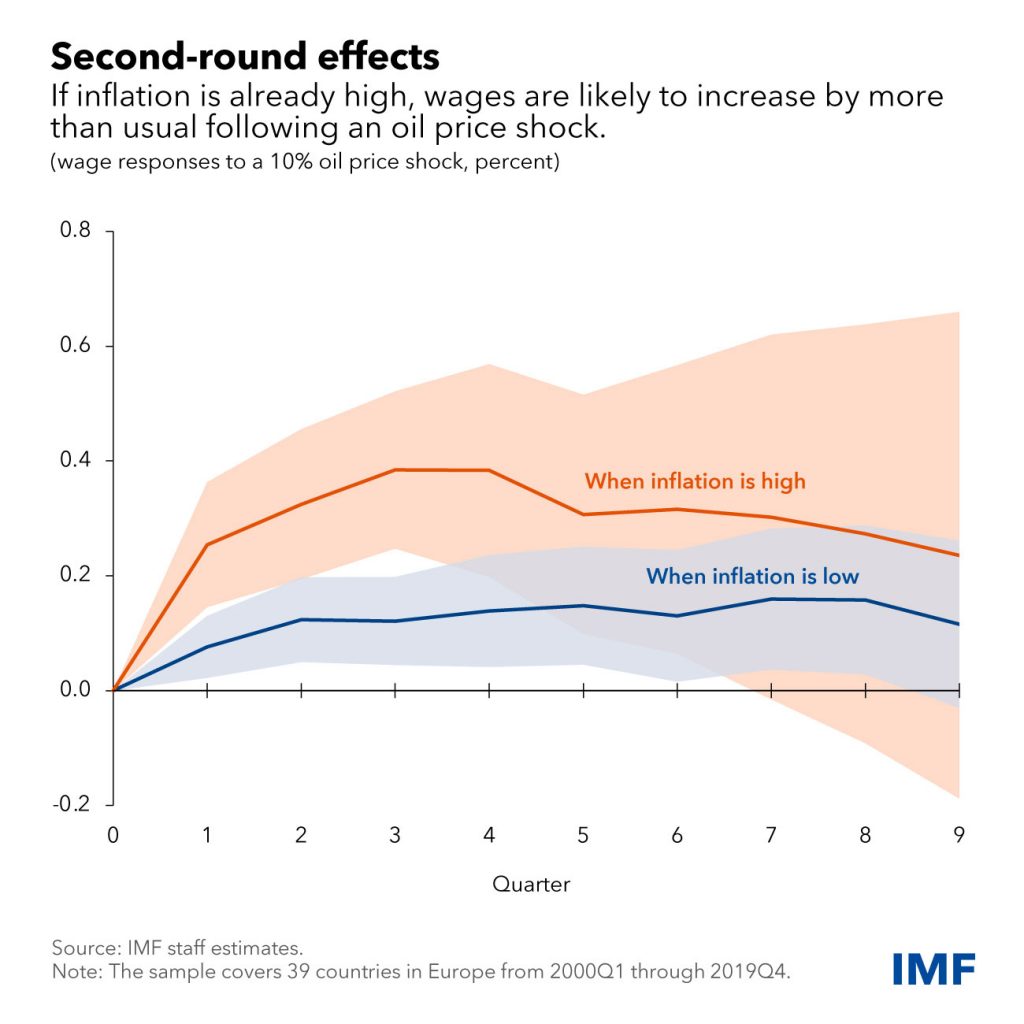
The rise in wholesale gas prices could also increase inflation significantly which we explicitly study in our work on Germany. Simulations also illustrate that voluntary consumer conservation could reduce economic losses by one-third, and a well-designed rationing plan, which for example lets downstream users and gas-intensive industries bear more of the shortages, could reduce them by up to three-fifths.
Easing consumption
Countries that already encourage households and businesses to save energy include Italy, where the government mandates minimum and maximum levels for heating and cooling. REPowerEU, the European Commission’s plan, also contains measures to conserve energy and reduce dependence on Russian fuels.
There is still a gap, however, between ambition and reality. Forthcoming IMF research shows that many countries have chosen policies which strongly limit how wholesale prices are passed on to consumers. A better alternative would be to allow greater passthrough to incentivize conservation while offering targeted compensation to households that can’t afford higher prices.
Addressing challenges
Our research shows that the economic fallout from a Russian gas shutoff can be partially mitigated. Beyond measures already taken, further action should focus on risk mitigation and crisis preparedness.
Governments must boost efforts to secure supplies from global LNG markets and alternative sources, continue to alleviate infrastructure bottlenecks to import and distribute gas, plan to share supplies in an emergency across the EU, act decisively to encourage energy savings while protecting vulnerable households, and prepare smart gas rationing programs.
This is a moment for Europe to build upon the decisive action and solidarity displayed during the pandemic to address the challenging moment it faces today.
Compliments of the IMF.
The post IMF | How a Russian Natural Gas Cutoff Could Weigh on Europe’s Economies first appeared on European American Chamber of Commerce New York [EACCNY] | Your Partner for Transatlantic Business Resources.

EACC

The sanctions against Russia are working

Blog Post by Josep Borrell, High Representative of the European Union for Foreign Affairs and Security Policy / Vice-President of the European Commission |
Many ask whether the sanctions against Russia are effective. I would like to explain in this blog post why the clear answer is yes. Already the sanctions that the EU and like-minded partners have adopted are hitting Vladimir Putin and his accomplices hard – and their effects on the Russian economy will increase further. We need strategic patience until Russia stops its aggression and Ukraine can recover its sovereignty in full.
“Our sanctions are hitting the Kremlin hard and their effects on the Russian economy will increase further. We need strategic patience until Ukraine is able to recover its sovereignty in full.”
Since Russia brutally invaded Ukraine, the EU has adopted six packages of sanctions against Moscow – and we are about to finalise a “maintenance and alignment” package to clarify a number of provisions to strengthen legal certainty for operators and align the EU’s sanctions with those of our allies and partners of the G7. Our measures already now target nearly 1,200 individuals and almost 100 entities in Russia as well as a significant number of sectors of the Russian economy. These sanctions were adopted in close coordination with the G7 member, and the fact that over forty other countries, including traditionally neutral countries, have also adopted them or taken similar measures enhances their effectiveness.
“Sanctions require strategic patience because it may take a long time for them to have the desired effect.”
Now, as the war drags on and the costs of energy rises, people in Europe and elsewhere ask whether these sanctions are working and/or whether the side effects are too great. Without underestimating different problems that could occur, including attempts made to bypass them, sanctions remain an important instrument of political action. But for sure we need to use them in a well targeted manner, and, above all, they require strategic patience because it may take a long time for them to have the desired effect.
One of the main sanctions adopted is to stop buying 90% of EU oil supplies from Russia by the end of 2022, depriving Moscow of corresponding revenues. Yes, Russia is able to sell its oil to other markets, however this benefit is limited by the fact that Russia is forced to give high discounts on each barrel (Russian oil is sold at around $ 30 less than the global average). In addition, and this is perhaps the most important point, this gradual oil embargo and the scaling back of the import of gas, liberates Europe from its energy dependence on Russia. We have discussed this issue at the EU level for years, but now we are implementing it.
“Cutting our structural energy dependence on Russia matters a lot because this dependence has been an obstacle to developing a strong European policy towards Moscow’s aggressive actions.”
Cutting our structural energy dependence on Russia matters a lot because this dependence has been an obstacle to developing a strong European policy towards Moscow’s aggressive actions. This dependence probably played an important role in Putin’s initial calculations in Ukraine. He may have believed that the EU would never sanction Russia seriously because it was too dependent on energy. This is one of his most important blunders when launching this war.
Of course, this rapid detoxification from Russian energy involves significant costs for a number of countries and sectors that we will have to face. However, it is the price to pay to defend our democracies and international law. We have to handle these consequences by reinforcing our internal solidarity and that is what we are doing. By breaking its energy dependence, in line with its climate ambition, the EU is learning that interdependence is not always a neutral instrument that is beneficial to all or a mean to guarantee peaceful international relations. The Ukraine war confirmed that interdependence can be used as a weapon.
“This rapid detoxification from Russian energy involves significant costs for a number of countries and sectors that we will have to face. However, it is the price to pay to defend our democracies and international law.”
Are the sanctions really hurting the Russian economy? Some observers have argued they are not very effective because the exchange rate of the Russian currency is very high. But this interpretation is dubious. The exchange rate of the Rouble simply reflects the fact that Russia has a massive imbalance between the high volume of oil and gas exports and the parallel collapse of imports that has followed the sanctions. This trade surplus is not a sign of good economic health, especially for an economy like Russia. While exporting unprocessed raw materials, Russia must import many high-value products that it does not manufacture. For advanced technology products, Russia depends on Europe for more than 45%, the United States for 21% and China for only 11%. Russia may of course try to limit the effects of sanctions by substituting imports through domestic products. This was done, not without success, in the agricultural sector after the 2014 sanctions. However, for high-tech products, import substitution is much more difficult to achieve.
“Russia will try to substitute imports through domestic products. This was done, not without success, in the agricultural sector after the 2014 sanctions. However, for high-tech products, it is much more difficult to achieve.”
Sanctions on semiconductors imports for instance have a direct impact on Russian companies that produce consumer electronics, computers, airplanes, cars, or military equipment. In this field, which is obviously crucial in the war in Ukraine, sanctions limit Russia’s capacity to produce precision missiles. On the ground, the Russian army is not making much use of this type of precision-guided missiles, not out of moderation, but out of necessity, as it does not have enough of them. In addition, the Russian air force has underperformed in Ukraine, also because it lacks precision-guided munitions.
The automotive sector is another sector that is very much feeling the effects of the sanctions. Almost all foreign manufacturers have decided to withdraw from Russia and production was last May down by 97% compared with 2021. In addition, the few cars that Russian manufacturers still produce will not have airbags or automatic gearboxes.
The Russian oil industry will suffer
Russia as the world’s second largest oil producer is still earning large sums from selling its oil worldwide, notably to Asian customers and this helps it to keep financing the war. But over time, the Russian oil industry will suffer not only from the departure of foreign operators but also from its increasing difficulty in accessing sophisticated technologies such as horizontal drilling. In fact, the capacity of Russia to put new wells in production will be limited, which will lead to a drop in production. Finally, there is the airline industry, which plays a very important role in such a vast country. Around 700 of Russia’s 1,100 civilian aircraft are of foreign origin. Russia will have to sacrifice a large part of its fleet, to find spare parts, so that the remaining aircrafts can fly. Even the Russian-produced aircrafts are dependent on technologies and material from western countries. As Alexander Morozov, the head of the research department of Bank of Russia recently wrote: ”The restrictions will lead to decreases in technological and engineering sophistication and in labour productivity in the sanctioned industries. Industries that rely on the most advanced foreign technologies and those with highly digitalized business processes risk being hit harder than others”. 
The list could go on with other important factors: the loss of access to financial markets; the disconnection of Russia with the major global research networks such as CERN for example; the massive brain drain of Russian elites with thousands of highly qualified professionals having left the country. The effects of such moves are not immediately visible. However, the scientific, economic and technological isolation of Russia is a major loss for the country in the medium term.
“The scientific, economic and technological isolation of Russia is a major loss for the country in the medium term.”
Moscow may claim that its relations with many countries remain intact. However, in reality, sanctions against Russia are also hurting its trade with non-sanctioning countries like China. The alternative offered by China to the Russian economy remains indeed limited. Although Beijing seems to want to make ideological gestures by siding with Moscow; refusing to condemn its invasion; or taking up the Russian narrative on the threat of NATO, it is overall rather careful regarding helping Russia circumvent the sanctions. While its imports from Russia have risen (mainly through greater energy imports), Chinese exports to Russia have decreased in proportions that are comparable to those of Western countries. Even if it does not admit it publicly, China is probably worried that this war could strengthen the position of the United States not only in Europe but also in Asia, with the strong involvement of countries such as Japan and South Korea in responding to Russia’s aggression. This is not exactly what China is aiming at.
As a result, the latest Russian figures released by Bank of Russia show that transactions through the Russian payment system are down 7.2% in June compared to the first quarter of 2022. This is a real-time indicator of the important slowdown in the Russian economy. Of course the biggest question of all is this: will the sanctions and the real effects they have, lead Putin changing his strategic calculations and if so when? Here we need to be cautious and recognise that his actions have always been disconnected from economic considerations. Putin believes in the magical power of political voluntarism. However, this cannot last forever. Hence Europe must show strategic patience. The war will be long and the test of strength will last. We have no other choice. Allowing Russia to prevail would mean allowing it to destroy our democracies and the very basis of the international rules-based world order.
“Europe must show strategic patience. The war will be long and the test of strength will last. Allowing Russia to prevail would mean allowing it to destroy our democracies and the very basis of the international rules-based world order.”
Even if sanctions do not change the Russian trajectory in the short-term, that does not mean they are useless for they do affect sheer amount of resources it has to wage its war. Without sanctions, Russia would ‘have its cake and eat it’, as the expression goes. With sanctions, it will be forced to “choose between butter and guns” locking Putin in a vice that is gradually tightening.
Finally, let me raise here as well the issue of the alleged or real impact of our sanctions on third countries, particularly African countries, which depend on Russian and Ukrainian wheat and fertilisers. Here it is very clear where responsibility lies for the food crisis. Our sanctions do not target Russian wheat or fertiliser exports. And it is until now Russia’s aggression and its blockade of the Black Sea that is preventing Ukraine from exporting its wheat. We hope however that the negotiations led by the Secretary General of the United Nations will enable this issue to be resolved quickly. I have informed my African counterparts that we are ready to assist them with any difficulties they may encounter related with our sanctions while urging them not to be fooled by the Russian authorities’ lies and disinformation regarding this subject.
“I have informed my African counterparts that we are ready to assist them with any difficulties they may encounter related with our sanctions while urging them not to be fooled by the Russian authorities’ lies and disinformation regarding this subject.”
There is a “battle of narratives” going on internationally over who is responsible global food and energy crisis as was clear at the last G20 Foreign Ministers’ Meeting. But the real answer is to bring an end to the war and this can only be achieved by Russia’s withdrawal from Ukraine. I keep reminding all our international partners that respect for the territorial integrity of states and the non-use of force are not Western or European principles. They are the basis of all international law and Russia is blithely trampling on them. To accept such a violation would open the door to the law of the jungle on a global scale.
Europe must become a real power
The war in Ukraine makes clear that, contrary to what many thought rather naively just a few years ago, economic interdependence does not automatically guarantee peaceful international relations. This is why Europe must become a real power, as I have been calling for since the beginning of my mandate. Faced with the invasion of Ukraine, we have moved from debates to concrete actions, showing that, when provoked, Europe can respond. Since we do not want to go to war with Russia, economic sanctions and the support of Ukraine are at the core of this response. And our sanctions are beginning to have an effect and will do so even more in the months to come.
Author:

HR/VP Josep Borrell

Compliments of the European Union External Action Service.
The post The sanctions against Russia are working first appeared on European American Chamber of Commerce New York [EACCNY] | Your Partner for Transatlantic Business Resources.

EACC

Keynote speech by EU Commissioner McGuinness at the forum on protecting and facilitating investment in the single market

Thank you very much, and good morning everyone, particularly those online, but also those in the room.
And as Klaus said, and thank you for the introductory remarks, as you said it is good that we can gather in physical presence but equally we have the opportunity to engage with more people online.
Because the topic we are discussing is really important, so thanks to Yann and indeed Anne-Françoise, who will address us shortly, and indeed colleagues in DG FISMA for all they work they’ve done on this topic for some time.
To you who are here, thank you for your contribution, because I know the engagement has been extremely strong.
And maybe before I start my formal presentation, just to acknowledge the very strong statement from a number of you in the room, including Business Europe and Eurocommerce, calling for a fresh political engagement to renew economic integration in the single market. This also speaks to the agenda we are addressing today.
Let’s say where we are at. Everyone in this room and online shares a key goal – and that is to facilitate investment in the single market – we may differ on how to achieve that goal – but I think we are clear about the target.
Because of current circumstances, the goal is more urgent that ever. We have a very uncertain climate.
Interest rates are rising, inflation is a reality, and indeed the Covid crisis has not gone away.
We also have Russia’s unprovoked and unjustified invasion of Ukraine, which is exacerbating pressure on growth, impacting on commodity prices and of course supply chains remain disrupted.
We are living in very uncertain times, and my engagement, formal and informal, with business across Europe, speaks to that sense of uncertainty and concern, amongst small and large companies.
So our policy priorities are more important than ever.
We, as you know, need to end our dependency on Russian fossil fuels, and speed up the transition to renewable energy. And we really need to accelerate that, removing blockages that exist, and also mobilising private finance to this absolute urgency.
We need to try and work to sustain the post-COVID economic recovery in Europe. In January, we were quite optimistic about the future. I think when the war broke out on February 24th – that optimism is now tinged with huge concern and much less optimism and more uncertainty.
And that’s why we’re here today, to address all of these issues and look at our priorities.
The regulatory environment in the Union should give investors certainty and stability – including when they invest in a member state you’re not based in, so across the single market.
We want the single market to work for investors.
In the past, investors often relied on bilateral investment treaties to protect investments if they faced difficulties in a different EU country.
And the Commission consistently held the view that there is no place for bilateral investment treaties between Member States within the EU legal system and in the single market – these so-called “intra-EU BITs”.
They overlap with EU single market rules and they discriminate among EU investors.
They create out-of-court dispute resolution systems that are incompatible with EU law.
And this was confirmed, as you know, by the Court of Justice in the Achmea case.
Following that judgement, the Commission stepped up our work with all Member States, calling on them to take action to terminate any intra-EU BITs.
And Member States are finalising the termination of those treaties.
Their formal termination clarifies the situation and brings legal certainty for investors.
And it allows us to turn the page and to consider how we can best provide the right regulatory environment for investors.
Fundamentally, EU law and single market rules offer investors an effective and complete system of protection.
We have the four freedoms in the single market – the free movement of capital, services, goods and labour.
Those give you the right to establish a business, to invest in a company or to provide services and goods across the whole of the single market.
EU investors are protected by the rules of the single market.
At the same time, EU law allows for markets to be regulated to pursue legitimate public interests such as security, public health, social rights, consumer protection or protecting the environment.
These legitimate goals may have direct consequences for investors.
But we should not be complacent.
We know that EU law does not always solve all issues and that investors may still face problems when they invest in other EU countries.
And I really want to emphasise that we do take investors’ concerns very seriously.
For example, our 2022 Eurobarometer survey on investment protection shows that only 56 percent of companies are confident that their investments are protected by the law and courts in the country of their investment if something goes wrong.
So clearly there is room for improvement.
For this reason, we announced that we would explore the need to provide some additional guarantees to those who want to invest across the single market, but have some concerns.
In recent years, we carried out an extensive consultation, launched an independent study and built up the evidence base.
So investors reported issues in 4 key areas:

Property protection and compensation for expropriation;
The quality of the law-making process,
Good administration,
And effective courts.

We carefully analysed a range of options to address issues in these areas, including some legislative solutions.
However, the evidence we gathered does not suggest these issues are systematic or sufficiently material to warrant specific legal action at EU level.
We also balanced the perspectives of all stakeholders – not only looking at investor problems.
We acknowledge civil society concerns about avoiding preferential treatment for investors compared to, for example, workers or consumers.
And of course we support the right of governments to regulate in the public interest.
Weighing different options, we have concluded that a legislative response is not justified.
EU law already protects investments in the single market and, in particular, provides for judicial remedies when something goes wrong.
National courts should remain the main forum for investors if they have to seek redress against measures introduced by Member States.
And the European Court of Justice is there to ensure that EU law is correctly applied.
In the Commission, we want to support the enforcement of EU rules.
Ensuring that EU rules are applied in practice also ensures effective protection of investments.
We will not come forward with legislation – but we do intend to take action.
So let me lay out what the Commission plans to do.
The pre-condition for consistent application of EU rules is clarity. Rules should be clear for all actors.
We are ready to communicate more on the existing rules.
And this will help prevent Member States adopting measures that infringe EU rules, and assist investors invoking their rights before public administrations and national courts.
It can also help legal practitioners apply EU rules.
Now beyond providing clarity, we want to maximize the benefits of existing EU tools and mechanisms.
We will call this the ‘toolbox for investment protection and facilitation’.
So first, we want to give some of our existing structural mechanisms an investment protection dimension.
This should address some of the structural problems that investors told us about.
The Rule of Law Report is a yearly report by the Commission that looks at all Member States.
It promotes the rule of law: the goal is to address and prevent any problems, looking at all Member States equally.
It seeks to strengthen the rule of law by stimulating a constructive debate and encouraging all Member States to examine how challenges can be addressed.
The EU Justice Scoreboard presents an annual overview of indicators on the efficiency, quality and independence of judicial systems.
Its purpose is to help Member States improve the effectiveness of their national justice system by providing objective, reliable and comparable data.
And the European Semester is our framework for monitoring and coordinating economic and employment policies across the European Union.
So we plan to give these mechanisms – the Rule of Law report, the EU Justice Scoreboard, and the European Semester – an investment protection dimension.
And that means we will be able to see what the situation is across all Member States when it comes to investment protection.
And the Commission will then be able to work constructively with Member States to address any issues that might be found.
Second, we are looking at existing mechanisms that provide help in individual cases, such as SOLVIT.
We understand that investors do not use SOLVIT to its full potential for various reasons, including lack of awareness or concerns about its suitability to deal with complex investment cases.
So we are reflecting on how SOLVIT could be adapted to investor needs.
Third, we want to hear from investors.
Collecting robust data is vital to inform the tools we can use.
We need and want to improve our understanding of the issues on the ground and practical problems that may affect investments in the single market.
We have many channels for that purpose, including:

questionnaires for stakeholders on the Rule of Law report,
country visits conducted by Commission officials,
formal complaint mechanisms,
and your national representatives in the different Single Market networks, among others.

Now fourth, beyond those specific tools, in its role as guardian of the Treaties, the Commission could address investor protection problems through infringement procedures.
Infringements are a key tool for the Commission to ensure that EU law is correctly implemented.
In 2020, the Commission opened over 900 new infringement cases. Many of these cases are solved through a constructive dialogue with Member States.
Infringements are a step of last resort. We always favour a collective and collaborative approach.
And that’s why we created a high-level forum – the Single Market Enforcement Taskforce – to discuss the most pressing single market barriers.
In this Task Force, the Commission and Member States can identify how to deal with barriers and together devise solutions.
This Task Force is the fifth part of our toolbox that I want to mention.
This toolbox, which I’ve just introduced, and which we will discuss together today, offers effective, flexible and proportionate instruments to tackle various investment protection issues.
We can address problems in a structural way and follow up with targeted action, if and when issues arise.
I believe that our approach will help nurture a positive investment environment within the EU.
And it will be most effective if we work together.
While I have seen a lot of different and divergent views on this file, I believe that all of us support the need for massive private investment.
Geopolitical tensions, macro-economic risks, the climate crisis and the digital transition – for all of these, we need to spend money to address this complex set of challenges.
Private investment requires investor confidence and the right regulatory environment.
It is vital to gather all stakeholders with different views around the same table, and to foster a constructive dialogue.
I want to encourage the search for solutions with a cooperative spirit – at national and EU level.
Your active involvement today and indeed in previous engagement, and your contribution over recent times, is essential for the successful implementation of this approach.
And I really look forward to very fruitful exchanges. I am sure there will be disagreements. But that’s the nature of our job.
But I do think that if we start from the premise of our shared objective, which is to foster investments, to encourage more private investment, not least in the whole renewable energy sector, then I think we will find solutions that work for all.
Thank you.
Compliments of the European Commission.
The post Keynote speech by EU Commissioner McGuinness at the forum on protecting and facilitating investment in the single market first appeared on European American Chamber of Commerce New York [EACCNY] | Your Partner for Transatlantic Business Resources.

EACC

EU digital diplomacy: Council agrees a more concerted European approach to the challenges posed by new digital technologies

The Council today approved conclusions on EU digital diplomacy.
Digital technologies have brought new opportunities and risks into the lives of EU citizens and people around the globe. They have also become key competitive parameters that can shift the geopolitical balance of power. The EU has a growing web of digital alliances and partnerships around the world. It is increasingly investing in digital infrastructure and, under the Global Gateway strategy, in supporting partners in defining their regulatory approach to technology based on a human-centric approach.
Against this background, the Council invites all relevant parties to ensure that digital diplomacy becomes a core component and an integral part of the EU external action, and is closely coordinated with other EU external policies on cyber and countering hybrid threats, including foreign information manipulation and interference.
In this context, to enhance the EU’s Digital Diplomacy in and with the US, the EU will soon open a dedicated office in San Francisco, a global centre for digital technology and innovation.
The conclusions stress the importance of capacity building and the strategic promotion of technological solutions and regulatory frameworks that respect democratic values and human rights.
For this reason, the EU will actively promote universal human rights and fundamental freedoms, the rule of law and democratic principles in the digital space and advance a human-centric approach to digital technologies in relevant multilateral fora and other platforms, promoting partnerships and coalitions with like-minded countries and strengthening cooperation in and with the UN system, the G7, the OSCE, the OECD, the WTO, NATO, the Council of Europe and other multilateral fora, striving to match the progress achieved with the EU’s Green Diplomacy and Cyber Diplomacy.
Compliments of the Council of the European Union.
The post EU digital diplomacy: Council agrees a more concerted European approach to the challenges posed by new digital technologies first appeared on European American Chamber of Commerce New York [EACCNY] | Your Partner for Transatlantic Business Resources.