EACC

IMF | Structural Factors and Central Bank Credibility Limit Inflation Risks

After ending last year with unexpectedly strong vaccine success and hope that the pandemic and economic distress it caused would recede, we woke up to the reality of new virus variants and the unpredictable, winding road that it can lead the world down.
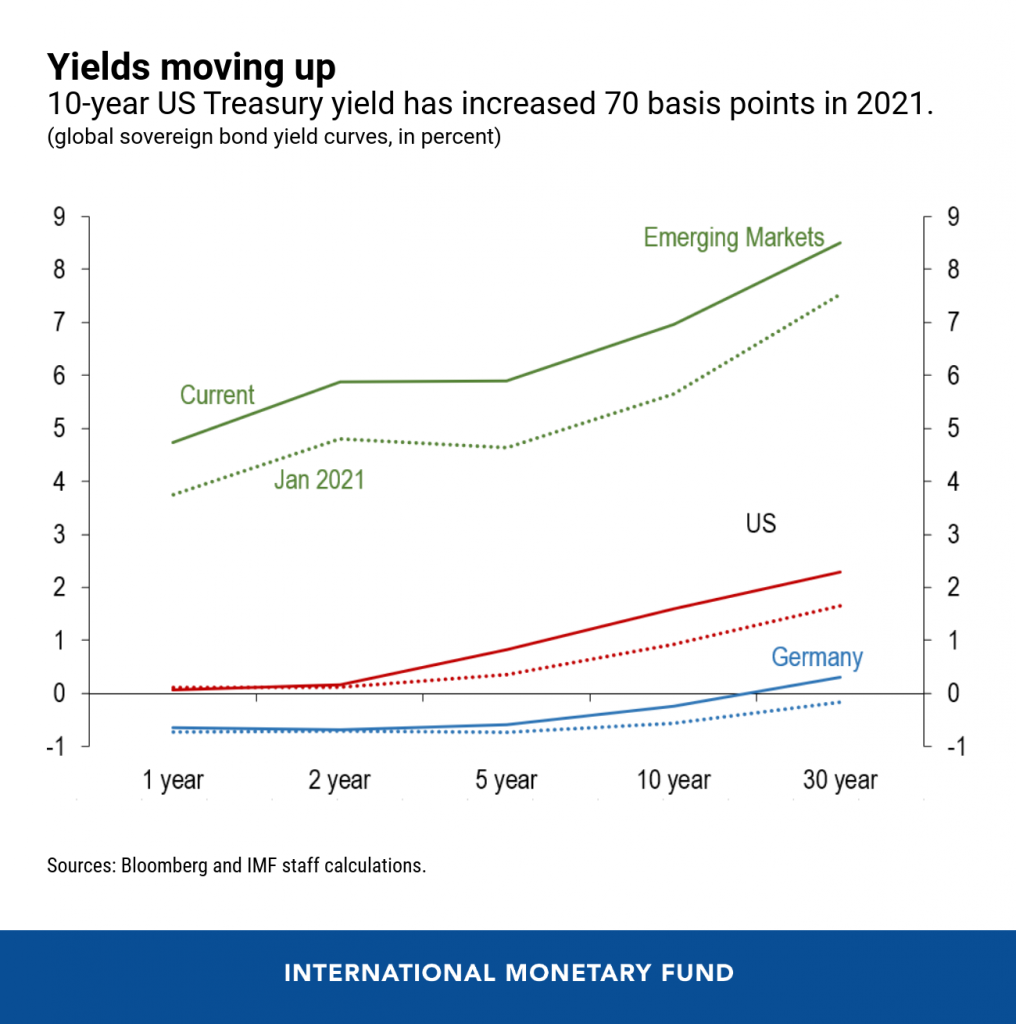
Something similar has happened with the discourse on inflation. At the end of last year, after a historic collapse of the global economy estimated at -3.5 percent, inflation was below target in 84 percent of countries. This was expected to allow for continued low interest rates and government spending to support growth, especially in advanced economies. The U.S. plan for an additional $1.9 trillion of fiscal spending has challenged this view, with even traditionally dovish economists raising concerns about an overheated economy that could push inflation well above the comfort zone of central bankers.
The evidence from the last four decades makes it unlikely, even with the proposed fiscal package, that the United States will experience a surge in price pressures that persistently pushes inflation well above the Fed’s 2 percent target. Despite the large swings in the U.S. unemployment rate from 10 percent in 2009 to 3.5 percent in 2019, inflation remained remarkably stable, even as wages rose. As of now, U.S.2008 employment gaps are large and understated by the headline unemployment rate. Our preliminary estimate is that the proposed U.S. package, equivalent to 9 percent of GDP, would increase U.S. GDP by a cumulative 5 to 6 percent over three years. Inflation, as measured by the Fed’s preferred index, would reach around 2.25 percent in 2022, which is nothing to be concerned about and, indeed, would help underpin the achievement of the goals outlined in the Fed’s policy framework.
Several structural factors underlie this diminished relation between inflation and economic activity in many countries. One such factor is globalization that has limited inflation in traded goods and even some services. In this crisis, despite some early disruptions, global supply chains have shown resilience and agility, and merchandise trade has recovered in lockstep with the recovery in manufacturing, surpassing pre-pandemic levels. Considerable slack remains in the global economy, with over 150 countries projected to have lower per capita incomes in 2021 relative to 2019.
A second factor is automation which, along with relative declines in the price of capital goods, has largely kept higher wages from being passed through to prices. This crisis is likely to accelerate that trend. Another structural trend over recent decades is the dominance of market share by firms with high profit margins. This has allowed these firms to absorb higher costs without raising prices, as was seen after the increase in U.S. tariffs. This crisis could likely increase the market share of such firms, as smaller firms have been harder hit than large businesses by the pandemic-related downturn.
Another important factor is that expectations of inflation have remained broadly stable around the targets set by central banks, thanks to central banks’ independence and the credibility of their policies. This credibility has also meant that even with high government debts there is no expectation that monetary policy will prioritize keeping government borrowing costs low at the expense of high inflation. As an example, Japan’s government debt has averaged over 200 percent of GDP since 2009, yet the challenge has been to raise inflation expectations. Indeed, inflation in Japan has averaged just 0.3 percent over the past decade.
None of this detracts, however, from the need to follow sound principles in the conduct of policy. First, even though there is limited risk of a steep rise in inflation, well targeted public spending would deliver the same improvement in employment and output but with a much smaller accumulation of debt, leaving more space for future spending that carries a high social return. High quality public investment would raise potential output, increase demand, and should be central to a comprehensive climate mitigation strategy to mitigate the catastrophic risks from climate change.
Second, because these are uncertain times with almost no parallel in history, extrapolating from the past is risky. Because of exceptional policy measures in 2020, including fiscal spending by G7 countries of 14 percent of GDP—well above the cumulative 4 percent of GDP spent during the financial crisis years of 2008–10—household savings rates in advanced economies are at multi-year highs and bankruptcies are 25 percent lower than before this pandemic. As vaccine protection becomes widespread, pent-up demand could trigger strong recoveries and defy inflation projections based on evidence from recent decades. On the other hand, bankruptcies may have only been delayed, and their eventual increase could dampen confidence, and weaken inflation and lead to further job losses.
Lastly, there is the danger of market turbulence that could be triggered by the discovery of new virus variants, transitory swings in inflation, or the possibility that major central banks raise interest rates sooner than expected. Such market reaction could tighten global financing conditions in unexpected ways. While central banks can’t do anything to change the course of the pandemic, they can and should pre-empt the possibility of sharp swings in borrowing costs. They can do this with early and clear communications of their intentions.
Author:

Gita Gopinath is the Economic Counsellor and Director of the Research Department at the IMF

Compliments of the IMF.
The post IMF | Structural Factors and Central Bank Credibility Limit Inflation Risks first appeared on European American Chamber of Commerce New York [EACCNY] | Your Partner for Transatlantic Business Resources.

EACC

WTO | History is made: Ngozi Okonjo-Iweala chosen as Director-General

WTO members made history today (15 February) when the General Council agreed by consensus to select Ngozi Okonjo-Iweala of Nigeria as the organization’s seventh Director-General.
When she takes office on 1 March, Dr Okonjo-Iweala will become the first woman and the first African to be chosen as Director-General. Her term, renewable, will expire on 31 August 2025.
“This is a very significant moment for the WTO. On behalf of the General Council, I extend our warmest congratulations to Dr Ngozi Okonjo-Iweala on her appointment as the WTO’s next Director-General and formally welcome her to this General Council meeting,” said General Council Chair David Walker of New Zealand who, together with co-facilitators Amb. Dacio Castillo (Honduras) and Amb. Harald Aspelund (Iceland) led the nine-month DG selection process.
“Dr Ngozi, on behalf of all members I wish to sincerely thank you for your graciousness in these exceptional months, and for your patience. We look forward to collaborating closely with you, Dr Ngozi, and I am certain that all members will work with you constructively during your tenure as Director-General to shape the future of this organization,” he added.
Dr Okonjo-Iweala said a key priority for her would be to work with members to quickly address the economic and health consequences brought about by the COVID-19 pandemic.
“I am honoured to have been selected by WTO members as WTO Director-General,” said Dr Okonjo-Iweala. “A strong WTO is vital if we are to recover fully and rapidly from the devastation wrought by the COVID-19 pandemic. I look forward to working with members to shape and implement the policy responses we need to get the global economy going again. Our organization faces a great many challenges but working together we can collectively make the WTO stronger, more agile and better adapted to the realities of today.” Her full statement is available here.
The General Council decision follows months of uncertainty which arose when the United States initially refused to join the consensus around Dr Okonjo-Iweala and threw its support behind Trade Minister Yoo Myung-hee of the Republic of Korea. But following Ms Yoo’s decision on 5 February to withdraw her candidacy, the administration of newly elected US President Joseph R. Biden Jr. dropped the US objection and announced instead that Washington extends its “strong support” to the candidacy of Dr Okonjo-Iweala.
Amb. Walker extended his thanks to all eight of the candidates who participated in the selection process and particularly to Ms Yoo “for her ongoing commitment to and support for the multilateral trading system and for the WTO”. His full statement is available here.
The General Council agreed on 31 July that there would be three stages of consultations held over a two-month period commencing 7 September. During these confidential consultations, the field of candidates was narrowed from eight to five and then two. On 28 October, General Council Chair David Walker of New Zealand had informed members that based on consultations with all delegations Dr Okonjo-Iweala was best poised to attain consensus of the 164 WTO members and that she had the deepest and the broadest support among the membership. At that meeting, the United States was the only WTO member which said it could not join the consensus.
The consultation process undertaken by the chair and facilitators was established through guidelines agreed by all WTO members in a 2002 General Council decision. These guidelines spelled out the key criteria in determining the candidate best positioned to gain consensus is the “breadth of support” each candidate receives from the members. During the DG selection processes of 2005 and 2013, breadth of support was defined as “the distribution of preferences across geographic regions and among the categories of members generally recognized in WTO provisions: that is (Least developed countries), developing countries and developed countries”. This same process, agreed by all members in the General Council in 2020, was strictly followed by Chair Walker and his colleagues throughout the 2020-21 DG selection process.
The process for selecting a new Director-General was triggered on 14 May when former Director-General Mr Roberto Azevêdo informed WTO members he would be stepping down from his post one year before the expiry of his mandate. He subsequently left office on 31 August.
Compliments of the World Trade Organization.
The post WTO | History is made: Ngozi Okonjo-Iweala chosen as Director-General first appeared on European American Chamber of Commerce New York [EACCNY] | Your Partner for Transatlantic Business Resources.

EACC

IMF | Public and Private Money Can Coexist in the Digital Age

We value innovation and diversity—including in money. In the same day, we might pay by swiping a card, waving a phone, or clicking a mouse. Or we might hand over notes and coins, though in many countries increasingly less often.
Today’s world is characterized by a dual monetary system, involving privately-issued money—by banks of all types, telecom companies, or specialized payment providers—built upon a foundation of publicly-issued money—by central banks. While not perfect, this system offers significant advantages, including: innovation and product diversity, mostly provided by the private sector, and stability and efficiency, ensured by the public sector.
These objectives—innovation and diversity on the one hand, and stability and efficiency on the other—are related. More of one usually means less of the other. A tradeoff exists, and countries—central banks especially—have to navigate it. How much of the private sector to rely upon, versus how much to innovate themselves? Much depends on preferences, available technology, and the efficiency of regulation.
So it is natural, when a new technology emerges, to ask how today’s dual monetary system will evolve. If digitalized cash—called central bank digital currency—does emerge, will it displace privately-issued money, or allow it to flourish? The first is always possible, by way of more stringent regulation. We argue that the second remains possible, by extending the logic of today’s dual monetary system. Importantly, central banks should not face a choice between either offering central bank digital currency, or encouraging the private sector to provide its own digital variant. The two can coincide and complement each other, for example, to the extent central banks make certain design choices and refresh their regulatory frameworks.
Public-private coexistence
It may be puzzling to consider that privately- and publicly-issued monies have coexisted throughout history. Why hasn’t the more innovative, convenient, user-friendly, and adaptable private money taken over entirely?
The answer lies in a fundamental symbiotic relationship: the option to redeem private money into perfectly safe and liquid public money, be it notes and coins, or central bank reserves held by selected banks.
The private monies that can be redeemed at a fixed face value into central bank currency become a stable store of value. Ten dollars in a bank account can be exchanged into a ten-dollar bill accepted as legal tender to settle debts. The example may seem obvious, but it hides complex underpinnings: sound regulation and supervision, government backstops such as deposit insurance and lender last resort, as well as partial or full backing in central bank reserves.
Moreover, privately-issued money becomes an efficient means of payment to the extent it can be redeemed into central bank currency. Anne’s 10 dollars in Bank A can be transferred to Bob’s Bank B because they are redeemed into central bank currency in between—an asset both banks trust, hold, and can exchange. As a result, this privately-issued money becomes interoperable. And so it spurs competition—since Anne and Bob can hold money in different banks and still pay each other—and thus innovation and diversity of actual forms of money.
In short, the option of redemption into central bank currency is essential for stability, interoperability, innovation, and diversity of privately-issued money, be it a bank account or other. A system with just private money would be far too risky. And one with just central bank currency could miss out on important innovations. Each form of money builds on the other to deliver today’s dual money system—a balance that has served us well.
Central bank currency in the digital age will face pressures
And tomorrow, as we step squarely into the digital age, what will become of this system? Will the digital currencies issued by central banks be so enticing that they overshadow privately-issued money? Or will they still allow for private sector innovation? Much depends on each central bank’s ability and willingness to consistently and significantly innovate. Keeping pace with technological change, rapidly evolving user needs, and private sector innovation is no easy feat.
Central bank digital currencies are akin to both a smart-phone and its operating system. At a basic level, they are a settlement technology allowing money to be stored and transferred, much like bits sent between a phone’s processor, memory, and camera. At another level, they are a form of money, with specific functionality and appearance, much like an operating system.
Central banks would thus have to become more like Apple or Microsoft in order to keep central bank digital currencies on the frontier of technology and in the wallets of users as the predominant and preferred form of digital money.
Innovation in the digital age is orders of magnitude more complex and rapid than updating security features on paper notes. For instance, central bank digital currencies may initially be managed from a central database, though might migrate to distributed ledgers (synchronized registries held and updated automatically across a network) as technology matures, and one ledger may quickly yield to another following major advancements. Phones and operating systems too benefit from major new releases at least yearly.
In addition, user needs and expectations are likely to evolve much more quickly and unpredictably in the digital age. Information and assets may migrate to distributed ledgers, and require money on the same network to be monetized. Money may be transferred in entirely new ways, including automatically by chips imbedded in everyday products. These needs may require new features of money and thus frequent architectural redesigns, and diversity. Today’s, or even tomorrow’s, money is unlikely to meet the needs of the day after.
Pressures will come from the supply-side too. The private sector will continue innovating. New eMoney and stablecoin schemes will emerge. As demand for these products grows, regulators will strive to contain risks. And the question will inevitably arise: how will these forms of money interact with the digital currencies issued by central banks? Will they exist separately, or will some be integrated into a dual monetary system where the private and central bank offerings build on each other?
A partnership with the private sector remains possible
Keeping with the pace of change of technology, user needs, and private-sector competition will be challenging for central banks. However, they need not be alone in doing so.
First, a central bank digital currency may be designed to encourage the private sector to innovate on top of it, much like app designers bring enticing functionality to phones and their operating systems. By accessing an open set of commands (“application programming interfaces”), a thriving developer community could expand the usability of central bank digital currencies beyond offering plain e-wallet services. For instance, they could make it easy to automate payments, so that a shipment of goods is paid once received, or they could build a look-up function so money can be sent to a friend on the basis of her phone number alone. The trick will be vetting these add-on services so they are perfectly safe.
Second, some central banks may even allow other forms of digital money to co-exist—much like parallel operating systems—while leveraging the settlement functionality and stability of central bank digital currencies. This would open the door to faster innovation and product choice. For instance, one digital currency might compromise on settlement speed to allow users greater control over payment automation.
Would this new form of digital money be a stable store of value? Yes, if it were redeemable into central bank currency (digital or non-digital) at a fixed face value. This would be possible if it were fully backed by central bank currency.
And would this form of digital money be an efficient means of payment? Yes again, as settlement would be immediate on any given digital money network—just as it is between accounts of the same bank. And networks would be interoperable to the extent a payment from Anne’s digital money provider to Bob’s would be settled with a corresponding move of central bank currency, just as in today’s dual system.
This form of digital money (which we have called synthetic  currency in the past) could well co-exist with central bank digital currency. It would require a licensing arrangement and set of regulations to fulfill public policy objectives including operational resilience, consumer protection, market conduct and contestability, data privacy, and even prudential stability. At the same time, financial integrity could be ensured via digital identities and complementary data policies. Partnering with central banks requires a high degree of regulatory compliance.
A system for the ages
If and when countries move ahead with central bank digital currencies, they should consider how to leverage the private sector. Today’s dual-monetary system can be extended to the digital age. Central bank currency—along with regulation, supervision, and oversight—will continue to be essential to anchor stability and efficiency of the payment system. And privately-issued money can supplement this foundation with innovation and diversity—perhaps even more so than today. Where central banks decide to end up on the continuum between private-sector and public-sector involvement in the provision of money will vary by country, and ultimately depend on preferences, technology, and the efficiency of regulation.
Authors:

Tobias Adrian, Financial Counsellor and Director of the IMF’s Monetary and Capital Markets Department

Tommaso Mancini-Griffoli, Deputy Division Chief in the Monetary and Capital Markets Department at the IMF

Compliments of the IMF.
The post IMF | Public and Private Money Can Coexist in the Digital Age first appeared on European American Chamber of Commerce New York [EACCNY] | Your Partner for Transatlantic Business Resources.
EACC

EU Commission sets course for an open, sustainable and assertive EU trade policy

The European Commission has today set out its trade strategy for the coming years. Reflecting the concept of open strategic autonomy, it builds on the EU’s openness to contribute to the economic recovery through support for the green and digital transformations, as well as a renewed focus on strengthening multilateralism and reforming global trade rules to ensure that they are fair and sustainable. Where necessary, the EU will take a more assertive stance in defending its interests and values, including through new tools.
Addressing one of the biggest challenges of our time and responding to the expectations of its citizens, the Commission is putting sustainability at the heart of its new trade strategy, supporting the fundamental transformation of its economy to a climate-neutral one. The strategy includes a series of headline actions that focus on delivering stronger global trading rules and contributing to the EU’s economic recovery.
Speaking about the new strategy, Executive Vice-President and Commissioner for Trade, Valdis Dombrovskis, said: “The challenges we face require a new strategy for EU trade policy. We need open, rules-based trade to help restore growth and job creation post-COVID-19. Equally, trade policy must fully support the green and digital transformations of our economy and lead global efforts to reform the WTO. It should also give us the tools to defend ourselves when we face unfair trade practices. We are pursuing a course that is open, strategic and assertive, emphasising the EU’s ability to make its own choices and shape the world around it through leadership and engagement, reflecting our strategic interests and values.”
Responding to current challenges, the strategy prioritises a major reform of the World Trade Organization, including global commitments on trade and climate, new rules for digital trade, reinforced rules to tackle competitive distortions, and restoring its system for binding dispute settlement.
The new strategy will strengthen the capacity of trade to support the digital and climate transitions. First, by contributing to achieving the European Green Deal objectives. Second, by removing unjustified trade barriers in the digital economy to reap the benefits of digital technologies in trade. By reinforcing its alliances, such as the transatlantic partnership, together with a stronger focus on neighbouring countries and Africa, the EU will be better able to shape global change.
In tandem, the EU will adopt a tougher, more assertive approach towards the implementation and enforcement of its trade agreements, fighting unfair trade and addressing sustainability concerns. The EU is stepping up its efforts to ensure that its agreements deliver the negotiated benefits for its workers, farmers and citizens.
This strategy is based on a wide and inclusive public consultation, including more than 400 submissions by a wide range of stakeholders, public events in almost every Member State, and close engagement with the European Parliament, EU governments, businesses, civil society and the public.
Compliments of the European Commission.
The post EU Commission sets course for an open, sustainable and assertive EU trade policy first appeared on European American Chamber of Commerce New York [EACCNY] | Your Partner for Transatlantic Business Resources.

EACC

ECB | Annual accounts 2020

The annual accounts of the ECB reflect the financial position and the results of the ECB’s operations at year-end. They comprise the management report, the financial statements (i.e. the Balance Sheet, the Profit and Loss Account, a summary of significant accounting policies and other explanatory notes), the independent auditor’s report and the note on profit distribution/allocation of losses.
The financial statements are prepared in accordance with the accounting policies laid down in the relevant legislation and are specific to the European System of Central Banks and the ECB. Read more about the production of the ECB’s financial statements.
The annual accounts are an integral part of the ECB’s Annual Report. They are published in February, ahead of the respective Annual Report.
Compliments of the European Central Bank.
The post ECB | Annual accounts 2020 first appeared on European American Chamber of Commerce New York [EACCNY] | Your Partner for Transatlantic Business Resources.

EACC

EU Commission welcomes European Parliament’s approval of Recovery and Resilience Facility

Our ‘Next Generation EU’ recovery plan is about more than just money.
It’s a very strong message of solidarity and of trust in the European Union. Now it’s time to deliver! The Recovery and Resilience Facility – a key part of our recovery plan – is on its way to becoming a reality after today’s signature.
This will play a crucial role in helping Europe overcome the economic and social impact of the pandemic and will help us to secure the green and digital transitions.
By adopting guidance to protect the environment, we have reached an historic moment in our fight for achieving our target of climate neutrality by 2050. Our aim is to make sure all investments and reforms proposed by EU countries do no significant harm to our environmental objectives. A requirement that a minimum of 37% of expenditure on investments and reforms contained in each national recovery and resilience plan will support climate objectives.
It sets us on a path of digital transition, creating jobs and spurring growth in the process. Read more below !

The European Commission welcomes the European Parliament’s vote today, confirming the political agreement reached on the Recovery and Resilience Facility (RRF) Regulation in December 2020. This marks an important step towards making €672.5 billion in loans and grants available to Member States to support reforms and investments.
The RRF is the key instrument at the heart of NextGenerationEU, the EU’s plan for emerging stronger from the COVID-19 pandemic. It will play a crucial role in helping Europe recover from the economic and social impact of the pandemic and will help to make the EU’s economies and societies more resilient and secure the green and digital transitions.
Recovery and resilience plans
The approval of the European Parliament paves the way for the RRF to come into force in the second half of February. Member States will then be able to officially submit their national recovery and resilience plans, which will be assessed by the Commission and adopted by the Council. The recovery and resilience plans set out the reforms and public investment projects that will be supported by the RRF. The Commission is already engaged in intensive dialogue with all Member States on the preparation of these plans.
Pre-financing of 13% of the total amount allocated to Member States will be made available once recovery and resilience plans are approved, to ensure that RRF financing arrives where it is needed as quickly as possible.
Structure and objectives of the Recovery and Resilience Facility
The RRF is structured around six pillars: green transition; digital transformation; economic cohesion, productivity and competitiveness; social and territorial cohesion; health, economic, social and institutional resilience; policies for the next generation.
It will help the EU achieve its target of climate neutrality by 2050 and set it on a path of digital transition, creating jobs and spurring growth in the process. A minimum of 37% of expenditure on investments and reforms contained in each national recovery and resilience plan should support climate objectives. A minimum of 20% of expenditure on investments and reforms contained in each national plan should support the digital transition.
It will also help Member States effectively address the challenges identified in relevant country-specific recommendations under the European Semester framework of economic and social policy coordination.
Next steps
The Council now also needs to formally approve the agreement reached, before the Presidents of the ECOFIN Council and the European Parliament can sign it. The Regulation will then be published in the Official Journal, allowing it to enter into force on the day after publication. The Commission expects all the necessary formal steps to be concluded in time for the RRF to enter into force in the second half of February.
Members of the College said:
President Ursula von der Leyen said: “Defeating the virus thanks to vaccines is essential. But we also need to help citizens, businesses and communities exit the economic crisis. The Recovery and Resilience Facility will bring €672.5 billion to do just that. It will invest in making Europe greener, more digital, more resilient, for everyone’s long term benefit. I welcome the positive vote by the European Parliament as an important step towards activating the Recovery and Resilience Facility.”
Valdis Dombrovskis, Executive Vice-President for an Economy that Works for People, said: “This Facility provides EU countries with a unique chance to rebuild and revamp their economies for the post-COVID world. It is an opportunity build resilience and to embrace a more digital and greener future. That requires both the right investments and the right reforms. To recover from the crisis and meet the challenges of the 21st century, Member States should seize the opportunity of the RRF funding to free their economies of bottlenecks and refresh outdated policies and practices. We call on Member States to continue working closely with the Commission on compiling robust and credible recovery and resilience plans so we can start disbursing the funding as soon as possible. I thank the European Parliament for its support and the speed with which it has approved the RRF.”
Paolo Gentiloni, Commissioner for Economy, said: “Today’s vote in the European Parliament brings us a step closer to the Recovery and Resilience Facility entering into force. Driven by the terrible shock of the pandemic, Europe has taken a historic step. We have done something that was unthinkable just one year ago: the creation of a common instrument, funded by common debt, to achieve a common goal. For several months the Commission has been working hard with governments as they draw up their recovery and resilience plans. Now we must all intensify our efforts and make sure we seize this unique opportunity to change our economies, for the common good of all Europeans.”
Compliments of the European Commission.
The post EU Commission welcomes European Parliament’s approval of Recovery and Resilience Facility first appeared on European American Chamber of Commerce New York [EACCNY] | Your Partner for Transatlantic Business Resources.

EACC

Coronavirus: preparing Europe for the increased threat of variants

Today, the Commission is proposing immediate action to prepare Europe for the increased threat of coronavirus variants. The new European bio-defence preparedness plan against COVID-19 variants called “HERA Incubator” will work with researchers, biotech companies, manufacturers and public authorities in the EU and globally to detect new variants, provide incentives to develop new and adapted vaccines, speed up the approval process for these vaccines, and ensure scaling up of manufacturing capacities.
Taking action now is important as new variants continue to emerge and challenges with scaling up vaccine production are arising. The HERA Incubator will also serve as a blueprint for the EU’s long‑term preparedness for health emergencies.
Key actions to boost preparedness, develop vaccines for the variants and increase industrial production:

Detect, analyse and assess variants

Developing specialised tests for new variants, and to support genomic sequencing in Member States with at least €75 million in EU funding;
Reaching the target of 5% of genome sequencing of positive tests to help identify variants, monitor their spread in populations, and screen their impact on transmissibility;
Stepping up research and data exchange on variants with €150 million funding;
Launching the VACCELERATE COVID-19 clinical trial network, bringing together 16 EU Member States and five associated countries including Switzerland and Israel to exchange data and progressively also include children and young adults as participants in clinical trials.

Speed up regulatory approval of adapted vaccines: based on the annual influenza vaccine model, the EU will provide accelerated approval for adapted COVID-19 vaccines by:

Adapting the regulatory framework, such as amending the regulatory procedure to enable the approval of an adapted vaccine with a smaller set of additional data submitted to EMA on a rolling basis;
Providing guidance on data requirements for developers from the European Medicines Agency so that the requirements for variants are known in advance;
Facilitating certification of new or repurposed manufacturing sites through early involvement of regulatory authorities;
Considering a new category of emergency authorisation of vaccines at EU level with shared liability among Member States.

Ramp up production of COVID-19 vaccines: the EU will:

Update or conclude new Advance Purchase Agreements to support the development of new and adapted vaccines through EU funding, with a detailed and credible plan showing capability to produce vaccines in the EU, on a reliable timescale. This should not prevent the EU from considering sources from outside the EU if needed, provided they meet the EU safety requirements;
Work closely with manufacturers to help monitoring supply chains and addressing identified production bottlenecks;
Support the manufacturing of additional vaccines addressing new variants;
Develop a voluntary dedicated licensing mechanism to facilitate technology transfer;
Support cooperation between undertakings;
Ensure the EU’s manufacturing capacity by building up the “EU FAB” project.

The actions announced today will go hand-in-hand with global cooperation via the World Health Organisation and global initiatives on vaccines. They will also prepare the ground for the European Health Emergency Preparedness and Response Authority (HERA). HERA will build on the actions launched today and provide a permanent structure for risk modelling, global surveillance, technology transfers, manufacturing capacity, supply chain risk mapping, flexible manufacturing capacity and vaccine and medicine research and development.
Members of the College said:

President of the European Commission, Ursula von der Leyen, said: “Our priority is to ensure that all Europeans have access to safe and effective COVID-19 vaccines as soon as possible. At the same time, new variants of the virus are emerging fast and we must adapt our response even faster. To stay ahead of the curve, we are launching today the HERA Incubator. It brings together science, industry and public authorities, and pulls all available resources to enable us to respond to this challenge.”
Margaritis Schinas, Vice-President of the European Commission, said: “In our fight against the virus we are anticipating problems and acting proactively to mobilise all means to address the impact of variants. With our new bio-defence preparedness plan ‘HERA Incubator’, we are tackling parallel or subsequent series of pandemics deriving from the variants. Today’s proposal is the perfect example of what the EU is best at: pooling efforts and complementing them by funding. This is the way to get out from the crisis, ready to adapt to new circumstances and united in action – ensuring solidarity across the EU and the world.”
Stella Kyriakides, Commissioner for Health and Food Safety, said: “Europe is determined to stay ahead of the threat of new coronavirus variants. The HERA Incubator is an exercise in foresight, anticipation and united response. We can meet the dual challenge of addressing new variants and increasing our vaccine production capacity. It will build bridges between research, industry and regulators to speed up the processes – starting from the detection of variants all the way to the approval and production of vaccines. We need significant investments now and for the future and the HERA Incubator is a crucial part of our response.”
Thierry Breton, Commissioner for the Internal Market, said: “The Task Force for ramping-up vaccine production is already engaging on a daily basis with industry to better address and anticipate potential bottlenecks. With this increased cooperation, we will ensure that the industrial phase of vaccine production allows manufacturers to meet their commitments while anticipating our future needs and adjusting vaccine production to future variants. Today, with HERA incubator, we are providing a strong structural response.This is not only about short term fixes: it will contribute to a higher level of autonomy in the area of health in the near future for our Continent.”
Mariya Gabriel, Commissioner for Innovation, Research, Culture, Education and Youth, said: “Research and innovation continue to be crucial in fighting the continuing challenges of this pandemic. The HERA Incubator and the reinforcement of European infrastructures and networks, supported by additional funding from Horizon 2020 and Horizon Europe programmes, will help us deal with any variants and be better prepared for future outbreaks.”
Background
The EU Vaccine Strategy has secured access to 2.6 billion vaccine doses as part of the broadest global portfolio of safe and secure COVID-19 vaccines. Less than a year since the virus appeared for the first time in Europe, vaccination has started across all Member States. This is a remarkable achievement of European and global advanced research and vaccine development, condensing what usually takes 5-10 years in just over 10 months.
At the same time, there are challenges to scale-up industrial vaccine production to keep pace. In order to boost production capacity in Europe, a much closer, more integrated and more strategic public-private cooperation with industry is needed. In this spirit, the Commission has set-up a Task Force for Industrial Scale-up of COVID-19 vaccines to detect and help respond to issues in real-time.
Europe now also needs to stay ahead of the curve as new and emerging threats continue to appear in the present or on the horizon. The most immediate of these are emerging and multiplying variants already spreading and developing in Europe and across the world. Presently, authorised vaccines are considered effective against the variants we are aware of. However, Europe must be ready and prepared for the possibility of future variants being more or fully resistant to existing vaccines.
Compliments of the European Commission.
The post Coronavirus: preparing Europe for the increased threat of variants first appeared on European American Chamber of Commerce New York [EACCNY] | Your Partner for Transatlantic Business Resources.

EACC

EUIPO | No more fax, no more CDs, no more attachments

Improved technology heralds a new era in EUIPO communications
From 1 March 2021, a number of important changes will affect the way the EUIPO communicates with customers. The changes are reflected in two key decisions recently adopted by the Executive Director of the EUIPO.
100% eComm

No more fax: as fax communications prove less and less reliable the EUIPO has discontinued its fax service as a means of communication in EUIPO procedures.

Fully eComm: the EUIPO’s secure e-communications platform will be the accepted means of communication for account holders in all matters relating to EU trade marks and designs via the User Area. Users, who have not chosen eComm as their preferred means of communication, will be automatically switched to eComm.

File-sharing from the User Area: the ‘Fax alternative’ button, found in the User Area under the ‘Communications’ tab, will be renamed ‘Correspondence alternative’. While the usual terms and conditions will still apply, this will serve as a back-up in the event of malfunction of specific e-operations.

File-sharing from outside the User Area: a new option will be available for users who are unable to access their account. The file-sharing platform will be independent from the EUIPO’s website and will be available during the EUIPO’s business hours after contacting us.

Hyperlinks to supporting documents: attachments in documents sent by the EUIPO will be in the form of hyperlinks rather than physical documents, where appropriate. The hyperlinks will lead to the User Area from where the user can download the documents.

For more on communication by electronic means, see Decision No EX-20-09
No more CDs and DVDs

USBs and pen drives: users must submit documents or other items of evidence for use in proceedings using small portable storage drives, such as USB flash drives, and not external hard drives, such as CD-ROMs or optical discs.

For more on the technical specifications for annexes submitted on data carriers, see Decision No EX-20-10
Compliments of the European Union Intellectual Property Office (EUIPO).
The post EUIPO | No more fax, no more CDs, no more attachments first appeared on European American Chamber of Commerce New York [EACCNY] | Your Partner for Transatlantic Business Resources.

Read More
EACC

IMF | Why Climate Change Vulnerability Is Bad for Sovereign Credit Ratings

Climate change has made the world a riskier place.
The destruction wrought by heatwaves, droughts, hurricanes, and coastal flooding doesn’t stop with the toll on human lives and livelihoods—it can also have deep consequences for a country’s finances.
Recent IMF staff research has found that a country’s vulnerability or resilience to climate change can have a direct effect on its creditworthiness, its costs of borrowing, and, ultimately, the likelihood it might default on its sovereign debt.

‘Financial risks created by climate change are felt more acutely by developing economies…’

The economic consequences of climate change have been known for years, but research on how climate change affects sovereign risk has been limited.
These findings provide evidence on the relationship between climate change and sovereign credit ratings. The research builds on similar analysis that, for the first time, links climate change vulnerability to sovereign default risk. Our research has similarly found a connection between climate shocks and sovereign bond yields.
One recurring theme amid all these findings is that financial risks created by climate change are felt more acutely by developing economies, especially those that are not adequately prepared, including because of the lack of policy space, to address climate shocks.
A climate credit score
A better understanding of how climate change affects sovereign credit ratings could provide valuable guidance on how much governments and firms can safely borrow and how much it will cost them.
To measure vulnerability and resilience, we use a dataset of climate change vulnerability and resilience developed by the Notre Dame Global Adaptation Initiative. The data capture a country’s overall susceptibility to climate-related disruptions and capacity to deal with the consequences of climate change.
Using a panel of 67 countries over a period of 1995–2017, we find climate change vulnerability has adverse effects on sovereign credit ratings, even after taking into account conventional macroeconomic determinants of sovereign bond spreads and credit worthiness.
An increase of 10 percentage points in climate change vulnerability is associated with an increase of about 30 basis points in long-term (10-year) government bond spreads relative to the U.S. benchmark in our sample of countries. On the other hand, we find that an improvement of 10 percentage points in climate change resilience is associated with a decrease of 7.5 basis points in long-term government bond spreads.
However, when the sample is split into different country groups, the results show a considerable contrast between advanced and developing economies.
Climate change vulnerability has no significant impact on bond spreads and credit ratings in advanced economies, but the effect on emerging markets and developing economies is much greater—due largely to weaker capacity to adapt to and mitigate the consequences of climate change. An increase of 10 percentage points in climate change vulnerability is associated with an increase of over 150 basis points in long-term government bond spreads of emerging markets and developing economies, while an improvement of 10 percentage points in climate change resilience is associated with a decrease of 37.5 basis points in bond spreads. On average, that is five times more than when all countries are counted. Furthermore, the difference between countries in the 25th and 75th quintile amounts to 233 basis points for climate change vulnerability and 56 basis points for climate change resilience.
Debt default
Using the same country-specific data on climate change vulnerability and resilience, a similar trend was found when looking at the link between climate change and sovereign default.
Using a panel of 116 countries over the same 1995–2017 time period, we find that countries with greater vulnerability to climate change face a higher likelihood of debt default compared to more climate resilient countries.
Our empirical results also indicate that climate change resilience can decrease the probability of sovereign debt default compared to those countries more vulnerable to climate change, after controlling for conventional determinants of sovereign defaults.
Building resilience
Without adequate action, climate change is an inevitable reality across the world. Rising temperatures, changing weather patterns, melting glaciers, intensifying storms and rising sea levels undoubtedly create vulnerabilities, especially in low-income countries.
As countries seek a sustainable path of recovery from the effects of the COVID-19 pandemic, the benefits of climate resilience are clear. In particular, developing economies with limited fiscal capacity could benefit from alternative instruments including catastrophe insurance and debt-for-nature swaps designed to mobilize resources for investments in resilient infrastructure and environmental conservation measures while reducing the debt burden.
Meanwhile, pursuing cost-effective climate change mitigation and adaption strategies; building structural resilience to climate risks, including through resilient infrastructure; strengthening financial resilience through fiscal buffers and insurance schemes; and improving economic diversification to reduce excessive reliance on climate-sensitive sectors can ease the strain of climate change on public finances and reduce the cost of borrowing associated with lower credit ratings.
Compliments of the IMF.
The post IMF | Why Climate Change Vulnerability Is Bad for Sovereign Credit Ratings first appeared on European American Chamber of Commerce New York [EACCNY] | Your Partner for Transatlantic Business Resources.

EACC

ECB | Greening monetary policy

Blog post by Frank Elderson, Member of the Executive Board of the ECB, 13 February 2021 |

Climate change requires urgent action, and the window of opportunity is closing fast. The ECB must be committed to doing its part. Yet, such commitment may raise a few eyebrows: why should the ECB care about climate change and how does that square with its mandate? These are important questions that we take seriously: the European Union is underpinned by the rule of law, and the ECB can only act within the limits set by the founding Treaties.
Addressing climate change was not an urgent issue when the ECB’s mandate was drafted. Yet its authors wisely provided us with rules and principles on what we are required to do, what we could do, and where the limits of our responsibility to address future challenges, including climate change, lie. What emerges from a careful reading of the Treaties is that they demarcate a vital policy space within which we must now take our decisions.
First, the ECB’s primary objective is to maintain price stability. Climate change can directly affect inflation. This may happen when more frequent floods or droughts destroy crops and raise food prices, for example. Mitigation policies can also affect consumer prices such as electricity and petrol directly or indirectly, for instance through higher production costs. These issues clearly lie at the heart of our mandate. Moreover, the effectiveness of monetary policy could be hampered by the impact of climate-related structural change, or by disruption to the financial system. For example, losses from disasters and stranded assets could impair credit creation. During the sovereign debt crisis and the pandemic, the ECB has taken resolute action and developed new policy tools to preserve the singleness and effectiveness of monetary policy. The Court of Justice of the European Union has confirmed that catering for the preconditions required for the pursuit of our primary objective falls within our mandate to maintain price stability.
Second, the Treaties gave the ECB the – sometimes overlooked – obligation “to support the general economic policies in the Union”. This support must not prejudice the objective of price stability. According to EU law, this includes contributing to “the sustainable development of Europe based on […] a high level of protection and improvement of the quality of the environment”. This mandate, which is sometimes referred to as the ECB’s “secondary objective”, stipulates a duty, not an option, for the ECB to provide its support.
Beyond that, the Treaties explicitly state that environmental protection requirements must be integrated into the definition and implementation of all EU policies and activities, which include actions taken by the ECB. More generally, the Treaties require consistency between EU policies. These provisions, although not conferring a specific mandate for ECB climate change action, do require us to take into account the EU’s environmental objectives and policies when pursuing both our primary and secondary objectives.
And in any case, the ECB must respond to risks related to climate change that may have an impact on its balance sheet.
The Treaties also set limits on what climate-related actions the ECB can take. First, the ECB’s support for EU policies should be without prejudice to the primary objective of price stability. Second, we must not encroach on the competences of other authorities that are responsible for environmental policy at the EU or national level. Unlike for price stability, we are not policymakers in this field but rather we need to defer to the balance struck between environmental concerns and other societal interests by the EU’s political institutions and Member States. We must contribute to the success of climate change-related policies, but we cannot make such policies ourselves. What is more, the principle of proportionality requires that the content and form of our actions not exceed what is necessary to achieve the objectives of the Treaties. Finally, the ECB must act “in accordance with the principle of an open market economy with free competition, favouring an efficient allocation of resources”.
These underlying rules determine general – but clear – obligations and limits on how the ECB must contribute to society’s urgent need to tackle climate change. They provide substantial scope for necessary action across our various functions. Climate considerations form an essential part of our ongoing monetary policy strategy review. We are already taking action where there is overlap between climate change and our areas of competence relating to financial stability, we have clarified our supervisory expectations of how banks should manage climate risks, we are conducting a climate stress test, and are one of 83 members of the Network for Greening the Financial System. These considerations and actions demonstrate the ECB’s determination to fulfil its mandate while giving the necessary level of urgency to climate change issues.

Compliments of the European Central Bank.
The post ECB | Greening monetary policy first appeared on European American Chamber of Commerce New York [EACCNY] | Your Partner for Transatlantic Business Resources.