
Read More
EACC

IMF | Metals Demand From Energy Transition May Top Current Global Supply

Firm, market, and country level factors may weigh on metals production under a net-zero scenario.
The clean energy transition needed to avoid the worst effects of climate change could unleash unprecedented metals demand in coming decades, requiring as much as 3 billion tons.
A typical electric vehicle battery pack, for example, needs around 8 kilograms (18 pounds) of lithium, 35 kilograms of nickel, 20 kilograms of manganese and 14 kilograms of cobalt, while charging stations require substantial amounts of copper. For green power, solar panels use large quantities of copper, silicon, silver and zinc, while wind turbines require iron ore, copper and aluminum.

‘The needed ramp-up in mining investment and operations could be challenging.’

Such needs could send metal demand and prices surging for many years, as we outlined in a recent blog post based on our research for the October World Economic Outlook and a new IMF staff paper.
Metal prices have already seen large increases as economies re-opened, highlighting a critical need to analyze what could constrain production and delay supply responses. Specifically, we assess whether there are enough mineral and metal deposits to satisfy needs for low-carbon technologies and how to best address factors that could restrain mining investment and metals supplies.
Supply constraints
Under the International Energy Agency’s Net-Zero by 2050 Roadmap, the share of power from renewables would rise from current levels of around 10 percent to 60 percent, boosted by solar, wind, and hydropower. Fossil fuels would shrink from almost 80 percent to about 20 percent.
Replacing fossil fuels with low-carbon technologies would require an eightfold increase in renewable energy investments and cause a strong increase in demand for metals. However, developing mines is a process that takes a very long time—often a decade or more—and presents various challenges, at both the company and country level.
The first question is how far current metals production is stretched and whether existing reserves can provide for the energy transition. Given the projected increase in metals consumption through 2050 under a net zero scenario, current production rates of graphite, cobalt, vanadium, and nickel appear inadequate, showing a more than two-thirds gap versus the demand. Current copper, lithium and platinum supplies also are inadequate to satisfy future needs, with a 30 percent to 40 percent gap versus demand.

We also examined whether production can be scaled up, by looking at current metal reserves. For some minerals, existing reserves would allow greater production through more investment in extraction, such as for graphite and vanadium. For other minerals, current reserves could be a constraint on future demand—especially lithium and lead, but also for zinc, silver, and silicon.
Importantly, however, metal reserves and production are not static. Firms can expand reserves through innovation in extraction technology and further exploration efforts may lead to increasing the future supply of metals to meet future demands.
Moreover, metals recycling can also increase supplies. Reuse of scrap metals only occurs on a large scale for copper and nickel, but it’s now increasing for some scarcer materials like lithium and cobalt.
One complicating factor is that some important supplies are generally very concentrated. This implies that a few producers will benefit disproportionately from growing demand. Conversely, this lays bare energy transition risks from supply bottlenecks should investments in production capacity not meet demand, or in case of potential geopolitical risk inside or between producer nations.

The Democratic Republic of the Congo, for example, accounts for about 70 percent of cobalt output and half of reserves. The role is so dominant that the energy transition could become more difficult if the country can’t expand mining operations. Similar risks apply to China, Chile, and South Africa, which are all top producers for some of the metals most crucial to the energy transition. Breakdowns or disruptions in their institutions, regulations, or policies could complicate supply growth.
Financing concerns
A related challenge is insufficient financing for metals and mining investment due to growing investor focus on environmental, social, and governance considerations, or ESG. Mining involves environmental impacts and fuels global warming, albeit just a fraction of coal and gas generation, as pointed out by a World Bank report on the mineral intensity of the energy transition.
Reduced access to financing by firms with lower ratings could constrain production, adding another potential supply-chain bottleneck. In response, miners are trying to reduce their carbon footprint. An S&P Global analysis shows that the ESG average score of the S&P Global 1200, an index representing about 70 percent of global stock-market capitalization, stood at 62 out of 100, while the metals and mining sector’s score rose to 52 last year from 39 in 2018. This may indicate miners are catching up with other sectors to become more attractive to global investors seeking to build more responsible portfolios.
Commitment to better environmental scores could help unlock more green financing for mining firms. This is supported by our analysis of S&P 1200 firms, which shows that mining companies that raised their ESG ratings from 2018 to 2020 also saw an increase in debt and equity financing. More generally, the effort to unlock more green financing is also aided by global efforts from, among others, the World Bank’s Climate-Smart Mining Initiative and IMF support for greening the recovery and promoting green finance.
The world needs more low-carbon energy technologies to keep temperatures from rising by more than 1.5 degrees Celsius, and the transition could unleash an unprecedented metals demand. While deposits are broadly sufficient, the needed ramp-up in mining investment and operations could be challenging for some metals and may be derailed by market- or country-specific risks.
Authors:

Nico Valckx is currently a senior economist with the IMF’s Research Department

Martin Stuermer is an economist at the Commodities Unit of the IMF’s Research Department

Dulani Seneviratne is a financial sector expert in the IMF’s Monetary and Capital Markets Department

Ananthakrishnan Prasad is Deputy Division Chief in the Middle East and Central Asia Department at the IMF

This blog post benefitted from comments by Andrea Pescatori

Compliments of the IMF.
The post IMF | Metals Demand From Energy Transition May Top Current Global Supply first appeared on European American Chamber of Commerce New York [EACCNY] | Your Partner for Transatlantic Business Resources.
EACC

New rules on VAT rates offer Member States more flexibility while supporting the EU’s green, digital and public health priorities

The Commission welcomes the agreement reached by EU finance ministers today to update the current rules governing value-added tax (VAT) rates for goods and services. These new rules will provide governments with more flexibility in the rates they can apply and ensure equal treatment between EU Member States. At the same time, the updated legislation will bring VAT rules into line with common EU priorities such as fighting climate change, supporting digitalisation and protecting public health. The European Parliament must now be consulted on this final text.
Paolo Gentiloni, Commissioner for Economy, said: “Today’s unanimous agreement to modernise the rules governing VAT rates is excellent news. The result of marathon negotiations, it shows that where there is a will, there is a way – a European way forward. Member States will have more flexibility to make their VAT systems reflect national policy choices, while ensuring coherence with common European priorities: the green and digital transitions and of course the protection of public health.”
In detail
Current EU rules on VAT rates are almost thirty years old and were in urgent need of modernisation given the evolution of the overall VAT rules over the years. That is why the Commission proposed in 2018 to reform VAT rates.
Today’s agreement will ensure that EU VAT rules are fully aligned with the EU’s common policy priorities. Today’s announcement will address these issues by:

Updating the list of goods and services (Annex III to the VAT Directive) to which all Member States can apply reduced VAT rates. New products and services added to the list include those that protect public health, are good for the environment and support the digital transition. Once the rules come into force, Member States will for the first time also be able to exempt from VAT certain listed goods and services considered to cover basic needs.

Removing the possibility by 2030 for Member States to apply reduced rates and exemptions to goods and services deemed detrimental to the environment and to the EU’s climate change objectives.

Making derogations and exemptions for specific goods and services, currently in place for historical reasons in certain Member States available to all countries to ensure equal treatment and avoid distortions of competition. However, existing derogations that are not justified by public policy objectives other than those in support of EU’s climate action will need to end by 2032.

Today’s new rules are supported by a previous agreement to move the EU’s VAT system to one where VAT is paid in the Member State of the consumer rather than the Member State of the supplier. This ensures that a greater diversity in rates (as agreed today) would be less likely to disrupt the functioning of the Single Market or to create distortions of competition. At the same time, it also avoids proliferation of reduced rates which would endanger Member States’ capacity to collect revenues in the post-COVID-19 era.
In the coming years, Member States will need to pursue efforts to ensure a sustainable recovery from the COVID-19 pandemic and invest heavily for the green and digital transitions. Protecting public revenues is particularly important in this context. This is why the updated legislation also specifies the minimum level of reduced rates, as well as the maximum number of goods and services in Annex III to which Member States may apply those rates (see Q&A for full details). For the first time, however, Member States will also be able to apply one reduced rate lower than 5% or exempt a small number of items on the list from VAT.
Next steps
The updated rules will now be sent to the European Parliament for its consultation on the final text by March 2022. Once formally adopted by Member States, the legislation will come into force 20 days after its publication in the Official Journal of the European Union, allowing Member States to apply the new system as of that date.
Compliments of the European Commission.
The post New rules on VAT rates offer Member States more flexibility while supporting the EU’s green, digital and public health priorities first appeared on European American Chamber of Commerce New York [EACCNY] | Your Partner for Transatlantic Business Resources.
Read More
EACC

IMF | The G20 Common Framework for Debt Treatments Must Be Stepped Up

With the debt service suspension initiative expiring and interest rates poised to rise, low-income countries will find it increasingly difficult to service their debts.
Despite significant relief measures brought on by the COVID-19 crisis, about 60 percent of low-income countries are at high risk or already in debt distress. In 2015 that number was below 30 percent.

‘With policy space tightening for highly indebted countries, the framework can and must deliver more quickly.’

For many of these countries, the challenges are mounting. New variants are causing further disruptions to economic activity. COVID-related initiatives such as the G20 Debt Service Suspension Initiative (DSSI) are ending. Many countries face arrears or a reduction in priority expenditures. We may see economic collapse in some countries unless G20 creditors agree to accelerate debt restructurings and suspend debt service while the restructurings are being negotiated. It is also critical that private sector creditors implement debt relief on comparable terms.
Recent experiences of Chad, Ethiopia, and Zambia show that the Common Framework for debt treatments beyond the DSSI must be improved. Quick action is needed to build confidence in the framework and provide a road map for helping other countries facing increasing debt vulnerabilities.
2022: a more challenging debt outlook
Since the start of the pandemic, low-income countries have benefited from some attenuating measures. Domestic policies, together with low interest rates in advanced economies mitigated the financial impact of the crisis on their economies. The G20 put in place the DSSI to temporarily pause official debt payments to the poorest countries, followed by the Common Framework to help these countries restructure their debt and deal with insolvency and protracted liquidity problems. The international community also scaled-up its financial support, including record IMF emergency lending and a $650 billion allocation of special drawing rights, or SDRs—$21 billion of which was allocated directly to low-income countries. The G20 leaders committed to support low-income countries with onlending $100 billion of their SDRs to significantly magnify this impact.
No doubt 2022 will be much more challenging with the tightening of international financial conditions on the horizon. The DSSI will expire at the end of this year forcing participating countries to resume debt service payments. Countries will need to transition to strong programs, and for low-income countries that need comprehensive debt treatment, the Common Framework will be critical to unlock IMF financing.
But the Common Framework is yet to deliver on its promise. This requires prompt action.
Implementation so far has been slow
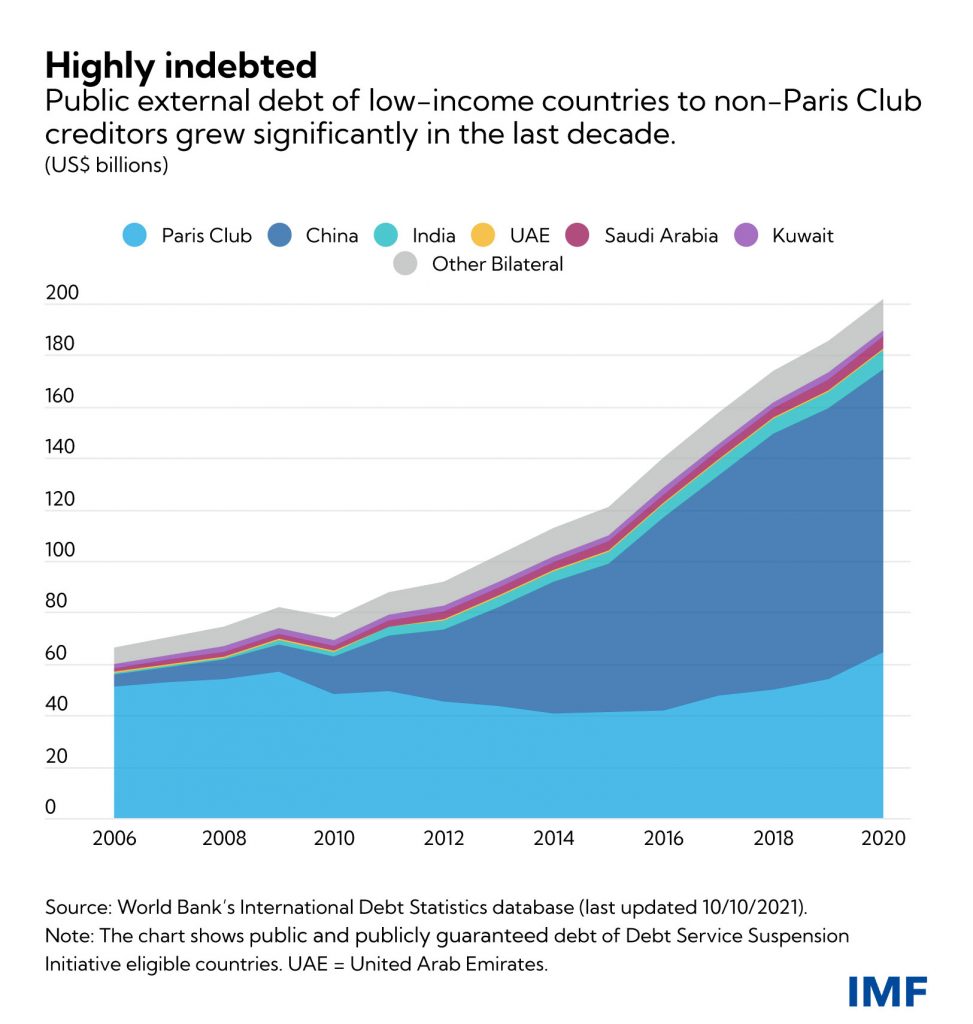
The Common Framework is intended to deal with insolvency and protracted liquidity problems, along with the implementation of an IMF-supported reform program. G20 official creditors—both traditional “Paris Club” creditors, such as France and the United States, and new creditors, such as China and India, which, as shown in the chart below, overtook the Paris Club as lenders in the last decade—agreed to coordinate to provide debt relief consistent with the debtor’s capacity to pay and maintain essential spending needs. The Common Framework requires private creditors to participate on comparable terms to overcome collective action challenges and ensure fair burden sharing.

But so far, only three countries—Chad, Ethiopia, and Zambia—have made requests for debt relief under the Common Framework. And each case has experienced significant delays.
In part, these delays reflect the problems that motivated the creation of the Common Framework in the first place. These include coordinating Paris Club and other creditors, as well as multiple government institutions and agencies within creditor countries, which can slow down decisions. The Common Framework aims to mitigate these problems but does not eliminate them. New creditors, including relevant domestic institutions, need to gain comfort with restructuring processes that would allow all creditors to work together in providing relief and enable the IMF to lend to countries facing debt difficulties. This takes time.
But there were also delays for reasons that have nothing to do with the Common Framework. To restore debt sustainability, Chad must restructure a large, collateralized obligation held by a private company, which is partly syndicated to a large number of banks and funds. This complicates the decision-making process. Domestic challenges slowed progress in Ethiopia and Zambia.
No time to waste
With policy space tightening for highly indebted countries, the framework can and must deliver more quickly.
First, greater clarity on the different steps and timelines in the Common Framework process is vital. Alongside earlier engagement of official creditors with the debtor and with private creditors, this would help accelerate decision making.
Second, a comprehensive and sustained debt service payment standstill for the duration of the negotiation would provide relief to the debtor at a time when it is under stress, as well as incentivize faster procedures to get to the actual debt restructuring.
Third, the Common Framework should clarify further how the comparability of treatment will be effectively enforced, including as needed through implementation of the IMF arrears policies, so as to give greater comfort to creditors and debtors.
Last but not least, the Common Framework should be expanded to other highly-indebted countries that can benefit from creditor coordination. Timely and orderly debt resolution is in the interest of both debtors and creditors.
Ensuring a success in the early cases will not only benefit the countries, but foster confidence in the Common Framework. In that regard, finalizing Chad’s restructuring quickly can serve as an essential precedent for other countries. In Ethiopia, the creditor committee should continue the technical work that will allow early provision of debt relief assurances once the situation stabilizes. In Zambia, G20 creditors should expeditiously form a committee of official creditors and begin engaging with the authorities and private creditors on debt relief, while also providing a temporary debt-service suspension for the duration of the debt-restructuring discussions. Otherwise, the country would be confronted with the impossible choice of cutting priority expenditures or piling up arrears.
Debt challenges are pressing and the need for action is urgent. The recent Omicron variant is a stark reminder that the pandemic will be with us for a while. Determined multilateral action is needed now to address vaccine inequality globally and also to support timely and orderly debt resolution. For its part, the IMF is ready to work with the World Bank and all our partners to help ensure the framework delivers for the people it was put in place to help.
Authors:

Kristalina Georgieva, Managing Director of the IMF

Ceyla Pazarbasioglu is Director of the Strategy, Policy, and Review Department (SPR) of the IMF

Compliments of the IMF.
The post IMF | The G20 Common Framework for Debt Treatments Must Be Stepped Up first appeared on European American Chamber of Commerce New York [EACCNY] | Your Partner for Transatlantic Business Resources.
EACC

EU and WTO members strike major deal to simplify trade in services

A group of 67 World Trade Organization (WTO) members, including the EU, have today concluded negotiations on a landmark agreement to cut red tape in services trade. The so-called Joint Initiative on Services Domestic Regulation will simplify unnecessarily complicated regulations and ease procedural hurdles faced by SMEs in particular. This agreement will help reduce the costs of global services trade by more than USD 150 billion every year.
This is the first WTO deliverable in the area of trade in services in a very long time. Good regulatory practices are crucial for the functioning of today’s economy. The clear rules on transparency and authorisation in the area of services agreed as part of this initiative will facilitate trade in services significantly. Especially for small and medium-sized enterprises who do not have the same resources and experience to cope with complex processes as do their larger competitors.
Moreover, the agreement will help the EU with regard to the digital agenda, since sectors such as telecommunications, computer services, engineering, and commercial banking stand to benefit from it. It is also the first time a WTO text includes a binding provision on non-discrimination between men and women.”
Executive Vice-President and Commissioner for Trade, Valdis Dombrovskis said: “This is a major achievement. Today’s agreement covers 90% of global trade in services and it will unlock billions of euros of growth thanks to clearer rules, more transparency and less red tape. This will help our SMEs in particular to thrive on the global stage. We have been at the forefront of this initiative, which is also a priority under our renewed EU trade strategy.”
Services represent the largest and fastest growing sector of today’s economy, but complicated rules and procedures have limited the amount of trade in services significantly. This initiative will align qualification requirements and procedures, technical standards, licensing requirements and procedures for services providers.
Next steps
The WTO members participating in this Initiative will make specific commitments by the end of 2022 to facilitate trade in services in their markets, for example by simplifying authorisation procedures or ensuring transparency. The adoption and implementation of the disciplines of the reference paper will reduce trade costs for service suppliers substantially and thus help the sector in its post-COVID-19 recovery. It is a sector where women entrepreneurs often play an important role. The reference paper recognises this role by ensuring non-discrimination between men and women in authorisation processes. This is the first rule of this kind in the WTO.
These new commitments will be included in each member’s so-called GATS Schedules. Every WTO member has such Schedules submitted to the WTO, which form the complete set of all the commitments WTO members make to allow foreign services suppliers in their markets. The new commitments made as part of this initiative will apply to service suppliers from any other WTO member, based on the so-called most favoured nation principle.
For More Information
Link to the declaration
Compliments of the European Commission.
The post EU and WTO members strike major deal to simplify trade in services first appeared on European American Chamber of Commerce New York [EACCNY] | Your Partner for Transatlantic Business Resources.

Read More
EACC

IMF | Addressing Inflation Pressures Amid an Enduring Pandemic

With inflationary pressures intensifying and Omicron generating new uncertainties, monetary policymakers are facing new and challenging tradeoffs.
The resurgence of the pandemic and the latest variant, Omicron, have sharply increased uncertainty around global economic prospects. This comes as several countries grapple with inflation well above their monetary policy targets. It is however evident that the strength of the economic recovery and magnitude of underlying inflationary pressures vary significantly across countries. Accordingly, policy responses to rising prices must be calibrated to the unique circumstances of individual economies.

‘Inflation is likely to be higher for longer than previously thought.’

We see grounds for monetary policy in the United States—with gross domestic product close to pre-pandemic trends, tight labor markets, and now broad-based inflationary pressures—to place greater weight on inflation risks as compared to some other advanced economies including the euro area. It would be appropriate for the Federal Reserve to accelerate the taper of asset purchases and bring forward the path for policy rate increases.
Over time, if inflationary pressures were to become broad-based in other countries, more may need to tighten earlier than currently expected. In this environment it is essential for major central banks to carefully communicate their policy actions so as not to trigger a market panic that would have deleterious effects not just at home but also abroad, especially on highly leveraged emerging and developing economies. Needless to say, given the extremely high uncertainty, including from Omicron, policymakers should remain agile, data-dependent, and ready to adjust course as needed.
The global inflation landscape
Rising energy and food prices have fueled higher inflation in many countries. These global factors may continue to add to inflation in 2022, especially high commodity food prices. This has particularly negative consequences for households in low-income countries where about 40 percent of consumption spending is on food.
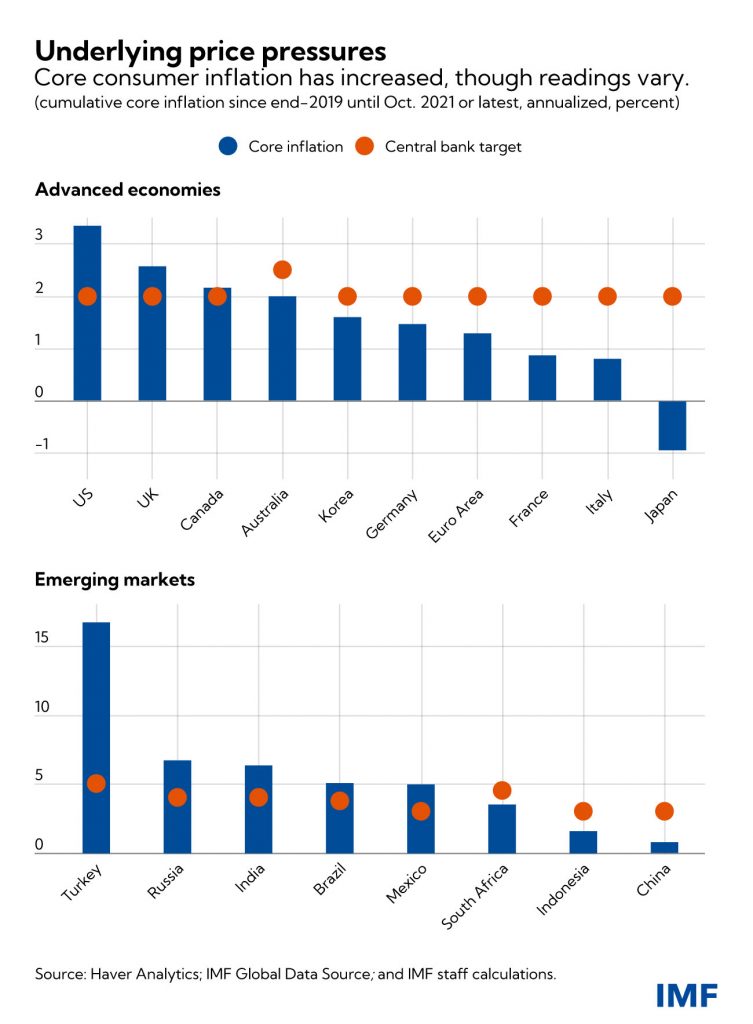
A measure of inflation which strips out volatile fuel and food inflation, so-called core consumer price inflation has also risen but exhibits significant variation across countries. Some of the increase in core inflation in countries reflects reversals of price falls in 2020, such as from the unwinding of VAT tax cuts in Germany. It therefore helps to focus on annualized cumulative inflation since pre-pandemic. By this measure, core inflation among advanced economies has risen most sharply in the United States, followed by the United Kingdom and Canada. In the euro area the increase is much less so. There are also limited signs of core inflationary pressures in Asia, including in China, Japan and Indonesia. Among emerging markets, core is dramatically elevated in Turkey.
Median inflation, a measure that is not affected by exceptionally large or small price changes in a few categories of goods and therefore conveys the breadth and likely persistence of price pressures, similarly varies across countries. The recent rise in median inflation for the United States to around 3 percent in October is also higher than for other Group of Seven countries.

While inflation is likely to remain elevated well into 2022 in several countries, measures of inflation expectations for the medium and long-term remain close to policy targets in most economies. This reflects, in addition to expectations of waning inflationary forces, that policy actions can bring inflation back to target.
In the United States, long-term inflation expectations have increased but remain close to historic averages and thus appear well-anchored. Euro area expectations have increased but from levels well below target to now close to it, which suggests long-term expectations may have become better anchored to the European Central Bank’s 2 percent objective. For Japan, inflation expectations remain well below the target.
For several emerging markets, including India, Indonesia, Russia, and South Africa, expectations show signs of being anchored. Exceptions include Turkey, where the risk of inflation expectations becoming unmoored is apparent as monetary policy is eased despite rising inflation.
Sources of price pressures
The rise in core inflation reflects multiple factors. Demand has rebounded strongly supported by exceptional fiscal and monetary measures, especially in advanced economies. In addition, supply disruptions caused by the pandemic and climate change, and a shift in spending toward goods over services have increased price pressures. Furthermore, wage pressures are apparent in some segments of labor markets. The United States has experienced a more prolonged reduction in labor-force participation relative to other advanced economies, further adding to wage and inflationary pressures.
We expect the mismatch in supply and demand to attenuate over time reducing some price pressures in countries. Under the baseline, shipping delays, delivery lags, and semiconductor shortages will likely improve in the second half of 2022. Aggregate demand should soften as fiscal measures come off in 2022.
That said, it’s important to keep in mind that economic activity has rebounded quickly in several countries, with the United States experiencing the fastest recovery among large, advanced economies. It is in such countries, where economic activity has rebounded more quickly to pre-pandemic trends, that core inflation has risen sharply relative to levels before the crisis. This relationship between recovery strength and core inflation, while far from perfect, suggests stronger underlying inflationary pressures in countries where demand has recovered the fastest.
Varied policy action
At the onset of the pandemic, policymakers around the world were synchronized in dramatically easing monetary policy and expanding fiscal policy. These actions helped prevent a global financial crisis, despite lockdowns and health shocks causing a historic recession. The confluence of very low inflation and weak demand provided a strong rationale for easy monetary policies.
Earlier this year, when inflation picked up sharply, it was driven by exceptionally high inflation in a few sectors such as energy and autos, much of which was expected to reverse by the end of the year as pandemic related disruptions declined. Central banks, with a long track record of keeping inflation low and stable could appropriately “look through” the runup in inflation and keep interest rates low to support the economic recovery.
However, risks of a further acceleration of inflation previously flagged in our global publications and country-specific reports are materializing, with supply disruptions and elevated demand lasting longer than expected. Inflation is likely to be higher for longer than previously thought, which means that real rates are even lower than before, implying an increasingly expansionary stance of monetary policy.
While we still anticipate that supply-demand imbalances will wane next year, a singular focus of monetary policy on supporting recovery may well fuel substantial and persistent inflationary pressures, with some risk of de-anchoring inflation expectations. Accordingly, in countries where economic recoveries are further along and inflationary pressures more acute it would be appropriate to accelerate the normalization of monetary policy.
Potentially challenging spillovers
The challenge of addressing large and persistent supply shocks is even greater for emerging market central banks. Given the greater risk to de-anchoring of inflation expectations relative to advanced economies, they see the need to get ahead of inflationary pressures and some—such as Brazil and Russia—have raised policy rates sharply. Such tightening comes amid large COVID-related output shortfalls and could further depress output and employment. Emerging markets face potentially challenging spillovers if tightening by advanced economies causes capital outflows and exchange rate pressures that could require them to tighten even more.
Lastly, there remains tremendous uncertainty around the evolution of the pandemic and on its economic consequences. A variant that significantly reduces vaccine efficacy could lead to further supply chain disruptions and contractions in labor supply pushing up inflationary pressures, while lower demand could have opposing effects. The sharp fall in oil prices following the discovery of Omicron and the rapid imposition of travel restrictions by countries is a sign of the volatility ahead.
In sum, policymakers must carefully calibrate their response to incoming data. Varying inflation conditions and strength of recoveries across countries show why the policy response needs to be tailored to country specific circumstances, given sharply higher uncertainty associated with Omicron. Clear central bank communication, too, is key to fostering a durable global recovery.
As we warned in recent reports such as the World Economic Outlook, a more frontloaded Fed response to dampen inflation risks could result in market volatility and create difficulties elsewhere—especially in emerging and developing economies. To avoid that, policy shifts need to be telegraphed well, as has so far been the case. Emerging market and developing economies should also prepare for increases in advanced economy interest rates through debt maturity extensions where feasible, thereby reducing their rollover needs, and regulators should also focus on limiting the buildup of currency mismatches on balance sheets.
Authors:

Tobias Adrian is the Financial Counsellor and Director of the IMF’s Monetary and Capital Markets Department

Gita Gopinath is the Chief Economist of the International Monetary Fund

Compliments of the IMF.
The post IMF | Addressing Inflation Pressures Amid an Enduring Pandemic first appeared on European American Chamber of Commerce New York [EACCNY] | Your Partner for Transatlantic Business Resources.

EACC

Modernising judicial cooperation: EU Commission paves the way for further digitalisation of EU justice systems

Today, the European Commission has adopted several initiatives to digitalise EU justice systems, making them more accessible and effective. The overarching aim of the measures is to make digital communication channels the default channel in cross-border judicial cases, thus translating one of the priorities set out in last year’s Communication on the Digitalisation of Justice into action.
In the EU’s internal market today, many legal disputes between citizens and businesses take place across borders. Also, to fight cross-border crime more effectively, different Member States and judicial systems need to work hand in hand. Investigative authorities and courts of different Member States need to cooperate and support each other in the investigation and prosecution of crimes and exchange information and evidence securely and swiftly.
Věra Jourová, Vice-President for Values and Transparency, said: “Crime does not stop at a border; neither should justice. Today’s proposals will help prosecutors and judges to cooperate faster and more effectively. We must make the best use of digital technologies to provide judicial authorities, citizens and businesses with swift and secure means of exchange of information. This is key for easier and faster access to justice.”
Didier Reynders, Commissioner for Justice, said: “Effective and quality justice systems require effective tools. We already have many instruments to facilitate EU cross-border judicial cooperation. However, not all of them are up-to-date and we urgently need to modernise them. Justice systems also need to be more resilient to crises. Courts should be able to function in all circumstances. This is a principle of rule of law. Equipping justice systems with the appropriate tools can support this objective.  Today, we are delivering on the Commission’s ambitions for creating a truly efficient and resilient European area of freedom, security and justice.”
Digitalisation of EU justice systems
The Commission has adopted the following initiatives today:
Digitalisation of cross-border judicial cooperation
The proposals on digitalisation of EU cross-border judicial cooperation and access to justice in civil, commercial and criminal matters will address two main problems: inefficiencies affecting cross-border judicial cooperation and barriers to access to justice in cross-border civil, commercial and criminal cases.
This Regulation will:

Enable parties to communicate with competent authorities electronically or to initiate legal proceedings against a party from another Member States.

Allow the use of videoconferencing in oral hearings in cross-border civil, commercial and criminal matters, which will result in speedier proceedings and less traveling.
Ensure the possibility of digital transfer of requests, documents and data between national authorities and courts.

Shifting communications, which are still exclusively paper-based today, to the electronic channel would not only have a positive environmental impact, but it would also save time, as well as up to approximately €25 million per year across the entire EU in postage and paper costs.
Digital information exchange in terrorism cases
There will be two proposals to effectively fight terrorism and other forms of serious cross-border crime. Currently Member States send information on judicial cases related to terrorism to Eurojust via various, often unsecure channels, for example via emails or CD-ROMs. In addition, Eurojust has an outdated information system, which is not able to crosscheck information properly. The initiative’s objective is to modernise these practices.
The Regulation will:

Digitalise the communication between Eurojust and the Member States’ authorities and provide secure communication channels.

Enable Eurojust to effectively identify links between prior and ongoing cross-border terrorism cases and other forms of serious cross-border crimes.
Based on the identification of such links, Member States will be able to coordinate their investigation measures and judicial responses.

Development of the JITs Collaboration Platform
This is a proposal for a establishing a collaboration platform for Joint Investigation Teams (JITs). These teams are set up for specific criminal investigations by two or more States. Although these teams have proven to be successful, practice shows that they face several technical difficulties. Exchanges are currently overly slow and burdensome. A dedicated IT platform would allow JITs to more easily share information and evidence and to more safely communicate with each other so that they can jointly manage their operations.
Next steps
The European Parliament and the Council of Ministers of the EU will now negotiate the Commission’s proposals.
Background
In December 2020, the Commission adopted initiatives to modernise the EU Justice Systems, proposing a set of measures towards furthering the digitalisation at both the national and EU level. The two main pillars of this package were the Communication on the digitalisation of justice in the EU, and the Strategy on European judicial training. This digital justice toolbox aimed at further supporting Member States to move ahead their national justice systems towards the digital era and at improving EU cross-border judicial cooperation between competent authorities.
Today’s initiatives are a follow-up to last year’s Communication. The measures aim to digitalise interactions between justice related authorities, harnessing the efficiency of the modern communication tools where civil and criminal procedures, combating terrorism and investigations in general, require it.
Compliments of the European Commission.
The post Modernising judicial cooperation: EU Commission paves the way for further digitalisation of EU justice systems first appeared on European American Chamber of Commerce New York [EACCNY] | Your Partner for Transatlantic Business Resources.

EACC

Global Gateway: up to €300 billion for the European Union’s strategy to boost sustainable links around the world

Today, the European Commission and the High Representative for Foreign Affairs and Security Policy launch the Global Gateway, the new European Strategy to boost smart, clean and secure links in digital, energy and transport and strengthen health, education and research systems across the world. It stands for sustainable and trusted connections that work for people and the planet, to tackle the most pressing global challenges, from climate change and protecting the environment, to improving health security and boosting competitiveness and global supply chains. Global Gateway aims to mobilise up to €300 billion in investments between 2021 and 2027 to underpin a lasting global recovery, taking into account our partners needs and EU’s own interests.
President of the European Commission, Ursula von der Leyen, said: “COVID-19 has shown how interconnected the world we live in is. As part of our global recovery, we want to redesign how we connect the world to build forward better. The European model is about investing in both hard and soft infrastructure, in sustainable investments in digital, climate and energy, transport, health, education and research, as well as in an enabling environment guaranteeing a level playing field. We will support smart investments in quality infrastructure, respecting the highest social and environmental standards, in line with the EU’s democratic values and international norms and standards. The Global Gateway Strategy is a template for how Europe can build more resilient connections with the world.”
High Representative/Vice-President, Josep Borrell, said: “Connections across key sectors help to build shared communities of interest and reinforce the resilience of our supply chains. A stronger Europe in the world means a resolute engagement with our partners, firmly grounded in our core principles. With the Global Gateway Strategy we are reaffirming our vision of boosting a network of connections, which must be based on internationally accepted standards, rules and regulations in order to provide a level-playing field.”
The EU has a long track record as a trusted partner to deliver sustainable and high quality projects, taking into account the needs of our partner countries and ensure lasting benefits for local communities, as well as the strategic interests of the European Union.
Global Gateway is about increasing investments promoting democratic values and high standards, good governance and transparency, equal partnerships, green and clean, secure infrastructures and that catalyse private sector investment.
Through a Team Europe approach, Global Gateway will bring together the EU, Member States with their financial and development institutions, including the European Investment Bank (EIB), and the European Bank for Reconstruction and Development (EBRD) and seek to mobilise the private sector in order to leverage investments for a transformational impact. The EU Delegations around the world, working with Team Europe on the ground, will play a key role to identify and coordinate Global Gateway projects in partner countries.
Global Gateway draws on the new financial tools in the EU multi-annual financial framework 2021-2027. The Neighbourhood, Development and International Cooperation Instrument (NDICI)-Global Europe, the Instrument for Pre-Accession Assistance (IPA) III, as well as Interreg, InvestEU and the EU research and innovation programme Horizon Europe; all allow the EU to leverage public and private investments in priority areas, including connectivity. In particular, the European Fund for Sustainable Development+ (EFSD+), the financial arm of NDICI-Global Europe will make available up to €135 billion for guaranteed investments for infrastructure projects between 2021 and 2027 up to €18 billion will be made available in grant funding from the EU budget and European financial and development finance institutions have up to €145 billion in planned investment volumes.
Further adding to its financial tool kit, the EU is exploring the possibility of establishing a European Export Credit Facility to complement the existing export credit arrangements at Member State level and increase the EU’s overall firepower in this area. The Facility would help ensure a greater level playing field for EU businesses in third country markets, where they increasingly have to compete with foreign competitors that receive large support from their governments, and thus facilitate their participation in infrastructure projects.
The EU will offer not only solid financial conditions for partners, bringing grants, favourable loans, and budgetary guarantees to de-risk investments and improve debt sustainability – but also promote the highest environmental, social and strategic management standards. The EU will provide technical assistance to partners to enhance their capacity to prepare credible projects ensuring value for money in infrastructure.
Global Gateway will invest in international stability and cooperation and demonstrate how democratic values offer certainty and fairness for investors, sustainability for partners and long-term benefits for people around the world.
This is Europe’s contribution to narrowing the global investment gap, that requires a concerted effort in line with the June 2021 commitment of the G7 Leaders to launch a values-driven, high-standard, and transparent infrastructure partnership to meet global infrastructure development needs.
The EU is committed to working with like-minded partners to promote sustainable connectivity investments. Global Gateway and the US initiative Build Back Better World will mutually reinforce each other. This commitment to working together was reaffirmed at COP26, the 2021 United Nations Climate Change Conference, where the EU and the United States brought together like-minded partners to express their shared commitment to addressing climate crisis through infrastructure development that is clean, resilient and consistent with a net-zero future.
Global Gateway builds on the achievements of the 2018 EU-Asia Connectivity Strategy, the recently concluded Connectivity Partnerships with Japan and India, as well as the Economic and Investment Plans for the Western Balkans, the Eastern Partnership, and the Southern Neighbourhood. It is fully aligned with the UN’s 2030 Agenda and its Sustainable Development Goals (SDGs) and the Paris Agreement.
Next steps
Global Gateway projects will be developed and delivered through Team Europe Initiatives. The EU institutions, Member States, and European financial institutions will work together with European businesses as well as governments, civil society and the private sector in partner countries.
Under the overall steer of the President of the Commission, the High Representative/Vice-President of the Commission, the Commissioners for International Partnerships and Neighbourhood and Enlargement will take forward the implementation of Global Gateway, and promote coordination among all actors.
Members of the College said
Commissioner for International Partnerships, Jutta Urpilainen, stated: “The Global Gateway Strategy is Europe’s offer to build partnerships of equals, which reflect Europe’s long-term commitment to the sustainable recovery in each of our partner countries. With the Global Gateway we want to create strong and sustainable links, not dependencies- between Europe and the world and build a new future for young people.”
Commissioner for Neighbourhood and Enlargement, Olivér Várhelyi, added: “Global connectivity for the EU starts with its neighbourhood. The Economic and Investment Plans we have recently launched for the Western Balkans, the Eastern and Southern Neighbourhood are all built around connectivity. Connectivity with Europe, connectivity within these regions. Developed in close cooperation with our partners, these Plans will start to deliver the Global Gateway Strategy in our neighbouring regions still within the mandate of this Commission.”
Compliments of the European Commission.
The post Global Gateway: up to €300 billion for the European Union’s strategy to boost sustainable links around the world first appeared on European American Chamber of Commerce New York [EACCNY] | Your Partner for Transatlantic Business Resources.

Read More
EACC

FSB | Good Practices for Crisis Management Groups (CMGs)

Crisis Management Groups (CMGs) of Global Systemically Important Banks (G-SIBs) have been in place for over 10 years as a core part of the post global financial crisis coordination infrastructure.

This report sets out good practices that have helped CMGs to enhance their preparedness for the management and resolution of a cross-border financial crisis affecting a Global Systemically Important Bank (G-SIB) as per the FSB Key Attributes. It draws on a stocktake carried out by the FSB in 2020 and CMG members’ experience during the COVID-19 pandemic.
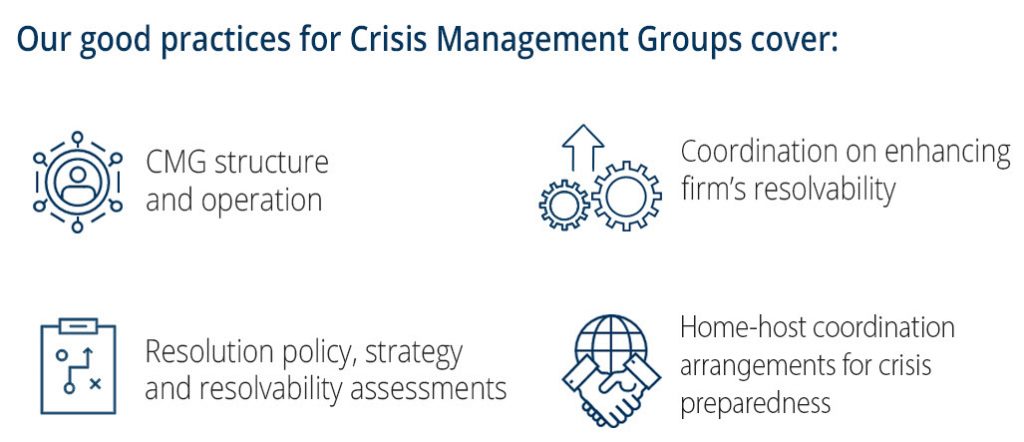
The focus is on CMG activities that seek to enhance crisis preparedness rather than on cooperation during a actual itself. The good practices identified in this report are organised along 16  desired outcomes that CMGs seek to achieve and relate to:

the structure and operation of CMGs;
resolution policy, strategy and resolvability assessments;
coordination on enhancing firm’s resolvability; and
enhancing home-host coordination arrangements for crisis preparedness.

A shared understanding of these practices can help lean against fragmented approaches and help to enhance the effectiveness of CMGs.. While many of these practices have been well established, others are emerging or developing.
As CMGs continue to evolve, the FSB will continue to monitor the development of their practices and consider any future work to promote consistency and effective operation of CMGs.
Compliments of the Financial Stability Board.
The post FSB | Good Practices for Crisis Management Groups (CMGs) first appeared on European American Chamber of Commerce New York [EACCNY] | Your Partner for Transatlantic Business Resources.

EACC

FSB Statement to Support Preparations for LIBOR Cessation

Completion of the steps laid out in the FSB’s Global Transition Roadmap is now critical and market participants need to act urgently to ensure they are fully prepared for LIBOR cessation by the end of this year.
Most LIBOR panels will cease at the end of this year, with certain key USD settings continuing until end-June 2023 to support the rundown of legacy contracts, executed before January 1 2022, only.
Continued reliance of global financial markets on LIBOR poses risks to global financial stability. With only a few weeks remaining to the end of 2021, it is now critical that market participants act urgently to complete any remaining steps set out in the FSB’s Global Transition Roadmap, with global and national financial regulators closely monitoring progress. The FSB emphasises that the continuation of some key USD LIBOR tenors through to 30 June 2023 is intended only to allow legacy contracts to mature, as opposed to supporting new USD LIBOR activity.
The key points covered in the statement are as follows:

Significant progress has been made in transitioning to Risk-Free Rates (RFRs), but market participants still need to finalise preparations to cease new use of LIBOR by end-2021.
Transition should be primarily to overnight RFRs, the most robust benchmarks available, to avoid reintroducing the weaknesses of LIBOR.
Active transition of legacy contracts remains the best way for market participants to have control and certainty over their existing arrangements.

The report notes that the FSB will continue to monitor the final steps in completing LIBOR transition over the coming months. Post end-2021, the FSB will monitor the effort to continue reducing the stock of legacy contracts which are using synthetic LIBOR rates, any continuing new issuance of USD LIBOR contracts post end-2021, and the size and resolution of legacy contracts referencing USD LIBOR that are due to mature after end-June 2023. The FSB will review these issues in mid-2022 and assess the implications for any further supervisory and regulatory cooperation that may be required.
Compliments of the Financial Stability Board.
The post FSB Statement to Support Preparations for LIBOR Cessation first appeared on European American Chamber of Commerce New York [EACCNY] | Your Partner for Transatlantic Business Resources.

Read More
EACC

IMF | Global Financial Safety Net—A Lifeline for an Uncertain World

When economic crises hit, such as the one caused by the pandemic, countries have a number of financial resources—both internal and external—to draw on. The global financial safety net is a set of institutions and mechanisms that provide insurance against crises and financing to mitigate their impact.
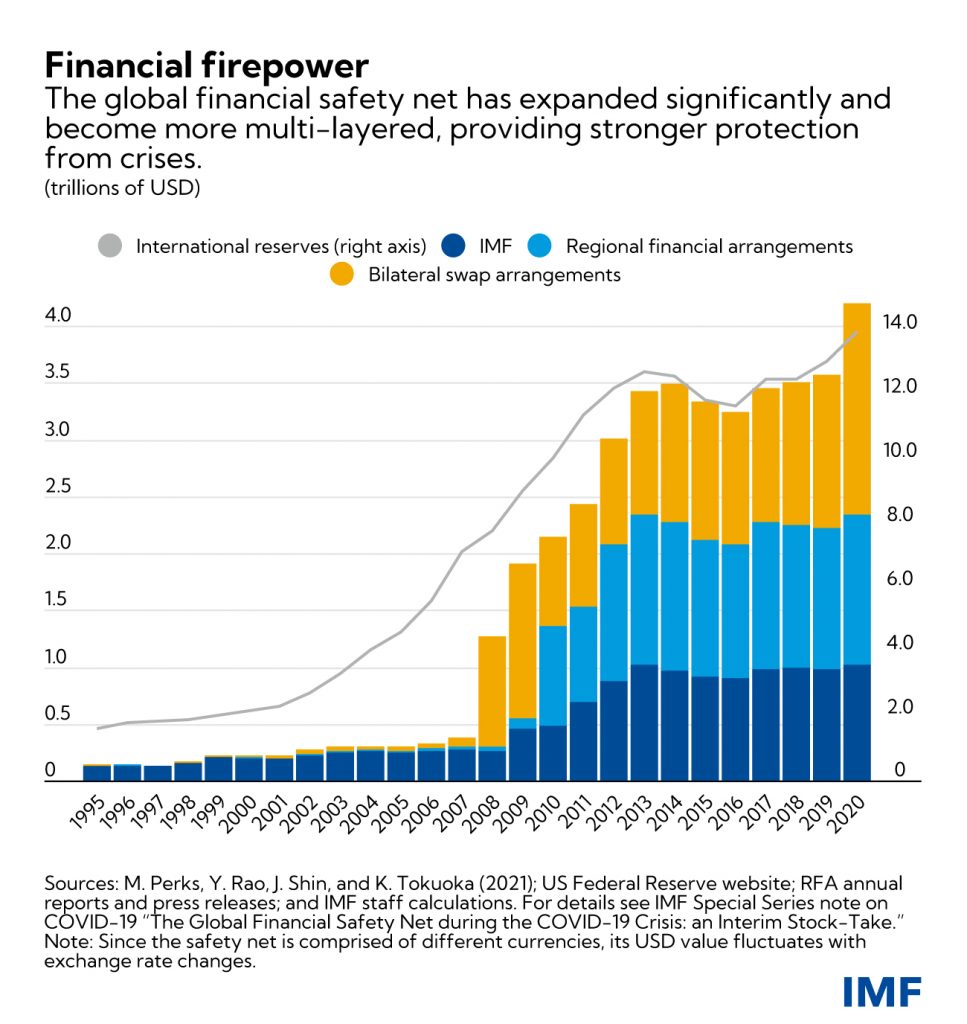
This safety net has four main layers: countries’ own international reserves; bilateral swap arrangements whereby central banks exchange currencies to provide liquidity to financial markets; regional financial arrangements by which countries pool resources to leverage financing in a crisis; and the IMF.
As our chart of the week shows, this global financial safety net has expanded significantly in the past decade and its sources have become more diverse.
The chart, drawn from the recent IMF Special Series on COVID-19, shows that since the global financial crisis, the total stock of international reserve holdings more than doubled, reaching about $14 trillion by end-2020. Other layers of the safety net increased about tenfold, to about $4 trillion.
This increase reflects the expansion of the bilateral swap arrangements during the global financial crisis and the recent pandemic, as well as the establishment of new regional financial arrangements, especially in Europe (e.g., the European Stability Mechanism) and in South East Asia (the Chiang Mai Initiative Multilateralization). The IMF also more than doubled available resources in the aftermath of the global financial crisis.
This reinforced insurance helped effectively cushion the shock during the first year of the COVID-19 crisis. The increased bilateral swap arrangements, primarily the US Federal Reserve swaps, provided prompt liquidity support, helping to stabilize the global financial markets and capital flows to emerging market economies.
Financing from the regional financing arrangements remained low, as demand was contained by supportive macroeconomic policies in advanced economies, and timely financing from other global financial safety net sources.
For its part, the IMF remained the linchpin of the safety net, approving debt service relief and providing financial assistance to an unprecedented number of countries, including low-income and emerging market economies that did not benefit from bilateral or regional arrangements.
As countries continue to grapple with the fallout from the pandemic and face increased risks of tighter financial conditions, the continued use of the global financial safety net will likely be needed until the crisis is over.
Authors:

Alina Iancu is the mission chief for Bosnia and Herzegovina and Deputy Unit Chief in the European Department

Seunghwan Kim  is an economist in the Strategy, Policy, and Review Department of the IMF

Alexei Miksjuk is an economist in the Strategy, Policy, and Review Department

Compliments of the IMF.
The post IMF | Global Financial Safety Net—A Lifeline for an Uncertain World first appeared on European American Chamber of Commerce New York [EACCNY] | Your Partner for Transatlantic Business Resources.