EACC

European Commission | Spring 2026 Economic Forecast Shows Slowdown in Growth as Energy Shock Drives up Inflation

The Spring 2026 Economic Forecast projects weaker economic activity, as the conflict in the Middle East triggers a new energy shock that reignites inflation and shakes economic sentiment.
Before the end of February 2026, the EU economy was set to keep expanding at a moderate pace alongside a further decline in inflation, but the outlook has changed substantially since the outbreak of the conflict. Inflation started picking up a few weeks after the outbreak of the conflict, driven by the sharp increase in energy commodity prices, and economic activity is losing momentum. The situation is set to improve slightly in 2027 if tensions on energy markets ease.
After reaching 1.5% in 2025, GDP growth in the EU is now projected to slow down to 1.1% in 2026—a downward revision of 0.3 percentage points from the Autumn 2025 Economic Forecast projection (1.4%). GDP growth is then set to edge up to 1.4% in 2027. Growth projections for the euro area are similarly revised down, to 0.9% in 2026 and 1.2% in 2027, from 1.2% and 1.4% respectively. Inflation in the EU is expected to reach 3.1% in 2026—a full percentage point higher than previously forecast—easing again to 2.4% in 2027. In the euro area, inflation is also revised up to 3.0% in 2026 and to 2.3% in 2027, compared to the autumn projections of 1.9% and 2.0% respectively.
EU economy to keep growing, but at a slower pace
As a net energy importer, the EU’s economy is highly susceptible to the energy shock caused by the conflict in the Middle East—the second such shock in less than five years. The spike in energy prices means higher household bills and surging business costs that reduce profits for many industries, effectively redirecting income out of the EU economy and into energy-exporting countries.
The onset of the conflict saw consumer confidence drop to a 40-month low, amid mounting fears of surging inflation and job losses. Still, consumption is expected to remain the main driver of growth. Business investment is also set to be constrained by tighter financing conditions, lower profits and heightened uncertainty.  Weaker external demand is also weighing on export growth.
The EU’s investment in energy resilience, especially in the aftermath of Russia’s full-scale invasion of Ukraine, is paying off. The push towards supply diversification, decarbonisation, and lower energy consumption has left the EU economy better placed to absorb today’s shock.
Inflation set to rise, driven by energy prices
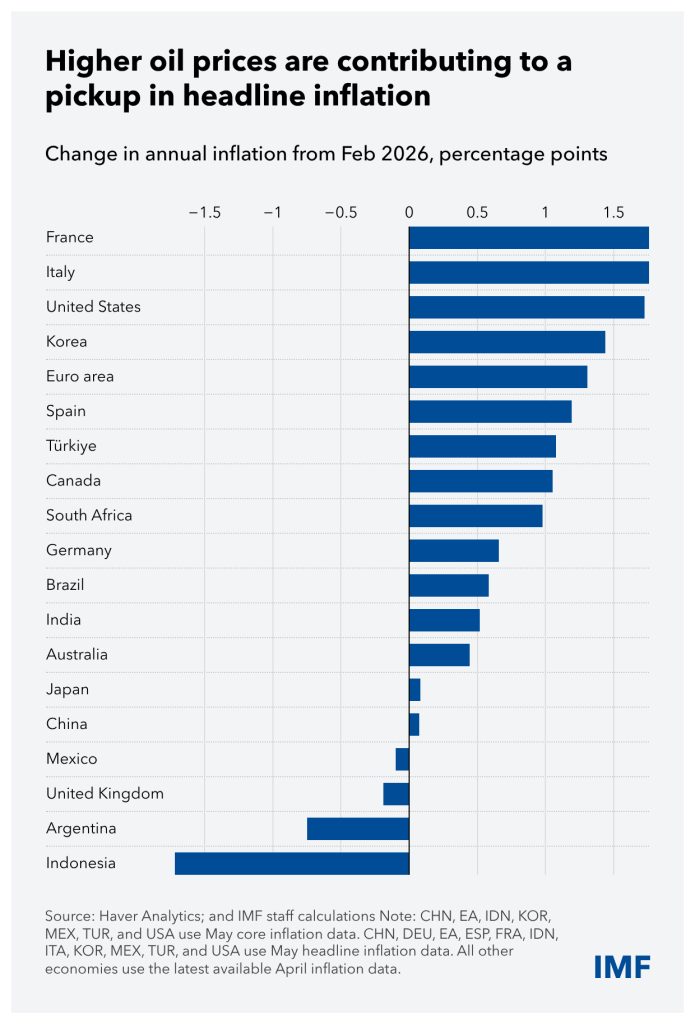
The short-term inflation outlook has deteriorated since the Autumn 2025 Forecast, with data from March and April already showing a sharp acceleration driven by energy prices. Headline inflation is now set to peak in 2026 before easing in 2027, as energy commodity prices are expected to gradually decline, albeit remaining around 20% above pre-war levels.
Long-term decline in unemployment rate coming to an end
In 2025, employment grew by 0.5%, adding more than 1 million jobs to the EU economy. In 2026, employment growth is forecast to slow down to 0.3%, edging up again to 0.4% in 2027. The long-term decline in the unemployment rate is set to come to an end, stabilising at around 6% in 2027. Nominal wage growthis set to remain strong, as wages adjust to higher inflation.
Energy shock adds new burden to public finances
General government deficit in the EU is expected to increase from 3.1% of GDP in 2025 to 3.6% by 2027, reflecting subdued economic activity, higher interest expenditure, measures to cushion the impact of higher energy prices on vulnerable households and firms, and increased defence spending. Public investment in the EU is set to stabilise at high levels in 2027, despite the end of Recovery and Resilience Facility disbursements.
The EU debt-to-GDP ratio is also projected to rise from 82.8% in 2025 to 84.2% in 2026 and 85.3% in 2027.In the euro area the ratio is set to rise from 88.7% in 2025 to 90.2% and 91.2% in 2026 and 2027 respectively. This reflects higher primary deficits and an increasingly unfavourable interest-growth differential. By 2027, four Member States are expected to have debt ratios above 100% of GDP.
Continued supply tensions weigh on the outlook
The major risk surrounding the forecast concerns the duration of the conflict in the Middle East and its implications for global energy markets. Given the unusually high degree of uncertainty—and the narrowing window for a rapid normalisation of supply conditions—the baseline forecast is complemented by an alternative scenario assuming more prolonged disruptions. Under this scenario, energy commodity prices are assumed to rise significantly above baseline futures curves, peaking in late 2026 before gradually realigning with them by the end of 2027. Under this scenario, inflation would not ease and economic activity would fail to rebound in 2027 as projected in the baseline forecast. In addition, higher prices could prompt households and firms to scale back consumption and investment more sharply.
Moreover, outright supply shortages for specific commodities and inputs, for example some refined oil products, helium and fertilisers, could intensify with knock-on effects for global production chains and food affordability.
The ongoing softening of labour demand—as evidenced by declining job vacancies and hiring rates—could signal a more adverse impact on employment growth ahead.
Continued uncertainty surrounding global trade policies and the ongoing reconfiguration of geopolitical and trade relationships could further weigh on confidence and activity.
Faster implementation of structural reforms addressing long-standing bottlenecks to EU growth remains an important upside risk to the outlook. Strong public investment in sectors such as defence and the energy transition may offset some of the weakness expected in the private sector. Artificial intelligence represents both opportunity and risk: productivity gains could support investment in the EU, while labour market disruption could weigh on demand.
Background
This forecast is based on technical assumptions for exchange rates, interest rates and commodity prices, with a cut-off date of 29 April. For all other incoming data, including about government policies, this forecast incorporates information up until, and including, 4 May. The projections assume no policy changes unless measures are adopted or credibly announced and specified in sufficient detail. The forecast includes two special issues on the reduction of energy use in the EU over the past three decades and on the AI adoption divide. Through a number of boxes, it also analyses the macroeconomic policy responses to energy shocks, manufacturers’ strategies to trade tensions and disruptions, the ongoing easing of labour markets, gas-electricity price linkages, and national fiscal policy measures to address the 2026 energy price shock.
The European Commission publishes two comprehensive forecasts (spring and autumn) each year, covering a broad range of economic indicators for all EU Member States, candidate countries, EFTA countries and other major advanced and emerging market economies.
The European Commission’s Autumn 2026 Economic Forecast will update the projections in this publication and is expected to be presented in November 2026.
 
 
Compliments of the European CommissionThe post European Commission | Spring 2026 Economic Forecast Shows Slowdown in Growth as Energy Shock Drives up Inflation first appeared on European American Chamber of Commerce New York [EACCNY] | Your Partner for Transatlantic Business Resources.

EACC

OECD | GDP growth in the OECD Area Picks up Moderately in the First Quarter of 2026

Corrigendum: In the OECD GDP release published on 21 May 2026, the quarter-on-quarter growth for Italy in the first quarter of 2026 is 0.2%, and not 0.1% as initially published in the last sentence of the second paragraph.
GDP (Gross Domestic Product) growth in the OECD area increased slightly to 0.4% in Q1 2026, up from 0.2% in the previous quarter, according to provisional estimates (Figure 1). This reflects a mixed picture across the 28 OECD countries for which data was available. In Q1 2026, twenty countries recorded growth, but at varying rates, while two saw no change in GDP and six experienced a contraction.
Looking at G7 countries, growth accelerated in the United Kingdom and the United States, from 0.2% and 0.1% in Q4 to 0.6% and 0.5% in Q1, respectively. The acceleration in the United Kingdom mainly reflected increases in private and government consumption, while in the United States, rebounds in government consumption and exports as well as increased investment supported economic growth. Growth also increased in Japan, from 0.2% in Q4 to 0.5% in Q1, and more marginally in Germany, from 0.2% to 0.3%. In Canada, growth rebounded to 0.4% after a contraction of 0.2% in the previous quarter. By contrast, France recorded no growth in Q1 after expanding by 0.2% in the previous quarter, as decreases in private consumption, investment and exports weighed on economic activity. Growth slowed in Italy from 0.3% in Q4 to 0.2% in Q1 as domestic demand1 decreased.
Among other OECD countries for which data was available, Korea recorded the highest quarter-on-quarter growth rate in Q1 (1.7%), followed by Finland (0.9%) and Hungary and Switzerland (0.8% in both countries). In contrast, Ireland continued to show the largest contraction (-2.0%), followed by Israel and Mexico (-0.8% in both countries).
Year-on-year, OECD GDP growth increased slightly in Q1 compared with Q4, from 1.7% to 1.8% (Table 2). Among G7 economies, the United States recorded the highest annual increase (2.7%), while Germany recorded the lowest (0.3%).
Click here to see the interactive chart.
 
Note:

Domestic demand covers private and government consumption and investment.

 
Compliments of the Organisation for Economic Co-operation and DevelopmentThe post OECD | GDP growth in the OECD Area Picks up Moderately in the First Quarter of 2026 first appeared on European American Chamber of Commerce New York [EACCNY] | Your Partner for Transatlantic Business Resources.

EACC

IMF | Responding to the Energy and Food Price Shock: Getting the Policy Details Right

Blog | Governments can protect vulnerable households, keep businesses open, and preserve price signals without straining public finances.
When global energy prices spike, governments face an unenviable dilemma: shield people and businesses while straining already reduced room in public budgets—or let prices rise for everyone and risk social and political backlash. So, how can policymakers do the best of both?
To be sure, there is no one-size-fits-all response because the impact of the war in the Middle East differs widely across countries, reflecting varied energy dependence, market structures, social protection policies, and fiscal space. Likewise, some countries are more affected than others by the high uncertainty about how long the shock will last and how much it will fuel inflation.
Sustained energy price surges can sharply reduce household purchasing power, which hurts poorer families most and strains businesses. If unaddressed, this can cause lasting damage by pushing more people into poverty and forcing businesses to shut down.
Many countries are already responding, but the challenge is doing so efficiently and without further hurting economies. Measures not designed thoughtfully can be fiscally costly and difficult to unwind. They can also fuel additional inflation, worsen fiscal fragilities, or increase further global energy prices.
To do so, it is important to keep in mind a common set of principles. The energy crisis is a standard negative supply shock—pushing prices up, weighing on activity and putting central banks in a tough spot. Fiscal measures have a role to play, but they need to be temporary, targeted, timely, and tailored. Specifically, they should:

Let domestic energy prices reflect international costs.
Shield vulnerable households with targeted, temporary support.
Support viable small businesses with liquidity, not price controls.
Reserve generalized subsidies and price caps for truly exceptional shocks.

These priorities were outlined in our April 2026 World Economic Outlook and Fiscal Monitor reports, in which we also emphasized the uneven impact within countries.

Persistence and prices
One of the most important questions is how long the shock lasts. If it’s within historical ranges, even if large, governments should let domestic prices adjust to international market conditions. Fiscal policy should rely mainly on automatic stabilizers, with revenue taking a hit as activity declines, while expenditures meet increased need for existing social assistance. For economies that rely on imported energy, higher import prices imply a drop in real income (by as much as 2 to 3 percent of gross domestic product over a short period under the current shock). This must be absorbed through lower domestic demand.
When price shocks are unusually large or disruptive, but likely to be temporary, governments may have a case for more active fiscal policy—only if they can afford it. Even then, most of the price increases should be passed through upfront, with any intervention aimed at smoothing the adjustment rather than preventing it.
Price signals play a major role in allocating scarce resources, encouraging efficient use, and preventing shortages. At the same time, higher energy prices can immediately have severe effects, and these are felt differently by individuals and businesses. That means the goals of fiscal support, and the tools to deliver it, should reflect this distinction.

Protecting people
Poorer families typically spend two or three times as much of their income on energy and food compared with wealthier households, while they don’t have as much in savings. Protecting them is important to preserving social cohesion and avoiding a surge in poverty.
Targeted cash transfers, ideally delivered through existing social assistance systems, are generally the best way to do so because they preserve price signals and limit fiscal costs. If coverage is insufficient, governments can temporarily top up payments or widen eligibility, including to lower‑ and middle‑income households that are at risk of falling into poverty.
For very large but temporary shocks, additional measures may include one‑time rebates or spreading price increases over time, helping households cope without freezing prices outright. As a last resort, if food security is at risk and safety nets aren’t sufficient, temporary reductions in taxes or subsidies for stable foods may be appropriate if accompanied by a clear and credible timeline for ending them.
Supporting businesses
For firms, support serves a different aim: keeping viable enterprises operating and avoiding unnecessary bankruptcies. It should address short‑term cash‑flow problems, not deeper viability issues, and be focused on otherwise sound or strategically important businesses, especially in industries where higher costs quickly raise consumer prices.
Temporary liquidity support—such as government‑guaranteed loans, credit lines, or short‑term tax and social security deferrals—should be the first line of response. That’s because these tools are fiscally less costly and easier to undo. Direct grants or equity injections are best avoided, given their high fiscal cost and political difficulty to reverse.
Exceptional use
Some policy tools are broader and more distortionary. Energy-tax cuts, price caps, or general subsidies mute the important signals from prices, usually benefit higher‑income households more, and are hard to phase out. They can also quickly escalate government budget costs and raise the risk of shortages, especially if suppliers are not adequately compensated.
Broad measures to address rising prices may be justified if a group of specific conditions hold simultaneously:

The price shock is clearly temporary.
Higher energy prices are quickly feeding into broader inflation.
Inflation expectations are at risk of becoming uncontrolled.
Economic overheating is limited.
Public finances have room to absorb the cost.

These conditions are hard to gauge in real time and, in any case, broad price controls have major spillovers. That’s why use of broad price tools should ideally be avoided, and if used, should be exceptional, temporary, transparent, and tightly circumscribed. Governments must weigh trade‑offs carefully. For example, price caps are easier to phase out but can drive shortages. Tax cuts pose fewer supply risks but are harder to stop and may cause persistent revenue losses. As a rule, full price freezes should be avoided.
Fiscal constraints
Fiscal space varies widely across countries and is now generally tighter than in past crises because of higher debt and borrowing costs. This strengthens the case for incremental and carefully calibrated responses. In countries where fiscal space is available, governments may have some scope to smooth severe but temporary price increases with targeted, transparent, and temporary measures.
Countries with limited fiscal space and weak social safety nets are more constrained. Extreme situations in which price increases threaten food or energy access may warrant rationing to manage demand, but this has very high economic costs. This underscores why it’s important to avoid generalized subsidies that quickly exhaust scarce fiscal resources.
Sharper tradeoffs
Even with improved policy frameworks, policy trade‑offs are often sharper in emerging market and developing economies. Compared with advanced economies, they typically have weaker social safety nets, larger shares of consumer spending on food and energy, tighter liquidity constraints, more fragile inflation expectations, and narrower fiscal space amid higher borrowing costs. Political pressure can also spur governments to act quickly when facing extraordinary shocks.
By contrast, advanced economies are less constrained. As a result, they should mainly use existing targeted transfers and automatic stabilizers, resorting to discretionary and price‑based measures only in exceptional cases.
This asymmetry matters globally. When larger or richer countries suppress domestic price signals, global demand rises, international prices increase, and shortages worsen—hurting poorer importing countries the most.
Policy sequence
The key question is not whether to act, but how to act effectively: assessing shock persistence, matching tools and objectives, distinguishing household and firm support, and tailoring responses to circumstances.
A disciplined, well‑sequenced approach—starting with targeted, temporary measures and escalating if needed—can help economies adjust to energy and food price shocks without costly policy mistakes, domestically and globally.


Compliments of the International Monetary Fund The post IMF | Responding to the Energy and Food Price Shock: Getting the Policy Details Right first appeared on European American Chamber of Commerce New York [EACCNY] | Your Partner for Transatlantic Business Resources.
EACC

European Council | EU-US trade: Council and Parliament Strike a Deal to Implement the Tariff Elements of the Joint Statement

Today, the Council presidency and the European Parliament reached a provisional agreement on two regulations aimed at implementing the tariff-related aspects of the EU-US Joint Statement, agreed on 21 August 2025.
The agreement marks an important step in delivering on the commitments undertaken in the EU-US Joint Statement. It aims at enhancing a stable and predictable transatlantic trade relationship, while ensuring robust safeguards and preserving flexibility to be able to protect the EU’s economic interests, if needed.
The Joint Statement is expected to serve as a platform to continue engaging with the US to lower tariffs and cooperate closely on shared challenges.
” The EU and the United States share the world’s largest and most integrated economic relationship. Maintaining a stable, predictable and balanced transatlantic partnership is in the interest of both sides. Today, the European Union delivers on its commitments. We are and will remain a trusted and reliable partner in global trade. We have ensured in our agreement robust safeguards to be able to protect European interests, businesses and workers.”- Michael Damianos, Minister of energy, commerce and industry of the Republic of Cyprus
The first (main) regulation eliminates remaining customs duties on US industrial goods and grants preferential market access including via tariff rate quotas (TRQs) and reduced tariffs for certain US seafood and non-sensitive agricultural products. The second regulation focuses on extending the duty suspension for imports of lobster, including processed lobster.
Main elements of the agreement
To ensure the effective implementation of the Joint Statement and protect the EU’s interests, the co-legislators agreed to strengthen the main regulation by setting up a robust safeguard mechanism, reinforcing the suspension clause provisions and introducing a sunset clause, among others. Some elements were mirrored in the second regulation concerning the imports of lobster.
Robust safeguard mechanism
The agreement includes a dedicated safeguard mechanism, which gives the EU the means to address possible significant increases in imports from the US that cause or threaten to cause serious injury to domestic producers.
In particular, following a duly substantiated request from three or more member states, from the EU industry or trade unions, or upon its own initiative, the Commission will launch an examination to assess whether the increased imports have caused or threaten to cause serious injury to EU producers. Where there is sufficient evidence, the Commission may decide to suspend in whole or in part the application of the regulation.
Reinforced suspension provisions
Furthermore, the agreement reinforces the conditions under which the Commission is empowered to suspend in whole or in part the application of the regulation, via an implementing act. This may happen where the United States fails to meet the commitments of the Joint Statement, where the United States otherwise undermines the objectives pursued by the Joint Statement or disrupts the trade and investment relations with the EU, including by discriminating against or targeting EU economic operators. The suspension mechanism may also be triggered where there are sufficient indications that such actions may occur in the future.
Furthermore, the Commission is empowered to suspend concessions concerning steel and aluminium products to the US if by 31 December 2026 the US continues to apply a tariff rate higher than 15% on steel and aluminium derivative products imported from the EU.
Time-limited application
The co-legislators agreed to introduce a sunset clause, under which the regulation will cease to apply at the end of 2029 unless further action is taken.
Monitoring the impact of the measures
The agreement provides for regular monitoring of the economic effects of the trade liberalisation measures on the EU’s economy. Six months after the regulation enters into force, and every three months thereafter, the Commission will have to inform the co-legislators of changes in trade volumes and values of US exports to the EU of the goods covered by the regulation(s).
Six months before the end date of application of the regulation, the Commission will present a comprehensive assessment examining, among other things, the impact of the regulation on the EU-US trade flows, on trade patterns, on tariff revenue, and, more specifically, the impact on SMEs. Where appropriate, this assessment will be accompanied by a legislative proposal to extend the application of the regulation.
Next steps
Once the texts have been finalised at technical level, the provisional agreement on both regulations will have to be endorsed and formally adopted by both institutions before being published in the Official Journal. The regulations will enter into force on the day following their publication. The second regulation concerning lobster imports will apply retroactively from 1 August 2025.
Background
The European Union and the United States have the largest bilateral trade and investment relationship and the most integrated economic relationship in the world, representing almost 30% of global trade in goods and services and 43% of global GDP. EU-US trade in goods and services has doubled over the last decade, amounting to around €1.7 trillion in 2024. This deep and comprehensive partnership is underpinned by mutual investment: in 2023, EU and US firms held over €4.7 trillion in investments in each other’s markets.
Proposed by the European Commission on 28 August 2025, the two regulations will enact the EU’s tariff reductions set forth in paragraph 1 of the EU-US Joint Statement of 21 August 2025.
 
 
Compliments of the European CouncilThe post European Council | EU-US trade: Council and Parliament Strike a Deal to Implement the Tariff Elements of the Joint Statement first appeared on European American Chamber of Commerce New York [EACCNY] | Your Partner for Transatlantic Business Resources.
EACC

Office of the United States Trade Representative | USTR to Host G20 Trade Ministerial in Milwaukee, Wisconsin

 Ambassador Jamieson Greer will host the G20 Trade Ministerial in Milwaukee, Wisconsin from Wednesday, September 30 to Thursday, October 1.
“President Trump’s tariff program is actively rebalancing global trade, reversing decades of non-market policies and practices to protect American workers and businesses,” said Ambassador Greer. “At the G20 Trade Ministerial this fall, USTR will lead discussions with the G20 Trade Ministers on a wide array of issues, including ending forced labor, updating the Most-Favored Nation (MFN) Principle, denouncing weaponization of trade in food, and addressing structural excess capacity and production. The Trump Administration looks forward to working with our G20 partners to establish a global trading order based on fair, reciprocal, and balanced trade.”
President Trump will host the culminating Leaders’ Summit on December 14-15 at Trump National Doral in Miami, Florida, as America celebrates its 250th anniversary.
For more information, click here.
 
 
Compliments of the Office of the United States Trade RepresentativeThe post Office of the United States Trade Representative | USTR to Host G20 Trade Ministerial in Milwaukee, Wisconsin first appeared on European American Chamber of Commerce New York [EACCNY] | Your Partner for Transatlantic Business Resources.

EACC

European Parliament | Protecting EU Strategic Sectors from Risky Foreign Investments

Screening of investments to be mandatory for all member states in sensitive sectors such as defence, financial services and semiconductors

New regulation is crucial to the EU’s economic security

Improved cooperation mechanism among Member States and harmonisation of procedures

European Commission to set conditions on foreign investments

On Tuesday, Parliament approved new EU rules for the screening of foreign investments to prevent security risks.
With 508 votes in favour, 64 against and 90 abstentions, MEPs gave their green light to an agreement with EU member states on the mandatory screening of foreign investments in sensitive sectors such as defence, semiconductors, artificial intelligence, critical raw materials and financial services, in order to identify and address potential security or public order risks while remaining open to foreign capital inflows.
The procedures applicable to national screening mechanisms will be streamlined, to reduce complexity and make the EU a more attractive place to invest. Cooperation among national screening authorities and with the Commission will be enhanced, facilitating coordination and joint action on cross-border security risks. The new law will also cover transactions within the EU where the investor is ultimately owned by individuals or entities from a non-EU country.
It was also agreed that further action at Union level is needed to address economic security risks resulting from foreign investments. The Commission also committed to take the initiative on setting the conditions for foreign investment in specific strategic sectors. The Commission delivered on this commitment by submitting a legislative proposal for an Industrial Accelerator Act on 4 March 2026.
Parliament’s rapporteur Raphaël Glucksmann (S&D, FR) said:“ With this text, we are closing a chapter of European naivety. Certain foreign states are seeking to weaken us. We are turning the page on the wilful blindness of Member States that allowed foreign actors to seize control of sensitive sectors of our economy. But our work on foreign investment is not finished – the fight for Europe’s independence and sovereignty continues, now with the proposed Industrial Accelerator Act.”

Background
The current foreign direct investment screening regulation entered into application on 11 October 2020. Following an evaluation of its functioning, the Commission proposed a revision of the law in January 2024 to address the deficiencies identified. The COVID-19 pandemic, Russia’s war of aggression against Ukraine and other geopolitical tensions have underlined the need to be able to identify risks and do more to protect EU critical assets from certain investments.

Next steps
The new regulation now has to be formally approved by the Council too, before entering into force and being applied 18 months later.
 
 
Compliments of the European Parliament The post European Parliament | Protecting EU Strategic Sectors from Risky Foreign Investments first appeared on European American Chamber of Commerce New York [EACCNY] | Your Partner for Transatlantic Business Resources.

EACC

World Bank | Fertilizer Prices Surge as Strait of Hormuz Disruptions Tighten Supplies

This blog post is part of a special series based on the April 2026 Commodity Markets Outlook, a flagship report published by the World Bank Group. This series features concise summaries of commodity-specific sections extracted from the report.
The World Bank Group’s fertilizer price index rose more than 12 percent in 2026Q1 (q/q), marking its sixth increase in seven quarters. By April 2026, the index had reached its highest level since October 2022, driven mainly by export disruptions related to the closure of the Strait of Hormuz. Urea prices recorded the largest gains, while increases in other fertilizers were more moderate. Despite the recent surge, price increases remain well below the spikes seen in 2021 and 2022, when fertilizer prices jumped by more than 100 percent and 55 percent, respectively, amid supply disruptions in Russia and Belarus—two of the world’s key fertilizer suppliers. The more subdued response this time reflects three factors: (i) growers in the Northern Hemisphere had already secured much of their fertilizer supply; (ii) natural gas prices (the main production cost for nitrogen-based fertilizers) rose less sharply than after Russia’s invasion of Ukraine; and (iii) trade flows from the Middle East are increasingly being rerouted through land corridors, bypassing the Strait of Hormuz. The fertilizer price index is projected to rise by more than 30 percent in 2026, supported by higher input costs—particularly for nitrogen- and phosphate-based fertilizers—and resilient global demand. Prices are expected to ease in 2027 as exports recover and new supply comes online. However, risks remain tilted to the upside if elevated energy prices persist and shipping and production disruptions linked to the Strait of Hormuz continue beyond 2026Q3.

Nitrogen (urea) prices climbed above $850 per metric ton in April, up 80 percent since February and the highest level since April 2022. The surge was driven by major export disruptions following the closure of the Strait of Hormuz, a key shipping route for fertilizer exports from the Middle East, which accounts for nearly one-quarter of global urea exports. Supply pressures have intensified due to production outages across the region. The Islamic Republic of Iran halted ammonia production amid the conflict, while Qatar suspended production of urea, ammonia, and sulfur after damage to key facilities. India has also reduced urea and ammonia output because of lower LNG supplies. Tighter supply and potential export curbs from China have added to market concerns, pushing fertilizer affordability for farmers to its weakest level since mid-2022.

Urea prices are projected to rise nearly 60 percent in 2026 before easing in 2027 as Middle East exports recover and natural gas prices moderate. However, risks remain tilted upward, including prolonged shipping disruptions from the Middle East, further trade restrictions, and higher input costs—especially natural gas prices—all of which could push urea prices above their 2022 average.

DAP (diammonium phosphate) prices rose more than 10 percent in April after remaining relatively stable earlier in the year. The increase reflects tightening supply conditions and rising input costs, particularly sulfur prices, which have doubled since January. China’s move to tighten exports has also added upward pressure on prices. As a result, the DAP-to-food price ratio—which had declined for six straight months through February—rebounded in March and April.

DAP prices are projected to rise nearly 6 percent in 2026 before falling about 10 percent in 2027 as new production capacity comes online. However, major risks remain. Renewed export restrictions by China or a prolonged closure of the Strait of Hormuz could significantly disrupt global fertilizer trade, especially since the route handles a large share of global sulfur and ammonia shipments—both critical inputs for DAP production. Supply concerns have also intensified after Morocco’s OCP accelerated maintenance at its phosphate facilities, likely in response to disruptions in sulfur and ammonia markets.

MOP (muriate of potash) prices rose more than 5 percent in 2026Q1 and were nearly 17 percent higher than a year earlier. Despite the increase, affordability relative to food prices has remained close to pre-2020 levels. The market is becoming increasingly well supplied, supported by higher exports from Belarus following the easing of U.S. sanctions, as well as stronger shipments from Russia, Canada, and  the Lao People’s Democratic Republic. Supply conditions are expected to remain comfortable through 2026 and 2027.

MOP prices are forecast to rise about 12 percent in 2026 before easing 6 percent in 2027. The broader outlook remains balanced, as potash markets are less exposed to Middle East disruptions than other fertilizers. Still, sharper-than-expected increases in urea or phosphate prices could prompt farmers to cut MOP use to manage costs, weakening demand and exerting downward pressure on prices. In the longer term, major new production capacity—especially in Canada, the world’s largest potash producer and exporter—could add further downward pressure.

Compliments of the World Bank
The post World Bank | Fertilizer Prices Surge as Strait of Hormuz Disruptions Tighten Supplies first appeared on European American Chamber of Commerce New York [EACCNY] | Your Partner for Transatlantic Business Resources.

EACC

European Commission | Report Shows Schengen Area Continues to be Resilient and Ready for Future Challenges

The Commission published its fifth State of the Schengen report, reviewing developments in the Schengen area over the past year and setting priorities for the year ahead. The Schengen area continues to demonstrate resilience, underpinned by collective efforts at both EU and national level.
The Schengen area is one of the European Union’s most tangible and valued achievements, enabling a more than 450 million EU citizens to travel, work, study and live freely across borders while supporting trade, tourism and freedom of movement of goods vital to the European economy, alongside strong cooperation to protect the Union’s external borders.
The 2026 State of Schengen Report highlights significant achievements during the past year. These include a better protected external border and a decrease of 26% in illegal border crossings in 2025 compared to 2024. Joint efforts also resulted in more effective returns of persons without a right to stay in the EU, with a 28% return rate in 2025 – the highest return rate in the past 10 years. A key milestone for external border protection was the full launch of the Entry/Exit System (EES) in April 2026, delivering on a stronger, more digitalised Schengen area. Already in the first 6 months of operation, Member States registered over 66 million entries and exits and 32 000 persons, who had no right to enter the EU, were refused. The Commission also adopted the EU’s first-ever Visa Strategy in January 2026.
At the same time, the report showed that challenges remain requiring actions at EU level and by Schengen States. This is particularly important in the context of today’s geopolitical environment which calls for reinforced collective responsibility to ensure that the Schengen area remains secure, united and resilient.
The priorities for the fifth Schengen cycle (2026-2027) will focus on consolidating achievements, addressing remaining gaps, and enhancing preparedness to meet current and future challenges. Work will continue in the following areas:

Supporting Schengen’s external dimension: including with the upcoming proposal for a revised Visa Code which will address security elements of the EU visa policy. In addition, developing partnerships with key countries to attract talent for innovation and enhance the EU’s global competitiveness will also be prioritised.
An integrated external border for a secure Schengen area: advancing the digitalisation of procedures, with the continued implementation of the new Entry-Exit System and the launch of ETIAS, the new travel authorisation for visa-exempt travellers. This will be further supported by the effective implementation of the Screening Regulation and reinforced contingency planning under the Pact on Migration and Asylum.
An effective return system: Schengen states should further strengthen operational capabilities and tools to support returns, while making use of Frontex support. An effective implementation of the new return border procedure – a key feature of the Pact on Migration and Asylum – will further strengthen the EU’s return system.  The Commission will also present a legislative proposal on return digitalisation in 2026, with a view to developing digital case management systems in this area. This will further contribute to reducing the administrative workload of national authorities, simplifying and automating processes.
Consolidating the operational framework for internal security cooperation:  through continued structured dialogue facilitated by the Schengen Coordinator with all Member States concerned or affected by internal border controls, in view of the gradual lifting of controls.
Strengthening the Schengen governance with strategic funding under the next long-term budget (MFF) and more systematic country-specific discussions. At EU-level work should continue to complete Cyprus’ Schengen accession, to reach full implementation of the Schengen rules relevant to internal security in Ireland and to continue strong engagement with enlargement countries.

Next steps
The Commission invites the Schengen Council to discuss the 2026 State of Schengen report and adopt the 2026-2027 priorities at the Justice and Home Affairs Council in June.
Background
The Commission has been evaluating annually the State of Schengen since 2022 as part of a reinforced Schengen governance framework. This exercise marks continued delivery on the Commission’s initiative to reinforce the common governance of the Schengen area and ensure a structured, coordinated and common response to its challenges
 
 
Compliments of the European CommissionThe post European Commission | Report Shows Schengen Area Continues to be Resilient and Ready for Future Challenges first appeared on European American Chamber of Commerce New York [EACCNY] | Your Partner for Transatlantic Business Resources.

EACC

ECB | How Cross-Border Flows via Non-bank Financial Institutions Constrain Financing for Euro Area Firms

Blog | Non-bank financial institutions (NBFIs) are on the rise. This blog shows how shifts in their borrowing and investment portfolios constrain financing for euro area firms and affect the transmission of monetary policy.
Two trends have diverted financing away from euro area firms in recent years. First, euro area NBFIs have shifted their portfolios towards foreign assets – particularly US equities. Second, banks have channelled more lending to NBFIs outside the euro area. Together, these cross-border flows via NBFIs contributed to a sluggish recovery in firms’ external financing over recent years.
NBFIs are reshuffling their portfolios at the expense of euro area firms
NBFIs, such as investment funds and insurers, play a crucial role in financing firms through both equity and bond markets. In recent years, euro area NBFI securities holdings have grown substantially, rising from around €11 trillion in early 2018 to €17 trillion by the end of 2025 (Chart 1, panel a). Investment funds account for roughly 60% of the total.[1] Strikingly, however, the composition of these portfolios has been shifting away from European assets more recently.[2]
Most of this reflects the exceptional performance of US stocks – especially in the tech sector. This has systematically raised their value relative to European holdings. But the changing composition of NBFIs’ portfolios is not just a valuation story: NBFIs, particularly investment funds, do not just hold US equities, they have also been buying them.
Since late 2023 euro area NBFIs have increased their allocation to US corporate equities by around 2.7 percentage points through net purchases. At the same time, they have reduced their allocation to euro area corporate equities by about 1.5 percentage points (Chart 1, panel b, left). The reallocation has come, to a lesser extent, at the expense of euro area government bonds and bank equities.

Chart 1
Developments in NBFI equity and debt portfolios

a) NBFI debt and equity holdings, by issuer sector and geography

b) NBFI holding of firm equity

EUR trillion

percentage points

Source: ECB (SHSS), ECB calculations and Henricot, D., Mendicino, C., Molestina Vivar, L. and Pelizzon, L. (2026).
Notes: For panel a) amounts are in market value. The holdings are for euro area NBFIs (ICPF, IF, MMF and OFIs). For panel b), left-hand scale, the chart shows NBFIs’ cumulative transaction-based firm equity portfolio share changes for NFCs in the euro area, the United States and other countries in relation to the fourth quarter of 2023. NBFIs include ICPFs, IFs, MMFs, and OFIs. The right-hand scale is based on a coefficient from a regression of euro area NFC equity shares on US NFC equity shares in euro area NBFI portfolios, based on sector-level data and controlling for NBFI sector and quarter fixed effects (2014-25).
The latest observations are for the fourth quarter of 2025.

These developments clearly matter for the financing of euro area firms. Research by Henricot, Mendicino, Molestina Vivar and Pelizzon finds that increases in the share of US corporate equities in NBFI portfolios are associated with declines in the share of euro area equities. An increase of 1 percentage point in the share of US equities in NBFI portfolios is associated with a 0.3 percentage point reduction in the share of euro area corporate equities (Chart 2, panel b, right).[3] While the substitution effect is not one-for-one, it is meaningful and material. And it suggests that the growing appetite for US assets may be squeezing out equity financing for European businesses.
Banks are lending more to non-bank financial institutions and less to firms
A similar dynamic is playing out on the banking side. Bank exposures to NBFIs have grown steadily in recent years, reaching around 11% of total assets by the end of 2025 (Chart 1, panel a).[4] Most of this takes the form of direct loans predominantly to investment funds and other financial institutions – mainly short-term collateralised loans (reverse repos). A substantial share of these loans is directed to entities operating outside the euro area.[5]

Chart 2
Bank loans to non-banks and firms

a) Bank asset-side exposure to NBFIs

b) Bank loans to non-banks and firms

percentages of total assets

LHS: percentage points; RHS: coefficient

Source: For panel a) ECB (Supervisory Reporting) and ECB calculation; for panel b) ECB (Supervisory Reporting, AnaCredit), Orbis, ECB calculations and Li, Ma, Mendicino, Supera (2025).
Notes: Panel b), left-hand scale, shows cumulated change relative to the fourth quarter of 2023. NBFIs stands for non-bank financial institutions. Bank loans exclude loans held for trading. The sample consists of a balanced sample of significant institutions reporting under IFRS. The right-hand scale is based on a coefficient from a regression of firm borrowing, on the dynamics of bank lending to NBFIs by each firm’s relationship banks, between 2019-25.
The latest observations are for Q4 2025.

It is especially notable that this trend has come at the expense of lending to firms (Chart 1, panel b).[6] Research by Li, Ma, Mendicino and Supera shows that when the bank a firm borrows from increases its NBFI lending by 1 percentage point, that firm’s access to bank credit falls by 0.55 percentage points on average (Chart 1, panel b). Crucially, firms cannot easily make up the shortfall by turning to other banks or NBFIs for alternative funding.[7]
In the current geopolitically uncertain environment[8], reverse repos to NBFIs are an attractive option for banks, particularly those with weaker capital positions. It is therefore unsurprising that this expansion aligns with the risk-averse attitudes banks have reported in recent surveys.[9]
Conclusion
The two trends described in this post point in the same direction: cross-border flows via NBFIs weigh on the recovery of firm financing over the ECB’s easing cycle.
When euro area investment funds reshuffle their portfolios in favour of US equities, European firms find it harder to raise capital in markets. When banks shift towards foreign NBFIs over domestic borrowing firms, European firms find it harder to secure loans. The result is a sluggish financing recovery that is lagging behind policy rates.[10] This is a reminder that as NBFIs grow in global importance their cross-border behaviour deserves close and sustained attention from policymakers.
The views expressed in each blog entry are those of the author(s) and do not necessarily represent the views of the European Central Bank and the Eurosystem.
 
 
Compliments of the European Central Bank The post ECB | How Cross-Border Flows via Non-bank Financial Institutions Constrain Financing for Euro Area Firms first appeared on European American Chamber of Commerce New York [EACCNY] | Your Partner for Transatlantic Business Resources.

EACC & Member News

Loyens & Loeff: European Court on transfer pricing and VAT: unresolved puzzle

In the Stellantis case, the European Court of Justice (ECJ) has ruled that a transfer pricing adjustment in the context of intra-group supplies of goods is not a consideration for a supply of services for VAT purposes. This was to be expected, and it also seemed likely that the transfer pricing adjustment would be qualified as an adjustment of the consideration of the initial supply of the goods.

Read more