EACC

ECB Speech | Preparing for euro area accession

Introductory statement by Fabio Panetta, Member of the Executive Board of the ECB, at the meeting of the Euro Accession Countries Working Group of the Committee on Economic and Monetary Affairs of the European Parliament | Brussels, 1 June 2022 |
Thank you for inviting me to discuss our latest ECB Convergence Report.[1]
As foreseen in the EU Treaties[2], we publish our Convergence Report at least once every two years. The report examines the progress made by non-euro area Member States[3] towards satisfying the necessary conditions for adopting the single currency. Specifically, it assesses whether a high degree of sustainable economic convergence has been achieved.[4] Moreover, it examines whether the national legislation is compatible with the EU Treaties (including our Statute[5]), and whether the statutory requirements are fulfilled for the relevant national central bank to become an integral part of the Eurosystem.
Our assessment is independent from the Commission’s assessment, which has just been presented to you by Executive Vice-President Dombrovskis. I will now briefly discuss our conclusions on the state of economic and legal convergence. I will then focus on our assessment of Croatia.
The state of economic and legal convergence in non-euro area countries
Looking at the general picture first, let me highlight four points.
First, since our last Convergence Report in 2020, the seven Member States under review have made limited progress overall towards meeting the convergence criteria, with the notable exception of Croatia. This lack of progress is mainly due to challenging economic conditions. While the countries rebounded strongly from a longer than initially expected COVID-19 shock, the Russian invasion of Ukraine has darkened economic prospects.
Second, apart from Croatia, none of the other countries under review complies with all economic convergence criteria. In five of the seven Member States examined in the report, HICP inflation is well above the reference value. The long-term interest rate is above the reference value in two countries and well above it in one country. The situation has clearly deteriorated compared with 2020, when only one country was above the reference value. Furthermore, most countries have made no progress in reducing fiscal imbalances, which is not surprising given the COVID-19 pandemic and the fiscal measures adopted to mitigate its economic impact. As regards the exchange rate criterion, the Bulgarian lev and Croatian kuna were included in the exchange rate mechanism (ERM II), on 10 July 2020. Over the two-year reference period the Bulgarian lev did not exhibit any deviation from its central rate due to its currency board arrangement, while the Croatian kuna displayed a low degree of volatility and traded close to its central rate.[6]
Third, all countries, with the exception of Croatia, need to adjust their legal framework to comply with the requirements under Union law. They must address issues relating to central bank independence and the prohibition on monetary financing.
Moreover, let me reiterate what I said here in 2020 when I presented our previous ECB Convergence Report.[7]
In the interest of the euro area as a whole and of each euro area accession country, convergence has to be reached on a lasting basis, and not just at a given point in time. This requires ongoing attention, also through our economic governance mechanisms and sound financial sector supervision. In order to achieve a high level of sustainable convergence, our Convergence Report emphasises the need for lasting policy adjustments in many of the countries under review. Specifically, we emphasise that the Next Generation EU (NGEU) package represents a unique opportunity to accelerate the process of euro area convergence, with swift and effective implementation being crucial for its success.
The state of economic and legal convergence in Croatia
Let me now focus on Croatia, which is the only country that fulfils all economic and legal requirements for adopting the euro and has expressed the wish to do so on 1 January 2023.
With regard to price stability, the 12-month average rate of HICP inflation in Croatia was 4.7%, which is below the reference value of 4.9%. In terms of fiscal sustainability, Croatia’s general government budget balance was just below the 3% deficit reference value in 2021, while its debt ratio was above the 60% reference value but on a downward trajectory. Since the inclusion of the Croatian kuna in ERM II, its deviations from the agreed central rate have been significantly smaller than the standard fluctuation band of ERM II. Long-term interest rates stood at 0.8% on average and thus remained below the 2.6% reference value for the interest rate convergence criterion.
From a legal perspective, Croatian law is compatible with the Treaties and the Statute of the European System of Central Banks and of the European Central Bank. What is key is the amendment to the Law on Croatia’s central bank, which prohibits the Croatian Government from seeking to influence the members of its decision-making bodies.
With the entry into force of the close cooperation framework on 1 October 2020, the ECB gained responsibility for directly supervising eight significant institutions and for overseeing 15 less significant institutions in Croatia.[8] The convergence in banking supervision ensures the application of uniform supervisory standards and thus contributes to safeguarding financial stability.
Moreover, the agreement on Croatia’s participation in ERM II was based on several policy commitments which I discussed with you two years ago.[9]
Although the anti-money laundering (AML) commitments have been fulfilled formally, there are still several shortcomings in this respect which must be addressed, as identified in the recent MONEYVAL report.[10] This is also key from a prudential perspective. We therefore urge the Croatian Government to deliver on its commitment to fully implement a new AML action plan by 2023, when the first year of MONEYVAL’s enhanced follow-up procedure ends.
Finally, our assessment stresses that, in view of the subdued growth potential, it is crucial to strengthen Croatia’s institutional capacity to ensure effective and efficient implementation of the structural reforms that can lift its growth path.
Conclusion
Let me conclude.
The convergence assessments by the Commission and the ECB are paving the way for another euro area enlargement. Two decades after the introduction of the single currency, euro area membership remains an attractive prospect.
The euro area is facing challenges on many fronts which are mainly of a global nature, like the Russian invasion of Ukraine and persistent supply chain disruptions. But the size of our Economic and Monetary Union gives us the economic firepower and policy autonomy to respond to these adverse external shocks. And the euro buttresses our supply chains, increasing their resilience. Supply chain integration in Europe is better than in any other continent, and continues to increase.[11]
We appreciate that countries make every effort to prepare themselves for adopting the euro. And they do so under challenging economic conditions. I am convinced that the recent EU initiatives such as the Recovery and Resilience Facility and the REPowerEU Plan will help our economies stay on the path towards reforms and investment.
Croatia’s progress demonstrates its commitment to adopting the euro. Most importantly, it is another step towards economic and monetary integration in Europe. It further underpins our collective economic strength and our sovereignty.
Footnotes:

1. ECB Convergence Report 2022
2. Article 140 of the Treaty on the Functioning of the European Union.
3. Denmark has notified the Council of the European Union (EU Council) of its intention not to participate in stage three of Economic and Monetary Union. Convergence reports have therefore only been prepared for Denmark if the country requests them. In the absence of such a request, the ECB’s 2022 Convergence Report examines the following countries: Bulgaria, the Czech Republic, Croatia, Hungary, Poland, Romania and Sweden.
4. To examine the state of economic convergence in EU Member States seeking to adopt the euro, the ECB makes use of a common framework for analysis. This common framework, which has been applied in a consistent manner throughout all European Monetary Institute (EMI) and ECB Convergence Reports, is based, first, on the Treaty provisions and their application by the ECB with regard to developments in prices, fiscal balances and debt ratios, exchange rates and long-term interest rates, as well as in other factors relevant to economic integration and convergence. Second, it is based on a range of additional backward and forward-looking economic indicators considered to be useful for examining the sustainability of convergence in greater detail.
5. Statute of the European System of Central Banks and of the European Central Bank.
6. The reference period considered in the ECB’s 2022 Convergence Report is from 26 May 2020 to 25 May 2022.
7. Panetta, F. (2020), “Pursuing a successful path towards euro area accession”, introductory remarks at a meeting of the Euro Accession Countries Working Group of the Committee on Economic and Monetary Affairs of the European Parliament, 13 July.
8. For more details on the ECB’s close cooperation with Hrvatska narodna banka, see ECB (2020), “ECB establishes close cooperation with Croatia’s central bank”, press release, 10 July.
9. See Panetta, F. (op. cit.).
10. Council of Europe (2021), Anti-money laundering and counter-terrorist financing measures – Croatia, December.
11. Panetta, F. (2022), “Europe’s shared destiny, economics and the law”, Lectio Magistralis on the occasion of the conferral of an honorary degree in Law by the University of Cassino and Southern Lazio, 6 April.
Compliments of the European Central Bank.

The post ECB Speech | Preparing for euro area accession first appeared on European American Chamber of Commerce New York [EACCNY] | Your Partner for Transatlantic Business Resources.
EACC

Convergence Report reviews Member States’ preparedness to join the euro area and paves the way for Croatia’s euro adoption on 1 January 2023

Today, the European Commission has concluded that Croatia is ready to adopt the euro on 1 January 2023, bringing the number of euro area Member States to twenty.
The conclusion is set out in the 2022 Convergence Report, which assesses the progress that Bulgaria, Czechia, Croatia, Hungary, Poland, Romania and Sweden have made towards joining the euro area. These are the seven non-euro area Member States that are legally committed to adopting the euro. The Report concludes that:

Only Croatia and Sweden meet the price stability criterion.
All Member States fulfil the criterion on public finances, except Romania which is the only Member State subject to an excessive deficit procedure.
Bulgaria and Croatia are the two Member States fulfilling the exchange rate criterion.
Bulgaria, Croatia, Czechia and Sweden fulfil the long-term interest rate criterion.

The Report finds that Croatia fulfils the four nominal convergence criteria and its legislation is fully compatible with the requirements of the Treaty and the Statute of the European System of Central Banks/ECB.
The Commission’s assessment is complemented by the European Central Bank’s (ECB) own Convergence Report, which has also been published today.
Croatia’s adoption of the euro
In light of the Commission’s assessment, and taking into account the additional factors relevant for economic integration and convergence, including balance of payments developments and integration of product, labour and financial markets, the Commission considers that Croatia fulfils the conditions for the adoption of the euro. It has therefore also adopted proposals for a Council Decision and a Council Regulation on euro introduction in Croatia.
The Council will make the final decisions on Croatia’s euro adoption in the first half of July, after discussions in the Eurogroup and in the European Council, and after the European Parliament and the ECB have given their opinions.
The Report, therefore, marks a crucial and historic step on Croatia’s journey towards adopting the euro.
Overall assessment of preparedness
In all of the non-euro area Member States examined except Croatia, the Report also finds that national legislation in the monetary field is not fully compatible with EMU legislation and with the Statute of the European System of Central Banks/ECB.
The Commission also examined additional factors referred to in the Treaty that should be taken into account in the assessment of the sustainability of convergence. This analysis shows that the Member States examined are generally well integrated economically and financially in the EU. However, some of them still experience macroeconomic vulnerabilities and/or face challenges related to their business environment and institutional framework which may pose risks as to the sustainability of the convergence process.
The effective implementation of the reforms and investments set out in their national recovery and resilience plans will address key macro-economic challenges. In the case of Hungary and Poland, the plans are currently being assessed by the Commission to make sure that all assessment criteria are being fulfilled.
Members of the College said:
President of the European Commission Ursula von der Leyen said: “Today, Croatia has made a significant step towards adopting the euro, our common currency. Less than a decade after joining the EU, Croatia is now ready to join the euro area on 1 January. This will make Croatia’s economy stronger, bringing benefits to its citizens, businesses and society at large. Croatia’s adoption of the euro will also make the euro stronger. Twenty years after the introduction of the first banknotes, the euro has become one of the most powerful currencies in the world, improving the livelihoods of millions of citizens across the Union. The euro is a symbol of European strength and unity. Congratulations, Croatia!”
Valdis Dombrovskis, Executive Vice-President for an Economy that Works for People, said: “Croatia has shown great commitment, diligence and perseverance in its efforts to meet the conditions for adopting the euro on January 1, 2023. Taking on Europe’s common currency as its own will mark the completion of Croatia’s integration into the European Union less than a decade after its EU accession. This is a great achievement. It will bring real benefits to Croatian people and businesses and make Croatia’s economy more resilient. It also shows that the euro remains an attractive and successful global currency. Our currency is a symbol of Europe’s strength, unity and solidarity at a time when these qualities are being tested by a war raging on our doorstep.”
Paolo Gentiloni, Commissioner for Economy, said: “Today marks a historic milestone on Croatia’s European journey, reflecting the determined efforts the Croatian authorities have made to meet the criteria for entry into the euro area. The Croatian people can now look forward to joining more than 340 million citizens already using the euro as their currency, a rock of stability in these turbulent times. And in the year in which we celebrated the twentieth anniversary of the euro’s birth as a physical currency, the euro area as a whole can now look forward to welcoming its twentieth member.”
Background
The Convergence Report by the European Commission forms the basis for the Council of the EU’s decision on whether a Member State fulfils the conditions for joining the euro area.
The Convergence Report of the European Commission is separate to, but published in parallel with, the Convergence Report of the ECB.
Convergence reports are issued every two years, or when there is a specific request from a Member State to assess its readiness to join the euro area – for example, Latvia in 2013.
All Member States, except Denmark, are legally committed to join the euro area. Denmark, which negotiated an opt-out arrangement in the Maastricht Treaty, is therefore not covered by the Report.
While the COVID-19 pandemic and the subsequent economic recovery in 2021 had a very significant impact on the findings of the 2022 Convergence Report, the impact of Russia’s unprovoked invasion of Ukraine which began in February 2022 on the historical data used to prepare the Report has been limited. The extent to which the economic convergence indicators are affected by the crisis triggered by Russia’s military agression as well as by other ongoing economic developments is fully captured in the economic projections for 2022 and 2023, which the Commission published on 16 May 2022 (Commission Spring 2022 Economic Forecast) and which are used to assess the sustainability of convergence.
Compliments of the European Commission.
The post Convergence Report reviews Member States’ preparedness to join the euro area and paves the way for Croatia’s euro adoption on 1 January 2023 first appeared on European American Chamber of Commerce New York [EACCNY] | Your Partner for Transatlantic Business Resources.

Read More
EACC

IMF | Dollar Dominance and the Rise of Nontraditional Reserve Currencies

The US dollar has long played an outsized role in global markets. It continues to do so even as the American economy has been producing a shrinking share of global output over the last two decades.
But although the currency’s presence in global trade, international debt, and non-bank borrowing still far outstrips the US share of trade, bond issuance, and international borrowing and lending, central banks aren’t holding the greenback in their reserves to the extent that they once did.
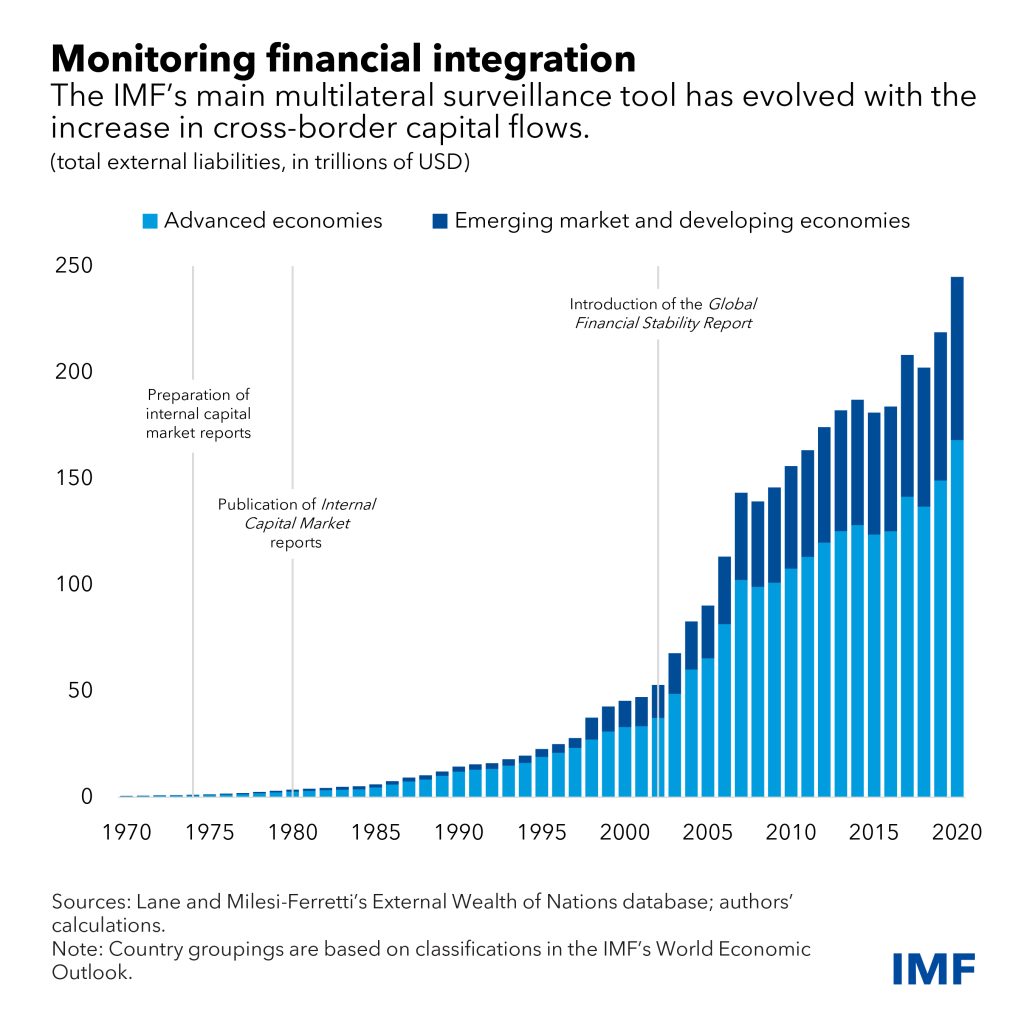
As the Chart of the Week shows, the dollar’s share of global foreign-exchange reserves fell below 59 percent in the final quarter of last year, extending a two-decade decline, according to the IMF’s Currency Composition of Official Foreign Exchange Reserves data.

In an example of the broader shift in the composition of foreign exchange reserves, the Bank of Israel recently unveiled a new strategy for its more than $200 billion of reserves. Beginning this year, it will reduce the share of US dollars and increase the portfolio’s allocations to the Australian dollar, Canadian dollar, Chinese renminbi and Japanese yen.
As we document in a recent IMF working paper, the reduced role of the US dollar hasn’t been matched by increases in the shares of the other traditional reserve currencies: the euro, yen, and pound. Moreover, while there has been some increase in the share of reserves held in renminbi, this accounts for just one quarter of the shift away from dollars in recent years, partly due to China’s relatively closed capital account. Moreover, an update of data referenced in the working paper shows that, as of the end of last year, a single country—Russia—held nearly a third of the world’s renminbi reserves.
By contrast, the currencies of smaller economies that haven’t traditionally figured prominently in reserve portfolios, such as the Australian and Canadian dollars, Swedish krona and South Korean won, account for three quarters of the shift from dollars.
Two factors may help to explain the movement into this set of currencies:

These currencies combine higher returns with relatively lower volatility. This appeals increasingly to central bank reserve managers as foreign exchange stockpiles grow, raising the stakes for portfolio allocation.
New financial technologies—such as automatic market-making and automated liquidity management systems—make it cheaper and easier to trade the currencies of smaller economies.

In some cases, the issuers of these currencies also have bilateral swap lines with the Federal Reserve. This, it can be argued, creates confidence that their currencies will hold their value against the dollar.
At the same time, the importance of this factor can be questioned. The nontraditional currencies tend to float. In practice, they fluctuate widely against the dollar. And their issuers have rarely if ever drawn on their bilateral swap lines with the Fed. A regression analysis shows that having a Fed swap line is associated with a 9 percentage point increase in the dollar share of the recipient’s reserves. This may indicate that swap lines are an imperfect substitute for actual reserves.
A more plausible explanation is that these nontraditional reserve currencies are issued by countries with open capital accounts and track records of sound and stable policies. Important attributes of reserve currency issuers include not just economic weight and financial depth, but also transparent and predictable policies. In other words, the stability of the economy and policy decisions matter for international acceptance.
A regression analysis of global reserve currency shares confirms that a higher economic risk premium, measured by the cost of using credit derivatives to insure against default, reduces a currency’s share in global reserves. Evidently, holders favor the currencies of countries known for good governance, economic stability and sound finances.
Authors:

Serkan Arslanalp
Barry Eichengreen
Chima Simpson-Bel

Compliments of the IMF.
The post IMF | Dollar Dominance and the Rise of Nontraditional Reserve Currencies first appeared on European American Chamber of Commerce New York [EACCNY] | Your Partner for Transatlantic Business Resources.
Read More
EACC

EU Commission | Business and consumer survey results for May 2022

Regular harmonised surveys are conducted by the European Commission’s Directorate General for Economic and Financial Affairs (DG ECFIN) for different sectors of the economies in the European Union (EU) and in the applicant countries.
May 2022: Economic Sentiment slightly down in the EU, broadly stable in the euro area; Employment Expectations mildly up in both regions
In May 2022, the Economic Sentiment Indicator (ESI) decreased slightly in the EU (-0.5 points to 104.1), while it stayed broadly unchanged in the euro area (+0.1 points to 105.0). By contrast, the Employment Expectations Indicator (EEI) increased mildly (+0.5 points to 112.3 in the EU and +0.3 points to 112.9 in the euro area).
DOWNLOAD THE FULL PRESS RELEASE HERE
Compliments of the European Commission’s Directorate General for Economic and Financial Affairs (DG ECFIN).
The post EU Commission | Business and consumer survey results for May 2022 first appeared on European American Chamber of Commerce New York [EACCNY] | Your Partner for Transatlantic Business Resources.
EACC

At the European Council, President von der Leyen reiterates support for Ukraine, welcomes leaders’ agreement on further sanctions against Russia

On the first day of the special European Council taking place on 30-31 May, EU leaders agreed on the sixth package of sanctions against Russia, that includes a ban on crude oil and petroleum products, with a temporary exception for crude oil delivered by pipeline.
President of the Commission Ursula von der Leyen welcomed the agreement, calling it an important step forward. She also recalled other restrictive measures that this package of sanctions includes, such as de-SWIFTing Sberbank, by far Russia’s largest bank, and the suspension of broadcasting of three big Russian state-owned broadcasters from EU airwaves.
Speaking about EU’s support to Ukraine, President von der Leyen said the EU was working on a mechanism to have an extraordinary EUR 9 billion of macro-financial assistance.
EU leaders noted that Ukraine’s reconstruction would require comprehensive support to rebuild the country for the future, and that the EU and its Member States were ready to play a major role. In that regard, the leaders discussed the Commission’s proposal to create a platform that would channel all the international initiatives in raising the necessary investment. President von der Leyen underlined that ‘investment comes with reform’. “It is important that we stand together to give Ukraine a fair chance to rise from the ashes and to be able to leapfrog forward that investment – concerning reconstruction as well as the improvement of the state of Ukraine,” she concluded.
Read more
Opening remarks by President von der Leyen at the joint press conference with President Michel following the special meeting of the European Council of 30 May 2022
European Council conclusions on Ukraine, 30 May 2022
Compliments of the European Commission.
The post At the European Council, President von der Leyen reiterates support for Ukraine, welcomes leaders’ agreement on further sanctions against Russia first appeared on European American Chamber of Commerce New York [EACCNY] | Your Partner for Transatlantic Business Resources.

Read More
EACC

EU leaders agree on new sanctions against Russia

On the first day of the summit, the European Council adopted conclusions on Ukraine. The leaders were joined by Ukrainian President Volodymyr Zelenskyy via video conference for a discussion at the beginning of the summit.

European Council conclusions on Ukraine, 30 May 2022
Remarks by President Charles Michel following the first day of the special meeting of the European Council, 30 May 2022

On the second day of the summit, EU leaders will discuss energy, defence and food security.

Invitation letter by President Charles Michel

Background brief

Main results, 30 May 2022
Russia’s aggression against Ukraine
EU leaders urged Russia to immediately stop its indiscriminate attacks against civilians and civilian infrastructure, and to withdraw,  immediately and unconditionally, all its troops and military equipment from the entire territory of Ukraine within its internationally recognised borders.

The atrocities being committed by Russian forces and the suffering and destruction being inflicted are unspeakable.
European Council conclusions

Leaders stressed that international humanitarian law, including the Geneva Convention relative to the treatment of prisoners of war, should be fully respected. They also called on Russia to allow:

immediate humanitarian access and the safe passage of all civilians concerned
the safe return of Ukrainian individuals forcibly removed to Russia

EU response to Russia’s invasion of Ukraine (background information)

Prosecution of war crimes
The European Council commended all those helping to gather evidence and to investigate war crimes, and expressed its support for the work of the Prosecutor of the International Criminal Court and of Ukraine’s Prosecutor General, assisted by the EU and its member states.

Russia, Belarus and all those responsible will be held to account for their actions in accordance with international law.
European Council conclusions

EU heads of state and government welcomed the establishment of a joint investigation team coordinated by Eurojust and the ongoing operational support provided by Europol.

EU solidarity with Ukraine (background information)

Infographic – EU sanctions in response to Russia’s invasion of Ukraine
See full infographic

Sanctions
The European Council agreed that the sixth package of sanctions against Russia will cover crude oil, as well as petroleum products, delivered from Russia to member states. A temporary exception for crude oil delivered by pipeline will be made. In case of sudden interruptions of supply, emergency measures will be introduced to ensure security of supply.
Leaders urged the Council of the European Union to finalise and adopt the new sanctions without delay, ensuring:

a well-functioning EU single market
fair competition
solidarity among member states
a level playing field for phasing out EU dependency on Russian fossil fuels

EU restrictive measures against Russia over Ukraine – since 2014 (background information)

EU support to Ukraine
Since the beginning of the Russian aggression, the European Union has been stepping up its support for Ukraine’s overall economic, social and financial resilience.
Humanitarian aid
EU leaders underlined that the EU and its member states have provided protection to millions of refugees fleeing the war in Ukraine, and that they remain committed to welcoming them and ensuring their safety. They also invited the Commission to present new initiatives to support this effort within the Multiannual Financial Framework.
The European Council also commended the results of the high-level international donors’ conference co-hosted by Poland and Sweden.
Financial support
 EU heads of state and government stressed that the EU will continue to assist the Ukrainian government with its urgent need for liquidity, and that it is ready to grant Ukraine new exceptional macro-financial assistance of up to €9 billion in 2022.
Reconstruction of a democratic Ukraine
The European Council said that a Ukraine reconstruction platform should be considered and that this platform should bring together the Ukrainian government, the EU and its member states, the European Investment Bank as well as international partners, financing institutions and organisations.
EU leaders highlighted that EU support for reconstruction will be linked to the implementation of reforms consistent with its European path and invited the European Commission to make proposals on this basis.
The European Council also supported further options in line with EU and international law being actively explored, including options aimed at using frozen Russian assets to support Ukraine’s reconstruction.
Military support
The European Union remains committed to continue bolstering Ukraine’s ability to defend its territorial integrity and sovereignty. In this respect, the European Council welcomed the adoption of the recent Council decision to increase military support to Ukraine under the European Peace Facility.

European Peace Facility (background information)

Trade measures
The European Council welcomed the adoption of the decision to suspend import duties on all Ukrainian exports to the European Union for one year.
Political support
EU leaders took note of the preparation of the Commission’s opinions on the application for EU membership of Ukraine, the Republic of Moldova and Georgia, and said they will return to this matter at their June meeting.
They stressed that the EU and its member states will step up their efforts to reach out to third countries in order to:

support Ukraine
counter the false Russian narrative and manipulation of information
prevent sanctions evasion and circumvention

EU relations with Ukraine (background information)
EU relations with the Republic of Moldova (background information)
EU relations with Georgia (background information)

EU support to neighbouring countries
The European Council emphasised the impact of Russia’s war against Ukraine on neighbouring countries and the Western Balkans and highlighted the need to provide all relevant support to the Republic of Moldova.
The European Council reiterated its call for an end to repression in Belarus and recalled the democratic right of the Belarusian people to new, free and fair elections.

EU relations with Belarus (background information)

Agenda highlights, 31 May 2022
Defence
The European Council will discuss EU security and defence in the wake of Russia’s aggression against Ukraine, including how to strengthen resilience and increase its capacity through investments.
EU leaders will also take into account the analysis on defence investment gaps, put forward by the European Commission in cooperation with the European Defence Agency, as well as the Commission’s proposal for strengthening the European industrial and technological base.

EU cooperation on security and defence (background information)

Energy
The European Council will review progress in phasing out the EU’s dependency on Russian fossil fuel, oil and coal imports as soon as possible.
In this context, EU leaders will also discuss the ‘RePowerEU Plan‘, presented by the European Commission on 18 May 2022.

Energy prices and security of supply (background information)

Food security
The European Council will discuss food security, including international coordination and how to ensure a comprehensive global approach.
Compliments of the European Council.
The post EU leaders agree on new sanctions against Russia first appeared on European American Chamber of Commerce New York [EACCNY] | Your Partner for Transatlantic Business Resources.

EACC

Ukraine: The EU Commission proposes rules on freezing and confiscating assets of oligarchs violating restrictive measures and of criminals

On 25 May 2022, the European Commission is proposing to add the violation of EU restrictive measures to the list of EU crimes. The Commission is also proposing new reinforced rules on asset recovery and confiscation, which will also contribute to the implementation of EU restrictive measures. While the Russian aggression on Ukraine is ongoing, it is paramount that EU restrictive measures are fully implemented and the violation of those measures must not be allowed to pay off. Today’s proposals aim to ensure that the assets of individuals and entities that violate the restrictive measures can be effectively confiscated in the future. The proposals come in the context of the ‘Freeze and Seize’ Task Force, set up by the Commission in March.
Making the violation of EU restrictive measures an EU crime
Firstly, the Commission is proposing to add the violation of restrictive measures to the list of EU crimes. This will allow to set a common basic standard on criminal offences and penalties across the EU. In turn, such common EU rules would make it easier to investigate, prosecute and punish violations of restrictive measures in all Member States alike.
The violation of restrictive measures, meets the criteria set out in Article 83(1) TFEU, as it is a crime in a majority of Member States. It is also a particularly serious crime, since it may perpetuate threats to international peace and security, and has a clear cross-border context, which requires a uniform response at EU level and global level.
Accompanying the proposal, the Commission is also setting out how a future Directive on criminal sanctions could look like in a Communication with an Annex. The potential criminal offences could include: engaging in actions or activities that seek to directly or indirectly circumvent the restrictive measures, including by concealing assets; failing to freeze funds belonging to, held or controlled by a designated person/entity; or engaging in trade, such as importing or exporting goods covered by trade bans.
Once the EU Member States agree on the Commission’s initiative to extend the list of EU crimes, the Commission will present a legislative proposal based on the accompanying Communication and Annex.
Reinforcing EU rules on asset recovery and confiscation to EU restrictive measures
Secondly, the Commission is putting forward a proposal for a Directive on asset recovery and confiscation. The core objective is to ensure that crime does not pay by depriving criminals of their ill-gotten gains and limiting their capacity to commit further crimes. The proposed rules will also apply to the violation of restrictive measures, ensuring the effective tracing, freezing, management and confiscation of proceeds derived from the violation of restrictive measures.
The proposal modernises EU asset recovery rules, among others, by:

Extending the mandate of Asset Recovery Offices to swiftly trace and identify assets of individuals and entities subject to EU restrictive measures. These powers will also apply to criminal assets, including by urgently freezing property when there is a risk that assets could disappear.
Expanding the possibilities to confiscate assets from a wider set of crimes, including the violation of EU restrictive measures, once the Commission proposal on extending the list of EU crimes is adopted.
Establishing Asset Management Offices in all EU Member States to ensure that frozen property does not lose value, enabling the sale of frozen assets that could easily depreciate or are costly to maintain.

Members of the College said:
Vice-President for Values and Transparency, Věra Jourová said: “EU sanctions must be respected and those trying to go around them punished. The violation of EU sanctions is a serious crime and must come with serious consequences. We need EU-wide rules to establish that.  As a Union we stand up for our values and we must make those who keep Putin’s war machine running pay the price”     
Commissioner for Justice and Consumers, Didier Reynders, said: “We must ensure that persons or companies that bypass the EU restrictive measures are held account. Such action is a criminal offence that should be sanctioned firmly throughout the EU. At present, divergent criminal definitions and sanctions as regards the violation of the restrictive measures can still lead to impunity. We need to close the loopholes and provide judicial authorities with the right tools to prosecute violations of Union restrictive measures”.
Commissioner for Home Affairs, Ylva Johansson said: “Crime bosses use intimidation and fear to buy silence and loyalty. But usually their greed means embrace of a rich lifestyle. That always leaves a trail. Now the European Commission is proposing new tools to fight organised crime by following this trail of assets. This proposal allows Asset Recovery officers to trace and freeze: trace where the assets are and issue an urgent freezing order. The tracing allows assets to be found and the urgent freezing gives time for courts to act. This proposal will cover new types of crime including firearms trafficking, extortion, to the tune of 50 billion. Our proposal also goes after unexplained wealth. Those at the top of criminal gangs will no longer be insulated from prosecution. Lastly the criminalisation of sanctions violation mean that reaction time against rogue actors is much quicker.”
Background
Restrictive measures are an essential tool for defending international security and promoting human rights. Such measures include asset freezes, travel bans, import and export restrictions and restrictions on banking and other services. Currently, there are over 40 regimes of restrictive measures in place in the EU and the rules criminalising the violations of such measures vary across Member States.
The Union has put in place a series of restrictive measures against Russian and Belarusian individuals and companies, as well as sectoral measures some of which date back to 2014. The implementation of EU restrictive measures following the Russian attack on Ukraine shows the complexity of identifying assets owned by oligarchs, who hide them across different jurisdictions through complex legal and financial structures. An inconsistent enforcement of restrictive measures undermines the Union’s ability to speak with one voice.
In order to enhance Union-level coordination in the enforcement of these restrictive measures, the Commission set up the ‘Freeze and Seize’ Task Force. Besides ensuring coordination among Member States, the Task Force seeks to explore the interplay between restrictive measures and criminal law measures. So far, Member States reported frozen assets worth €9.89 billion and blocked €196 billion worth of transactions. On 11 April, Europol, jointly with Member States, Eurojust and Frontex, launched Operation Oscar to support financial and criminal investigations targeting criminal assets owned by individuals and legal entities covered by EU sanctions.
Restrictive measures are only effective if systematically and fully enforced, and violations punished. Member States are already required to introduce effective, proportionate and dissuasive penalties for violations of restrictive measures. However, some Member States use much broader definitions, others have more detailed provisions in place. In some Member States, violation of restrictive measures is an administrative and a criminal offence, in some purely a criminal offence, and in some, restrictive measures violations currently only lead to administrative penalties. This patchwork enables persons subject to restrictive measures to circumvent them.
The Commission has also published today a progress report on the implementation of the EU Security Union Strategy, which highlights the security threats stemming from Russia’s unprovoked and unjustified war against Ukraine. The report emphasizes the need of a coordinated EU approach on a range of issues and highlights that fight against organised crime is one of the top priorities for the EU in ensuring a Security Union for all.
Compliments of the European Commission.
The post Ukraine: The EU Commission proposes rules on freezing and confiscating assets of oligarchs violating restrictive measures and of criminals first appeared on European American Chamber of Commerce New York [EACCNY] | Your Partner for Transatlantic Business Resources.

EACC

OECD | Labour taxation rebounding as global economy recovers from COVID-19 pandemic

Effective tax rates on labour rebounded in 2021 as the global economy recovered and many countries began withdrawing or scaling back measures implemented in response to the COVID-19 pandemic, according to a new OECD report.
Taxing Wages 2022 shows that rising household incomes in 2021 coupled with the reversal of many tax and benefit policies linked to the pandemic drove increases in effective taxes on wages across the OECD. This marks a turn-around from 2020, when the pandemic drove significant decreases in the labour tax wedge – defined as the total taxes on labour paid by both employees and employers, minus family benefits, as a percentage of the labour cost to the employer.
The report points to an increase in the tax wedge in a majority of OECD countries during 2021, as many countries withdrew or scaled back measures introduced to support households during the pandemic. In spite of these increases, the average tax wedge across the OECD declined slightly as relatively large declines in the tax wedge were observed in a small number of countries where new COVID-19 support measures were introduced in 2021.

In most countries, increases to the tax wedge in 2021 have more than offset the sharp declines recorded in 2020 for a number of household types, and have seen the tax wedge rebound to higher levels than in 2019 before the pandemic. For a one-earner couple on 100% of the average wage with two children and for a single-parent household earning 67% of the average wage with two children, the tax wedge was larger in 2021 than it was in 2019 in 21 countries.
The average tax wedge for the one-earner couple on 100% of the average wage with two children declined by 1.2 percentage points over the 2019-21 period, while that of the single parent on 67% of the average wage with two children declined by 1 percentage point. Both falls were larger than the decline for the single worker without children, for whom the tax wedge fell by 0.3 percentage points to 34.6%.
Between 2020 and 2021, the tax wedge for the single worker increased in 24 of the 38 OECD countries, fell in 12 and remained the same in two. The increases exceeded one percentage point in Israel, the United States and Finland, while the declines exceeded one percentage point in Australia, Latvia, Greece and the Czech Republic. In almost all countries where the tax wedge increased for this household type, the rise was driven by higher personal income tax, as higher average wages interacted with the progressivity of tax systems.
The tax wedge for one-earner households on the average wage with two children increased in 27 countries, fell in 10 countries and remained unchanged in one between 2020 and 2021. The increase exceeded one percentage point in 10 countries, with the largest increases seen in Lithuania, Austria and Canada. Decreases of over one percentage point were observed in five countries, with the largest fall in Chile (of 25.5 percentage points) due to the Emergency Family Income, a temporary COVID-19 support measure.
The gap between the OECD average tax wedge for the single worker and the one-earner couple with children widened by 0.36 percentage points between 2020 and 2021 to 10.2 percentage points.
Taxing Wages 2022 provides unique cross-country comparative data on income tax paid by employees, cash benefits received by in-work families and the associated social security contributions and payroll taxes made by employees and employers across the OECD, which are key factors when individuals consider their employment options and businesses make hiring decisions.
The report illustrates how these taxes are calculated and examines the impact on household incomes. It enables cross-country comparisons of labour costs and the overall tax and benefit position for eight different household types, varying by income level and household composition (single persons, single parents, one- or two-earner households, with or without children).
This year’s report includes a special chapter on how labour taxation has responded to the economic shocks related to the COVID-19 pandemic. It pays particular attention to what drove the changes in the main indicators, including trends in average wages and changes to tax and benefit systems in response to the pandemic in 2020 and 2021. These include changes in personal income tax, social security contributions, payroll taxes and cash benefits paid to workers.
Further information and individual country notes are available at: https://oe.cd/taxingwages.
Contacts:

David Bradbury, Head of the OECD’s Tax Policy and Statistics division | David.Bradbury@oecd.org
Lawrence Speer, OECD Media Office | Lawrence.Speer@oecd.org

Compliments of the OECD.
The post OECD | Labour taxation rebounding as global economy recovers from COVID-19 pandemic first appeared on European American Chamber of Commerce New York [EACCNY] | Your Partner for Transatlantic Business Resources.

EACC

Twitter to pay $150 million penalty for allegedly breaking its privacy promises – again

It’s FTC 101. Companies can’t tell consumers they will use their personal information for one purpose and then use it for another. But according to the FTC, that’s the kind of digital bait-and-switch Twitter pulled on unsuspecting consumers. Twitter asked users for personal information for the express purpose of securing their accounts, but then also used it to serve targeted ads for Twitter’s financial benefit. It wasn’t Twitter’s first alleged violation of the FTC Act, but this one will cost the company $150 million in civil penalties.
The story starts with the FTC’s 2010 complaint against Twitter. In that case, Twitter told users that users could control who had access to their tweets and that their private messages could be viewed only by recipients. But according to the FTC, Twitter didn’t have reasonable safeguards to ensure users’ choices were honored. The 2010 complaint cited multiple instances in which Twitter’s actions – and inactions – led to unauthorized access of users’ personal information. To settle that case, the company agreed to an order that became final in 2011 that would impose substantial financial penalties if it further misrepresented “the extent to which [Twitter] maintains and protects the security, privacy, confidentiality, or integrity of any nonpublic consumer information.”
The just-announced $150 million civil penalty stems from a new complaint filed by the Department of Justice on behalf of the FTC, alleging that Twitter violated the order in the earlier case by collecting customers’ personal information for the stated purpose of security and then exploiting it commercially. You’ll want to read the complaint for the details, but here’s how the FTC says Twitter deceived its customers.
From May 2013 through September 2019, Twitter prompted users to provide their telephone numbers or email addresses for security purposes, such as to enable multi-factor authentication. (Multi-factor authentication is an additional layer of security that requires separate forms of identification to access an account – for example, a password and a code sent to a user’s verified email address.) Twitter also told people it would use their personal data to help with account recovery (for example, if users forgot their passwords) or to re-enable full access if Twitter detected suspicious activity on a person’s account. The FTC says Twitter induced people to provide their phone numbers and email addresses by claiming that the company’s purpose was, for example, to “Safeguard your account.” Twitter further encouraged users to provide that information because “An extra layer of security helps make sure that you, and only you, can access your Twitter account.”
But according to the FTC, much more was going on behind the scenes. In fact, in addition to using people’s phone numbers and email addresses for the protective purposes the company claimed, Twitter also used the information to serve people targeted ads – ads that enriched Twitter by the multi-millions.
Just how persuasive was Twitter’s security pitch? During the time period covered by the complaint, more than 140 million users gave Twitter their email addresses or phone numbers for security purposes. Would that same number of people have given Twitter that information if they knew how else Twitter was going to use it? We don’t think so. If you’re struck by the irony of a company exploiting consumers’ privacy concerns in a way that facilitated further invasions of consumers’ privacy, it’s an irony not lost on the FTC.
In addition to imposing a $150 million civil penalty for violating the 2011 order, the new order adds more provisions to protect consumers in the future:

Twitter is prohibited from using the phone numbers and email addresses it illegally collected to serve ads.
Twitter must notify users about its improper use of phone numbers and email addresses, tell them about the FTC law enforcement action, and explain how they can turn off personalized ads and review their multi-factor authentication settings.
Twitter must provide multi-factor authentication options that don’t require people to provide a phone number.
Twitter must implement an enhanced privacy program and a beefed-up information security program that includes multiple new provisions spelled out in the order, get privacy and security assessments by an independent third party approved by the FTC, and report privacy or security incidents to the FTC within 30 days.

What can other companies take from the latest action against Twitter?
What the text giveth, a privacy policy or buried disclaimer cannot taketh away. Consumers have a right to rely on what you say at the time you ask for their information. Trying to take it back in a contradictory statement buried elsewhere on your website is unlikely to correct a misrepresentation.
Keeping customers’ information secure is a win-win. Consumers benefit when companies take extra steps to protect their personal data. So let’s be clear: Multi-factor authentication can be an effective way to do that. Don’t discourage people from agreeing to multi-factor authentication by making them give up their privacy to use it.
Violating FTC orders will result in substantial penalties. The FTC takes order enforcement seriously and will use every lawful means to hold recidivists responsible for further violations.
Compliments of the U.S. Federal Trade Commission.
The post Twitter to pay 0 million penalty for allegedly breaking its privacy promises – again first appeared on European American Chamber of Commerce New York [EACCNY] | Your Partner for Transatlantic Business Resources.

EACC

State of Schengen: EU Commission sets new priorities and new governance model

Today, the Commission is presenting the State of Schengen Report 2022. This is the first time the Commission is presenting such report, following last year’s Schengen Strategy. This report  is part of the Commission’s initiative to reinforce the Schengen governance through a yearly reporting exercise presenting the state of Schengen, identifying priorities for the year ahead and monitoring progress made at the end of a given year. The State of Schengen report will serve as basis for discussions of Members of the European Parliament and Home Affairs Ministers in the Schengen Forum on 2 June, and in the upcoming Schengen Council on 10 June.
Vice President Margaritis Schinas said: “The Schengen area has unified our continent and is emblematic of the European way of life. Over the past year we have taken decisive steps to further strengthen Schengen’s governance and rebuild trust in this crucial driver of our economies. Today’s reports reflect that unwavering commitment to ensure Schengen emerges stronger from the variety of challenges it has faced.”
Commissioner for Home Affairs Ylva Johansson said: “The freedom to move, live and work in different Member States is held dear by Europeans. Recent crises and challenges have shown that we cannot take this freedom for granted. We will keep working together to deliver on the priorities set out in the State of Schengen Report, and to steer the European Border and Coast Guard to work in a more effective and integrated way. Schengen is a shared responsibility that requires the engagement and commitment of all of us.”
A state of play of the Schengen area and new priorities
The State of Schengen Report 2022 is the starting point for the new annual Schengen cycle. The cycle provides for a regular ‘health-check’ on Schengen, allowing to identify problems early on to ensure common responsibility and to promote the uptake of appropriate measures. Interinstitutional discussion will take place at the Schengen Forum on 2 June, and political deliberations will follow in the June Schengen Council. This process is part of the new Schengen governance that enhances participation of all the actors involved to monitoring the functioning of the Schengen area and follow-up with necessary measures. The new Schengen Evaluation and Monitoring Mechanism, which the Commission proposed in June 2021 and which has been recently adopted by the Council, will play a crucial role in this new Schengen governance model.
The report sets a list of priority actions for 2022-2023 that are to be addressed at both national and European level such as:

implementing the new IT architecture and interoperability for border management,
making full use of cross-border cooperation tools,
ensuring systematic checks at the external borders of all travellers,
ensuring that Frontex reaches the full potential of its mandate,
lifting all long-lasting internal border controls, and
adopting the revised Schengen Borders Code.

The report also reminds of the importance of completing the Schengen area and calls upon the Council to adopt the decisions to allow Croatia, as well as Romania and Bulgaria to formally become a part of it, in view of the fact that all criteria have been fulfilled. The same will apply to Cyprus once it has successfully completed the Schengen evaluation process.
The report also presents the priorities resulting from the Schengen evaluations. The Schengen evaluations currently cover external border management, police cooperation, return, the Schengen information System, visa policies and data protection.
While Schengen evaluations during the last years have demonstrated that in general terms Member States implement adequately the Schengen rules, there are some areas where improvements can be made. This demonstrates that the evaluation mechanism is effective and leads to continuous strengthening of the Schengen area. Additional efforts are required notably in the fields of return and the Schengen Information System. Indeed, in an area without controls at the internal borders, solid police cooperation between Member States together with effective implementation of the large-scale information systems, notably the Schengen Information System is indispensable, as well as effective return and common visa policies.
In parallel to the State of Schengen Report, the Commission is also consulting the institutions on the future multiannual strategic policy for European integrated border management, and presenting a report on the implementation of the obligation Member States have to carry out systematic checks at the external borders of the EU.
The future of European integrated border management
With today’s Policy Document, the Commission is starting a consultation with the European Parliament and the Council on the future of integrated border management.

It launches the multiannual strategic policy cycle for European Integrated Border Management, which will guide how all the actors within the European Border and Coast Guard operate over the next five years.
It sets the way forward reflecting on the main elements of the Integrated Border Management. This includes: border control; search and rescue; risk analysis; inter-agency, EU and international cooperation; return; fundamental rights; research and innovation; and education and training.
It will lead to a Communication establishing the Multiannual Strategic Policy for European integrated border management, to be adopted by the end of 2022.

Systematics checks at the external borders of the EU
The Commission is also publishing the report on the implementation of the Article 8 of the Schengen Border Code, according to which Member States are under an obligation to carry out systematic checks against relevant databases on all persons crossing the EU’s external borders, including persons enjoying the right to free movement. This measure was intended to strengthen the EU’s internal security following findings that EU citizens were among foreign terrorists fighters returning to the EU.
The report to the European Parliament and the Council analyses the implementation and impact of these systematic checks. It concludes that the application of systematic checks filled an important regulatory gap, despite challenges faced by Member States in the implementation of these rules. The Commission intends to address those challenges and support Member States in the upcoming review of the Practical Handbook for Border Guards, which is used by Member State competent authorities when carrying out border checks on persons.
Next Steps
The reports adopted today will feed into the next Schengen Forum in June. The upcoming Schengen Council will be the opportunity for Ministers to endorse the policy priorities identified in the State of Schengen Report. Increased political ownership based on dialogue and regular monitoring will ensure implementation of the priorities for the Schengen area. For this reason, the Commission calls on Member States and EU agencies to take the necessary steps to deliver on these priorities and take the necessary follow-up actions. The Commission also invites the Schengen Council in June to endorse the key elements of the new Schengen governance model and the priorities for 2022-2023. The Commission will closely accompany this process both at the political and technical levels, and it will report on progress achieved and follow-up actions at the end of the annual cycle.
Background
Today’s proposals complement the EU’s continuous efforts to improve Schengen’s overall functioning and governance. The Schengen area without controls at internal borders is a historic achievement of European integration. Since its foundations were laid in 1985, it has changed the daily reality of millions of people. Almost 1.7 million people reside in one Schengen State and work in another. People have built their lives around the freedoms offered by the Schengen area, with 3.5 million people crossing between Schengen States every day. In June 2021, the Commission presented the Schengen Strategy taking stock of the challenges the area has faced in recent years and sets out a path forward to make the Schengen area stronger and establish a solid Schengen Governance.
Compliments of the European Commission.
The post State of Schengen: EU Commission sets new priorities and new governance model first appeared on European American Chamber of Commerce New York [EACCNY] | Your Partner for Transatlantic Business Resources.