EACC

ESMA consults on notifications for cross-border marketing and management of funds

The European Securities and Markets Authority (ESMA), the EU’s securities markets regulator, is consulting stakeholders on the information and templates to be provided, and used by firms, when they inform regulators of their cross-border marketing and management activities under the UCITS Directive and the AIFMD.
The purpose of the draft ITS and RTS is to facilitate the process for notifying cross-border marketing and management activities in relation to UCITS and AIFs. This will be achieved by defining harmonised information to be notified to competent authorities, and developing common templates to be used by management companies, UCITS and AIFMs.
Consultation process
This consultation will be of particular interest to alternative investment fund managers, internally managed AIFs, UCITS, management companies, internally managed UCITS, and their trade associations, as well as professional and retail investors investing into UCITS and AIFs and their associations.
The closing date for responses to the consultation is 9 September 2022.
Next steps
Following the consultation period, the draft RTS and ITS will be finalised and submitted to the European Commission.
RESPOND
Compliments of The European Securities and Markets Authority (ESMA).
The post ESMA consults on notifications for cross-border marketing and management of funds first appeared on European American Chamber of Commerce New York [EACCNY] | Your Partner for Transatlantic Business Resources.

EACC

EU-US Trade and Technology Council: strengthening our renewed partnership in turbulent times

The EU and the US have today reaffirmed their close cooperation to address global trade and technology challenges in line with their shared commitment to democracy, freedom and human rights. Meeting at the second Ministerial Meeting of the Trade and Technology Council (TTC) in Paris, both parties reiterated the central role of the TTC for the renewed transatlantic partnership, which has already served to coordinate joint measures being taken by the EU and the US in face of the Russian aggression against Ukraine.
Members of the College said:
Margrethe Vestager, Executive Vice-President for a Europe fit for the Digital Age and co-chair of the TTC, said: “Russia’s war of aggression against Ukraine has further underlined the key importance of our cooperation with the US on economic and technology issues. This cooperation goes beyond our reaction to the war. Together with our transatlantic partners, we can create a positive vision for our economies and for a democratic governance of the internet based on the dignity and integrity of the individual. When we act together, we can set the standards of tomorrow’s economy. We are joining forces and when two such determined partners take the lead, we can enable the tides to turn.”
Valdis Dombrovskis, Executive Vice-President and Commissioner for Trade and co-chair of the TTC, said: “I am delighted that at this second TTC meeting, we have agreed to expand our cooperation with the US to address new and emerging global trade challenges, working as trusted partners. We will work closely to secure our supply chains and boost global food security. We will build on our unprecedented transatlantic coordination on export controls against Russia to further align our approaches in this critical field, while also boosting trade with Ukraine. We will also cooperate on promoting green trade, for instance through green public procurement.”
Thierry Breton, Commissioner for Internal Market, added: “Transatlantic collaboration on supply chains and digital technologies is crucial to defend our common interests and values. Having successfully worked with the United States on supply chain bottlenecks for vaccine ingredients, I am pleased to see a joint ambition to strengthen supply chain resilience in other areas, from raw materials to semiconductors. The Paris summit is an important moment for the Trade and Technology Council to transform the transatlantic dialogue into concrete results.”
Key outcomes of the 2nd TTC Ministerial Meeting
Support to Ukraine
The TTC’s co-chairs expressed strong shared commitment to supporting Ukraine against Russian military aggression and agreed on concrete measures already delivered and to be further continued within the TTC. They also committed to work jointly with Ukraine to rebuild its economy and facilitate trade and investment.
Information integrity
They agreed to strengthen their cooperation to support information integrity in crisis situations, initially focusing on a common analytical framework for identifying Russia’s information manipulation and interference, which will lead to establishing a Cooperation Framework in all crisis situations.
Trade and Labour Dialogue
The co-chairs agreed to establish a tripartite Trade and Labour Dialogue in order to jointly promote internationally recognised labour rights, including the eradication of forced labour and child labour.
Export controls
Cooperation in the TTC has been instrumental for the swift and aligned deployment of export controls on advanced technologies such as aerospace and cyber surveillance to undermine Russia’s ability to further develop its industrial and military capabilities. Both parties committed to build on and enhance this strong collaboration.
Secure supply chains
With global supply chains further challenged by the Russian aggression against Ukraine, both parties agreed that close cooperation to advance the resilience of supply chains is more important than ever. For instance, the EU and US have agreed to develop a common early warning and monitoring mechanism on semiconductor value chains, to increase awareness of and preparedness for supply disruptions, and information exchange to avoid a subsidy race.
A dedicated taskforce on public financing for secure and resilient digital infrastructure in third countries shall also pave the way to joint US-EU public financing of digital projects in third-countries, based on a set of common overarching principles.
Technology standards
In the field of emerging technologies, the EU and the US have agreed to establish a Strategic Standardisation Information (SSI) mechanism to promote and defend common interests in international standardisation activities. Both sides will work to foster the development of aligned and interoperable technical standards in areas of shared strategic interest such as AI, additive manufacturing, recycling of materials, or Internet of Things
Artificial Intelligence
Both parties further discussed the implementation of common AI principles and agreed to develop a joint roadmap on evaluation and measurement tools for trustworthy AI and risk management.
Platform governance
The EU and the US also reaffirmed their support for an open, global, interoperable, reliable and secure Internet, in line with the Declaration for the Future of the Internet and the declaration on European digital rights and principles. Moreover, the EU and US agreed to strengthen cooperation on key aspects of platform governance.
SMEs access to technology
The EU and US published today a joint best practice guide with resources for how SMEs can become more cybersecure.
Environmental and climate aspects of trade and technology
Promoting sustainability is an overarching ambition for the TTC. In that spirit, Ministers agreed to work on trade and environment/climate issues, including on fostering a better understanding of the role that trade can play in facilitating the dissemination of environmental goods and services; a closer cooperation on green public procurement and work on common methodologies for carbon footprinting.
Trade barriers
Ministers agreed to work together on solutions that will help increase transatlantic trade and investment, including through increased cooperation on government procurement and conformity assessment, and exchanges on potential new trade barriers both bilaterally and in relation to third countries. They also agreed to coordinate their efforts to address non-market policies, while seeking to avoid collateral consequences on one another.
Background
The European Union and the United States announced the EU-US Trade and Technology Council (TTC) at their summit in Brussels on 15 June 2021. The TTC serves as a forum for the EU and the US to coordinate approaches to address key trade and technology issues, and to deepen transatlantic cooperation in this realm based on shared democratic values. The inaugural meeting of the TTC took place on 29 September 2021. Following the meeting, 10 working groups were set up covering issues such as standards, artificial intelligence, semiconductors, export controls and global trade challenges. The next meeting of the TTC is planned in before the end of 2022 in the United States.
Compliments of the European Commission.
The post EU-US Trade and Technology Council: strengthening our renewed partnership in turbulent times first appeared on European American Chamber of Commerce New York [EACCNY] | Your Partner for Transatlantic Business Resources.
EACC

ECB Speech | Fabio Panetta: Public money for the digital era: towards a digital euro

Keynote speech by Fabio Panetta, Member of the Executive Board of the ECB, at the National College of Ireland | Dublin, 16 May 2022 |
It is a pleasure to be here with all of you today to talk about the digital euro.
When we launched this project, we made it clear that this is a common European enterprise. Our collective effort is key to the preparation and eventual success of a digital euro.
I would like to take this opportunity to thank Commissioner McGuinness and the President of the Eurogroup, Mr Donohoe, for the excellent collaboration.
As we prepare to potentially issue a digital euro, we want to engage with and listen to stakeholders and society at large. So I would like to thank the National College of Ireland for hosting us today and giving us the opportunity to discuss this project with you.
And I look forward to talking to the students who are here today. Young people will play a key role in the adoption of a digital euro and we need to hear their perspectives to make it a success.
We live in turbulent times. As we face the most serious geopolitical crisis since the Cold War, old certainties are increasingly being challenged. The invasion of Ukraine has cast further doubt on the reliability of a global order that enabled unprecedented economic interdependence.
In the financial realm, old certainties are also beginning to falter. Digital technologies, changing payment habits and the race for payments supremacy are testing the complementarity of public and private money, which has long formed a cornerstone of our monetary system.
Today I will argue that to preserve this symbiosis, public money must keep its role as a monetary anchor in the digital era. A digital euro would fortify our monetary sovereignty and provide a form of central bank money for making daily digital payments across the euro area, just like cash for physical transactions. To succeed, a digital euro will need to add value for users, foster innovation, and enjoy strong political and societal support.
Preserving the role of public money
Our monetary system is based on the complementarity of public and private money. Central banks provide a trusted and stable monetary base on which intermediaries such as banks build new payment and financial services. This coexistence has been a powerful driver of stability and innovation.
But digital disruption and the declining use of cash – the only form of sovereign money currently available to the public – are threatening to upend this balance. Consumers are increasingly turning towards non-cash payments. Only 20% of the cash stock is now used for payments, down from 35% fifteen years ago.
We will ensure that cash remains available. But if the current trend continues, we could face a future in which cash loses its central role and its ability to provide an effective anchor as consumers turn to digital means of payment.
We cannot allow public money to become marginalised, for two good reasons.
First, just a few global players have come to dominate certain segments of the payments market, such as card payments and e-commerce. This trend could be accentuated by the expansion of big techs, which can offer payment services leveraging their large consumer base and dominant position in related markets. This could result in an uneven playing field that harms competition and raises data privacy concerns. And by creating further dependencies on non-European providers, it could increase risks to Europe’s strategic autonomy and threaten monetary sovereignty if central bank money is no longer at the heart of the payment system.[1]
Second, even digital payments will ultimately depend on the anchoring role of public money to function smoothly.
Confidence that “one euro is one euro” whatever form it takes rests on our ability to convert, at par, private money – such as funds held in bank deposits or digital wallets – into public money, which is the safest form of money available.[2]
This possibility of conversion reinforces confidence in the various forms of private money used for euro payments, ensuring the smooth functioning of the payment system.[3]
Recent developments in the market for crypto-assets illustrate that it is an illusion to believe that private instruments can act as money when they cannot be converted at par into public money at all times.
Despite claims that cryptos are a trustworthy form of “currency” free from public control, they are too risky to act as a reliable means of payment. They behave more like speculative assets and raise multiple public policy and financial stability concerns.[4] Anyone investing in cryptos must be prepared to lose all their investment.[5]
To mitigate these risks, so-called stablecoins have emerged and have the potential to become globally systemic, especially if issued by big techs. But while the value of stablecoins is linked to what their issuers describe as “reserve assets” and adequate regulation and oversight could reduce risks, stablecoins are not risk-free.[6] There is no guarantee that they can be redeemed at par at any time – just last week the world’s biggest stablecoin temporarily lost its peg to the dollar. And stablecoins do not benefit from deposit insurance, nor do they have access to central bank standing facilities. They are therefore vulnerable to runs[7], as we have just seen with the crash of another stablecoin – TerraUSD.
The benefits of a digital euro
The increasing popularity of non-cash payments and the expansion of crypto-assets reveal a growing demand for immediacy and digitalisation. If the “official sector” – central banks and supervised intermediaries – does not satisfy this demand, others will.
For this reason, countries around the world are currently exploring the issuance of a central bank digital currency.[8] Nine countries have now fully launched a digital currency and some large economies are quite advanced in their exploration, like China.[9]
Digital money issued by the central bank would offer the possibility for everyone to use public money for digital payments. It would be a sound, reliable means of payment designed in the public interest. And it would preserve the coexistence of sovereign and private money that has served us well so far.
In Europe, issuing a digital euro would also allow us to protect our strategic autonomy while remaining open in a world where technology and dependencies are increasingly being weaponised.
But the benefits of a digital euro would extend further than that. In particular, a digital euro would serve as an instrument to accompany the ongoing digital transition in payments. This transition is particularly visible here in Ireland, where the financial landscape is undergoing drastic change, with some major incumbent banks withdrawing and fintechs making rapid inroads into the payments market. A digital euro would bring important benefits in this context. It would level the playing field by allowing intermediaries – including small ones, which are typically less able to keep pace with innovation – to offer more technologically advanced products at a competitive price. And it would enable innovative payment solutions to be quickly scaled up to cover the entire euro area. This would help narrow the gap with economies like that of the United States, where entrepreneurs can expand in a large market that is not fragmented along state lines, as it is in Europe.[10]
Finally, a digital euro would aim to offer a means of payment that is free, available for all digital payments, and accessible to everyone, everywhere. It would seek to support financial inclusion at a time when the vast reduction in the number of bank branches may be affecting vulnerable customers.[11] Taking Ireland as an example, the number of bank branches declined by one-quarter between 2010 and 2020, and 5% of the adult Irish population do not even have a bank account.
Designing the digital euro for success
But despite its advantages from a system-wide perspective, a digital euro can only be successful if potential users find that it adds value to current payment options.
The motto “pay anywhere, pay easily, pay safely” seems to correspond to what potential users expect from a digital euro.
Indeed, people see the ability to pay anywhere as the most important feature of a digital euro, as shown by the results of recent focus group interviews on payment behaviour. Ideally, all merchants across the euro area – in both physical and online stores – would need to accept a digital euro.
People also value payments that are instant, easy and contactless, especially for person-to-person (P2P) payments. In particular, they would like to see a solution that would allow them to make instant payments to friends at the touch of a button, regardless of the platform used by the person sending the money and the person receiving it.
A P2P payment solution that covers a broad set of users across the entire euro area could provide fertile ground for the adoption of a digital euro. Research shows that new payment solutions are more readily adopted in a one-sided[12] market segment, like P2P payments, before spreading to other use cases.[13]
For example, Swish – Sweden’s mobile payment system which was launched in 2012 and is now used by 80% of the population there – initially offered instant P2P transfers where there was no convenient digital payment solution. The service was subsequently expanded to online and point-of-sale payments. In Brazil, PIX – a central bank initiative in which most financial intermediaries participate, generating network effects for users[14] – became the most widely used digital payment solution just one year after its launch. It did so by offering new features, such as instant payments via QR codes and simplified user identification using, for instance, a mobile number or email address.
We could also foster the adoption of a digital euro by giving it legal tender status and designing it in a way that provides more privacy than current private digital payment instruments.[15]
In October 2021 the ECB launched a two-year investigation phase to define the design features of a digital euro, such as how to ensure confidentiality, which use cases to prioritise and what business options to offer intermediaries.
For a digital euro to be designed and adopted successfully, it must be a collective endeavour. So we are stepping up our engagement with all stakeholders, from banks to payment companies, and from merchants to society at large. And at every stage of the project we will continue to engage with the European Commission (which recently launched a consultation on the digital euro), the European Parliament and the finance ministers of the euro area countries.
Defining the legal framework will entail reconciling trade-offs arising from several objectives, such as the right of individuals to confidentiality versus the public interest in maintaining the level of transparency required to combat illicit activities, or the benefits of allowing the digital euro to be widely used – also internationally – versus the need to safeguard financial intermediation and stability. But there are ways to resolve these trade-offs, as I have discussed in previous speeches.[16]
Finally, at the end of 2023 we could decide to start a realisation phase to develop and test the appropriate technical solutions and business arrangements necessary to provide a digital euro. This phase could take three years.
Conclusion
Let me conclude.
The complementarity of public and private money has guaranteed stability, competition and innovation for decades.
The ongoing changes in technology, geopolitics and user preferences must not herald the demise of this careful balance, but rather a chance to extend its success to the digital age.
Central bank digital currencies will allow public money to continue to play its role in anchoring the stability of the payments system and contributing to its efficiency. And private money will add innovation and diversity to this foundation. The coexistence of public and private money can continue to be a win-win situation – perhaps even more so in the digital age.
Compliments of the European Central Bank.
Footnotes:

A payment system based on technologies and practices designed, managed and supervised elsewhere would undermine authorities’ ability to exercise their supervisory control. A situation in which the digitalisation of payments leads to most prices being quoted in a foreign or private unit of account would greatly reduce the central bank’s ability to influence monetary and financial conditions.

Although many people are unaware of the differences between public and private money, they do know that banknotes protect them from a potential default by their bank.

The use of central bank money in payment systems puts the value of private money to the test every day by checking their convertibility into the defined unit of value, so preserving confidence in the currency

Panetta,For a few cryptos more: the Wild West of crypto finance F. (2022), “”, speech at Columbia University, 25 April. For instance, crypto-assets are often used for illicit purposes. Across all crypto-assets tracked by Chainalysis, the total transactions amounted to USD 15.8 trillion in 2021. Transactions involving illicit addresses represented 0.15% of the total value, which amounted to USD 23.7 billion – see Chainalysis (2022), The 2022 Crypto Crime Report, February. As noted by Chainalysis, this figure is expected to rise as more addresses associated with illicit activity are identified over time. For instance, the share of crypto-asset transactions in 2020 identified as involving illicit addresses was initially estimated at 0.34% in their 2021 Report, but was subsequently revised to 0.62% in the 2022 Report.

See the joint warning by the European Supervisory Authorities: ”EU financial regulators warn consumers on the risks of crypto-assets”, 17 March 2022.

The value of a stablecoin is linked to a portfolio of one or more other assets (the reserve assets). Stablecoins are therefore not risk-free. Risks increase if stablecoin arrangements are backed by risky or opaque assets, especially in times of market turmoil.

Panetta, F. (2020), “The two sides of the (stable)coin”, speech at Il Salone dei Pagamenti 2020, 4 November.

87 countries (representing over 90% of global GDP) are exploring a CBDC according to the CBDC Tracker of the Atlantic Council.

Kosse, A. and Mattei, I. (2022), “Gaining momentum – Results of the 2021 BIS survey on central bank digital currencies”, BIS Papers, No 125, Bank for International Settlements, May.

As an example, see the rapid growth of Stripe – a company founded by Irish entrepreneurs – in the United States.

Houses of the Oireachtas (2021), “Future of Banking in Ireland: Statements”, Seanad Éireann debates, Vol. 276, No 1, 10 May.

Networks with homogeneous users (individuals in the case of P2P payments) are described as “one-sided”, in order to distinguish them from “two-sided” networks, which have two distinct user groups whose respective members consistently play the same role in transactions, such as businesses and their customers. See ECB (2010), The payment system – payments, securities and derivatives, and the role of the Eurosystem.

Van der Heijden, H. (2002), “Factors affecting the successful introduction of mobile payment systems”, Bled 2002 Proceedings, June; BIS (2021), Central Bank Digital Currencies: user needs and adoption, September.

All financial and payment institutions – including fintechs – can offer Pix. Those with over 500,000 active accounts are obligated to offer it.

Panetta, F. (2022), “A digital euro that serves the needs of the public: striking the right balance”, introductory statement at the Committee on Economic and Monetary Affairs of the European Parliament, 30 March.

Panetta, F. (2021), “Evolution or revolution? The impact of a digital euro on the financial system”, speech at a Bruegel online seminar, 10 February; Panetta, F. (2021), “A digital euro to meet the expectations of Europeans”, introductory remarks at the ECON Committee of the European Parliament, 14 April.

The post ECB Speech | Fabio Panetta: Public money for the digital era: towards a digital euro first appeared on European American Chamber of Commerce New York [EACCNY] | Your Partner for Transatlantic Business Resources.
EACC

Joint Statement by President von der Leyen and President Biden on the meeting of the Trade and Technology Council

At our June 2021 US-EU Summit, we established the US-EU Trade and Technology Council (TTC) to shape the rules of the road for a 21st century economy, and for rapidly evolving digital and emerging technology. In less than a year, the TTC has become a pillar of transatlantic cooperation, particularly in growing our bilateral trade and investment relationship; resolving existing and avoiding new barriers to trade while countering non-market, trade distortive practices; and in our united response to Russia’s aggression in Ukraine.
Following its first ministerial meeting last September in Pittsburgh, Pennsylvania, the TTC held its second ministerial meeting in Saclay, France. The US co-chairs, Secretary of State Antony J. Blinken, Secretary of Commerce Gina Raimondo, and United States Trade Representative Katherine Tai and EU Co-Chairs European Commission Executive Vice Presidents Margrethe Vestager and Valdis Dombrovskis built on the rock-solid foundation and announced new initiatives on supply chains, food security, export controls, emerging technology, digital infrastructure, trade, and much more. These initiatives will reinforce our shared values, bolster our global competitiveness, and benefit workers and families on both sides of the Atlantic. We are grateful to the leadership of the TTC and look forward to further progress in the months ahead.
Compliments of the European Commission.
The post Joint Statement by President von der Leyen and President Biden on the meeting of the Trade and Technology Council first appeared on European American Chamber of Commerce New York [EACCNY] | Your Partner for Transatlantic Business Resources.

EACC

EU Commission welcomes political agreement on new rules on cybersecurity of network and information systems

The Commission welcomes the political agreement reached today between the European Parliament and EU Member States on the Directive on measures for a high common level of cybersecurity across the Union (NIS 2 Directive) proposed by the Commission in December 2020.
The existing rules on the security of network and information systems (NIS Directive), have been the first piece of EU-wide legislation on cybersecurity and paved the way for a significant change in mind-set, institutional and regulatory approach to cybersecurity in many Member States. In spite of their notable achievements and positive impact, they had to be updated because of the increasing degree of digitalisation and interconnectedness of our society and the rising number of cyber malicious activities at global level.
To respond to this increased exposure of Europe to cyber threats, the NIS 2 Directive now covers medium and large entities from more sectors that are critical for the economy and society, including providers of public electronic communications services, digital services, waste water and waste management, manufacturing of critical products, postal and courier services and public administration, both at central and regional level. It also covers more broadly the healthcare sector, for example by including medical device manufacturers, given the increasing security threats that arose during the COVID-19 pandemic. The expansion of the scope covered by the new rules, by effectively obliging more entities and sectors to take cybersecurity risk management measures, will help increase the level of cybersecurity in Europe in the medium and longer term.
The NIS 2 Directive also strengthens cybersecurity requirements imposed on the companies, addresses security of supply chains and supplier relationships and introduces accountability of top management for non-compliance with the cybersecurity obligations. It streamlines reporting obligations, introduces more stringent supervisory measures for national authorities, as well as stricter enforcement requirements, and aims at harmonising sanctions regimes across Member States. It will help increase information sharing and cooperation on cyber crisis management at a national and EU level.
Members of the College said:
Margrethe Vestager, Executive Vice-President for a Europe Fit for the Digital Age, said: “We have been working hard for digital transformation of our society. In the past months we have put a number of building blocks in place, such as the Digital Markets Act and the Digital Services Act. Today, Member States and the European Parliament have also secured an agreement on NIS 2. This is another important breakthrough of our European digital strategy, this time to ensure that citizens and businesses are protected and trust essential services.”
Margaritis Schinas, Vice-President for Promoting our European Way of Life, said: “Cybersecurity was always essential to shield our economy and our society against cyber threats; it is becoming critical as we are moving further in the digital transition. The current geopolitical context makes it even more urgent for the EU to ensure that its legal framework is fit for purpose. By agreeing on these further strengthened rules, we are delivering on our commitment to enhance our cybersecurity standards in the EU. Today, the EU shows its clear determination to champion preparedness and resilience against cyber threats, which target our economies, our democracies and peace.”
Thierry Breton, Commissioner for the Internal Market, said: “Cyber threats have become bolder and more complex. It was imperative to adapt our security framework to the new realities and to make sure our citizens and infrastructures are protected. In today’s cybersecurity landscape, cooperation and rapid information sharing are of paramount importance. With the agreement of NIS2, we modernise rules to secure more critical services for society and economy. This is therefore a major step forward. We will complement this approach with the upcoming Cyber Resilience Act that will ensure that digital products are also more secure whenever they are used.”
Next Steps
The political agreement reached by the European Parliament and the Council is now subject to formal approval by the two co-legislators. Once published in the Official Journal, the Directive will enter into force 20 days after publication and Member States will then need to transpose the new elements of the Directive into national law. Member States will have 21 months to transpose the Directive into national law.
Background
Cybersecurity is one of the Commission’s top priorities and a cornerstone of the digital and connected Europe.
The first EU-wide law on cybersecurity, the NIS Directive, that came into force in 2016 helped to achieve a common high level of security of network and information systems across the EU. As part of its key policy objective to make Europe fit for the digital age, the Commission proposed the revision of the NIS Directive in December 2020. The EU Cybersecurity Act that is in force since 2019 equipped Europe with a framework of cybersecurity certification of products, services and processes and reinforced the mandate of the EU Agency for Cybersecurity (ENISA).
Compliments of the European Commission.
The post EU Commission welcomes political agreement on new rules on cybersecurity of network and information systems first appeared on European American Chamber of Commerce New York [EACCNY] | Your Partner for Transatlantic Business Resources.

Read More
EACC

State aid: EU Commission will phase out State aid COVID Temporary Framework

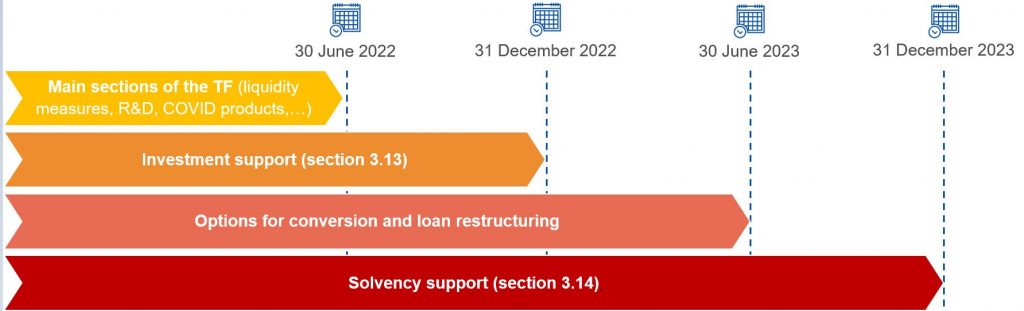
The European Commission will phase out the State aid COVID Temporary Framework, adopted on 19 March 2020 and last amended on 18 November 2021, enabling Member States to remedy a serious disturbance in the economy in the context of the coronavirus pandemic. The State aid COVID Temporary Framework will not be extended beyond the current expiry date, which is 30 June 2022 for most of the tools provided. The existing phase-out and transition plan will not change, including the possibility for Member States to provide specific investment and solvency support measures until 31 December 2022 and 31 December 2023 respectively, as already announced in November last year.
Executive Vice-President Margrethe Vestager, in charge of competition policy, said: “Since the very beginning of the pandemic, the State aid COVID Temporary Framework has enabled Member States to provide timely, targeted and proportionate support to businesses in need, while preserving the level playing field in the Single Market and maintaining horizontal conditions applicable to everyone.
It has allowed Member States to act quickly and effectively to help companies hit by the crisis, while ensuring that support remained limited to those in actual need.
As of today, the Commission adopted more than 1300 decisions in the context of the coronavirus pandemic, approving nearly 950 national measures for an estimate total State aid amount approved of nearly €3.2 trillion *. All aid approved to date has been necessary and proportionate. Of course one thing is the amount of aid notified by Member States and approved by the Commission, and another thing is the aid actually spent. Based on data provided by Member States, in the period between mid-March 2020 and end of June 2021, of the over €3 trillion in aid approved during that period, around €730 billion euros was actually spent.
What is most important is that, through the Temporary Framework, the Commission has designed a set of horizontal rules in a fashion that respected the diversity of options preferred by the Member States to support their economies. Through this Framework, support has been provided to businesses of all sizes and potentially from all sectors of the economy, including small and medium-sized enterprises, airlines and farmers, as well as COVID-related research and event organizers, among many others.
Today, after over two years, we are finally seeing an overall improvement of the sanitary crisis in Europe, with numbers of COVID-19 infections under control and a relatively high vaccination rate. With the progressive lifting of restrictive measures, the European economy has started taking the first steps towards recovery from the sanitary crisis. As the Commission has stated in its Communication on the next steps in response to the COVID-19 pandemic: this relaxation of rules is a great relief also for our economies – but does not mean that we should not continue to stay vigilant.
The improving economic situation in view of the relaxation of restrictions is the main reason why we have decided not to prolong the State aid COVID Temporary Framework beyond 30 June 2022, with the exception of investment and solvency support measures, that will be in place until 31 December 2022 and 31 December 2023 respectively, as already provided for in the current rules. These two tools are indeed very important to kick-start the economy and crowd-in private investment for a faster, greener and more digital recovery and should therefore remain at the disposal of the Member States for longer than the other measures.
Let me also underline that the phase-out will be progressive and coordinated, and that affected businesses will not be cut off suddenly from necessary support. The State aid COVID Temporary Framework already provides for a flexible transition, in particular for the conversion and restructuring options of debt instruments (e.g. guarantees, loans, repayable advances) into other forms of aid, such as direct grants, until 30 June 2023, under clear safeguards. We stand ready to provide all the necessary guidance and support to the Member States during the phase-out. Finally, the Commission will continue to closely monitor future developments and will act fast again if the need arises.
While we all look forward to leaving behind us this disruptive pandemic, we are also well aware that the war in Europe is overshadowing the positive signals of recovery. Ukrainians are paying the highest cost for Russia’s senseless and unlawful war of aggression against their country. At the same time, this is creating a disturbance in the European economy and having a severe impact on recovery. While we continue to coordinate efforts to further support Ukraine and its people and to impose severe sanctions on the Russian Federation for this cruel and ruthless war, we are also acting to mitigate the economic impact of this geopolitical crisis on severely affected companies and sectors. Every crisis is however different and requires targeted tools.
This is why the Commission adopted a Temporary Crisis Framework providing Member States with the right toolbox to address the consequences of the current geopolitical crisis, making sure that the right level of support remains available to severely impacted companies and sectors.  It will be in place until 31 December 2022 and the Commission will assess before that date if it needs to be extended, while keeping the content and scope of the Framework under review in the light of developments regarding the energy markets, other input markets and the general economic situation.
In addition, under existing EU State aid rules there are many other possibilities constantly available to Member States, such as measures providing compensation to companies for damages directly suffered due to exceptional circumstances or measures helping companies cope with liquidity shortages and needing urgent rescue aid.
Possibilities that, alongside the new Temporary Crisis Framework, will of course remain available to Member States also after the phase-out of the State aid COVID Temporary Framework.”
Background
The State aid COVID Temporary Framework was adopted on 19 March 2020 and first amended on 3 April 2020 to increase possibilities for public support to research, testing and production of products relevant to fight the coronavirus outbreak, to protect jobs and to further support the economy. On 8 May 2020, the Commission adopted a second amendment extending the scope of the COVID Temporary Framework to recapitalisation and subordinated debt measures. On 29 June 2020, the Commission adopted a third amendment extending the scope of the COVID Temporary Framework to further support micro, small and start-up companies and incentivise private investments. On 13 October 2020, the Commission prolonged the COVID Temporary Framework until 30 June 2021 (with the exception of recapitalisation measures that could be granted until 30 September 2021) and enabled Member States to cover part of the uncovered fixed costs of companies affected by the crisis. On 28 January 2021, the Commission adopted a fifth amendment expanding the scope of the COVID Temporary Framework by increasing the ceilings set out in it and by allowing, until the end of 2022, the conversion of certain repayable instruments into direct grants. On 18 November 2021, the Commission prolonged the COVID Temporary Framework until 30 June 2022 and introduced two new measures to create direct incentives for forward-looking private investment and solvency support measures, for an additional limited period.
Member States can use all elements of the Temporary Framework until 30 June 2022. After this date, Member States may still convert loans into limited amounts of aid in the form of direct grants, applying the conditions of the Temporary Framework and if provided for in their national schemes. Such a conversion may be used under strict conditions to write off loans or parts of them to the benefit of borrowers that are not in a position to repay. Equally, Member States may also have in place schemes that allow to restructure loans, for example extending their duration or lowering applicable interest rates, within specific limits. Furthermore, investment support towards a sustainable recovery, will be possible until 31 December 2022, and solvency support until 31 December 2023.

For more information
Link to non-paper: Liquidity support and other possibilities to support undertakings under the COVID-19 Temporary Framework beyond 30 June 2022
Compliments of the European Commission.
The post State aid: EU Commission will phase out State aid COVID Temporary Framework first appeared on European American Chamber of Commerce New York [EACCNY] | Your Partner for Transatlantic Business Resources.

EACC

U.S. FED | Plans for Reducing the Size of the Federal Reserve’s Balance Sheet

Consistent with the Principles for Reducing the Size of the Federal Reserve’s Balance Sheet that were issued in January 2022, all Committee participants agreed to the following plans for significantly reducing the Federal Reserve’s securities holdings.

The Committee intends to reduce the Federal Reserve’s securities holdings over time in a predictable manner primarily by adjusting the amounts reinvested of principal payments received from securities held in the System Open Market Account (SOMA). Beginning on June 1, principal payments from securities held in the SOMA will be reinvested to the extent that they exceed monthly caps.

For Treasury securities, the cap will initially be set at $30 billion per month and after three months will increase to $60 billion per month. The decline in holdings of Treasury securities under this monthly cap will include Treasury coupon securities and, to the extent that coupon maturities are less than the monthly cap, Treasury bills.
For agency debt and agency mortgage-backed securities, the cap will initially be set at $17.5 billion per month and after three months will increase to $35 billion per month.

Over time, the Committee intends to maintain securities holdings in amounts needed to implement monetary policy efficiently and effectively in its ample reserves regime.

To ensure a smooth transition, the Committee intends to slow and then stop the decline in the size of the balance sheet when reserve balances are somewhat above the level it judges to be consistent with ample reserves.
Once balance sheet runoff has ceased, reserve balances will likely continue to decline for a time, reflecting growth in other Federal Reserve liabilities, until the Committee judges that reserve balances are at an ample level.
Thereafter, the Committee will manage securities holdings as needed to maintain ample reserves over time.

The Committee is prepared to adjust any of the details of its approach to reducing the size of the balance sheet in light of economic and financial developments.

For media inquiries, e-mail media@frb.gov or call 202-452-2955
Compliments of the U.S. Federal Reserve.
The post U.S. FED | Plans for Reducing the Size of the Federal Reserve’s Balance Sheet first appeared on European American Chamber of Commerce New York [EACCNY] | Your Partner for Transatlantic Business Resources.

EACC

U.S. FED | Speech by Governor Waller on monetary policy in 2021

Reflections on Monetary Policy in 2021 | Speech by Governor Christopher J. Waller at the 2022 Hoover Institution Monetary Conference, Stanford, California |
I want to thank the organizers for inviting me to speak here today. The discussion has focused on the following question: “How did the Fed get so far behind the curve?” My response is to relate how my view of the economy changed over the course of 2021 and how that evolving view shaped my policy position. When thinking about this question, there are three points that need to be considered. First, the Fed was not alone in underestimating the strength of inflation that revealed itself in late 2021. Second, to determine whether the Fed was behind the curve, one must take a position on the evolving health of the labor market during 2021. Finally, setting policy in real time can create what appear to be policy errors after the fact due to data revisions.
Let me start by reminding everyone of two immutable facts about setting monetary policy in the United States. First, we have a dual mandate from the Congress: maximum employment and price stability. Whether you believe this is the appropriate mandate or not, it is the law of the land, and it is our job to pursue both objectives. Second, policy is set by a large committee of up to 12 voting members and a total of 19 participants in our discussions. This structure brings a wide range of views to the table and a diverse set of opinions on how to interpret incoming economic data and how best to respond. We need to reconcile those views and reach a consensus that we believe will move the economy toward our mandate. This process may lead to more gradual changes in policy as members have to compromise in order to reach a consensus.
Back in September and December 2020, respectively, the Federal Open Market Committee (FOMC) laid out guidance for raising the federal funds rate off the zero lower bound and for tapering asset purchases. We said that we would “aim to achieve inflation moderately above 2 percent for some time” to ensure that it averages 2 percent over time and that inflation expectations stay anchored. We also said that the Fed would keep buying $120 billion per month in securities until “substantial further progress” was made toward our dual-mandate objectives. It is important to stress that views varied among FOMC participants on what was “some time” and “substantial further progress.” The metrics for achieving these outcomes also varied across participants.
A few months later, in March 2021, I made my first submission for the Summary of Economic Projections as an FOMC member. My projection had inflation above 2 percent for 2021 and 2022, with unemployment close to my long-run estimate by the second half of 2022. Given this projection, which I believed was consistent with the guidance from December, I penciled in lifting off the zero lower bound in 2022, with the second half of the year in mind. To lift off from the ZLB in the second half of 2022, I believed tapering of asset purchases would have to start in the second half of 2021 and conclude by the third quarter of 2022.
This projection was based on my judgment that the economy would heal much faster than many expected. This was not 2009, and expectations of a slow, grinding recovery were inaccurate, in my view. In April 2021, I said the economy was “ready to rip,” and it did.1 I chose to look at the unemployment rate and job creation as the labor market indicators I would use to assess whether we had made “substantial further progress.” My projection was also based on the belief that the jump in inflation that occurred in March 2021 would be more persistent than many expected.
There was a range of views on the Committee. Eleven of my colleagues did not have a rate hike penciled in until after 2023. With regard to future inflation, 13 participants projected inflation in 2022 would be at or below our 2 percent target. In the March 2021 SEP, no Committee member expected inflation to be over 3 percent for 2021. As I argued in a speech last December, this view was consistent with private-sector economic forecasts.2
When inflation broke loose in March 2021, even though I had expected it to run above 2 percent in 2021 and 2022, I never thought it would reach the very high levels we have seen in recent months. Indeed, I expected it would eventually fade, due to the nature of these shocks. All the suspected drivers of this surge in inflation appeared to be temporary: the one-time stimulus from fiscal policy, supply chain shocks that previous experience indicated would ease soon, and a surge in demand for goods. In addition, we had very accommodative monetary policy that I believed would end in 2022. The issue in my mind was whether these factors would start fading away later in 2021 or in 2022.
Over the summer of 2021, the labor market and other data related to economic activity came in as I expected, and so I argued publicly that we were rapidly approaching “substantial further progress” on the employment leg of our mandate. In the June Summary of Economic Projections, seven participants had liftoff in 2022 and only five participants projected liftoff after 2023. Also, unlike the March SEP, every Committee participant now expected inflation to be over 3 percent in 2021 and just five believed inflation would be at 2 percent or below in 2022. In addition, the vast majority of participants now saw risks associated with inflation weighted to the upside. The June 2021 minutes also describe the vigorous discussion about tapering asset purchases. Numerous participants said that new data indicated that tapering should begin sooner than anticipated.3 Thus, in June, after observing high inflation for only three months, the Committee was moving in a hawkish direction and was considering tapering sooner and pulling liftoff forward.
At the July FOMC meeting, the minutes show that most participants believed that “substantial further progress” had been made on inflation but not employment.4 Tapering was not viewed as imminent by most participants. Again, individual participants had different metrics for evaluating the health of the labor market, and this approach influenced how each thought about policy. So, in my view, one cannot address the question of “how did the Fed get so far behind the curve?” without taking a stand on the health of the labor market as we moved through 2021.
Based on the incoming data over the summer, my position was that we would soon achieve the substantial further progress needed to start tapering of asset purchases—in particular, our purchases of agency mortgage-backed securities—and that we needed to “go early and go fast” on tapering our asset purchases to position ourselves for rate hikes in 2022 should we need to tighten policy.5 I also argued that, if the July and August job reports came in around the forecast values of 800,000 to 1 million job gains per month, we should commence tapering our asset purchases at the September 2021 FOMC meeting. The July report was indeed over 1 million new jobs, but then the August report shocked us by reporting only 235,000 new jobs when the consensus forecast was for 750,000. I considered this a punch in the gut and relevant to a decision on when to start tapering.6 Nevertheless, the September FOMC statement noted that the economy had made progress toward the Committee’s goals and that, if progress continued, it would soon be time to taper.7
Up until October, monthly core personal consumption expenditures (PCE) inflation was actually slowing. As shown in Figure 1, it went from 0.62 percent in April to 0.24 percent for the month of September. The September jobs report was another shock, with only 194,000 jobs created. So, up until the first week of October 2021, the story of high inflation being temporary was holding up, and the labor market improvements had slowed but were continuing. Based on the incoming data, the FOMC announced the start of tapering at its early November meeting.8
It was the October and November consumer price index (CPI) reports that showed that the deceleration of inflation from April to September was short lived and year-over-year inflation had topped 6 percent. It became clear that the high inflation realizations were not as temporary as originally thought. And the October jobs report showed a significant rebound with 531,000 jobs created and big upward revisions to the previous two months.
It was at this point—with a clearer picture of inflation and revised labor market data in hand—that the FOMC pivoted. In its December meeting, the Committee accelerated tapering, and the SEP showed that each individual participant projected an earlier liftoff in 2022 with a median projection of three rate hikes in 2022. These forecasts and forward guidance had a significant effect on raising market interest rates, even though we did nothing with our primary policy tool, the federal funds rate, in December 2021. It is worth noting that markets had the same view of likely policy—federal funds rate futures in November and December called for three hikes in 2022, indicating an economic outlook that was similar to the Committee’s.
Given this description of how policy evolved over 2021, did the Fed fall far behind the curve?
First, I want to emphasize that forecasting is hard for everyone, especially in a pandemic. In terms of missing on inflation, policymakers’ projections looked very much like most of the public’s. For example, as shown in table 1, the median SEP forecast for 2021 Q4/Q4 PCE inflation was very similar to the consensus from the Blue Chip, which is a compilation of private sector forecasts. In short, nearly everyone was behind the curve when it came to forecasting the magnitude and persistence of inflation.
Second, as I mentioned, you cannot answer this question without taking a stand on the employment leg of our mandate. There was a clear difference in views on this and on what indicators should be looked at to determine whether we had met the ‘substantial further progress” criteria we laid out in our December 2020 guidance. Some of us concluded the labor market was healing fast and we pushed for earlier and faster withdrawal of accommodation. For others, data suggested the labor market was not healing that fast and it was not optimal to withdraw policy accommodation soon. Many of our critics tend to focus only on the inflation aspect of our mandate and ignore the employment leg of our mandate. But we cannot. So, what may appear as a policy error to some was viewed as appropriate policy by others based on their views regarding the health of the labor market.
Third, one must account for setting policy in real time. The Committee was getting mixed signals from the labor market data in August and September. Two consecutive weak job reports didn’t square with a rapidly falling unemployment rate. Later that fall, and then with the Labor Department’s 2021 revisions, we found that payrolls were quite steady over the course of the year. As shown in table 2, revisions to changes in payroll employment since late last summer have been quite substantial. From the original reports to the current estimate, the change in payroll employment has been revised up nearly 1.5 million. As the revisions came in, a consensus grew that the labor market was much stronger than we originally thought. If we knew then what we know now, I believe the Committee would have accelerated tapering and raised rates sooner. But no one knew, and that’s the nature of making monetary policy in real time.
Finally, if one believes we were behind the curve in 2021, how far behind were we? In a world of forward guidance, one simply cannot look at the policy rate to judge the stance of policy. Even though we did not actually move the policy rate in 2021, we used forward guidance to start raising market rates starting with the September 2021 statement, which indicated tapering was coming soon. The 2-year Treasury yield, which I view as a good market indicator of our policy stance, went from approximately 25 basis points in late September 2021 to 75 basis points by late December. That is the equivalent, in my mind, of two 25 basis point policy rate hikes for impacting the financial markets. When looked at this way, how far behind the curve could we have possibly been if, using forward guidance, one views rate hikes effectively beginning in September 2021?
Compliments of the U.S. Federal Reserve.

1. See Jeff Cox (2021), “Fed’s Waller Says the Economy Is ‘Ready to Rip’ But Policy Should Stay Put,” CNBC, April 16. Return to text

2. See Christopher J. Waller (2021), “A Hopeless and Imperative Endeavor: Lessons from the Pandemic for Economic Forecasters,” speech delivered at the Forecasters Club of New York, New York, December 17. Return to text

3. See Board of Governors of the Federal Reserve System (2021), “Minutes of the Federal Open Market Committee, June 15–16, 2021,” press release. Return to text

4. See Board of Governors of the Federal Reserve System (2021), “Minutes of the Federal Open Market Committee, July 27–28, 2021,” press release. Return to text

5. See Ann Saphir (2021), “Fed’s Waller: ‘Go Early and Go Fast’ on Taper,” Reuters, August 2. Return to text

6. Of course, as we all know, these employment data would be revised upward substantially, but that was not known to policymakers at the time, and it’s important to explicitly make that point now—the data were choppy and did not lend themselves to a clear picture of the outlook. Return to text

7. See Board of Governors of the Federal Reserve System (2021), “FOMC Statement,” press release, September 22. Return to text

8. See Board of Governors of the Federal Reserve System (2021), “FOMC Statement,” press release, November 3. Return to text

The post U.S. FED | Speech by Governor Waller on monetary policy in 2021 first appeared on European American Chamber of Commerce New York [EACCNY] | Your Partner for Transatlantic Business Resources.

EACC

Speech by President von der Leyen at the EP Plenary on the social and economic consequences for the EU of the Russian war in Ukraine – reinforcing the EU’s capacity to act

“Check against delivery”
Madam President, dear Roberta,
Honourable Members,
Next week, we will mark Europe Day. The 72nd birthday of our Union. This Europe Day will be all about the Union of the future – how we make it stronger, more resilient, closer to its people. But the answer to all of these questions, we cannot give alone. The answer is also given in Ukraine. It is given in Kharkiv, where Ukrainian first responders venture into the combat zone to help those wounded by Russian attacks. It is given in small towns like Bucha, where survivors are coping with the atrocities committed against civilians by Russian soldiers. And it is given in Mariupol, where Ukrainians are resisting a Russian force, which greatly outnumbers them. They are fighting to reaffirm basic ideas: That they are the master of their own future – and not some foreign leader. That it is the international law that counts and not the right of might. And that Putin must pay a high price for his brutal aggression.
Thus, the future of the European Union is also written in Ukraine. And therefore, today, I would like to speak about two topics. First about sanctions and second about relief and reconstruction. Today, we are presenting the sixth package of sanctions. First, we are listing high-ranking military officers and other individuals who committed war crimes in Bucha and who are responsible for the inhuman siege of the city of Mariupol. This sends another important signal to all perpetrators of the Kremlin’s war: We know who you are, and you will be held accountable. Second, we de-SWIFT Sberbank – by far Russia’s largest bank, and two other major banks. By that, we hit banks that are systemically critical to the Russian financial system and Putin’s ability to wage destruction. This will solidify the complete isolation of the Russian financial sector from the global system. Third, we are banning three big Russian state-owned broadcasters from our airwaves. They will not be allowed to distribute their content anymore in the EU, in whatever shape or form, be it on cable, via satellite, on the internet or via smartphone apps. We have identified these TV channels as mouthpieces that amplify Putin’s lies and propaganda aggressively. We should not give them a stage anymore to spread these lies. Moreover, the Kremlin relies on accountants, consultants and spin doctors from Europe. And this will now stop. We are banning those services from being provided to Russian companies.
My final point on sanction: When the Leaders met in Versailles, they agreed to phase out our dependency on Russian energy. In the last sanction package, we started with coal. Now we are addressing our dependency on Russian oil. Let us be clear: it will not be easy. Some Member States are strongly dependent on Russian oil. But we simply have to work on it. We now propose a ban on Russian oil. This will be a complete import ban on all Russian oil, seaborne and pipeline, crude and refined. We will make sure that we phase out Russian oil in an orderly fashion, in a way that allows us and our partners to secure alternative supply routes and minimises the impact on global markets. This is why we will phase out Russian supply of crude oil within six months and refined products by the end of the year. Thus, we maximise pressure on Russia, while at the same time minimising collateral damage to us and our partners around the globe. Because to help Ukraine, our own economy has to remain strong.
With all these steps, we are depriving the Russian economy from its ability to diversify and modernise. Putin wanted to wipe Ukraine from the map. He will clearly not succeed. On the contrary: Ukraine has risen up in unity. And it is his own country, Russia, he is sinking.
Honourable Members,
We want Ukraine to win this war. But we also want to set the conditions for Ukraine’s success in the aftermath of the war. The first step is immediate relief. This is about short-term economic support to help Ukrainians cope with the fallout of the war, like we do with our macro-financial assistance package and with direct support to the Ukrainian budget. In addition, we recently proposed to suspend all import duties on Ukrainian exports to our Union for one year. I am sure the European Parliament will put its weight behind this idea. But this is not enough for the short-term relief. Ukraine’s GDP is expected to fall by 30% to 50% this year alone. And the IMF estimates that, from May on, Ukraine needs EUR 5 billion each month, plain and simply, to keep the country running, paying pensions, salaries and basic services. We have to support them, but we cannot do it alone. I welcome that the United States announced massive budgetary support. And we, as Team Europe, will also do our share.
But then, in a second phase, there is the wider reconstruction effort. The scale of destruction is staggering. Hospitals and schools, houses, roads, bridges, railroads, theatres and factories – so much has to be rebuilt. In the fog of war, it is difficult to come up with a precise estimate. Economists are talking about several hundred billion euros. And costs are rising with each day of this senseless war.
Honourable Members,
Europe has a very special responsibility towards Ukraine. With our support, Ukrainians can rebuild their country for the next generation. That is why today I am proposing to you that we start working on an ambitious recovery package for our Ukrainian friends. This package should bring massive investment to meet the needs and the necessary reforms. It should address the existing weaknesses of the Ukrainian economy and lay the foundations for sustainable long-term growth. It could set a system of milestones and targets to make sure that European money truly delivers for the people of Ukraine, and is spent in accordance with EU rules. It could help fight corruption, align the legal environment with European standards and radically upgrade Ukraine’s productive capacity. This will bring the stability and certainty needed to make Ukraine an attractive destination for foreign direct investment. And eventually, it will pave the way for Ukraine’s future inside the European Union.
Slava Ukraini and long live Europe.
Compliments of the European Commission.
The post Speech by President von der Leyen at the EP Plenary on the social and economic consequences for the EU of the Russian war in Ukraine – reinforcing the EU’s capacity to act first appeared on European American Chamber of Commerce New York [EACCNY] | Your Partner for Transatlantic Business Resources.

EACC

Corporate taxation: EU Commission proposes tax incentive for equity to help companies grow, become stronger and more resilient

The European Commission has today proposed a debt-equity bias reduction allowance, or DEBRA, to help businesses access the financing they need and to become more resilient. This measure will support businesses by introducing an allowance that will grant to equity the same tax treatment as debt. The proposal stipulates that increases in a taxpayer’s equity from one tax year to the next will be deductible from its taxable base, similarly to what happens to debt.
This initiative is part of the EU strategy on business taxation, which aims to ensure a fair and efficient tax system across the EU, and contributes to the Capital Markets Union, making financing more accessible to EU business and promoting the integration of national capital markets into a genuine single market.
The current pro-debt bias of tax rules, where businesses can deduct interest attached to a debt financing – but not the costs related to equity financing – can incentivise companies  to take on debt rather than increase equity to finance their growth. Excessive debt levels make companies vulnerable to unforeseen changes in the business environment. The total indebtedness of non-financial corporations in the EU amounted to almost €14.9 trillion in 2020 or 111% of GDP. Against this background, it is worth stressing that businesses with a solid capital structure may be less vulnerable to shocks, and more prone to make investments and innovate. Therefore, reducing the over-reliance on debt-financing, and supporting a possible rebalancing of companies’ capital structure, can positively affect competitiveness and growth. The combined approach of equity allowance and limited interest deduction is expected to increase investments by 0.26% of GDP and GDP by 0.018%.
Valdis Dombrovskis, Executive Vice-President for an Economy that Works for People, said: “Europe’s companies should be able to choose the financing source that is best for their growth and business model. By making new equity tax-deductible, just as debt is at present, this proposal reduces the incentive to add to their borrowing and allows them to make financing decisions based on commercial considerations alone. As part of the EU’s agenda to ensure a fair and efficient tax system, it will make financing more accessible for EU businesses, particularly start-ups and SMEs, and help to create a genuine single market for capital. This will be important for the green and digital transitions, which require new investments in innovative technologies that could be funded by increased equity.”
Paolo Gentiloni, Commissioner for Economy, said: “In these dark and uncertain times, we must act not only to help our companies cope with their immediate challenges, but also to support their future development. Today we are taking action to make the tax advantages of equity comparable to those of debt for firms wanting to raise capital. We want to give a shot in the arm to innovative start-ups and SMEs throughout the EU. This harmonised solution to the debt-equity bias will make Europe’s business environment more predictable and competitive, spurring the development of our capital markets union. Our proposal will help companies build up more solid capital, making them less vulnerable and more likely to invest and take risks. And that will be good news for jobs and growth in Europe.”
The green and digital transition requires new investments in innovative technologies. Taxation has an important role to play in encouraging and enabling businesses to develop and grow sustainably. An allowance for equity financing can facilitate bold investments in cutting-edge technologies, notably for start-ups and SMEs.  Equity is particularly important for fast-growing innovative companies in their early stages and scale-ups willing to compete globally.
Background
DEBRA is a follow-up to the Communication on Business Taxation for the 21st Century, which sets out a long-term vision to provide a fair and sustainable business environment and EU tax system, as well as targeted measures to promote productive investment and entrepreneurship and ensure effective taxation. The proposal also contributes to the EU’s Capital Markets Union Action Plan (CMU), which aims at helping companies raise the capital they need, particularly as they navigate the post-pandemic period. The CMU incentivises long-term investments to foster the sustainable and digital transition of the EU economy.
Compliments of the European Commission.
The post Corporate taxation: EU Commission proposes tax incentive for equity to help companies grow, become stronger and more resilient first appeared on European American Chamber of Commerce New York [EACCNY] | Your Partner for Transatlantic Business Resources.