


This week’s top stories in the fashion and luxury sector:
Read More
This week’s top stories in the fashion and luxury sector:
Read More
Financial service providers that use automated systems to give advice will be subject to new rules from 1 July 2024. With this long-awaited legal basis, the legislature has created various additional safeguards for responsible use of this ‘robo-advice’.
The European Commission has published a Communication on managing climate risks in Europe on March 13th. It sets out how the EU and its Member States can better anticipate, understand, and address growing climate risks. It further presents how they can prepare and implement policies that save lives, cut costs, and protect prosperity across the EU.
The Communication responds to the first ever European Climate Risk Assessment (EUCRA), a scientific report by the European Environment Agency. Together, they are a call to action for all levels of government, as well as the private sector and civil society. They set out clearly how all major sectors and policy areas are exposed to climate-related risks, how severe and urgent the risks are, and how important it is to have clarity on who has the responsibility to address the risks.
2023 was the hottest year on record. According to the February report by the Copernicus Climate Change Service, the global average temperature for the preceding 12 months had surpassed the threshold of 1.5 degrees set in the Paris Agreement. As the EU is taking comprehensive action to reduce its emissions and limit climate change, we must also take action to adapt to already unavoidable changes, and to protect people and prosperity. According to the Eurobarometer survey, 77% of Europeans see climate change as a very serious problem, and more than one in three Europeans (37%) already feel personally exposed to climate risks.
Today’s Communication shows how the EU can effectively get ahead of the risks and build greater climate resilience. The Commission is proposing a series of actions and will work with other EU Institutions, Member States, regional and local authorities, citizens and businesses to follow up on these suggestions.
Equipping European society for greater climate resilience
The Commission Communication underscores how action to improve climate resilience is essential for maintaining societal functions and protecting people, economic competitiveness and the health of the EU’s economies and companies. It is also imperative for a just and fair transition. Investing upfront in reducing our vulnerability to climate risk will incur much lower costs than the sizable sums required to recover from climate impacts like droughts, floods, forest fires, diseases, crop failures or heat waves. By conservative estimates, these damages could otherwise reduce EU GDP by about 7% by the end of the century. Investments in climate-resilient buildings, transport and energy networks could also create significant business opportunities and benefit more widely the European economy, generating highly skilled jobs, and affordable clean energy.
To help the EU and its Member States to manage climate risks, the Communication identifies four main categories of action:
Improved governance: The Commission calls on Member States to ensure that the risks and responsibilities are better understood, informed by best evidence and dialogue. Identifying the ‘risk owners’ is a critical first step. The Commission calls for closer cooperation on climate resilience between national, regional and local levels to ensure that knowledge and resources are made available where they are most effective. Climate resilience is increasingly addressed across all sectoral policies, but shortcomings persist in planning and implementation at national level. The Communication notes that Member States have taken the first steps to include climate resilience in their National Energy and Climate Plans (NECPs).
Better tools for empowering risk owners: Policymakers, businesses, and investors need to better understand the interlinkages between climate risks, investment, and long-term financing strategies. This can provide the right market signals to help bridge the current resilience and protection gaps. The Commission will improve existing tools to help regional and local authorities better prepare through robust and solid data. The Commission and the European Environment Agency (EEA) will provide access to key granular and localised data, products, applications, indicators and services. To help with emergencies, in 2025 the Galileo Emergency Warning Satellite Service (EWSS) will become available to communicate alert information to people, businesses and public authorities even when terrestrial alert systems are down. Major data gaps will be reduced thanks to the proposed Forest Monitoring Law and Soil Monitoring Law, which will improve early warning tools for wildfires and other disasters and contribute to more accurate risk assessments. More broadly, the Commission will promote the use of available monitoring, forecasting and warning systems.
Harnessing structural policies: structural policies in Member States can be efficiently used to manage climate risks. Three structural policy areas hold particular promise for managing climate risks across sectors: better spatial planning in the Member States; embedding climate risks in planning and maintaining critical infrastructure; linking EU-level solidarity mechanisms, like the UCPM, the EU Solidarity Fund, and Cohesion policy structural investments, with adequate national resilience measures. The civil protection systems and assets must be future-proofed, through investing in EU and Member State disaster risk management, response capacities and expertise that can be rapidly deployed across borders. This should fully integrate climate risks in the disaster risk management processes.
Right preconditions for financing climate resilience: Mobilising sufficient finance for climate resilience, both public and private will be crucial. The Commission stands ready support Member States to improve and mainstream climate-risk budgeting in national budgetary processes. To ensure that EU spending is resilient to climate change, the Commission will integrate climate adaptation considerations in the implementation of EU programmes and activities as part of the ‘do no significant harm’ principle. The Commission will convene a temporary Reflection Group on mobilising Climate Resilience Financing. The Reflection Group will bring together key industrial players and representatives of public and private financial institutions to reflect on how to facilitate climate resilience finance. The Commission calls on Member States to take account of climate risks when including environmental sustainability criteria in competitive public procurement tenders, for instance through the Net-Zero Industry Act.
From a sectoral perspective, the Commission puts forward concrete suggestions for action in six main impact clusters: natural ecosystems, water, health, food, infrastructure and built environment, and the economy. The implementation of existing EU legislation is an important precursor to successfully managing risks in many of these areas, and key measures are outlined in the Communication.
While the Communication focusses on managing climate risks within the European Union, the EU is also active at the international level in addressing climate risks, and a large share of our international climate finance goes to adaptation measures. The Commission will continue to share experience, knowledge, and tools on climate risk management internationally and include climate risk management in bilateral and multilateral discussions.
Background
A historically high acceleration in climate disruption in 2023, saw global warming reaching 1.48°C above pre-industrial levels, and ocean temperatures and Antarctic Ocean ice loss breaking records by a wide margin. Surface air temperature has risen even more sharply in Europe, with the latest five-year average at 2.2°C above the pre-industrial era. Europe is warming twice as fast as the rest of the world.
To avoid the worst outcomes of climate change and protect lives, health, the economy and ecosystems, emissions need to be reduced. While the EU is taking action to cut greenhouse gas emissions, climate impacts are already with us, and the risks will continue to increase, meaning that climate adaptation measures are also essential.
The European Climate Risk Assessment identifies 36 major climate risks for Europe within five broad clusters: ecosystems, food, health, infrastructure, and the economy. More than half of the identified risks demand more action now and eight of them are particularly urgent, mainly to conserve ecosystems, protect people against heat, protect people and infrastructure from floods and wildfires.
Since the adoption of the EU’s first Adaptation Strategy in 2013, and the updated Adaptation Strategy adopted in February 2021 under the von der Leyen Commission, the EU and its Member States have made considerable progress in understanding the climate risks they face and in preparing for them. National climate risk assessments are increasingly used to inform adaptation policy development. However, societal preparedness is still low because of a lag between policy development and implementation and the rapid increase in risk levels.
Compliments of the European Commission.The post Commission Sets Out Key Steps for Managing Climate Risks to Protect People and Prosperity first appeared on European American Chamber of Commerce New York [EACCNY] | Your Partner for Transatlantic Business Resources.

At the end of 2023, the total volume of sovereign and corporate bond debt stood at almost USD 100 trillion, similar in size to global GDP, says a new OECD report.
The first OECD Global Debt Report 2024: Bond Markets in a High-Debt Environment released today shows the low interest rate environment post-2008 opened bond markets to a wider range of issuers, including lower rated governments and companies, expanding the riskier market segments and contributing to the rapid growth of the sustainable bond market – a market segment focused on bonds that finance or re-finance green and social projects.
The central government debt-to-GDP ratio in OECD countries reached 83% at the end of 2023. This is an increase of 30 percentage points compared to 2008, even as higher inflation, which boosted nominal GDP growth, has contributed to a decrease in this ratio of more than 10 percentage points over the past two years. Total OECD government bond debt is projected to further increase to USD 56 trillion in 2024, an increase of USD 2 trillion compared to 2023 and USD 30 trillion compared to 2008. Over the same period, the global outstanding corporate bond debt has increased from USD 21 trillion to USD 34 trillion, with over 60 per cent of this increase coming from non-financial corporations.
“A new macroeconomic landscape of higher inflation and more restrictive monetary policies is transforming bond markets globally at a pace not seen in decades. This has profound implications for government spending and financial stability at a time of renewed financing needs,” OECD Secretary-General Mathias Cormann said. “Government spending needs to be more highly targeted, with an increased focus on investments in areas that drive productivity increases and sustainable growth. Market supervisors need to monitor closely both debt sustainability in the corporate sector and overall exposures in the financial sector.”
Sovereign and corporate bond market borrowing
Source: OECD Global Debt Report 2024.
The OECD report shows that central banks have absorbed large parts of the increases in borrowing over the last decade but are now withdrawing from bond markets through quantitative tightening. This is increasing the net supply of bonds to be absorbed by the broader market to record levels.
During the extended period of low interest rates, many governments and companies have managed to borrow at low cost, extending their maturities and increasing their share of fixed-rate issuance. Therefore, the impact of the steep increases in interest rates since early 2022 has so far remained relatively mild. Average sovereign borrowing costs in the OECD area rose from 1% in 2021 to 4% in 2023, while central government interest expenses as a share of GDP only rose from 2.3% to 2.9% in the same period.
However, this partial insulation is transitory. Even if inflation comes down to target and remains low, yields will likely remain above the low levels that prevailed at issuance in most cases. In addition, the amount of debt maturing in the next three years is considerable, adding to financing pressures, notably in emerging economies. Several highly indebted countries, including in the OECD, may potentially face a negative feedback loop of rising interest rates, slow growth and growing deficits unless bold steps to enhance fiscal resilience are taken.
The OECD Global Debt Report shows that key risks are currently concentrated in some segments of global debt markets, including some advanced economies with elevated debt-to-GDP ratios, lower-rated low-income countries, and highly leveraged corporate issuers in some sectors, notably real estate.
Risk-taking has increased substantially in all parts of the non-financial corporate sector. At the end of 2023, 53% of all investment grade issuance by non-financial companies was rated BBB, the lowest investment grade rating, more than twice the share in 2000. Simultaneously, the share of BBB rated bonds with debt-to-EBITDA ratios over 4 – an indicator of high leverage – was 42% in 2023, up from 11% in 2008. Given the decreasing quality of investment grade bonds and the limited capacity of the market to absorb a large increase in non-investment grade supply, the implications of potential downgrades merit consideration.
The sustainable bond market has grown rapidly. At the end of 2023, the outstanding global amount of sustainable corporate and official-sector bonds totalled USD 4.3 trillion, up from USD 641 billion just five years ago. This has made it a key source of funding for both governments and companies to accelerate their transition to a low-carbon economy. The growth of the sustainable bond market calls for a detailed assessment of its functioning. Sustainable bonds typically allow for the refinancing of concluded eligible projects, rather than new ones, and issuers are not penalised for failing to use all proceeds to finance eligible projects.
See here for further information on the report with key findings and charts (this link can be used in media articles).
Compliments of the OECD.The post OECD | Governments and Firms Need to Address the Key Risks from a Sharp Increase in Global Bond Borrowing first appeared on European American Chamber of Commerce New York [EACCNY] | Your Partner for Transatlantic Business Resources.
Open, well-functioning, and integrated European capital markets are crucial to promote the single market and to attract the necessary investments, and thereby to boost the EU’s global competitiveness, innovation, sustainable growth, and job creation. It will provide better funding possibilities for growing companies, including small and medium-sized companies, and give EU citizens the opportunity to invest their savings more productively in Europe.
Deep and liquid capital markets that can allocate capital efficiently and allow for cross-border private risk-sharing constitute, together with a well-functioning Banking Union, a key element for the resilience of our economic and monetary union.
Today, Europe is at risk of falling further behind globally in terms of competitiveness, growth, and prosperity of its citizens. European capital markets need to be urgently developed into globally competitive markets. The EU needs a capital market that can channel domestic savings and foreign capital freely and effectively into innovative companies, allowing them to develop into engines of long-term growth and, ultimately, help the EU to become a global leader for innovation and new industries.
The robust and well-regulated banking sector of the European Union carries nowadays the bulk of the financing needs for businesses. Banks and insurance companies are the main distribution channel offering savings and investment possibilities for citizens. But to match the substantial financial needs of the future, market-based funding opportunities must urgently become more widely and readily available in Europe.
While we have made significant progress in recent years to improve the functioning of European capital markets through the Capital Markets Union action plans, they are far from reaching their full potential.
The lack of a deep and well-functioning market for risk capital in Europe – notably in the start-up and scale-up phase of companies, but also for those in more mature stages of development – continues to force many of the EU’s most dynamic and innovative businesses to seek funding abroad. Reducing fragmentation, regulatory burden, and high transaction costs can increase the EU’s attractiveness as a financial hub. Attracting and keeping businesses in the EU will improve its future economic growth potential and offer more profitable investment opportunities in the EU.
An open, liquid capital market which is well integrated into global markets is important to support the flow of private investment into innovation, including in the green and digital sectors. With the limited fiscal space and multiple spending priorities, funds to build up production capacity and boost innovation in Europe need to come primarily from the private sector.
Equally, well-functioning capital markets allow European citizens to benefit from more attractive investment opportunities that help boost their available income and complement their future pension income.
Priority areas for action
Preparing for the next European legislative term of 2024-2029, under the mandate of the EU Leaders, the Eurogroup in inclusive format has identified three priority areas for action where measures are necessary to improve the functioning of European capital markets:
A. Architecture: develop a competitive, streamlined and smart regulatory system, allowing funds to be better channelled into innovative EU businesses, with greater liquidity, risk taking and risk sharing together with higher resilience and financial stability.
B. Business: ensure better access to private funding for EU businesses to invest, innovate and grow in the EU.
C. Citizens: create better opportunities for EU citizens to accumulate wealth and improve financial security, by increasing direct and indirect retail participation through access to profitable investment opportunities.
Measures
The Eurogroup in inclusive format considers the following measures in the three areas to be imperative and urgent to be taken forward during the next European legislative term, which should be considered in full respect of the European Commission’s right of initiative and the role of the Union legislator. The Eurogroup in inclusive format intends to monitor and evaluate progress achieved at national and EU-level:
A. Architecture: Develop, within the EU, an agile capital markets framework that allows better cross-border diversification of risk by reducing barriers and developing a competitive, consistent, streamlined, and smart regulatory and supervisory system that works for businesses, investors, and savers, and ensures financial stability.
1. Develop the EU securitisation market to allow for the efficient and transparent transfer of risks to parties best equipped to carry those risks
We invite the European Commission to comprehensively assess all the supply and demand factors holding back the development of the securitisation market in the EU. This assessment should cover, inter alia, the adequacy of our toolbox, including the prudential treatment of securitisation for banks and insurance companies and the reporting and due diligence requirements. The European Commission should consider coming forward with corresponding proposals, taking into account international standards.
2. Further supervisory convergence of capital markets across the EU
We invite the European Commission to assess ways to improve supervision in the EU through further developing the common rulebook as well as examining a broad range of options to enhance supervisory convergence through a more efficient and effective use of the existing powers of the European Supervisory Authorities and a possible targeted strengthening of their role and governance arrangements. The aim should be to strengthen financial integration, ensure financial stability, simplify processes and reduce compliance costs for supervised entities across the EU, thus delivering a more harmonised enforcement of rules, improving the access to and the attractiveness of EU capital markets and building trust in the single market for EU capital.
We also invite the European Commission to explore ways to enhance the efficiency of supervisory data collection and storage in the EU, in order to facilitate supervision of market activities and to reduce IT and compliance costs for financial companies and supervisory authorities.
Any possible follow-up initiatives should be based on a thorough impact assessment including a cost-benefit analysis and a consultation with relevant stakeholders, including Member States, national supervisors and the industry concerned.
3. Reassess the regulatory framework to reduce regulatory burden and transaction costs for market participants
We invite the Commission, following a thorough assessment, to consider bringing forward additional measures to reduce regulatory burden in the EU’s financial market framework, in particular for smaller market participants, to improve the EU’s competitiveness as a financial hub, while maintaining the related policy objectives.
Any new legislative initiatives, in the three areas to foster the Capital Markets Union and in financial services in general, should also always be based on thorough impact assessments in line with agreed principles for better regulation to support informed decisions. These impact assessments should be based on aggregate effects and cost estimates at EU level and, subject to data being made available, at national level.
We also invite the European Supervisory Authorities to aim at reducing, to the fullest extent possible and based on cost-benefit analysis, compliance costs and regulatory burden for financial companies when carrying out their tasks and exercising their powers.
4. Targeted convergence of national corporate insolvency frameworks
We invite the European Commission to assess the need for additional measures to facilitate further convergence in specific features of insolvency frameworks that could deter cross-border capital markets/investments, notably the ranking of claims and insolvency triggers or the rules for financial collateral and settlement.
5. Further harmonise accounting frameworks in a targeted manner to enhance cross-border comparability of available information on companies, without increasing administrative burden, to allow in particular small and medium sized businesses (SMEs) and other non-listed firms to better benefit from the new European Single Access Point (ESAP) and thus facilitate investment in those companies.
We invite the European Commission to consider making appropriate proposals to that end, including with regard to the development of a voluntary IFRS-light regime for SMEs. We encourage the industry to make use of the ESAP and invite the European Commission to report on its progress regularly.
6. Increase the attractiveness of capital market funding for companies through better integrated market infrastructure in the EU and through further convergence and harmonisation of listing requirements across European exchanges to ensure lower costs and easy access to make equity and bond financing in the EU more attractive, including for SMEs.
We invite the European Commission and Member States to assess and, if appropriate, address obstacles that could hinder mergers and acquisitions or other forms of integration of market infrastructure, including stock exchanges, with the view to strengthening European centres of expertise.
We also invite the European Commission to monitor any outstanding issues following the adoption and implementation of the Listing Act and of the consolidated tape, including the identification of areas where further developing the consolidated tape could be beneficial to market integration.
7. Foster equity financing through well-designed national corporate tax systems to ensure EU companies have access to diversified sources of funding.
Member States are invited to investigate ways to reduce the debt equity bias (for example through their national tax systems) and share best practices and plans to address this bias. We invite the European Commission to support this initiative by providing analysis and advice.
B. Business: Increase investments in the EU, especially in the sustainable and digital sectors, and ensure that businesses, especially SMEs, have access to the appropriate funding to grow within the EU, can be competitive and are not hindered by excessive administrative burden.
8. Improve conditions for institutional, retail, and cross-border investment in equity, in particular in growth/scale up venture capital through regulatory means, targeted tax incentives by Member States or other measures at EU and national level.
We invite the European Commission to consider coming forward with proposals to improve the financing conditions for EU businesses throughout their lifecycle, providing the ecosystem necessary for EU businesses to grow and prosper with investment from private investors.
We invite the European Commission, in cooperation with Member States, to assess the impediments, including of a regulatory nature, to cross-border investment, especially in the EU equity market, by institutional investors, including pension funds and, based on this assessment, consider ways to tackle the impediments.
Member States and EU institutions are invited to consider setting up a European initiative based on joint public-private investment structures facilitated by the EIF aimed at improving exit routes from the venture capital stage, following up on the European Tech Champion Initiative (ETCI), to help EU businesses grow into successful global players. We invite the EIB group to consider setting up similar initiatives as ETCI to facilitate access for mid-sized companies in all participating Member States.
We invite the European Commission to explore ways to support Member States in their efforts to facilitate the path for companies of all sizes to raise capital through public listings.
9. Bolster the EU’s edge in sustainable finance by scaling up the impact of the EU framework in place and fostering the use of the provided finance toolkit by market participants to support their transition efforts.
We invite the European Commission to continue its efforts to enhance the usability of the EU sustainable finance framework and to support stakeholders with its implementation and, where appropriate, to take steps to reduce administrative burden through enhancing clarity, consistency and ease of use based on an appropriate impact assessment.
We also invite Member States to step up their efforts in supporting market participants in the uptake of sustainable finance tools and to address national barriers which slow down the use of the common EU framework.
C. Citizens: Facilitate citizens’ access to capital markets by creating easier access routes to a larger choice of investment possibilities for their savings and pensions, by providing tools for citizens to improve their financial literacy, and by creating attractive, consumer-centric, investment products, underpinned by a robust retail investor protection framework that bolsters trust in capital markets.
10. Create an attractive, easy-to-use and consumer-centric investment environment, including easy-to-use and secure digital interfaces developed by the industry, and provide incentives to citizens to encourage them to make better use of the opportunities of capital markets.
Member States are invited to assess ways to make their respective personal income tax systems more supportive of investments in capital markets. Notably, Member States should review the tax treatment of long-term retail investment products and of capital gains and losses.
We invite the European Commission to identify and propose best practices and monitor and assess the impact in terms of possible market fragmentation.
We invite the European Commission to look further into any outstanding EU legislative changes to facilitate retail investments building on the retail investment strategy. Easy access to simple, transparent and low-cost retail investment products, with appropriate risk-return profiles for all EU citizens, should be facilitated.
In this context, we call for a speedy implementation of the European framework for digital identity. We invite the European Commission to monitor and assess the uptake of the framework by the financial industry, especially the banking sector, to offer easy-to-use and secure digital interfaces for all retail clients to facilitate flexible access to financial services across the EU.
We invite the European Commission, if necessary, to consider coming forward with legislative proposals to facilitate retail access to an easy-to use digital investment environment.
11. Support sufficient complementary income streams for an ageing population through wider use of longer-term savings and investment products, including through occupational and personal pension schemes.
We invite the European Commission to review and consider whether to further develop and improve the pan-European pension product (PEPP) to offer all citizens attractive options for their pension income and to make sure that pension savings are invested productively.
Member States are invited to assess the availability of products for their citizens on the occupational pensions market and share best practices, including on how to better enrol citizens in occupational pensions. We invite the European Commission to inform Member States’ efforts by identifying and proposing best practices.
Member States are also invited to develop pension tracking systems to provide citizens with an overview of their future retirement income, where needed, based on input from the European Commission. The European Commission is invited to develop a pension dashboard, in collaboration with the European Insurance and Occupational Pensions Authority and Member States, to follow the evolution of pension coverage across Member States and to report back to Member States on developments.
12. Facilitate the strengthening of an investor/shareholder culture among EU citizens to increase retail participation.
Member States are invited to create initiatives to improve financial literacy among citizens as well as SMEs, combined with targeted initiatives to create more interest in long-term wealth-creation through investing. The European Commission should promote a regular exchange of best practices among Member States integrating the joint EU/OECD financial competence frameworks in specific financial education measures aimed at building a better understanding of market-based investment opportunities.
We also invite the European Commission to review the EU Shareholder Rights Directive, notably with the aim to better harmonize shareholder rights in the EU, including the definition of shareholders and to ensure that cross-border shareholders do not face undue obstacles when exercising their ownership rights.
13. Develop attractive cost-effective and simple cross-border investment/savings products for retail investors.
We invite interested Member States and the European Commission to examine the potential of developing a framework for a common cross-border market-based investment/savings product for citizens and assess its impact. Such product could also be aimed at young citizens, offering them an early hands-on capital market experience through mechanisms such as a programmed monthly contribution and a diversified allocation by default.
Process and Follow-Up
The Eurogroup in inclusive format calls on Member States to implement the outlined measures swiftly.
The Eurogroup in inclusive format invites the European Commission to consider bringing forward the corresponding initiatives, as early as possible during the new legislative term and looks forward to completion of relevant legislative work by 2029.
The Eurogroup in inclusive format, in full respect of the competences of the European Commission and the co-legislators, will continue to play an active role in discussing the key political issues to further development of the Capital Markets Union. In this regard, the Eurogroup in inclusive format commits to taking stock regularly of the performance of European capital markets and to monitoring progress on the above-listed measures at national and EU-level regularly, on the basis of input from the European Commission and starting from 2025.
For these regular performance reviews, the Eurogroup in inclusive format invites Member States to report on their national initiatives to deepen capital markets, including any impact assessment, to Member States. We also invite the European Commission to report on progress on EU level initiatives and on capital market developments, based on quantitative key performance indicators and qualitative information providing a clear picture, at ministerial level, of the progress made.
The Eurogroup in inclusive format will also regularly coordinate the exchange of best practices among Member States, with input from the European Commission.
Complementary work streams
We call on Member States to swiftly implement the already adopted European legislative measures aimed at developing our Capital Markets Union.
The Eurogroup in inclusive format looks forward to a rapid completion of the outstanding legislative work following the 2020 Capital Markets Union action plan.
While EU institutions and Member States have a major responsibility in developing the enabling conditions and removing the barriers for a deep and robust Capital Markets Union, the EU-based industry has a central role to play in making full use of these opportunities. Therefore, we invite the industry to make active use of created opportunities and to anticipate these regulatory changes to ensure a smooth implementation of the measures aimed at building a genuine single market for capital.
The Eurogroup in inclusive format remains committed to strengthening and completing the Banking Union in a holistic manner. The Capital Markets Union, together with the Banking Union, is critical to improving the investment opportunities for investors, businesses, and citizens, and promote sustainable growth and financial stability in the EU.
Compliments of the European Council.The post European Council | Statement of the Eurogroup in Inclusive Format on the Future of Capital Markets Union first appeared on European American Chamber of Commerce New York [EACCNY] | Your Partner for Transatlantic Business Resources.
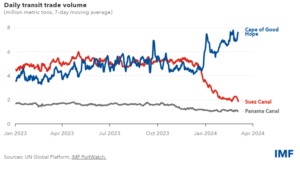
In the first two months of 2024, Suez Canal trade dropped by 50 percent from a year earlier while trade through the Panama Canal fell by 32 percent, disrupting supply chains and distorting key macroeconomic indicators.
In the past few months, global trade has been held back by disruptions at two critical shipping routes. Attacks on vessels in the Red Sea area reduced traffic through the Suez Canal, the shortest maritime route between Asia and Europe, through which about 15 percent of global maritime trade volume normally passes. Instead, several shipping companies diverted their ships around the Cape of Good Hope. This increased delivery times by 10 days or more on average, hurting companies with limited inventories.
On the other side of the world, a severe drought at the Panama Canal has forced authorities to impose restrictions that have substantially reduced daily ship crossings since last October, slowing down maritime trade through another key chokepoint that usually accounts for about 5 percent of global maritime trade.
The Chart of the Week uses data from our PortWatch platform to show trade volume that transits through these three critical shipping lanes. Our high-frequency transit estimates indicate that the volume of trade that passed through the Suez Canal dropped by 50 percent year-over-year in the first two months of the year, and the volume of trade transiting around the Cape of Good Hope surged by an estimated 74 percent above last year’s level. Meanwhile, the transit trade volume through the Panama Canal fell by almost 32 percent compared with the prior year.
The platform also shows that in January and February 2024, there was a 6.7 percent decline year-over-year in port calls to the 70 ports we track in sub-Saharan Africa. The corresponding declines for the European Union and the Middle East and Central Asia were 5.3 percent. These decreases likely reflect the transitory effects of longer shipping times. If continued, the ripple effects of these disruptions could temporarily hamper some supply chains in affected countries and cause upward pressure on inflation (in part due to higher shipping costs).
An important implication of these shipping disruptions is that official statistics on recorded imports (and exports) based on customs records may be affected by the temporary impact of ships being re-routed. This will make it more difficult to gauge the underlying momentum of global trade and economic activity in the coming months.
For example, merchandise trade reports for January in many countries in Africa, the Middle East and Europe may show slowing import growth as some imports that would normally have been recorded in January were only delivered in February. For the same reason, many low-income countries that obtain a significant share of their fiscal revenues from import duties (and export taxes) may report lower fiscal revenue than expected for January.
—This blog was co-authored by the PortWatch team, which includes Serkan Arslanalp. See the press release: IMF and University of Oxford Launch “PortWatch” Platform to Monitor and Simulate Trade Disruptions.
For more information, please contact the authors: Parisa Kamali, Robin Koepke, Alessandra Sozzi, Jasper Verschuur.
Compliments of the IMF.The post IMF | Chart of the Week: International Trade Red Sea Attacks Disrupt Global Trade first appeared on European American Chamber of Commerce New York [EACCNY] | Your Partner for Transatlantic Business Resources.
Article by Atif Mian in the IMF’s Finance & Development Magazine | Nature requires balance—between predator and prey in the jungle, between the push and pull of planets in orbit, and so on. The economic system is no different; it requires long-term balance between what people earn and what they spend. Loss of this balance has led to a massive debt supercycle that threatens the global economy. Breaking that cycle is one of the most pressing challenges of the 21st century.
The debt supercycle is the product of an ever-increasing buildup of borrowing by consumers and governments. For example, total debt was about 140 percent of GDP between 1960 and 1980 in the United States, but has since more than doubled—to 300 percent of GDP. The same trend holds true globally. In fact, not even the Great Recession of 2008—which in many ways was a result of the excesses of borrowing—could put a dent in debt’s relentless upward march. It would be a mistake to think that 2008 reflected merely some unfortunate policy misstep. The buildup in debt that led to the 2008 crisis stemmed from deep structural imbalances in the economy. Those imbalances persist, as do the dangers associated with them.
Behind the imbalances
There are two main forces behind the rise of imbalances that have generated the debt supercycle: the saving glut of the rich and the global saving glut. The saving glut of the rich is a consequence of rising inequality. The share of disposable income going to the very rich (top 1 percent) has been steadily rising since 1980. Since the rich also tend to save a much higher fraction of their disposable income, rising inequality has led to a large surplus of savings accumulated by the very rich. The global saving glut is driven by a group of countries, including China, that essentially mimic the saving glut of the rich phenomenon. These countries have been earning a larger share of global income and also save at a much higher rate through various government institutions, such as central banks and sovereign wealth funds. The combined consequence of these two imbalances is a rise in financial surpluses, which have financed the global debt supercycle.
The financial sector plays an important intermediation role: it takes financial surpluses from rich individuals and countries and lends them to various segments of the economy. A well-functioning financial sector would channel the financial surpluses toward productive investments, such as building and maintaining infrastructure and developing technology. Any debt resulting from such productive lending would naturally be sustainable, because returns from investment would pay it off. Unfortunately, a key feature of the debt supercycle is its failure to finance productive investment. For example, even though total debt as a share of GDP has more than doubled, real investment as a share of GDP has remained stagnant, or even fallen over the past four decades.
Nature requires balance—between predator and prey in the jungle, between the push and pull of planets in orbit, and so on. The economic system is no different; it requires long-term balance between what people earn and what they spend. Loss of this balance has led to a massive debt supercycle that threatens the global economy. Breaking that cycle is one of the most pressing challenges of the 21st century.
The debt supercycle is the product of an ever-increasing buildup of borrowing by consumers and governments. For example, total debt was about 140 percent of GDP between 1960 and 1980 in the United States, but has since more than doubled—to 300 percent of GDP. The same trend holds true globally. In fact, not even the Great Recession of 2008—which in many ways was a result of the excesses of borrowing—could put a dent in debt’s relentless upward march. It would be a mistake to think that 2008 reflected merely some unfortunate policy misstep. The buildup in debt that led to the 2008 crisis stemmed from deep structural imbalances in the economy. Those imbalances persist, as do the dangers associated with them.
Behind the imbalances
There are two main forces behind the rise of imbalances that have generated the debt supercycle: the saving glut of the rich and the global saving glut. The saving glut of the rich is a consequence of rising inequality. The share of disposable income going to the very rich (top 1 percent) has been steadily rising since 1980. Since the rich also tend to save a much higher fraction of their disposable income, rising inequality has led to a large surplus of savings accumulated by the very rich. The global saving glut is driven by a group of countries, including China, that essentially mimic the saving glut of the rich phenomenon. These countries have been earning a larger share of global income and also save at a much higher rate through various government institutions, such as central banks and sovereign wealth funds. The combined consequence of these two imbalances is a rise in financial surpluses, which have financed the global debt supercycle.
The financial sector plays an important intermediation role: it takes financial surpluses from rich individuals and countries and lends them to various segments of the economy. A well-functioning financial sector would channel the financial surpluses toward productive investments, such as building and maintaining infrastructure and developing technology. Any debt resulting from such productive lending would naturally be sustainable, because returns from investment would pay it off. Unfortunately, a key feature of the debt supercycle is its failure to finance productive investment. For example, even though total debt as a share of GDP has more than doubled, real investment as a share of GDP has remained stagnant, or even fallen over the past four decades.
Instead of financing investment, the debt supercycle has mostly financed unproductive consumption by households and governments. Whether debt finances consumption or investment does not pose a problem in the short term, because both contribute toward aggregate demand in the same way. However, debt-financed consumption, or “indebted demand,” has different implications in the long run when indebted consumers repay their lenders. Borrowers can repay their debt only by cutting consumption, which puts a drag on aggregate demand, since savers are less inclined to spend the paid-back funds on consumption.
Pushing rates down
Indebted demand thus pulls down aggregate demand in the long run. The economy attempts to compensate for this downward pressure by pushing interest rates down as well. Lower rates help ease the debt-service burden for borrowers and push aggregate demand back up. Consequently, the rise of the debt supercycle is associated with a persistent fall in long-term interest rates as well. For example, the 10-year US real interest rate has declined from about 7 percent in the early 1980s to zero or even negative values in recent years. One unfortunate implication of the fall in long-term rates is that asset valuations tend to rise, which further worsens inequality.
In short, rising imbalances traceable to the very rich and certain countries have generated a global debt supercycle that largely finances unproductive indebted demand. This significant characteristic of the debt supercycle pushes long-term interest rates down, which only further exacerbates rising wealth inequality. An equally troubling aspect of the debt supercycle is that real investment has not gone up despite the large decline in interest rates and abundant financial surpluses. Debt supercycles reflect problems on the demand side, with rising inequality and the saving glut of the rich, and problems on the supply side, with a highly restrictive investment response despite extremely low interest rates and abundant financing.
World economy’s vulnerabilities
What dangers does the debt supercycle pose to the world economy? An economy that relies on a constant supply of new debt to generate demand is always susceptible to disruptions in financial markets, which can trigger serious slowdowns. This is what happened in 2008 with household debt. Since then, the economy has relied more on government debt to generate demand. Governments in advanced economies can often borrow at a rate lower than their rate of growth, which makes it easier for them to sustain the debt supercycle and keep the economy afloat. But dependence on continuous government borrowing is politically risky because it relies on continued financial market stability. Recent rate hikes in many countries demonstrate that this reliance cannot be taken for granted.
Ultimately the economy needs to find a way to rebalance and reverse the debt supercycle. This calls for structural changes so that growth is more equitable, which would naturally reduce the scope for imbalances. There is also a natural role for tax policy to rebalance the economy. For example, taxing wealth beyond a certain threshold can promote more spending by the very wealthy. This in turn would reduce the saving glut of the rich that finances the unproductive debt cycle. Finally, supply-side reforms, such as removing restrictions on new construction, promoting competition, and boosting public investment, can help expand investment opportunities so that debt can fund productive investment rather than unproductive indebted demand.
Governments around the world have been responding to the ills of the debt supercycle with traditional fiscal and monetary tools. However, as is well known, these tools are designed only to address temporary cyclical problems, not structural problems such as long-term imbalances. For example, looser monetary policy may help boost demand in the short term by enabling borrowers to borrow a little more. But ultimately such indebted demand will pull the economy back down again. We have at best been kicking the proverbial can down the road, and at worst further impeding eventual resolution of the debt supercycle.
Opinions expressed in articles and other materials are those of the authors; they do not necessarily reflect IMF policy.
For more information, please contact the author:
> Atif Mian, Professor of Economics, Public Policy, and Finance, Princeton University
Compliments of the IMF.The post IMF | Dependence on Credit to Boost Demand Imperils the World Economy – We Must Correct the Underlying Imbalances first appeared on European American Chamber of Commerce New York [EACCNY] | Your Partner for Transatlantic Business Resources.
The European Commission was instrumental in brokering important outcomes at the 13th ministerial meeting of the World Trade Organization (MC13) that ended Friday in Abu Dhabi. After a week of intense engagement, EU negotiators secured important agreements on e-commerce, new rules to improve global services trade, environmental cooperation, and strengthening the position of developing countries in the global trading system.
However, over the past months, the EU had worked for ambitious results to revitalise the WTO at a time of rising geopolitical tensions, including a comprehensive agreement on global fisheries subsidies, agriculture reform, and meaningful progress on dispute settlement. The EU regrets that, despite willingness by a large majority of WTO members, it was not possible to find compromises on these issues.
E-COMMERCE REMAINS DUTY FREE
WTO Members agreed to renew the “e-commerce moratorium” until MC14, maintaining duty free trade in online services, including apps, games and software, as well as digitally transmitted content such as music, video, and other digital files. The EU invested considerable time and political effort to build a coalition in favour of this extension, which will help the growth of an already booming global trade in digital services. The e-commerce moratorium has been in place since 1998 and is crucial for businesses – notably SMEs – and consumers around the world, enabling them to engage in electronic commerce and to access electronic services more cheaply and easily. It is also key for businesses in developing countries to expand globally. Digital trade already accounts for close to a quarter of global trade and will only continue to grow in importance. The EU will continue to develop efforts at the WTO towards creating a more inclusive, predictable, and rules-based global trading system that is fit for the digital economy, including seeking a long-term solution for customs duties on electronic transmissions.
BOOST FOR GLOBAL TRADE IN SERVICES
The EU welcomed the entry into force of new rules to facilitate and simplify trade in services. Businesses will now enjoy clear, predictable and effective authorisation procedures in more than 71 markets. The EU was at the forefront of this initiative, which will support economic growth for us and our partners in the largest and fastest growing sector of today’s economy.
SUPPORTING DEVELOPMENT
The EU played a leading role in delivering outcomes that will integrate developing countries more firmly into the global trading system. 123 WTO Members finalised a deal to facilitate investment and support development. This new Agreement on Investment Facilitation for Development (IFD) aims to harness the economic potential of foreign direct investment to boost development in poorer countries. The next step will be to incorporate this agreement into the WTO rulebook. The accession of two new members – Timor Leste and Comoros – to the WTO this week, highlights the value countries around the world still place on a shared global rules base for trade and investment. Ministers also adopted a decision to help least developed countries as they graduate to a higher level of development. Beyond supporting least developed members, WTO members took a step towards improving clear and effective implementation of special and differential treatment for all developing countries in the key areas of standards for market access.
ENVIRONMENT & SUSTAINABILITY
Important progress was made at MC13 on the contribution of trade to environmental sustainability, taking forward work on tackling plastics pollution, phasing out fossil fuels and promoting the circular economy, among others.
The Coalition of Trade Ministers on Climate met under the co-leadership of the European Commission to discuss policies on driving decarbonisation. Ministers from 61 countries also adopted voluntary trade-related actions to tackle the climate crisis.
NO DEAL ON GLOBAL FISHERIES SUBSIDIES
The EU deeply regrets that a handful of WTO members blocked a comprehensive agreement on global fisheries subsidies. A deal was on the table to build on the outcome reached at the 12th Ministerial Conference, and fulfil the mandate set by the UN Sustainable Development Goal 14.6 to ban harmful fisheries subsidies worldwide.
The EU worked with partners from across the development spectrum to find common ground for a robust deal to expand the rules to prohibit subsidies that contribute to overcapacity and overfishing.
INDUSTRIAL POLICY
We regret that there was no agreement at MC13 to launch deliberations on key trade challenges (Trade and Industrial Policy, policy space for industrialisation, Trade and environment) despite such a deal being supported by the EU and a majority of other delegations. The blockage of this future-oriented agenda by a small number of countries is a setback that weakens the role of the WTO as a key forum to address contemporary challenges.
Further international cooperation will continue to be necessary to address these issues, and the EU will maintain its leadership role in this respect.
NO AGREEMENT ON AGRICULTURE
Despite the constructive and pragmatic engagement of the EU and other Members to find compromises towards an agreement, the WTO Members could not agree on advancing agriculture reform at MC13. The divergences across the membership were too large to be solved. This failure is unfortunately to the detriment of the most vulnerable countries who count most on the multilateral trading system.
DISPUTE SETTLEMENT REFORM
AT MC13, WTO members recognised the progress made – and reaffirmed their commitment to finding agreement to restore – a fully functioning dispute settlement system by the end of 2024. The EU has consistently called on the WTO membership to make headway on reforming the dispute settlement system, which is critical to the WTO’s overall legitimacy and to stopping the erosion of trade rules. It is also vital in providing stability for companies to invest and export. However, a solution still needs to be found on a reformed appeal system.
SOLIDARITY WITH UKRAINE
Trade ministers from around the world expressed support for Ukraine at a Solidarity Event, hosted by the EU in the margins of the Ministerial Conference. The event marked the two years since the start of the full-scale war of aggression by Russia against Ukraine. Remembering the victims of the war, WTO Members in attendance reaffirmed their continued support for Ukraine as they called for the end of the war.
Compliments of the European Commission.The post European Commission | EU Secures Results at WTO Ministerial but Important Work Remains to Reform Global Trade Rulebook first appeared on European American Chamber of Commerce New York [EACCNY] | Your Partner for Transatlantic Business Resources.
It is my great pleasure to report to you ahead of your first meeting under the Brazilian G20 Presidency. Tax policy and tax administration efforts can help to move the dial in the fight against extreme poverty and hunger, while addressing rising inequality and closing the funding gaps on the Sustainable Development Goals (SDGs). Thanks to the leadership of the G20, stronger international tax cooperation in recent year has delivered significant additional revenues and other important benefits for governments around the world.
• Since the G20 led global efforts to crack down on bank secrecy in 2009, EUR 126 billion in additional tax revenues have been assessed or collected among the members of the Global Forum on Transparency and Exchange of Information for Tax Purposes (Global Forum).
• The BEPS Project has successfully addressed various tax planning strategies used by multinational enterprises (MNEs) that exploit gaps and mismatches in tax rules to avoid paying tax. The OECD/G20 Inclusive Framework on BEPS (Inclusive Framework) continues to implement the 15 BEPS Actions to tackle tax avoidance, improve the coherence of international tax rules, ensure a more transparent tax environment and address the tax challenges arising from the digitalisation of the economy.
• The implementation of the Inclusive Framework’s landmark Two-Pillar Solution to Address the Tax Challenges Arising from the Digitalisation of the Economy (Two-Pillar Solution), agreed on 8 October 2021, is well advanced. The Pillar Two global minimum tax, which represents the most significant globally coordinated effort to address profit shifting ever agreed, is already being (or will be implemented) by over 35 jurisdictions taking effect in 2024. It will substantially reduce low-taxed profit globally by about 80% (from an estimated 36% of all profit globally to about 7%). Moreover, the Inclusive Framework is now working towards finalising the text of the Multilateral Convention to
Implement Amount A of Pillar One (MLC) by the end of March with a view to holding a signing ceremony by the end of June 2024. Amount A is set to allocate taxing rights on around USD 200 billion profit per year and raise USD 17-32 billion by reallocating taxing rights from investment hubs to market jurisdictions.
Since you last met in October 2023, two new countries have joined the Inclusive Framework, bringing its total membership to 145 countries and jurisdictions1 and three new countries have joined the Global Forum, bringing its total membership to 171 countries and jurisdictions – demonstrating the international community’s ongoing commitment to supporting these bodies as important platforms for international tax cooperation.
You can read the full report here.
Compliments of the OECD.The post OECD | Secretary-General Tax Report to G20 Finance Ministers and Central Bank Governors first appeared on European American Chamber of Commerce New York [EACCNY] | Your Partner for Transatlantic Business Resources.