
EACC

Recovery fund: ministers welcome assessment of four more national plans

Economy and finance ministers today welcomed the assessment of national recovery and resilience plans for Croatia, Cyprus, Lithuania and Slovenia. The Council will adopt its implementing decisions on the approval of these plans by written procedure shortly after the informal ministers’ meeting held today.
Following the formal adoption of the decisions, this second batch of member states will be able to use the facility’s funds to foster their economic recovery from the COVID-19 pandemic. All four member states requested pre-financing from their allocated funds, which will be disbursed after the signing of bilateral grant and loan agreements.

Good news for four more member states – Croatia, Cyprus, Lithuania and Slovenia. Following the approval of first 12 decisions on national plans earlier this month, we swiftly continued our work so that these member states could start receiving support for implementing their planned reforms and investments as soon as possible. We have to make the best possible use of these funds to recover from the crisis and pave the way to a resilient, greener and more digital Europe.
Andrej Šircelj, Slovenia’s Minister for Finance

The Recovery and Resilience Facility is the EU’s programme of large-scale financial support in response to the challenges the pandemic has posed to the European economy. The facility’s €672.5 billion will be used to support the reforms and investments outlined in the member states’ recovery and resilience plans.
Reforms and investments
The Council decisions are preceded by the Commission’s assessment of the national recovery and resilience plans. The plans have to comply with the 2019 and 2020 country-specific recommendations and reflect the EU’s general objective of creating a greener, more digital and more competitive economy.
The reforms and investments that Croatia plans to implement to reach these goals include improving water and waste management, a shift to sustainable mobility and financing digital infrastructures in remote rural areas. Cyprus intends, among other things, to reform its electricity market and facilitate the deployment of renewable energy, as well as to enhance connectivity and e-government solutions.
An increase in locally produced renewables, the green public procurement measures and further developing the rollout of very high capacity networks are some of the measures that Lithuania has included in its recovery and resilience plan. Slovenia plans to use a part of the allocated EU support to invest in sustainable transport, unlock the potential of renewable energy sources and further digitalise its public sector.
Next steps
Future disbursements from the facility will take place once the member states reach milestones and targets set for each investment and reform.
Compliments of the European Council
The post Recovery fund: ministers welcome assessment of four more national plans first appeared on European American Chamber of Commerce New York [EACCNY] | Your Partner for Transatlantic Business Resources.

EACC

EU invests €122 million in innovative projects to decarbonise the economy

For the first time since the creation of the Innovation Fund, the European Union is investing €118 million into 32 small innovative projects located in 14 EU Member States, Iceland and Norway. The grants will support projects aiming to bring low-carbon technologies to the market in energy intensive industries, hydrogen, energy storage and renewable energy. In addition to these grants, 15 projects located in 10 EU Member States and Norway will benefit from project development assistance worth up to €4.4 million, with the aim of advancing their maturity.
Executive Vice-President Timmermans said: “With today’s investment, the EU is giving concrete support to clean tech projects all over Europe to scale up technological solutions that can help reach climate neutrality by 2050. The increase of the Innovation Fund proposed in the Fit for 55 Package will enable the EU to support even more projects in the future, speed them up, and bring them to the market as quickly as possible.”
The 32 projects selected for funding were evaluated by independent experts for their ability to reduce greenhouse gas emissions compared to conventional technologies and to innovate beyond the state-of-the-art while being sufficiently mature to enable their quick deployment. Other criteria included the projects’ potential for scalability and cost effectiveness. The selected projects cover a wide range of relevant sectors to decarbonise different parts of Europe’s industry and energy sectors. The success rate of eligible proposals to this call for proposals is 18%.
The 15 projects that can benefit from project development assistance were assessed to be sufficiently innovative and promising in terms of their ability to reduce greenhouse gas emissions, but not yet mature enough to be considered for a grant. The support, to be provided as tailor-made technical assistance by the European Investment Bank, aims to advance their financial or technical maturity, with a view to potential re-submission under future Innovation Fund calls.
Next steps
Successful projects under the call for small-scale projects are starting to prepare individual grant agreements. These should be finalised in the fourth quarter of 2021, allowing the Commission to adopt the corresponding grant award decision and start disbursing the grants. Projects have up to four years to reach financial closure.
Projects offered development assistance under the call for large-scale projects will be contacted by the European Investment Bank to conclude individual agreements and enable the start of the service in the fourth quarter of 2021.
Compliments of the European Commission.
The post EU invests €122 million in innovative projects to decarbonise the economy first appeared on European American Chamber of Commerce New York [EACCNY] | Your Partner for Transatlantic Business Resources.

EACC

ECB | After the crisis: Economic lessons from the pandemic

Blog post by Fabio Panetta, Member of the Executive Board of the ECB | 27 July 2021 |
With the complete reopening of the economy in sight, what Europe needs to emerge stronger from the pandemic will change. We will have to shift from offsetting lost income to adding new income, and from preserving productive capacity to reallocating capital and labour towards sectors with more favourable opportunities.
Whether we will succeed depends on how we reform the way in which the European economy is governed.
When the pandemic hit, the European Union intervened to provide immediate support: Fiscal and state aid rules were suspended and powerful common instruments were introduced; the European Central Bank (ECB) adopted extraordinary actions to help the economy absorb the shock and loosened bank capital rules.
As the acute phase of the pandemic draws to a close, we are faced with a fundamental choice: Do we go back to the pre-crisis model of economic policymaking or do we opt to transform it?
During the financial crisis, the eurozone adopted a wrong policy mix, causing an economic gap to emerge with other major economies, one from which we have not yet recovered. Back then, the governance of Economic and Monetary Union (EMU) revolved around a dichotomy between a lack of coordination between fiscal and economic policies — outside of emergencies — and far-reaching policy conditionality when it came to financial assistance programs. These aid policies were conceived in partial equilibrium at the level of single countries; there was too little attempt to understand what they meant for the eurozone as a whole.
This system experienced policy failures and political backlash. Limited coordination led to a premature withdrawal of fiscal support and sluggish structural reforms, which, in turn, contributed to the eurozone’s second recession. Far-reaching conditionality unnecessarily divided Europe into creditor and debtor countries, resulting in a deep economic and political divide.
During the pandemic, however, Europe embraced a new model for managing crises. The virus and the restrictions put in place to contain it caused not only a huge negative demand shock but also a powerful and potentially long-lasting adverse supply shock. It accelerated digitalization and automation in ways that will radically transform production and the labor market.
In the face of these shocks, three paradigm shifts have taken place. First, the new European common fiscal instruments, which were introduced to ensure broad-based and faster recoveries, were designed explicitly in recognition that the EU is more than the sum of its parts.
Being funded collectively, the Next Generation EU (NGEU) package has created a critical fiscal policy space akin to federal budget support in other economies. ECB research suggests that if the entire NGEU loan envelope were taken up, the program could raise the public investment-to-GDP ratio in the eurozone by almost 40 percent by 2024. The ratio could even double in some countries.
The second shift is the recognition that reforms are more likely to emerge in a growing economy, where resources can be redistributed more easily. That has also highlighted the need to align demand- and supply-side policies at the EU level.
Europe’s sovereign debt crisis illustrated that austerity does not pay, and simply stimulating demand would not be sufficient to escape the low growth trap. The economy must adapt to the new economic environment created by the pandemic, with resources being reallocated across sectors and firms.
The most productive companies need to expand, and the unprofitable ones need to exit. NGEU recognizes this by providing grants to accelerate the green and digital transitions, in exchange for growth-enhancing recovery plans that modernize legal and institutional frameworks, enabling this reallocation of resources.
This points to the third paradigm shift, which is more institutional in nature: The explicit commitment by EU countries to transform their economies using European funding, so that the investment eventually repays itself through higher productivity growth and positive demand spillovers.
This reflects the growing awareness of how interdependent European economies are. For example, the European Commission estimates that countries like Belgium, Luxembourg, Austria and even Germany will obtain most of the GDP stimulus from NGEU through the boost in foreign-induced demand, stemming from other corners of the EU.
This autumn, as Europe reviews its economic governance, we have the possibility of taking decisions that will put the recovery and the post-crisis economy on stronger footing by building on these three paradigm shifts. But this will require a new approach.
First, we need to make sure this new “European social contract” embodied by NGEU is adopted through recovery and resilience plans that are ambitious and well implemented. The recovery fund is based on a joint effort — through a balance of responsibilities — by European and national authorities. It puts European money on the table, while member countries put forward concrete plans, which are consistent with EU priorities, to tackle their economic and institutional weaknesses. If successfully implemented, NGEU will help legitimize this new model, and the use of EU bonds, should a future crisis again threaten to overwhelm national policies.
Second, while NGEU grants will play a crucial role in managing the structural transformation created by the accelerated shift toward digitalization and automation, the EU liquidity toolbox remains insufficiently used or ill-suited to tackle this challenge head-on.
Loans under NGEU can be used to modernize the economy, but the available envelope remains partly untapped. Meanwhile, liquidity support provided by programs such as the temporary Support to mitigate Unemployment Risks in an Emergency (SURE) and the European Stability Mechanism remains targeted at yesterday’s challenges — notably, substituting lost income and supporting health expenditure, which were more pressing during the immediate public health crisis that we are now starting to emerge from.
These tools could be extended and adapted to support various policy objectives in the recovery phase, first and foremost boosting human capital through measures such as on-the-job training and active labor market policies. This would, in turn, stimulate employment growth as the recovery picks up speed.
Third, it’s important to note that the bulk of Europe’s fiscal firepower remains nested in national policies. Therefore, reforms to the rules that govern them are essential. Fiscal rules aim to guide governments on which policy trajectories are consistent with the sustainability of public finances. But because they affect demand directly and through expectations, they can only be stabilizing if they are countercyclical.
A targeted reform should therefore include both a conjunctural component (ensuring that fiscal policy is responsive to short-run market fluctuations and enables a strong recovery) and a structural component (strengthening the sustainability of debt over the economic cycle).
Only by protecting public investment over the entire business cycle, while successfully implementing structural reforms, can we boost productivity and growth potential and, ultimately, rebuild tax bases and service debt in the long run.
If we apply the lessons of the pandemic to our economic policy, we can emerge from this crisis with a stronger economy and greater social and political cohesion. Upgrading the rules by which the EMU is governed is unequivocally in the interest of all EU member countries, and the importance of NGEU cannot be overstated. Its success would recast the EU economic toolbox and shore up the European project for generations to come.
This blog post first appeared as an opinion piece in Politico.eu on 27 July 2021.
Compliments of the European Central Bank.
The post ECB | After the crisis: Economic lessons from the pandemic first appeared on European American Chamber of Commerce New York [EACCNY] | Your Partner for Transatlantic Business Resources.

EACC

IMF | Cryptoassets as National Currency? A Step Too Far

New digital forms of money have the potential to provide cheaper and faster payments, enhance financial inclusion, improve resilience and competition among payment providers, and facilitate cross-border transfers.
But doing so is not straightforward. It requires significant investment as well as difficult policy choices, such as clarifying the role of the public and private sectors in providing and regulating digital forms of money.
Some countries may be tempted by a shortcut: adopting cryptoassets as national currencies. Many are indeed secure, easy to access, and cheap to transact. We believe, however, that in most cases risks and costs outweigh potential benefits.
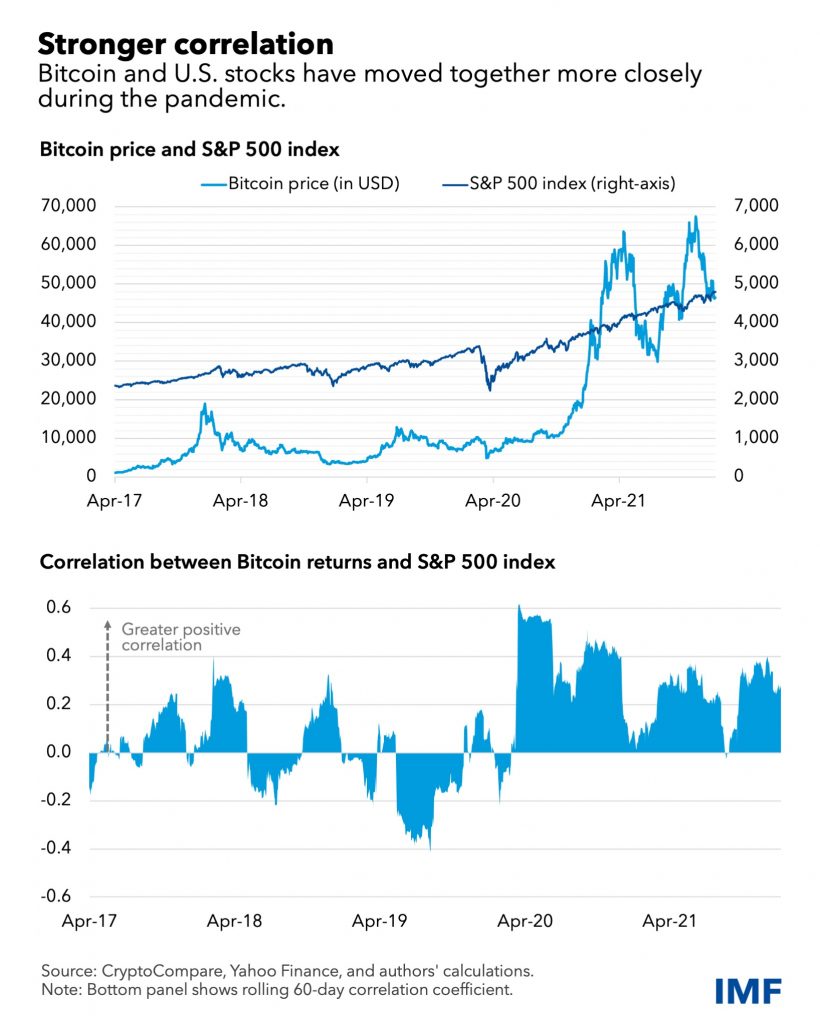
Cryptoassets are privately issued tokens based on cryptographic techniques and denominated in their own unit of account. Their value can be extremely volatile. Bitcoin, for instance, reached a peak of $65,000 in April and crashed to less than half that value two months later.
And yet, Bitcoin lives on. For some, it is an opportunity to transact anonymously—for good or bad. For others, it is a means to diversify portfolios and hold a speculative asset that can bring riches but also significant losses.
Cryptoassets are thus fundamentally different from other kinds of digital money. Central banks, for instance, are considering issuing digital currencies—digital money issued in the form of a liability of the central bank. Private companies are also pushing the frontier, with money that can be sent over mobile phones, popular in East Africa and China, and with stablecoins, whose value depends on the safety and liquidity of backing assets.
Cryptoassets as legal tender?
Bitcoin and its peers have mostly remained on the fringes of finance and payments, yet some countries are actively considering granting cryptoassets legal tender status, and even making these a second (or potentially only) national currency.
If a cryptoasset were granted legal tender status, it would have to be accepted by creditors in payment of monetary obligations, including taxes, similar to notes and coins (currency) issued by the central bank.
Countries can even go further by passing laws to encourage the use of cryptoassets as a national currency, that is, as an official monetary unit (in which monetary obligations can be expressed), and a mandatory means of payment for everyday purchases.
Cryptoassets are unlikely to catch on in countries with stable inflation and exchange rates, and credible institutions. Households and businesses would have very little incentive to price or save in a parallel cryptoasset such as Bitcoin, even if it were given legal tender or currency status. Their value is just too volatile and unrelated to the real economy.
Even in relatively less stable economies, the use of a globally recognized reserve currency such as the dollar or euro would likely be more alluring than adopting a cryptoasset.
A cryptoasset might catch on as a vehicle for unbanked people to make payments, but not to store value. It would be immediately exchanged into real currency upon receipt.
Then again, real currency may not always be readily available, nor easily transferable. Moreover, in some countries, laws forbid or restrict payments in other forms of money. These could tip the balance towards widespread use of cryptoassets.
Proceed with caution
The most direct cost of widespread adoption of a cryptoasset such as Bitcoin is to macroeconomic stability. If goods and services were priced in both a real currency and a cryptoasset, households and businesses would spend significant time and resources choosing which money to hold as opposed to engaging in productive activities. Similarly, government revenues would be exposed to exchange rate risk if taxes were quoted in advance in a cryptoasset while expenditures remained mostly in the local currency, or vice versa.
Also, monetary policy would lose bite. Central banks cannot set interest rates on a foreign currency. Usually, when a country adopts a foreign currency as its own, it “imports” the credibility of the foreign monetary policy and hope to bring its economy–and interest rates–in line with the foreign business cycle. Neither of these is possible in the case of widespread cryptoasset adoption.
As a result, domestic prices could become highly unstable. Even if all prices were quoted in, say, Bitcoin, the prices of imported goods and services would still fluctuate massively, following the whims of market valuations.
Financial integrity could also suffer. Without robust anti-money laundering and combating the financing of terrorism measures, cryptoassets can be used to launder ill-gotten money, fund terrorism, and evade taxes. This could pose risks to a country’s financial system, fiscal balance, and relationships with foreign countries and correspondent banks.
The Financial Action Task Force has set a standard for how virtual assets and related service providers should be regulated to limit financial integrity risks. But enforcement of that standard is not yet consistent across countries, which can be problematic given the potential for cross-border activities.
Further legal issues arise. Legal tender status requires that a means of payment be widely accessible. However, internet access and technology needed to transfer cryptoassets remains scarce in many countries, raising issues about fairness and financial inclusion. Moreover, the official monetary unit must be sufficiently stable in value to facilitate its use for medium- to long-term monetary obligations. And changes to a country’s legal tender status and monetary unit typically require complex and widespread changes to monetary law to avoid creating a disjointed legal system.
In addition, banks and other financial institutions could be exposed to the massive fluctuations in cryptoasset prices. It is not clear whether prudential regulation against exposures to foreign currency or risky assets in banks could be upheld if Bitcoin, for instance, were given legal tender status.
Moreover, widespread cryptoasset use would undermine consumer protection. Households and businesses could lose wealth through large swings in value, fraud, or cyber-attacks. While the technology underlying cryptoassets has proven extremely robust, technical glitches could occur. In the case of Bitcoin, recourse is difficult as there is no legal issuer.
Finally, mined cryptoassets such as Bitcoin require an enormous amount of electricity to power the computer networks that verify transactions. The ecological implications of adopting these cryptoassets as a national currency could be dire.
Striking a balance
As national currency, cryptoassets—including Bitcoin—come with substantial risks to macro-financial stability, financial integrity, consumer protection, and the environment. The advantages of their underlying technologies, including the potential for cheaper and more inclusive financial services, should not be overlooked. Governments, however, need to step up to provide these services, and leverage new digital forms of money while preserving stability, efficiency, equality, and environmental sustainability. Attempting to make cryptoassets a national currency is an inadvisable shortcut.
Compliments of the IMF.
The post IMF | Cryptoassets as National Currency? A Step Too Far first appeared on European American Chamber of Commerce New York [EACCNY] | Your Partner for Transatlantic Business Resources.

EACC

Delivering the European Green Deal

Making Europe the first climate neutral continent in the world is our goal. On July 14, the European Commission adopted a broad set of proposals to make the EU’s climate, energy, transport, and taxation policies fit for reducing net greenhouse gas emissions by at least 55% by 2030, compared to 1990 levels.
These proposals aim to make all sectors of the EU’s economy fit to meet this challenge. They set the EU on a path to reach its climate targets by 2030 in a fair, cost effective and competitive way.

Revision of the EU Emission Trading System, including revision of the EU ETS Directive concerning aviation, maritime and CORSIA
Revision of the Regulation on the inclusion of greenhouse gas emissions and removals from land use, land use change and forestry (LULUCF)
Effort Sharing Regulation
Amendment to the Renewable Energy Directive to implement the ambition of the new 2030 climate target
Amendment of the Energy Efficiency Directive to implement the ambition of the new 2030 climate target
ReFuelEU Aviation – sustainable aviation fuels –
FuelEU Maritime – green European maritime space
Revision of the Directive on deployment of the alternative fuels infrastructure
Amendment of the Regulation setting CO2 emission standards for cars and vans
Carbon border adjustment mechanism
Revision of the Energy Tax Directive
Climate Action Social Facility

Resources

Delivering the European Green Deal (official webpage)

Official European Commission communications (PDF)

Press conferences on Delivering the European Green Deal and its individual proposals (video)

Compliments of the Delegation of the European Union to the United States.
The post Delivering the European Green Deal first appeared on European American Chamber of Commerce New York [EACCNY] | Your Partner for Transatlantic Business Resources.

EACC

EACCNY Country Highlight: The Republic of KOSOVO

EACC New York is inviting European countries, member states and non-member states, to share some fun facts about their country with the EACC network to showcase their home country’s cultural beauty, economic strengths, and their role in transatlantic trade & investment.

Today, we present a profile for the REPUBLIC OF KOSOVO.
A quick fun fact about your country: Kosovo is the newest and youngest country in Europe, with 70% of its population under the age of 35, and an average age of 29.1 years old.
What is a famous dish from your Country and do you like it? Do you eat it a lot? Located at the heart of the Balkan peninsula, this landlocked country is one of the region’s hidden gems. Beyond asphalt and dust, which at times seem overwhelming, one can discover rolling hills, lush green forests and meadows, high snow-covered peaks and charming old towns.
The people of Kosovo are proud of their multi-cultural and multi religious society. Its people are particularly proud of their traditions of hospitality. Guests in a Kosovo home are treated with the highest honor and respect. Kosovar hosts are always ready to offer help, a cup of coffee or a free meal – a guarantee for a great trip.
Kosovo has a very old and healthy gastronomy with traditional and mostly Mediterranean food. There are a lot of traditional dishes, but among the most popular traditional Albanian dishes are Flija, a dish of pancake like pastry layered with cream and yogurt, then would be Pite, a phyllo pastry with cheese, meat, or vegetable filling. Another characteristic dish is Llokuma, deep-fried dough puffs pairing with yogurt, cheese or ajvar, a spicy homemade spread of roasted red peppers (and sometimes eggplant) that is found on nearly every table. Among the traditional sweets Bakllava is the most common sweet to be served on special occasions.
And, of course, since we have a large diaspora in the U.S., mostly in New York, almost all the mentioned traditional dishes may be found here.
What is your Country’s strongest connection to NYC? To the US? Kosovo is a very pro-American nation. This devotion has its roots since back in the ‘90’s when Kosovo was going through the oppression under the Serbian regime. The US and other Western allies intervened to stop the ethnic cleansing campaign against the Kosovan people.

Having this special bond with the U.S., a lot of streets and boulevards in Kosovo’s capital – Prishtina, are named after some U.S. representative, such as: Along the Bill Clinton Boulevard in Prishtina, there’s an 11-foot statue of former President Clinton, and next to that statue there is a boutique called Hillary, selling woman suits. “Kosovo will always hold a special place in my heart,” Bill Clinton said in a video message for the country’s 10th birthday on February 17, 2018.
There’s a boulevard dedicated to George W. Bush, the American President who supported Kosovo when it officially declared independence in 2008.
The former US Secretary of State Madeleine Albright is among the growing list of illustrious American politicians to get their own bust.
Even Democratic US Congressman from New York and a longtime supporter of Kosovo Eliot Engel has seen a boulevard named after him.
The now retired US Republican Senator Bob Dole is being honored twice, with a boulevard named after him and a statue also.
There is a roadway named Beau Biden after the late son of the President Joe Biden, outside Camp Bondsteel, the U.S. military base in Kosovo.

During the struggles of the ’eighties and ’nineties, the diaspora was very involved in the affairs of Kosovo and alleviated many hardships. The Kosovo diaspora has been and continues to be a great contributor to the economy of the country mostly through remittances (15% of GDP), through investments and the circulation of talent. These are people of various ages, different professions and different generations of migration and they present different motivations and reasons to stay connected to Kosovo.
Albanian community in the US have been able to climb the ladders of success through hard work and their own talent. Particularly in New York City, there are many Kosovar/Albanian restaurants owners, businesses, young entrepreneurs, achieving political success or degrees in the medical field. Albanian New Yorkers have begun to find success in other areas as well, such as show business, where there are significant singers, models and designers.
Kosovo has a very vibrant community, with contributions and distinct presence of which has been growing for years. With increased economic and social status, our people in New York have begun carving their own identity. More restaurants like Çka Ka Qëllu, Dea – an Authentic Eatery, and Dua Caffein the Bronx and Manhattan are exclusively serving our traditional cuisine.
The presence of Kosovo’s community brings charm to the New York City Metropolitan area.
In your view, what is the hottest industry/field in your Country at the moment? Kosovo offers a range of ground-floor investment opportunities in the renewable energy and agricultural sectors. Other sectors that are becoming important to Kosovo are wood processing, wine companies, textile industry and the Information and Communications Technology (ICT) sector (developing startups, business process outsourcing and customer support centers).
The ICT sector in Kosovo is one of the most developed and promising sectors for generating economic growth. It has proven to be a highly promising sector for generating new jobs for young entrepreneurs, as well as for increasing the overall level of the country’s exports. The ICT sector is among the few sectors within the Kosovo economy that is characterized by a positive trade balance, where around 78% of already existing companies export their services.
Kosovo is expected to become an even more attractive country for foreign companies in terms of ICT services, where approximately 350 ICT professionals graduate each year and this number is expected to grow substantially in forthcoming years. Having a skilled and experienced workforce, as well as the suitable geographical area and time zone, Kosovo is a target for many foreign companies and investors.
Kosovo is also one of the top locations that has gained a lot of recognition for outsourcing services that is growing stronger day by day. There is an enormous range of benefits when outsourcing IT services, customer care, market research, and other shared services to Kosovo. This includes the country’s youth, who are well-educated, highly motivated and satisfactory with their work. The potential of this work force is characterized by the high literacy of foreign languages, such as English and German. Almost every citizen in the workforce now in their mid-20s, speaks and writes fluent English.
How is your Country attracting foreign business? The free market economy is the foundation for the economic development and the welfare of businesses in Kosovo. Kosovo’s economy has become part of the economic integration of its region, offering opportunities to expand the market by showing progress in transitioning to a market-based system and maintaining macroeconomic stability.
Kosovo’s legal framework are consistent with international benchmarks for supporting and protecting investments. The laws and regulations on establishing and owning business enterprises and engaging in all forms of remunerative activity apply equally to foreign and domestic private entities. Under Kosovo law, foreign firms operating in Kosovo are granted the same privileges as local businesses. To promote and support foreign investments, the Government of Kosovo has established the Kosovo Investment Enterprise and Support Agency (KIESA). The agency is tasked with offering a menu of services, including assistance and advice on starting a business in Kosovo, assistance with applying for a site in a special economic zone or as a business incubator, facilitation of meetings with different state institutions, and participation in business-to-business meetings and conferences.
Kosovo is a member of the International Monetary Fund (IMF), World Bank (WB), and other strong economic and financial mechanisms such as European Bank for Reconstruction and Development (EBRD), and Council of Europe Development Bank. In 2016, the Government of Kosovo ratified a strategic investment law, with the intention to ease market access for investors in key sectors. Moreover, the government partnered with USAID and other international donors to launch the Kosovo Credit Guarantee Fund, which improves access to credit.
As an important location for business development, Kosovo offers comparative advantages such as: a young and well qualified population, natural resources, favorable climatic conditions, new infrastructure, a fiscal policy with the lowest taxation in the region, a geographic position with access to the regional Central European Free Trade Agreement (CEFTA) market and that of the European Union
What is your Country’s most successful export product? Kosovo has maintained positive economic growth rates for over a decade. Currently, the most successful export product are hybrid mattresses that are being exported to the EU and US market. Kosovo’s largest exports are outsourcing services, metal and wood-based products, as well as mineral products. Additionally, wine products cultivated from old traditions in Rahovec, Kosovo have found very successful placement in the international market, including Europe and the US.
What are some best-practice insights for businesses seeking to move/expand into your Country? Kosovo’s relatively young population, low labor costs, and rich natural resources have attracted several significant foreign investments, and several international firms and franchises are present in the market. Kosovo has free trade agreements with important markets, and linkages to the EU has strengthened since the signing of the Stabilization and Association Agreements (SAAs).
Being located in the heart of the Balkans, Kosovo offers easy access to neighboring markets and CEFTA members, a market of approximately 28 million people. Kosovo’s infrastructure has been steadily improving, with the completion of a modern highway to Albania, providing easily access the Adriatic Sea Port of Durrës for less than three hours. A second highway to North Macedonia provides access to Thessaloniki Sea Port for about five hours. More than two million passengers passed through Pristina’s international airport in 2019 as well.
Labor cost has also become a competitive advantage. Kosovo has become the new low-cost investment destination. With 40-60% lower average gross wage than the CEB economies and one fifth that of more advanced EU economies, Kosovo is particularly attractive to labor-intensive industries.
Taxes in Kosovo are very low compared to neighboring countries. The tax system is kept extremely simple. Kosovo has one of Europe’s lowest corporate income tax rates and stands out for its low prices for energy. Tax policies in Kosovo are very competitive, and the current tax regime is business-friendly with a flat, 10 percent corporate income tax, personal income tax is 10%, tax on dividend 0% and the VAT is 0 and 8% to max 18%.
In the 2020 Doing Business Report, Kosovo ranked 57 out of 190 economies surveyed and was recognized as one of the top 20 most improved economies in the world.  Kosovo also scored highly in the sub-categories for ease of “Starting a Business” and “Getting Credit”, as it had been ranking 12th and 15th, respectively out of the 190 countries measured in the report and leading as a country among Western Balkans countries in those two categories. Moreover, according to Index of Economic Freedom, Kosovo’s economic freedom scored 67.4, making its economy the 53rd freest in the 2020 Index.
Kosovo enjoys free access to the markets of Japan, Norway, Switzerland, Turkey, and the US due to the preferential trade treatment these countries offer for Kosovo products. As a member of the EU-funded Western Balkans 6 (WB6) core transportation network, which aims at improving regional connectivity, Kosovo plans to revitalize key railway lines for both domestic transport and connections with neighboring countries.
Despite the fact that Kosovo is not an official Eurozone member, it has unilaterally adopted the euro monetary as its currency ever since 2002, avoiding the risk of currency fluctuation and attracted more foreign investments.
What’s the biggest cultural difference you’ve noticed between America and your County? Home to a variety of communities and historically a crossroad of peoples, Kosovo has inherited variety of cultural influences. It must be noted at the outset that two countries share more similarities than differences.
One notable difference is the way coffee is enjoyed. In Kosovo, you will find cafes on every block of every city. Kosovo has become very famous for its own way of making coffee, especially the macchiato. While in the US, having a coffee is mostly on the rush because people are busy with their daily activities. In Kosovo, coffee is enjoyed in a more relaxing mode over a date or chat with a friend. The macchiato fits seamlessly into the daily routine of the Kosovar. But what makes it so special, is the people (bartenders) who prepare them that make them so good. People there, especially tourists love them. The trick is also how you foam the milk. You can order a macchiato almost anywhere you go in Kosovo: a roadside greasy spoon, a gas station – and they’re cheap.
In the grand scheme, what do strong European-American relationships mean to your country? The EU and the US have played a crucial role in Kosovo since the end of war. They provide political and financial support for programs related to economic growth through private sector, promotion of multi-ethnicity, support for good governance, and integration in the EU and Euro-Atlantic structures.
The progress in Kosovo as well as in the region depends very much on the transatlantic relations. The EU remains the largest trade partner for Kosovo, and Kosovo aspires to join the EU. Kosovo considers the US as a key ally and security guarantor, receiving the largest share of U.S. foreign assistance to the Balkans. The two countries also cooperate on numerous security issues.
The Republic of Kosovo is fully determined to complete the process of integration into the European Union, NATO, and other Euro-Atlantic structures. The greater the relationship between Europe and the US means more prosperity, economic development, and security for our country and the region.
Compliments of The Consulate General of the Republic of Kosovo in NY – a member of the EACCNY.
The post EACCNY Country Highlight: The Republic of KOSOVO first appeared on European American Chamber of Commerce New York [EACCNY] | Your Partner for Transatlantic Business Resources.

EACC

State aid: EU Commission widens scope of General Block Exemption Regulation – frequently asked questions

The European Commission is in charge of ensuring that State aid granted by Member States complies with EU rules. At the heart of this responsibility lies the notification procedure, under which Member States have to notify any planned aid measures to the Commission before putting them into effect. Therefore, generally, aid measures can only be implemented after approval by the Commission.
The General Block Exemption Regulation (“GBER”) introduces an important exception to the obligatory notification procedure. It declares specific categories of State aid compatible with the Treaty if they fulfil certain conditions and it exempts these categories from the requirement of prior notification to the Commission. By doing so, it allows Member States to implement public support measures directly, without prior Commission approval.
The European Commission has further widened the scope of the General Block Exemption Regulation. The new rules concern:

Aid granted through national funds for projects also supported under certain EU centrally managed programmes;
State aid to support the twin transition to a green and digital economy that will, at the same time, help the recovery from the effects of the coronavirus pandemic.

Please see also the related press release.
What is the General Block Exemption Regulation?
The 2014 ‘General Block Exemption Regulation‘ exempts certain categories of State aid from the requirement of prior notification to the Commission, when the benefits to society outweigh the possible distortions of competition that the aid may cause to the Single Market. State aid measures that meet the criteria of the Regulation can be implemented by Member States directly, without prior Commission approval. As a result, more than 96% of new of state aid measures implemented by Member States are now exempted.
The criteria set out in the General Block Exemption Regulation determine, in particular, eligible beneficiaries, maximum aid intensities (i.e. the maximum proportion of the eligible costs of a project that can benefit from State aid), aid amounts and eligible expenses. These criteria are derived from the Commission’s market experience and decision-making practice.
The fact that a State aid measure does not meet the criteria of the General Block Exemption Regulation does not mean that it is incompatible with EU state aid rules. It only means that the measure must be notified (prior to its implementation) to the Commission, which will then assess whether the State aid can be approved under other EU State aid rules.
Why has the Commission amended the General Block Exemption Regulation?
The aim of the current extension of the General Block Exemption Regulation is, firstly, to improve the interplay between EU funding rules under the new Multiannual Financial Framework (“MFF” the “budget” of the EU) on the one hand and EU State aid rules on the other hand. With this extension, the Commission, also introduces further possibilities for Member States to provide State aid to support the recovery from the economic impact of the coronavirus pandemic in a sustainable and resilient way without prior notification.
As regards the first aspect, the GBER extension aligns EU funding rules and EU State aid rules in certain areas. This will reduce unnecessary complexities, for example by allowing Member States to rely on the assessment of projects already carried out at EU-programme level, rather than having to carry out a separate assessment for State aid purposes when combining with national funding or funding under shared management programmes. At the same time, the rules ensure that competition in the EU Single market is preserved, amongst others by ensuring that public funding addresses market failures, does not crowd out private investments and is limited to the minimum necessary to achieve the public policy goals.
The extension of the GBER introduces new rules in the following areas:

Financing and investment operations supported by the InvestEU Fund;
Research, Development and Innovation (RD&I);
European Territorial Cooperation (ETC) projects, also known as Interreg;

In addition to these areas, the revision also introduces new block exemptions for European Innovation Partnership for agricultural productivity and sustainability (‘EIP’), and Operational Group projects or community-led local development (‘CLLD’) projects.
Furthermore, the extension of the GBER provides for additional possibilities for Member States to support the transition to a green and digital economy in a way that will speed up their economic recovery from the coronavirus pandemic. This will allow for the quick implementation, without prior notification to the Commission, of crucial State aid measures that will accelerate the twin transition and, at the same time, the recovery from the economic effects of the pandemic in a sustainable and resilient way. For this purpose, the rules in the following areas have been revised:

Aid for energy efficiency projects in buildings;
Aid for publicly accessible electric recharging and hydrogen refuelling infrastructure for road vehicles;
Aid for fixed broadband networks, 4G and 5G mobile networks, certain trans-European digital connectivity infrastructure projects and certain vouchers.

What are the main new elements of the General Block Exemption Regulation?
The amendment of the General Block Exemption Regulation (“GBER”) provides new rules to: (i) accompany the new Multiannual Financial Framework; (ii) support the twin transition to a green and digital economy and (iii) the recovery from the economic effects of the coronavirus pandemic.

1. Measures to accompany the new Multiannual Financial Framework:

New rules for State aid involved in the implementation of the new InvestEU program
The aim of the InvestEU Fund is to provide for an EU guarantee to support financing and investment operations to address specific market failures and mobilise additional private and public investment in support of the Union’s internal policies. Member States have a possibility to contribute their resources to the EU guarantee under the Member State compartment and/or to finance financial products via national promotional banks or other public finance institutions under the support of the InvestEU Fund.
Financial products supported by the InvestEU Fund may involve funds controlled by Member States, including Union shared management funds, contributions stemming from the Recovery and Resilience Facility (“RRF”), or other contributions by Member States, in order to increase leverage and support additional investments in the Union. For instance, Member States have the possibility of contributing a part of Union shared management funds or Recovery and Resilience Facility resources to the Member State compartment of the EU guarantee. Moreover, Member States can finance financial products backed by the InvestEU Fund through their own funds or national promotional banks. The GBER amendment introduces block exemptions for situations where such funding constitutes State aid and will, thereby, improve the interplay between the InvestEU Fund and State aid rules. This will facilitate the deployment of Member States’ resources to finance the target investments under the support of the InvestEU Fund, while at the same time ensuring that potential competition distortions are minimised.
The amendment introduces two new block exemptions, catering for the following scenarios:

The first (general) scenario provides for eligibility and exclusion criteria for the final recipients, as well as maximum financing amounts for a wide range of different policy areas (broadband; energy generation and infrastructure; social, educational, cultural and natural heritage infrastructure and activities; transport and transport infrastructures; other infrastructures than transport; environmental protection, including climate protection; research, development, innovation and digitalisation). The scenario provides for additional possibilities for block exempting aid for SMEs and small mid-caps, even beyond the listed policy areas.
The second scenario applies to financial products supporting smaller financing (up to €7.5 million per beneficiary), provided to final recipients by commercial financial intermediaries which retain some risk exposure. There will be no limitations (“eligibility criteria”) for final recipients under this scenario, except for the exclusion of large firms in financial difficulties.

New rules in the area of Research, Development and Innovation:
The GBER amendment will facilitate the way in which centrally managed funding from Horizon Europe can be combined or, in cases of projects having received a Seal of Excellence, substituted with national funding. Following a detailed mapping exercise of the different sets of rules, the amendment aligns certain aspects of State aid rules, on the one hand, and Horizon Europe on the other. This will prevent potential discrepancies that could cause delays or difficulties in the roll-out of R&D&I funding under the new Multiannual Financial Framework.
More concretely, the amendment provides for exemptions to the notification obligation and of the requirement to carry out at national level an assessment of the quality of an R&D&I project already assessed under the rules established under Horizon 2020 and Horizon Europe programmes in the following areas:

Aid for SMEs for research and development projects as well as feasibility studies awarded a Seal of Excellence quality label under the Horizon 2020 or the Horizon Europe programme;
Aid for Marie Skłodowska-Curie actions and ERC Proof of Concept actions awarded a Seal of Excellence quality label under the Horizon 2020 or the Horizon Europe programme;
Aid provided to a co-funded research and development project or a feasibility study implemented by at least three Member States, or alternatively two Member States and at least one associated country, and selected on the basis of the evaluation and ranking made by independent experts following trans-national calls, in line with the Horizon 2020 or Horizon Europe programme rules;
Aid provided to co-funded Teaming actions, involving at least two Member States and selected on the basis of the evaluation and ranking made by independent experts following transnational calls under the Horizon 2020 or the Horizon Europe programme rules.

New rules for European Territorial Cooperation (also known as “Interreg”)
The promotion of European Territorial Cooperation (“ETC”) projects has been an important priority in the EU’s Cohesion policy for many years. Under State aid rules, a block exemption for aid provided in the context of such ETC projects already existed. Given the experience gained in the area, the GBER amendment extends the possibilities for providing aid to ETC projects in two ways:

The already existing block exemption, which was limited to aid being provided to SMEs, is extended to allow aid to be provided also to large companies without prior notification;
In addition, a new, simplified, block exemption for very small amounts of aid provided to ETC projects is introduced (up to €20 000 per beneficiary per project).

New rules for European Innovation Partnership for agricultural productivity and sustainability (‘EIP’) Operational Group projects and community-led local development (‘CLLD’) projects
The amendment introduces new block exemptions for SMEs participating in community-led local development (‘CLLD’) projects, designated as LEADER (“Liaison Entre Actions de Développement de l’Économie Rurale”) projects for local development under the European Agricultural Fund for Rural Development, or European Innovation Partnership (‘EIP’) for agricultural productivity and sustainability Operational Group projects.
In addition to a general provision, spelling out eligible costs and maximum aid intensities, the amendment introduces a simplified block exemption for small amounts of funding per project, not exceeding €200.000 for CLLD projects and €350.000 for EIP Operational Group projects.
2. Measures to support the twin transition to a green and digital economy as well as the recovery from the economic effects of the coronavirus pandemic
The GBER extension revises and provides block exemptions in areas that are key to the transition to a green and digital economy. The measures Member States will be implementing under these new rules will, at the same time, help to implement their Recovery and Resilience Plans (in particular under the European Flagships “renovate”, “recharge and refuel” and “connect”), as well as other measures taken at national level to support the recovery from the economic effects of the coronavirus pandemic, in a fast and streamlined manner.
Aid for energy efficiency measures in buildings
The amendment simplifies the rules for State aid for energy efficiency measures in buildings by:

simplifying the way of calculating the eligible costs for certain categories of buildings, including residential buildings;
including a new possibility of combining aid for energy efficiency measures in those buildings with aid for on-site renewable energy installations, storage facilities for the renewable energy produced, equipment and infrastructures for the recharging of electric vehicles and investments in the digitalisation of the building;
including a new possibility allowing for the aid measures to also relate to the facilitation of energy performance contracts.

Aid for publicly accessible recharging or refuelling infrastructure for zero and low emission road vehicles
The amendment introduces a new block exemption for aid for publicly accessible recharging or refuelling infrastructure for the supply of electricity and hydrogen to zero and low emission road vehicles for transport purposes. This will facilitate aid for comprehensive networks of such infrastructures in the Member States far beyond what was possible under the GBER rules in place until today (under which only aid for local measures was block exempted and larger networks of recharging and refuelling infrastructures were subject to a notification procedure and prior approval by the Commission).
Aid for broadband infrastructures
In order to facilitate the digital transition, including in the context of the recovery, the amendment also revises the rules on aid for broadband infrastructures:

Revision of the rules for fixed broadband networks:

The amendment allows aid for investments in fixed broadband networks in the following cases:

to connect households and socio-economic drivers in areas where there is no network able to reliably provide speeds of at least 30 Mbps download present or credibly planned to be deployed within three years from the moment of publication of the planned aid measure or within the same timeframe as the deployment of the subsidised network;
to connect households and socio-economic drivers in areas where there is no network able to reliably provide speeds of at least 100 Mbps download present or credibly planned to be deployed within three years from the moment of publication of the planned aid measure or within the same timeframe as the deployment of the subsidised network; and
to connect only socio-economic drivers in areas where there is only one network able to reliably provide speeds of at least 100 Mbps download, but below 300 Mbps download, present or credibly planned to be deployed within three years from the moment of publication of the planned aid measure or within the same timeframe as the deployment of the subsidised network.

Introduction of new rules for aid for 4G and 5G mobile networks;
Introduction of new rules for aid for projects of common interest in the area of trans-European digital connectivity infrastructure; and
Introduction of new rules for aid schemes for certain vouchers for consumers in order to facilitate teleworking, online education, training services, or for SMEs.

Are there any other measures contained in the amendment that could facilitate the application of State aid rules during the ongoing coronavirus pandemic?
The coronavirus pandemic continues to significantly affect undertakings in the EU. In response to the pandemic, the Commission adopted temporary rules in March 2020, (“Temporary Framework for State aid measures to support the economy in the current COVID-19 outbreak”, as amended on 2 April 2020, 8 May 2020, 29 June 2020, 13 October 2020 and 28 January 2021) to give Member States a flexible framework to support their economies. One aspect of these temporary rules is that companies that were not in difficulty before 31 December 2019, but became undertakings in difficulties during the pandemic, are eligible for State aid under the temporary rules (while under normal circumstances, such undertakings in difficulty would be excluded from most categories of State aid).
To ensure consistency across EU State aid rules, the prolongation of the General Block Exemption Regulation adopted on 27 July 2020 introduced an exception to the general rule that excludes any undertakings in difficulty from receiving block exempted aid. This exception was applicable to companies that became undertakings in difficulty in the period from 1 January 2020 until 30 June 2021.
Since the coronavirus pandemic is, however, still ongoing, and given that the Temporary Framework in the meantime has been prolonged until 31 December 2021, the current amendment prolongs until 31 December 2021 the exception allowing undertakings in difficulty to receive aid block exempted under the General Block Exemption Regulation.
This means that, following the amendment, undertakings that were not in difficulty on 31 December 2019 but became undertakings in difficulty during the period from 1 January 2020 to 31 December 2021 are exceptionally eligible for aid under the General Block Exemption Regulation.
What are the next steps?
The amending Regulation will enter into force on the third day after its publication in the Official Journal of the European Union. The amending Regulation is available here.
Compliments of the European Commission
The post State aid: EU Commission widens scope of General Block Exemption Regulation – frequently asked questions first appeared on European American Chamber of Commerce New York [EACCNY] | Your Partner for Transatlantic Business Resources.

Read More
EACC

IMF | Reaching Net Zero Emissions

Climate action is gaining momentum. Since the 2015 Paris Agreement, countries have intensified climate action and many have committed to reach net zero emissions by 2050, meaning that any additional carbon emissions will be offset completely by carbon emissions withdrawn from the atmosphere.
However, the carbon budget, or maximum amount of emissions allowable, to limit global warming to well below 2°C is running out quickly. More frequent and intense disasters, a decline in agricultural productivity, and rising sea levels will only grow more common if this critical goal is not met.

‘Our analysis shows that delaying action on carbon pricing by 10 years would likely result in missing a mid-century net zero emission target by a large margin…’

In our recent G20 Background Note on climate policy, we detail the policies and, crucially, the amount of investment needed over the next 5 to 10 years to reach net zero emissions by 2050 in a growth-friendly manner. The strategy has three building blocks: carbon pricing; a green investment plan; and measures for a just transition.
Carbon price: Carbon pricing, which can take the form of a carbon tax or emissions trading schemes (or equivalent measures such as sector-level regulations), are key elements of the decarbonization strategy. Green investment and R&D support are unlikely to be enough to reach net zero emissions by mid-century. By raising the cost of high-carbon energy, carbon pricing incentivizes a shift to cleaner fuels and energy efficiency. By contrast, only increasing the supply of clean energy sources tends to lower the cost of energy and does not incentivize energy efficiency as much, making it harder to reach net-zero emissions targets.
Our analysis shows that delaying action on carbon pricing by 10 years would likely result in missing a mid-century net zero emission target by a large margin, since the prices required at that point to reach those goals would appear unviable. Such a delay, compared with the swift introduction of carbon pricing, would raise temperatures and result in potential irreversible damage to the climate and the economy. An agreement on minimum carbon prices among key emitters, with differentiated prices according to level of development, as recently proposed by IMF staff , could facilitate action on carbon pricing by addressing concerns that unilateral action could lead to competitiveness losses for firms in energy-intensive and trade-exposed sectors and shift production to countries with lower prices.
Green investment: Green investments are crucial to enable the transition to a low-carbon economy and support the response to carbon pricing. Radically transforming our energy system will require investments to be scaled up to finance the shift from fossil fuels to renewables as well for smart electricity networks, energy efficiency measures, and electrification in sectors like transport, buildings, and industry. Large investments will be needed in the transition. For example, a person looking to buy a new car may be more willing to purchase a battery-powered vehicle rather than one that runs on gasoline if electric vehicle charging stations are more widely available. Investing in R&D is also key—further technological progress in low-carbon technologies will be needed to make the transition to net zero feasible.
In many sectors, while reducing emissions can come with a higher upfront investment associated with building new infrastructure, it brings a lower recurrent cost due to a reduction in fuel consumption. Installing solar panels to power a water pump for a rural village involves a new cost initially—for example—but the sun’s energy is free. Investments to improve energy efficiency follow a similar path. As a result, the investment is hump-shaped, with an increase in the next 20 years and a decrease to recent historical levels after that.

An estimated additional $6 to 10 trillion in global investments, both public and private, are needed in the next decade to mitigate climate change. This amounts to a cumulative 6-10 percent of annual global GDP.
According to International Energy Agency data, about 30 percent of additional investment, on average globally, is expected to come from public sources—that is a cumulative 2-3 percent of annual GDP for the decade 2021 to 2030. The remaining 70 percent would be private.
On the public side, fiscal packages from governments to support recovery from the COVID-19 pandemic are a unique opportunity to invest in a transition to a low-carbon economy. And as we move beyond recovery, governments should also move toward a more comprehensive system of green budgeting, examining both “brown” and “green” incentives budgets are offering and helping align budgets with nationally determined contributions (NDCs) and the Paris Agreement goals.
Governments can also help mobilize capital from the private sector by improving investment frameworks, helping create pipelines of bankable projects, and using international public financing effectively to reduce perceived risks and bring down the high cost of capital (the latter, especially in emerging and developing economies). Financial sector policies such as requiring disclosures of climate-related risks and establishing a common taxonomy of what constitutes green and brown assets would also be crucial to channel financial flows into sustainable investments.
Just transition: A just transition takes both a domestic and an international dimension. On the domestic side, governments need measures to help households already struggling to afford basic necessities pay for higher energy costs. These measures should extend to coal miners and other workers and communities that depend on high carbon sectors for their livelihoods. On the international front, financial support will be necessary for developing economies, which are expected to incur greater costs in the transition yet have little means to pay for it.
Major carbon emitters like China, the EU, Japan, Korea, and the US have made pledges to reach net zero emissions by mid-century. This will reduce a large share of global emissions but also provide technology and policy solutions to make it easier and more affordable for other countries to follow. Still, without a global climate policy, today’s smaller emitters will become major emitters as their populations and incomes grow. These are also the countries, often harder hit by the effects of climate change, for which the transition costs are more difficult to bear, due to fast-growing energy needs and less budgetary space to finance green investments.
Climate finance—financing emission-reducing investments in developing economies—would allow for a more even burden-sharing and help the global economy reach net zero emissions. Many developing economies are prepared to ramp up their NDCs if they receive climate finance, and given that many of the world’s lowest-cost mitigation opportunities exist in emerging and developing economies, it is in the global interest to make sure that these are pursued.
Compliments of the IMF.
The post IMF | Reaching Net Zero Emissions first appeared on European American Chamber of Commerce New York [EACCNY] | Your Partner for Transatlantic Business Resources.

EACC

ECB Press Conference | Christine Lagarde, Luis de Guindos: Monetary policy statement

Christine Lagarde, President of the ECB, Luis de Guindos, Vice-President of the ECB | Frankfurt am Main, 22 July 2021 |
Good afternoon, the Vice-President and I welcome you to our press conference.
At today’s meeting, the Governing Council focused on two main topics: first, the implications of our strategy review for our forward guidance on the key ECB interest rates; and, second, our assessment of the economy and our pandemic measures.
In our recent strategy review, we agreed a symmetric inflation target of two per cent over the medium term. Our policy rates have been close to their lower bound for some time and the medium-term outlook for inflation is still well below our target. In these conditions, the Governing Council today revised its forward guidance on interest rates. We did so to underline our commitment to maintain a persistently accommodative monetary policy stance to meet our inflation target.
In support of our symmetric two per cent inflation target and in line with our monetary policy strategy, the Governing Council expects the key ECB interest rates to remain at their present or lower levels until we see inflation reaching two per cent well ahead of the end of our projection horizon and durably for the rest of the projection horizon, and we judge that realised progress in underlying inflation is sufficiently advanced to be consistent with inflation stabilising at two per cent over the medium term. This may also imply a transitory period in which inflation is moderately above target.
Let me turn to the assessment of the economic outlook and our pandemic measures.
The recovery in the euro area economy is on track. More and more people are getting vaccinated, and lockdown restrictions have been eased in most euro area countries. But the pandemic continues to cast a shadow, especially as the delta variant constitutes a growing source of uncertainty. Inflation has picked up, although this increase is expected to be mostly temporary. The outlook for inflation over the medium term remains subdued.
We need to preserve favourable financing conditions for all sectors of the economy over the pandemic period. This is essential for the current rebound to turn into a lasting expansion and to offset the negative impact of the pandemic on inflation. Therefore, having confirmed our June assessment of financing conditions and the inflation outlook, we continue to expect purchases under the pandemic emergency purchase programme (PEPP) over the current quarter to be conducted at a significantly higher pace than during the first months of the year.
We also confirmed our other measures to support our price stability mandate, namely the level of the key ECB interest rates, our purchases under the asset purchase programme (APP), our reinvestment policies and our longer-term refinancing operations, as detailed in the press release published at 13:45 today. We stand ready to adjust all of our instruments, as appropriate, to ensure that inflation stabilises at our two per cent target over the medium term.
I will now outline in more detail how we see the economy and inflation developing, and then talk about our assessment of financial and monetary conditions.
Economic activity
The economy rebounded in the second quarter of the year and, as restrictions are eased, is on track for strong growth in the third quarter. We expect manufacturing to perform strongly, even though supply bottlenecks are holding back production in the near term. The reopening of large parts of the economy is supporting a vigorous bounce-back in the services sector. But the delta variant of the coronavirus could dampen this recovery in services, especially in tourism and hospitality.
As people return to shops and restaurants and resume travelling, consumer spending is rising. Better job prospects, increasing confidence and continued government support are reinforcing spending. The ongoing recovery in domestic and global demand is boosting optimism among businesses. This supports investment. For the first time since the start of the pandemic, our bank lending survey indicates that funding of fixed investment is an important factor driving the demand for loans to firms.
We expect economic activity to return to its pre-crisis level in the first quarter of next year. But there is still a long way to go before the damage to the economy caused by the pandemic is offset. The number of people in job retention schemes has been declining but remains high. Overall, there are still 3.3 million fewer people employed than before the pandemic, especially among the younger and lower skilled.
Ambitious, targeted and coordinated fiscal policy should continue to complement monetary policy in supporting the recovery. In this context, the Next Generation EU programme has a key role to play. It will contribute to a stronger and uniform recovery across euro area countries. It will also accelerate the green and digital transitions and support necessary structural reforms that lift long-term growth.
Inflation
Inflation was 1.9 per cent in June. We expect inflation to increase further over the coming months and to decline again next year. The current increase is largely being driven by higher energy prices and by base effects from the sharp fall in oil prices at the start of the pandemic and the impact of the temporary VAT reduction in Germany last year. By early 2022, the impact of these factors should fade out as they fall out of the year-on-year inflation calculation.
In the near term, the significant slack in the economy is holding back underlying inflationary pressures. Stronger demand and temporary cost pressures in the supply chain will put some upward pressure on prices. But weak wage growth and the past appreciation of the euro mean that price pressures will likely remain subdued for some time.
There is still some way to go before the fallout from the pandemic on inflation is eliminated. As the economy recovers, supported by our monetary policy measures, we expect inflation to rise over the medium term, although remaining below our target. While measures of longer-term inflation expectations have increased, they remain some distance from our two per cent target.
Risk assessment
We see the risks to the economic outlook as broadly balanced. Economic activity could outperform our expectations if consumers spend more than currently expected and draw more rapidly on the savings they have built up during the pandemic. A faster improvement in the pandemic situation could also lead to a stronger expansion than currently envisaged. But growth could underperform our expectations if the pandemic intensifies or if supply shortages turn out to be more persistent and hold back production.
Financial and monetary conditions
The recovery of growth and inflation still depends on favourable financing conditions. Market interest rates have declined since our last meeting. Financing conditions for most firms and households remain at favourable levels.
Bank lending rates for firms and households remain historically low. Firms are still well funded as a result of their borrowing in the first wave of the pandemic, which in part explains why lending to firms has slowed. By contrast, lending to households is holding up. Our most recent bank lending survey shows that credit conditions for both firms and households have stabilised. Liquidity remains abundant.
At the same time, the cost for firms of issuing equity is still high. Many firms and households have taken on more debt to weather the pandemic. Any worsening of the economy could therefore threaten their financial health, which could trickle through to the quality of banks’ balance sheets. It remains essential to prevent balance sheet strains and tightening financing conditions from reinforcing each other.
Conclusion
Summing up, the euro area economy is rebounding strongly. But the outlook continues to depend on the course of the pandemic and progress with vaccinations. The current rise in inflation is expected to be largely temporary. Underlying price pressures will likely increase gradually, although leaving inflation over the medium term still well below our target. Our policy measures, including our revised forward guidance, will help the economy shift to a solid recovery and, ultimately, bring inflation to our two per cent target.
We are now ready to take your questions.
Compliments of the European Central Bank.
The post ECB Press Conference | Christine Lagarde, Luis de Guindos: Monetary policy statement first appeared on European American Chamber of Commerce New York [EACCNY] | Your Partner for Transatlantic Business Resources.

EACC

ECB | Privacy & data protection of a possible digital euro

Read the letter from Mr Panetta to the European Data Protection Board on the privacy and data protection aspects of a possible digital euro here !
Compliments of the European Central Bank.
The post ECB | Privacy & data protection of a possible digital euro first appeared on European American Chamber of Commerce New York [EACCNY] | Your Partner for Transatlantic Business Resources.