

EACC

EU Commission welcomes return by Canada of gas pipeline turbine

The European Commission welcomes the decision by Canada to return a natural gas pipeline turbine to Germany after its repair, for use in the Nord Stream 1 pipeline. With the return of this part, one of the excuses being used by Russia for reduced gas flows has been removed. The Commission has been in close contact with both Germany and Canada on this issue, and with Siemens, to ensure that we were well informed of the situation.
The Commission continues to work closely with its international partners, including Canada and the United States, to ensure the energy security of Europe for the coming winter. We are pursuing the target of filling 80% of Europe’s gas storage by 1 November in line with the new Regulation which was proposed by the Commission in March, and agreed by the European Parliament and Member States in June. We also continue the work under our REPowerEU Plan to diversify our energy supplies, accelerate deployment of renewable energy sources, and to strengthen our energy efficiency and energy savings efforts.
Compliments of the European Commission.
The post EU Commission welcomes return by Canada of gas pipeline turbine first appeared on European American Chamber of Commerce New York [EACCNY] | Your Partner for Transatlantic Business Resources.
EACC

Location, health, and other sensitive information: FTC committed to fully enforcing the law against illegal use and sharing of highly sensitive data

Among the most sensitive categories of data collected by connected devices are a person’s precise location and information about their health. Smartphones, connected cars, wearable fitness trackers, “smart home” products, and even the browser you’re reading this on are capable of directly observing or deriving sensitive information about users. Standing alone, these data points may pose an incalculable risk to personal privacy. Now consider the unprecedented intrusion when these connected devices and technology companies collect that data combine it, and sell or monetize it. This isn’t the stuff of dystopian fiction. It’s a question consumers are asking right now.
The conversation about technology tends to focus on benefits. But there is a behind-the-scenes irony that needs to be examined in the open: the extent to which highly personal information that people choose not to disclose even to family, friends, or colleagues is actually shared with complete strangers. These strangers participate in the often shadowy ad tech and data broker ecosystem where companies have a profit motive to share data at an unprecedented scale and granularity.
When consumers use their connected devices – and sometimes even when they don’t – these devices may be regularly pinging cell towers, interacting with WiFi networks, capturing GPS signals, and otherwise creating a comprehensive record of their whereabouts. This location data can reveal a lot about people, including where we work, sleep, socialize, worship, and seek medical treatment. While many consumers may happily offer their location data in exchange for real-time crowd-sourced advice on the fastest route home, they likely think differently about having their thinly-disguised online identity associated with the frequency of their visits to a therapist or cancer doctor.
Beyond location information generated automatically by consumers’ connected devices, millions of people also actively generate their own sensitive data, including by using apps to test their blood sugar, record their sleep patterns, monitor their blood pressure, or track their fitness, or sharing face and other biometric information to use app or device features. The potent combination of location data and user-generated health data creates a new frontier of potential harms to consumers.
The marketplace for this information is opaque and once a company has collected it, consumers often have no idea who has it or what’s being done with it. After it’s collected from a consumer, data enters a vast and intricate sales floor frequented by numerous buyers, sellers, and sharers. There are the mobile operating systems that provide the mechanisms for collecting the data. Then there are app publishers and software development kit (SDK) developers that embed tools in mobile apps to collect location information and provide the data to third parties.
The next stop in the murky marketplace may be data aggregators and brokers – companies that collect information from multiple sources and then sell access to it (or analyses derived from it) to marketers, researchers, and even government agencies. These companies often build profiles about consumers and draw inferences about them based on the places they have visited. The amount of information they collect is staggering. For example, in a 2014 study, the FTC reported that data brokers use data to make sensitive inferences, such as categorizing a consumer as “Expectant Parent.” According to the report, one data broker bragged to shareholders in a 2013 annual report that it had 3,000 points of data for nearly every consumer in the United States. In many instances, data aggregators and brokers have no interaction with consumers or the apps they’re using. So people are left in the dark about how companies are profiting from their personal information.
Now let’s consider a particularly sensitive subset at the intersection of location and health: information related to personal reproductive matters – for example, products that track women’s periods, monitor their fertility, oversee their contraceptive use, or even target women considering abortion.
The concerns many have expressed about the risk of misuse are more than just theoretical. In 2017, for example, the Massachusetts Attorney General reached a settlement with marketing company Copley Advertising, LLC, and its principal for using location technology to identify when people crossed a secret digital “fence” near a clinic offering abortion services. Based on that data, the company sent targeted ads to their phones with links to websites with information about alternatives to abortion. The Massachusetts AG asserted that the practice violated state consumer protection law.
And just recently, the FTC reached a settlement with Flo Health, alleging the company shared with third parties – including Google and Facebook – sensitive health information about women collected from its period and fertility-tracking app, despite promising to keep this information private.
The misuse of mobile location and health information – including reproductive health data – exposes consumers to significant harm. Criminals can use location or health data to facilitate phishing scams or commit identity theft. Stalkers and other criminals can use location or health data to inflict physical and emotional injury. The exposure of health information and medical conditions, especially data related to sexual activity or reproductive health, may subject people to discrimination, stigma, mental anguish, or other serious harms. Those are just a few of the potential injuries – harms that are exacerbated by the exploitation of information gleaned through commercial surveillance.
The Commission is committed to using the full scope of its legal authorities to protect consumers’ privacy. We will vigorously enforce the law if we uncover illegal conduct that exploits Americans’ location, health, or other sensitive data. The FTC’s past enforcement actions provide a roadmap for firms seeking to comply with the law.
What should companies consider when thinking about the collection of confidential consumer information, including location and health data?
Sensitive data is protected by numerous federal and state laws. There are numerous state and federal laws that govern the collection, use, and sharing of sensitive consumer data, including many enforced by the Commission. The FTC has brought hundreds of cases to protect the security and privacy of consumers’ personal information, some of which have included substantial civil penalties. In addition to Section 5 of the FTC Act, which broadly prohibits unfair and deceptive trade practices, the Commission also enforces the Safeguards Rule, the Health Breach Notification Rule, and the Children’s Online Privacy Protection Rule.
Claims that data is “anonymous” or “has been anonymized” are often deceptive. Companies may try to placate consumers’ privacy concerns by claiming they anonymize or aggregate data. Firms making claims about anonymization should be on guard that these claims can be a deceptive trade practice and violate the FTC Act when untrue. Significant research has shown that “anonymized” data can often be re-identified, especially in the context of location data. One set of researchers demonstrated that, in some instances, it was possible to uniquely identify 95% of a dataset of 1.5 million individuals using four location points with timestamps. Companies that make false claims about anonymization can expect to hear from the FTC.
The FTC cracks down on companies that misuse consumers’ data. As recent cases have shown, the FTC does not tolerate companies that over-collect, indefinitely retain, or misuse consumer data. Ad exchange OpenX recently paid $2 million for collecting children’s location data without parental consent. The Commission also took action against Kurbo/Weight Watchers for, among other things, indefinitely retaining sensitive consumer data. The settlement requires the company to pay a $1.5 million fine for violating COPPA, delete all illegally collected data, and also delete any work product algorithms created using that data. Just a few weeks ago, the Commission entered a final order requiring CafePress to pay redress and minimize its data collection because, according to the Commission’s complaint, it improperly collected and retained consumer data, and failed to respect consumers’ deletion requests, among other things.
Compliments of the U.S. Federal Trade Commission.
The post Location, health, and other sensitive information: FTC committed to fully enforcing the law against illegal use and sharing of highly sensitive data first appeared on European American Chamber of Commerce New York [EACCNY] | Your Partner for Transatlantic Business Resources.

EACC

FSB Statement on International Regulation and Supervision of Crypto-asset Activities

Crypto-assets and markets must be subject to effective regulation and oversight commensurate to the risks they pose, both at the domestic and international level.
In February 2022, the FSB published a risk assessment on crypto-assets, which outlined its concerns over the rapid growth in crypto-assets. The recent turmoil in crypto-asset markets highlights their intrinsic volatility, structural vulnerabilities and increasing interconnectedness with the traditional financial system. In addition to imposing potentially large losses on investors and threatening market confidence arising from crystallisation of conduct risks, the failure of a market player can also quickly transmit risks to other parts of the crypto-asset ecosystem. It may have spill-over effects on important parts of traditional finance such as short-term funding markets. An effective regulatory framework must ensure that crypto-asset activities posing risks similar to traditional financial activities are subject to the same regulatory outcomes, while taking account of novel features of crypto-assets and harnessing their benefits.
The statement notes that crypto-assets and markets must be subject to effective regulation and oversight commensurate to the risks they pose, both at the domestic and international level. It calls for adherence by so-called stablecoins and crypto-assets to relevant existing requirements where regulations apply to address the risks these assets pose. It also calls for crypto-asset service providers to ensure compliance with existing legal obligations in the jurisdictions in which they operate at all times.
This statement outlines the work the FSB is taking forward, in collaboration with standard-setting bodies, including the Financial Action Task Force, on the regulation and supervision of ‘unbacked’ crypto-assets and ‘stablecoins’, as well as on analysing the financial stability implications of Decentralised Finance. This work should provide a solid basis for a consistent and comprehensive regulation of crypto assets.
Compliments of the Financial Stability Board.
The post FSB Statement on International Regulation and Supervision of Crypto-asset Activities first appeared on European American Chamber of Commerce New York [EACCNY] | Your Partner for Transatlantic Business Resources.

EACC

Media Advisory – OECD launches first survey on Drivers of Trust in Public Institutions on Wednesday 13 July

How much do people trust their government? And to what degree do a government’s competence and values influence trust in public institutions? To measure and better understand what drives people’s trust in public institutions, the OECD conducted the first cross-national survey of more than 50,000 people in 22 countries*, aimed at helping governments better understand where citizen confidence is wavering, where it remains solid and what needs to be done to close the gap.
A report, Building Trust to Reinforce Democracy: Main Findings of the 2021 OECD Survey on Drivers of Trust in Public Institutions, analysing the survey findings will be released on Wednesday 13 July at 11.00 CET.
A webinar to discuss the findings will take place at 14.00 CET the same day. The webinar is open to media – register here.
Journalists can request a copy of the report under embargo, thereby undertaking to respect the OECD’s embargo procedures, by emailing embargo@oecd.org. Embargoed copies will be sent by email on Tuesday 12 July.
*Participating countries were: Australia, Austria, Belgium, Canada, Colombia, Denmark, Estonia, Finland, France, Iceland, Ireland, Japan, Korea, Latvia, Luxembourg, Mexico, The Netherlands, New Zealand, Norway, Portugal, Sweden and the United Kingdom.
Contacts:

Spencer Wilson, OECD Media Office | spencer.wilson@oecd.org
The OECD Media Office | news.contact@oecd.org
To get advance notification of other OECD reports and events, journalists can complete this short form.

Compliments of the OECD.
The post Media Advisory – OECD launches first survey on Drivers of Trust in Public Institutions on Wednesday 13 July first appeared on European American Chamber of Commerce New York [EACCNY] | Your Partner for Transatlantic Business Resources.

EACC

ECB | Frank Elderson, Isabel Schnabel: A catalyst for greening the financial system

The ECB is taking action to reduce the carbon footprint in its portfolio and push banks to better manage climate and environmental risks. Within our mandate, we are incorporating climate change considerations into our monetary policy and banking supervision.
Climate change matters for central banks. It is not only an existential threat to civilisation, it also entails severe risks for the economy. Floods, storms and wildfires have become more frequent. Extreme weather events damage infrastructure, destroy harvests and raise food prices.
To secure a liveable future, the European Union is committed to achieving climate neutrality by 2050. This will require enormous investment and innovation, and it has implications for inflation during the transition phase. It also makes parts of the capital stock redundant and creates financial risks.
So the ECB cannot ignore climate change. It has direct effects on price stability and is therefore at the core of the ECB’s primary mandate. It creates financial risks, which matter for both the ECB’s risk management of its own operations and for banking supervision. And with climate change being a priority for European lawmakers, the ECB shall take climate change into account, with reference to its objective to support the EU’s general economic policies without prejudice to price stability.
By doing so, the ECB can, within its mandate, act as a catalyst for greening the financial system. It can support the development of green capital markets, which are necessary to finance the transition to a low-carbon economy. And it can ensure that banks properly take climate-related risks into account in their lending decisions.

Chart 1
Global and European temperatures
(difference in degrees Celsius compared with pre-industrial levels)

Source: Annual global (land and ocean) temperature anomalies – HadCRUT (degrees Celsius) provided by Met Office Hadley Centre observations datasets.
Notes: Temperature anomalies are shown compared with the pre-industrial period between 1850 and 1899. The latest observation is for 2020.

From market neutrality to carbon neutrality
This week, the ECB presented the first milestone for incorporating climate change considerations into its monetary policy. One important measure concerns our private sector asset purchases. The ECB’s corporate bond portfolio has so far been guided by market neutrality and thus reflects the existing bond universe. However, it is companies from carbon-intensive sectors in particular that issue such bonds. This has led to a carbon bias in our portfolio and an accumulation of climate risks on our balance sheet. To reduce these risks, we will start tilting the reinvestments from maturing corporate bonds – around €30 billion every year – towards assets issued by companies with a better climate performance. This will gradually bring our corporate bond holdings onto a path that is aligned with the Paris Agreement and the EU climate neutrality objectives.
Additionally, we will limit the share of assets of high-carbon companies that can be pledged by a bank as collateral when borrowing from us. In the future, we will limit collateral to companies and debtors that are compliant with EU sustainable reporting standards.
These measures have two effects: first, they reduce our own climate-related financial risks and, second, they motivate bond issuers to improve their disclosures and reduce their carbon emissions. This will ultimately help steer capital towards supporting the green transition.
Testing banks’ resilience to climate stress
Climate change also plays a major role in our supervisory activities. Over the past few years, we have started to look much more closely at how climate change affects the banks under our supervision. Since we clarified our supervisory expectations in 2020 we have been pushing banks to improve how they manage and disclose climate and environmental risks.

Banks earn half of their income with heavy greenhouse emitters. This might be profitable today, but it won’t be tomorrow

As part of these efforts, we have now concluded a pioneering “bottom-up” climate stress test. We found that three in five banks still do not have a climate stress test framework in place. Only one in five banks consider climate risks when granting loans. And most banks rely heavily on proxy data to quantify their customers’ emissions with, on aggregate, half of banks’ income currently coming from heavy greenhouse gas emitters. This might be profitable today, but it won’t be tomorrow. So we will not stop reminding banks that they must take decisive action to address shortcomings and prepare for a timely transition to a carbon-neutral economy, while engaging closely with their clients.
Towards a greener financial system
Everyone involved in financial markets will need to prepare for the green transition and tackle the resulting risks. Our climate stress test proves, once again, that banks need to act boldly and urgently to better manage the risks from climate change. Our actions on the monetary policy side will not only reduce our own exposures to these risks, they will also encourage companies and banks to be more transparent about their carbon emissions – and ultimately to reduce them.
These efforts will make our financial system more resilient to the climate and environmental crises and better equipped for the green transition. There is still much more work to be done. This is only the beginning of a long journey. While the ECB’s actions are no substitute for ambitious and decisive action from governments and parliaments, within our mandate we have a duty to play our part, and we will do so.
This blog post appeared as an opinion piece in various newspapers and websites across Europe.
Authors:

Frank Elderson, Member of the ECB’s Executive Board

Isabel Schnabel, Member of the ECB’s Executive Board

Compliments of the European Central Bank.
The post ECB | Frank Elderson, Isabel Schnabel: A catalyst for greening the financial system first appeared on European American Chamber of Commerce New York [EACCNY] | Your Partner for Transatlantic Business Resources.

EACC

ECB takes further steps to incorporate climate change into its monetary policy operations

ECB to account for climate change in its corporate bond purchases, collateral framework, disclosure requirements and risk management, in line with its climate action plan
Measures aim to reduce financial risk related to climate change on the Eurosystem’s balance sheet, encourage transparency, and support the green transition of the economy

Measures to be regularly reviewed to check that they are fit for purpose and aligned with the objectives of the Paris Agreement and the EU’s climate neutrality objectives

The Governing Council of the European Central Bank (ECB) has decided to take further steps to include climate change considerations in the Eurosystem’s monetary policy framework. It decided to adjust corporate bond holdings in the Eurosystem’s monetary policy portfolios and its collateral framework, to introduce climate-related disclosure requirements and to enhance its risk management practices.
These measures are designed in full accordance with the Eurosystem’s primary objective of maintaining price stability. They aim to better take into account climate-related financial risk in the Eurosystem balance sheet and, with reference to our secondary objective, support the green transition of the economy in line with the EU’s climate neutrality objectives. Moreover, our measures provide incentives to companies and financial institutions to be more transparent about their carbon emissions and to reduce them.
“With these decisions we are turning our commitment to fighting climate change into real action”, says ECB President Christine Lagarde. “Within our mandate, we are taking further concrete steps to incorporate climate change into our monetary policy operations. And, as part of our evolving climate agenda, there will be more steps to align our activities with the goals of the Paris Agreement.”
The following concrete measures have been decided:

Corporate bond holdings: The Eurosystem aims to gradually decarbonise its corporate bond holdings, on a path aligned with the goals of the Paris Agreement. To that end, the Eurosystem will tilt these holdings towards issuers with better climate performance through the reinvestment of the sizeable redemptions expected over the coming years. Better climate performance will be measured with reference to lower greenhouse gas emissions, more ambitious carbon reduction targets and better climate-related disclosures.
Tilting means that the share of assets on the Eurosystem’s balance sheet issued by companies with a better climate performance will be increased compared to that by companies with a poorer climate performance. This aims to mitigate climate-related financial risks on the Eurosystem balance sheet. It also provides incentives to issuers to improve their disclosures and reduce their carbon emissions in the future.
The ECB expects the measures to apply from October 2022, and further details will follow shortly before then. The ECB will start publishing climate-related information on corporate bond holdings regularly as of the first quarter of 2023.
In any case, the volume of corporate bond purchases will continue to be determined solely by monetary policy considerations and their role in achieving the ECB’s inflation target.

Collateral framework: The Eurosystem will limit the share of assets issued by entities with a high carbon footprint that can be pledged as collateral by individual counterparties when borrowing from the Eurosystem. The new limits regime aims to reduce climate-related financial risks in Eurosystem credit operations. At first, the Eurosystem will apply such limits only to marketable debt instruments issued by companies outside the financial sector (non-financial corporations). Additional asset classes may also fall under the new limits regime as the quality of climate-related data improves. The measure is expected to apply before the end of 2024 provided that the necessary technical preconditions are in place. To encourage banks and other counterparties to prepare early, the Eurosystem will run tests of the limits regime ahead of its actual implementation. Further details, including the timeline, will be communicated in due course.
Additionally, the Eurosystem will, as of this year, consider climate change risks when reviewing haircuts applied to corporate bonds used as collateral. Haircuts are reductions applied to the value of collateral based on its riskiness.
In any case, all measures will ensure that ample collateral remains available, allowing monetary policy to continue to be implemented effectively.

Climate-related disclosure requirements for collateral: The Eurosystem will only accept marketable assets and credit claims from companies and debtors that comply with the Corporate Sustainability Reporting Directive (CSRD) as collateral in Eurosystem credit operations (once the directive is fully implemented). As the implementation of the CSRD has been delayed, the new eligibility criteria are expected to apply as of 2026.
This requirement will apply to all companies within the scope of the CSRD. It will help improve disclosures and generate better data for financial institutions, investors and civil society.
To encourage stakeholders to align with the new rules early on, the ECB will run test exercises one year ahead of actual implementation.
However, a significant proportion of the assets that can be pledged as collateral in Eurosystem credit operations, such as asset-backed securities and covered bonds, do not fall under the CSRD. To ensure a proper assessment of climate-related financial risks for those assets as well, the Eurosystem supports better and harmonised disclosures of climate-related data for them and, acting as a catalyst, engages closely with the relevant authorities to make this happen.

Risk assessment and management: The Eurosystem will further enhance its risk assessment tools and capabilities to better include climate-related risks. For example, ECB analysis has shown that, despite the progress already achieved by the rating agencies, current disclosure standards are not yet satisfactory.
To improve the external assessment of climate-related risks, the Eurosystem will urge rating agencies to be more transparent about how they incorporate climate risks into their ratings and to be more ambitious in their disclosure requirements on climate risks. The Eurosystem is in close dialogue with the relevant authorities on this matter.
Additionally, the Eurosystem agreed on a set of common minimum standards for how national central banks’ in-house credit assessment systems should include climate-related risks in their ratings. These standards will enter into force by the end of 2024.

Looking ahead, the Governing Council is committed to regularly reviewing all the measures outlined above. It will assess their effects and adapt them, if necessary: (1) to confirm that they continue to fulfil their monetary policy objectives; (2) to ensure – within its mandate – that the relevant measures continue to support the decarbonisation path to reach the goals of the Paris Agreement and the EU climate neutrality objectives; (3) to respond to future improvements in climate data and climate risk modelling or changes in regulation; and (4) to address additional environmental challenges, within its price stability mandate.
Companies and governments need to do their part to address climate risks by enhancing disclosures and following up on their commitments to reduce carbon emissions.
The decisions described above are part of the climate action plan announced in July 2021. The ECB’s work is progressing as outlined in the climate roadmap, and may have to be aligned if and when the timetable in EU legislation changes.
The ECB is also including climate change considerations in areas of its work besides monetary policy, including banking supervision, financial stability, economic analysis, statistical data and corporate sustainability. With this commitment, we aim to make a real difference in three ways: (1) by managing and mitigating the financial risk of climate change and assessing its economic impact, (2) by promoting sustainable finance to support an orderly transition towards a low-carbon economy and (3) by sharing our expertise to help foster wider changes in economic behaviour.
An overview of ongoing actions can be found in the ECB-wide climate agenda (see annex).
Contact:

Daniel Weber | Daniel.Weber1@ecb.europa.eu

Compliments of the European Central Bank.
The post ECB takes further steps to incorporate climate change into its monetary policy operations first appeared on European American Chamber of Commerce New York [EACCNY] | Your Partner for Transatlantic Business Resources.

EACC

EU Commission presents new European Innovation Agenda to spearhead the new innovation wave

Today, the Commission adopted a New European Innovation Agenda to position Europe at the forefront of the new wave of deep tech innovation and start-ups. It will help Europe to develop new technologies to address the most pressing societal challenges, and to bring them on the market. The New European Innovation Agenda is designed to position Europe as a leading player on the global innovation scene. Europe wants to be the place where the best talent work hand in hand with the best companies and where deep tech innovation thrives and creates breakthrough innovative solutions across the continent that will inspire the world.
By leading on innovation, in particular on the new wave of deep-tech innovation requiring breakthrough R&D and large capital investment, Europe will reinforce its central role in shaping the green and digital transitions. Deep tech innovation will reinforce Europe’s technological leadership and generate innovative solutions to pressing societal challenges, such as climate change and cyberthreats. Such innovations are likely to irrigate and benefit all sectors from renewable energy to agri-tech, from construction to mobility and health, thereby tackling food security, reducing energy dependency, improving people’s health and making our economies more competitive. The severe consequences of Russia’s war of aggression has given these issues even greater urgency and prompted strategic policy changes to ensure the EU’s prosperity and security.
Margrethe Vestager, Executive Vice-President for a Europe fit for the Digital Age, said: “We need to boost our innovation ecosystems to develop human-centered technologies. This new Innovation Agenda builds on the significant work done already on innovation in the last years and will help us accelerate our digital and green transition. The Agenda is rooted in the digital, physical and biological spheres and will enable us tackle better burning concerns, such as breaking the dependence from fossil fuels or securing our food supply in a sustainable way.”
Mariya Gabriel, Commissioner for Innovation, Research, Culture, Education and Youth, said: “The new European Innovation Agenda will ensure innovators, start-ups and scale-ups, their innovative businesses to become global innovation leaders. For more than a year we have consulted the stakeholders, such as innovation ecosystem leaders, startups, unicorns, women founders, women working in the capital venture, universities, and businesses. Together, we will make Europe the global powerhouse for deep-tech innovations and startups.”
Building on Europeans’ entrepreneurial mindset, scientific excellence, the strength of the single market and democratic societies, the New Innovation Agenda will in particular:

Improve access to finance for European start-ups and scale-ups, for example, by mobilising untapped sources of private capital and simplifying listing rules;
Improve the conditions to allow innovators to experiment with new ideas through regulatory sandboxes;
Help create  “regional innovation valleys” that will strengthen and better connect innovation players through Europe, including in regions lagging behind;
 Attract and retain talent in Europe, for example by training 1 million deep tech talents, increasing support for women innovators and innovating with start-up employees’ stock options;
Improve the policy framework through clearer terminology, indicators and data sets, as well as policy support to Member States.

The New European Innovation Agenda sets out 25 dedicated actions under five flagships:

Funding Scale-Ups will mobilise institutional and other private investors in Europe to invest in, and benefit from the scaling of European deep-tech start-ups.

Enabling innovation through experimentation spaces and public procurement will facilitate innovation through improved framework conditions including experimental approaches to regulation (e.g. regulatory sandboxes, test beds, living labs and innovation procurement).

Accelerating and strengthening innovation in European Innovation Ecosystems across the EU will support the creation of regional innovation valleys and help Member States and regions direct at least EUR 10 billion to concrete interregional innovation projects, including in deep-tech innovation for key EU priorities. It will also support Member States to foster innovation in all regions through the integrated use of cohesion policy and Horizon Europe instruments.

Fostering, attracting and retaining deep tech talents will ensure the development and flow of essential deep tech talents in and to the EU through a series of initiatives including an innovation intern scheme for startups and scale-ups, an EU talent pool to help startups and innovative businesses find non-EU talent, a women entrepreneurship and leadership scheme and a pioneering work on startup employees’ stock options.

Improving policy making tools will be the key for development and use of robust, comparable data sets and a shared definitions (startups, scale-up) that can inform policies at all levels across the EU and for ensuring better policy coordination at the European level through the European Innovation Council Forum.

Building on the substantive work that have been done already to foster innovation in the EU, the New European Innovation Agenda aims to accelerate the development and scaling up of innovation across the Union through a coherent set of actions.
Background
Innovation policy is a crucial policy area with significant EU initiatives and investments.
This is complemented by the work on European Research Area (ERA) aiming to build a true European single market for research and innovation. The measures put forward in this communication, grouped under five flagship areas will leverage the strengths of the EU’s Single Market, strong industrial base, talents, stable institutions and democratic societies to drive deep tech innovation in Europe, and deliver on the opportunities offered by the twin transition and the need for future strategic autonomy.
Deep-tech innovation is rooted in cutting edge science, technology and engineering, often combining advances in the physical, biological and digital spheres and with the potential to deliver transformative solutions in the face of global challenges. The deep tech innovations that are emerging from a growing cohort of innovative startups in the EU have the potential to drive innovation across the economy.
The toolkit of EU innovation policy has expanded over the years and the institutional landscape has changed with it. With its Innovative Europe pillar, Horizon Europe has given rise to both existing and new tools to support start-ups, scale-ups and Small and Medium-Sized Enterprises (SMEs). The European Innovation Council (EIC) established in 2021 and with a budget of €10 billion, aims to support innovation throughout the whole innovation lifecycle, from the early stages of research to proof of concept, technology transfer, and the financing and scaling up of start-ups and SMEs. The European Institute of Innovation and Technology (EIT) took on additional tasks by establishing new Knowledge and Innovation Communities (KICs) such as on culture and creative sector, putting more emphasis on addressing regional imbalances, and looking at increasing the entrepreneurial and innovation capacity of higher education institutions. Via the European Innovation Ecosystems initiative of Horizon Europe, the EU also aims to create more connected and efficient innovation ecosystems to support the scaling-up of companies, encourage innovation and stimulate cooperation among national, regional and local innovation actors.
Russia’s invasion of Ukraine has given the need of innovation even greater urgency. It has also spurred additional support to the Ukrainian innovation community – scientists and researchers who have been key contributors to EU research and innovation. The EU has set up €20 million support for Ukrainian start-ups through the European Innovation Council. This complements the ‘European Research Area for Ukraine’ (ERA4Ukraine), Horizon4Ukraine and ERC for Ukraine initiatives, as well as the dedicated fellowship scheme of €25 million under the Marie Skłodowska Curie Actions (MSCA) for displaced researchers of Ukraine.
Compliments of the European Commission.
The post EU Commission presents new European Innovation Agenda to spearhead the new innovation wave first appeared on European American Chamber of Commerce New York [EACCNY] | Your Partner for Transatlantic Business Resources.

EACC

European Commission proposes first €1 billion tranche of the new macro-financial assistance for Ukraine

The European Commission has today proposed a new €1 billion macro-financial assistance (MFA) operation for Ukraine as the first part of the exceptional MFA package of up to €9 billion announced in the Commission’s communication of 18 May 2022 and endorsed by the European Council of 23-24 June 2022.
Today’s proposal is part of the extraordinary effort by the EU, alongside the international community, to help Ukraine to address its immediate financial needs following the unprovoked and unjustified aggression by Russia. It will complement the support already provided by the EU, including a €1.2 billion emergency MFA loan paid out in the first half of the year. Taken together, the two strands of the programme would bring the total MFA support to Ukraine since the beginning of the war to €2.2 billion, and could reach up to €10 billion once the full package of exceptional MFA to Ukraine becomes operational.
Under the proposal, MFA funds will be made available to Ukraine in the form of long-term loans on favourable terms. The assistance will support Ukraine’s macroeconomic stability and overall resilience in the context of Russia’s military aggression and the ensuing economic challenges. In a further expression of solidarity, the EU budget will cover the interest costs on this loan. As for all previous MFA loans, the Commission will borrow funds on international capital markets and transfer the proceeds on the same terms to Ukraine. This loan to Ukraine will be backed for 70% of the value by amounts set aside from the EU budget.
As soon as the European Parliament and the Council approve today’s proposal and the corresponding Memorandum of Understanding and Loan Agreement with the Ukrainian authorities are signed, the Commission will swiftly make available the amount of €1 billion to Ukraine.
This financial assistance comes in addition to the unprecedented support provided by the EU to date, notably humanitarian, development and defence assistance, the suspension of all import duties on Ukrainian exports for one year or other solidarity initiatives, e.g. to address transport bottlenecks so that exports, in particular of grains, could be ensured.
Members of the College said:
President Ursula von der Leyen said: ”The EU continues standing by Ukraine and its brave people. Today, we propose a €1 billion tranche of the new macro-financial assistance package for Ukraine. This first part of the assistance announced in May will allow us to give an immediate answer to the urgent needs of Ukraine. The EU will keep on providing relief to Ukraine and in the longer-term support its reconstruction as a democratic and prosperous country”.
Valdis Dombrovskis, Executive Vice-President for An Economy that Works for People said: “This latest financial assistance and first part of the €9 billion financial support package again demonstrates the EU’s firm commitment to support Ukraine and its people in the face of Russia’s continued illegal aggression. These loans will allow Ukraine to meet more of its immediate massive financing needs, with the EU showing further solidarity by covering the interest costs.”
Josep Borrell, High Representative/Vice-President for a Stronger Europe in the World said: “Putin’s unjustified war against Ukraine is putting massive economic pressure on the Ukrainian people. The European Union is acting with great speed to support Ukraine’s financial stability and assist it in rebuilding its future within the European family. With this emergency package, we are sending a strong message: The European Union continues to stand with Ukraine and its people.”
Johannes Hahn, Commissioner for Budget and Administration, said: “With this proposal, we continue to make best use of the EU budget to support our neighbour and ally Ukraine under the current extremely challenging circumstances. We count on rapid agreement by the European Parliament and Council which would enable us to make the first payment to Ukraine swiftly faced with urgent funding needs.”
Paolo Gentiloni, Commissioner for Economy, said: “The European Commission is committed to supporting Ukraine in shoring up its finances as the country continues to defend itself against the Russian aggressor. This proposal marks another concrete step in making good on that commitment, making available €1 billion that can be rapidly disbursed to Ukraine. We will in parallel continue to work swiftly on a proposal for the second part of the exceptional macro-financial assistance, as announced in May.”
Background
The EU has already provided significant assistance to Ukraine in recent years under its MFA programme. Since 2014, the EU has provided over €5 billion to Ukraine through five MFA programmes to support the implementation of a broad reform agenda in areas such as the fight against corruption, an independent judicial system, the rule of law, and improving the business climate. In addition, earlier this year the Commission granted an MFA emergency loan of €1.2 billion, for which the Commission raised funds in two private placements in the first half of 2022. On 18 May, the Commission set out plans in a Communication for the EU’s immediate response to address Ukraine’s financing gap, as well as the longer-term reconstruction framework.
To finance the MFA, the Commission borrows on capital markets on behalf of the EU, in parallel to its other programmes, most notably NextGenerationEU and SURE. The possible borrowing for Ukraine is foreseen in the Commission’s funding plan for the second half of 2022.
Macro-financial assistance (MFA) operations are part of the EU’s wider engagement with neighbouring countries and are intended as an exceptional EU crisis response instrument. They are available to EU neighbourhood countries experiencing severe balance-of-payments problems. In addition to MFA, the EU supports Ukraine through several other instruments, including humanitarian aid, budget support, thematic programmes, and technical assistance and blending facilities to support investment.
Compliments of the European Commission.
The post European Commission proposes first €1 billion tranche of the new macro-financial assistance for Ukraine first appeared on European American Chamber of Commerce New York [EACCNY] | Your Partner for Transatlantic Business Resources.

EACC

FACT SHEET: U.S.-EU Trade and Technology Council Establishes Economic and Technology Policies & Initiatives

Posted on May 16, 2022 |
New Policies Will Strengthen Our Economic Partnership, and Update Rules of Global Economy
Read the U.S.-EU Joint Statement here.
The U.S.-EU Trade and Technology Council (TTC) held its second ministerial meeting in Saclay – Paris, France on May 15-16, 2022. U.S. co-chairs, Secretary of State Antony J. Blinken, Secretary of Commerce Gina Raimondo, and United States Trade Representative Katherine Tai were joined by EU Co-Chairs European Commission Executive Vice Presidents Margrethe Vestager and Valdis Dombrovskis to review progress, meet with a range of U.S. and EU stakeholders, and advance Transatlantic cooperation and democratic approaches to trade, technology, and security that deliver for people on both sides of the Atlantic.
Thanks to the close and enduring ties between the United States and the European Union, we have resolved long-standing bilateral issues, including disagreements on tariffs, and leveraged the strength of our partnership to counter non-market, trade distortive practices, and respond swiftly to Putin’s war with unprecedented sanctions and export control measures. Building on these successes, the United States and European Union, home to 780 million people who share democratic values and the largest economic relationship in the world, will advance the TTC agenda on a number of critical economic and technology policies and initiatives designed to strengthen our bilateral economies, meet current geopolitical challenges and update the rules of the global economy.
TTC working groups are deepening U.S.-EU cooperation by expanding access to digital tools for small- and medium-sized enterprises and securing critical supply chains such as semiconductors. They are collaborating closely on emerging technology standards, climate and clean tech objectives data governance and technology platforms, information and communications technology services’ (ICTS) security and competitiveness, and the misuse of technology threatening security and human rights. The TTC working groups are also coordinating on export controls, investment screening and security risks, and a range of global trade challenges, including countering the harmful impact of non-market, trade-distortive policies and practices on technological development and competitiveness in sectors of shared priority. To ensure that the government dialogues are informed by the broad perspectives of the U.S. and EU communities inform their work, the TTC working groups are continuing robust engagement with a diverse range of stakeholders, including those in industry, labor organizations, think tanks, non-profit organizations, environmental constituencies, academics, and other civil society members.
During their ministerial meeting, the U.S. and EU TTC co-chairs reviewed the outcomes generated by the joint working groups and announced key outcomes including:

Deeper information exchange on exports of critical U.S. and EU technology, with an initial focus on Russia and other potential sanctions evaders, coordination of U.S. and EU licensing policies, and cooperation with partners beyond the United States and the European Union;
Development of a joint roadmap on evaluation and measurement tools for trustworthy Artificial Intelligence and risk management, as well as a common project on privacy-enhancing technologies;
Creation of a U.S.-EU Strategic Standardization Information (SSI) mechanism to enable information sharing on international standards development;
An early warning system to better predict and address potential semiconductor supply chain disruptions as well as a Transatlantic approach to semiconductor investment aimed at ensuring security of supply and avoiding subsidy races;
A dedicated taskforce to promote the use of trusted/non-high-risk ICTS suppliers through financing for deployments in third countries;
A new Cooperation Framework on issues related to information integrity in crises, particularly on digital platforms, with a focus on ongoing issues related to Russian aggression, including Russia’s actions to manipulate and censor information;
A stakeholder-focused Trade and Labor Dialogue to discuss policy options to promote internationally recognized labor rights and to help workers and firms make successful digital and green transitions, remain globally competitive, and enjoy broad and inclusive prosperity;
An early dialogue on shared trade concerns regarding third-countries measures or initiatives and an early stage consultation mechanism regarding bilateral barriers that may disadvantage the transatlantic economy;
A policy dialogue aimed at developing responses to global food security challenges caused by Russian aggression in Ukraine; and
A U.S.-EU guide to cybersecurity best practices for small- and medium-sized companies, whose business is impacted disproportionally from cyber threats.

Compliments of The White House.
The post FACT SHEET: U.S.-EU Trade and Technology Council Establishes Economic and Technology Policies & Initiatives first appeared on European American Chamber of Commerce New York [EACCNY] | Your Partner for Transatlantic Business Resources.

EACC

Digital Services Package: Commission welcomes the adoption by the European Parliament of the EU’s new rulebook for digital services

The Commission welcomes the adoption by the European Parliament of the Digital Services Act and Digital Markets Act, proposed by the Commission in December 2020.
The Digital Services Package sets out a first comprehensive rulebook for the online platforms that we all depend on in our daily lives. These new rules will be applicable across the whole of the EU and will create a safer and more open digital space, grounded in respect for fundamental rights.
Executive Vice-President for a Europe Fit for the Digital Age, Margrethe Vestager, said: “The European Parliament has adopted a global first: Strong, ambitious regulation of online platforms. The Digital Services Act enables the protection of users’ rights online. The Digital Markets Act creates fair, open online markets. As an example, illegal hate speech can also be dealt with online. And products bought online must be safe. Big platforms will have to refrain from promoting their own interests, share their data with other businesses, enable more app stores. Because with size comes responsibility – as a big platform, there are things you must do and things you cannot do.”
Commissioner for the Internal Market Thierry Breton said: “10 years ago, a page was turned on ‘too big to fail‘ banks. Now — with DSA & DMA — we’re turning the page on ‘too big to care‘ platforms. We are finally building a single digital market, the most important one in the ‘free world‘. The same predictable rules will apply, everywhere in the EU, for our 450 million citizens, bringing everyone a safer and fairer digital space.”
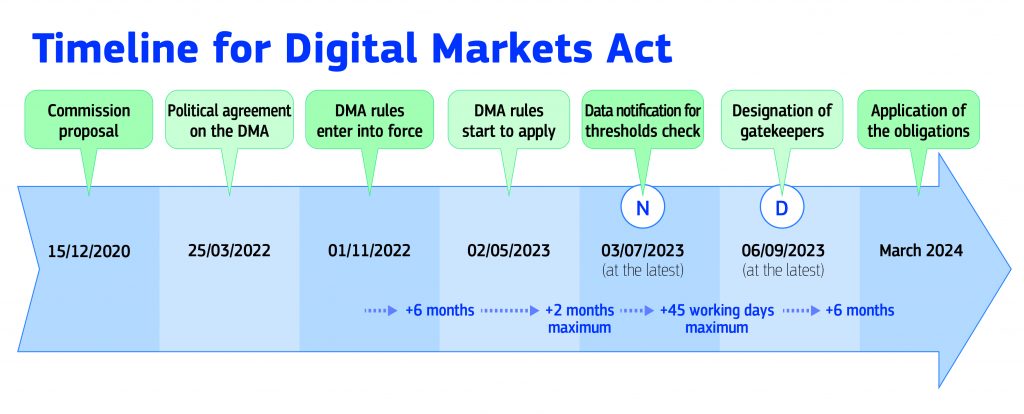
The adoption of the Digital Services Package in the first reading by the European Parliament follows the political agreement that has been reached by the co-legislators on the Digital Markets Act on 24 March and the Digital Services Act on 23 April this year. The new rules will be enforced by the Commission for the largest online platforms active in the EU. The Commission is taking all necessary steps to be ready to take up this role upon the entry into force of the rules.
Next Steps
Following the adoption of the Digital Services Package in the first reading by the European Parliament, both texts now have to be formally adopted by the Council of the European Union. After their signature, the Digital Services Act and the Digital Markets Act will be published in the Official Journal. Both acts will enter into force 20 days after their publication in the Official Journal, in autumn this year.
Background
The Commission made its proposals on the Digital Services Act and the Digital Markets Act on 15 December 2020.The European Parliament and Council reached a political agreement on 24 March 2022 on the Digital Markets Act, and on 23 April on the Digital Services Act. Updated Q&A documents are available for the DSA and the DMA.
Compliments of the European Commission.
The post Digital Services Package: Commission welcomes the adoption by the European Parliament of the EU’s new rulebook for digital services first appeared on European American Chamber of Commerce New York [EACCNY] | Your Partner for Transatlantic Business Resources.