EACC

HR/VP Josep Borrell | How to deal with China

How to handle China is a major political issue for the EU, one that is more complex than dealing with Russia. Certainly, the EU’s political and economic systems have profound differences with both Russia and China. Unlike Russia, China is a real systemic actor, approaching 20% of the world economy and growing while Russia represents around two percent and decreasing.
The economic, political, and financial influence of China is considerable, and its military power continues to grow. Its ambition is clearly to build a new  world order, with China at the centre, becoming by the middle of the century the world’s leading power.
The EU must be aware that many countries see the geopolitical influence of China as a counterweight to the West and therefore to Europe. And in a world that is becoming more fragmented and multipolar, most of the emerging countries are becoming hedgers, strengthening their room for manoeuvre without picking sides.
In this context the EU has to recalibrate its policy towards China for at least three reasons: the changes inside China with nationalism and ideology on the rise,; the hardening of US-China strategic competition; and the rise of China as a key player in regional and global issues.
This is putting growing pressure on the EU and sometimes creating uncomfortable dilemmas. Europe was built on the idea of shared prosperity and today is a power of peace. So we do not want to block the rise of emerging nations, be it China or India or others.  But logically we want to ensure that it does not harm our interests, does not threaten our values nor jeopardize the international rules-based order.
Last week we discussed EU-China relations with EU Foreign Ministers and we agreed that there is no viable alternative to the triptych of treating simultaneously China as a partner, competitor and systemic rival, depending on the issue. But it is necessary to adjust the relative weights among these three items and this adjustment depends in large part on China’s own behaviour and the issue concerned. EU ministers underscored that we must continue to engage with China wherever possible, and at the same time reducing strategic risks and vulnerabilities by re-calibrating our stance across three clusters of issues: values, economic security and strategic security.
On values, our differences are hardening. In all international fora, China has constructed a narrative subordinating fundamental rights to the right to development. The EU must counter this discourse and uphold the universality of human rights.
In spite those substantial differences, European and Chinese societies need to know each other better. The obstacles to the free flow of ideas and to the presence of Europeans in China must be removed. Otherwise China and Europe will become more foreign to each other.
On economic security, it is obvious that our trade relations are unbalanced. At over €400 billion a year, the EU’s trade deficit is at an unacceptable level. This is not due to the EU’s lack of competitiveness, but to China’s deliberate choices and policies. European companies face persistent obstacles and discriminatory practices. Moreover, the EU faces a growing risk of excessive dependencies on certain products and critical raw materials.
Hence, the importance of reducing risks and building up resilience, also for reasons of national security. This will require the diversification and reconfiguration of EU value chains, a more effective export control system, the control of inbound investment and possibly outbound investment, and the smart use of the anti-coercion instrument.  But our international partners can rest assured that all measures we take will remain in line with WTO rules. The multilateral system must be revitalized, not abandoned.
The third cluster concerns essentially Taiwan and China’s position on Russia’s war against Ukraine. On Taiwan, the EU’s position remains consistent and based on its ‘One China policy’. Any unilateral change of the status quo and any use of force would have massive economic, political and security consequences. The EU must prepare for all scenario’s and engage with China –  in maintaining the status quo and work to de-escalate tensions.
On Ukraine, our message is clear:  EU-China relations have no chance of developing if China does not push Russia to withdraw from Ukraine. Faced with a conflict involving the territorial integrity and sovereignty of an independent state, any so-called neutrality amounts in reality to taking the side of the aggressor. We welcome positive moves from China aiming at finding a solution to contribute to a just peace in Ukraine.
The message of all 27 Foreign Ministers last week was clear: the best way to shape China’s choices is through robust engagement and by reducing strategic risks.
Author:

Josep Borrell, High Representative of the European Union for Foreign Affairs and Security Policy / Vice-President of the EUROPEAN COMMISSION

Compliments of the European External Action Service, European Commission.The post HR/VP Josep Borrell | How to deal with China first appeared on European American Chamber of Commerce New York [EACCNY] | Your Partner for Transatlantic Business Resources.

EACC

U.S. and EU Sanctions Teams Enhance Bilateral Partnership

The United States and European Union are committed to working more closely on sanctions as a key tool to address shared foreign policy goals. From April 26–28, the U.S. Department of Treasury’s Office of Foreign Assets Control (OFAC), the European External Action Service (EEAS), and the European Commission Directorate-General for Financial Stability, Financial Services and Capital Markets Union (DG FISMA) concluded a multi-day technical meeting in Brussels, exchanging best practices and strengthening working relationships.
The purpose of the meeting was to share sanctions expertise to enhance and improve capabilities of those at the forefront of sanctions design, implementation, and compliance. OFAC, EEAS, and DG FISMA identified ways to align the implementation of sanctions, promote compliance, strengthen enforcement, and address shared foreign policy challenges. The teams also explored methods to ensure that sanctions do not prevent humanitarian trade and assistance from reaching those in need and that persons in sanctioned jurisdictions preserve their internet freedom.
The partners have been working together to provide coordinated information to the compliance community and will continue to update and maintain their sanctions-related lists and published guidance.
Background
Alongside partners, the United States and the European Union have imposed unprecedented costs on Russia in response to its illegal war of aggression against Ukraine. The efforts of these governments, industry, and other stakeholders who are at the forefront of implementing U.S., EU, and other multilateral sanctions are having a material impact on the Russian economy. For example, senior Russian officials have repeatedly admitted that the crude oil price cap, which both the U.S. and EU introduced in December 2022, is cutting into Russia’s most important source of revenue and darkening the Kremlin’s troubled fiscal situation.
Sanctions are most effective when coordinated with a broad range of international partners who can magnify the economic and political impact. Multilateral implementation maximizes effectiveness of sanctions and minimizes unintended costs and eases the compliance burden for the general public.
The U.S.-EU partnership is constructed on a foundation of shared common values that, combined with our deep economic ties and role in the global financial system, makes the partnership essential to tackling today’s global challenges. As they develop and deepen their collaborative efforts on financial sanctions, OFAC, EEAS, and DG FISMA continue to seek and welcome opportunities to work closely with partners around the world to ensure that sanctions make the fullest contribution to the policy aims they seek to achieve. For example, the U.S. and EU sanctions teams have recently participated in joint events to counter sanctions evasion, including at a private sector roundtable in Washington, D.C. and through joint travel to Central Asia.
For More Information
https://finance.ec.europa.eu/eu-and-world/sanctions-restrictive-measures_en 
https://ofac.treasury.gov/
Compliments of the Department of the Treasury.The post U.S. and EU Sanctions Teams Enhance Bilateral Partnership first appeared on European American Chamber of Commerce New York [EACCNY] | Your Partner for Transatlantic Business Resources.

EACC

EU Customs Reform

On 17 May 2023, the Commission put forward proposals for the most ambitious and comprehensive reform of the EU Customs Union since its establishment in 1968.
Key features of the proposals
The reform responds to the current pressures under which EU Customs operates, including a huge increase in trade volumes, especially in e-commerce, a fast-growing number of EU standards that must be checked at the border, and shifting geopolitical realities and crises.
The measures proposed present a world-leading, data-driven vision for EU Customs, which will massively simplify customs processes for business, especially for the most trustworthy traders. Embracing the digital transformation, the reform will cut down on cumbersome customs procedures, replacing traditional declarations with a smarter, data-led approach to import supervision. At the same time, customs authorities will have the tools and resources they need to properly assess and stop imports which pose real risks to the EU, its citizens and its economy.
A new EU Customs Authority will oversee an EU Customs Data Hub which will act as the engine of the new system. Over time, the Data Hub will replace the existing customs IT infrastructure in EU Member States, saving them up to €2 billion a year in operating costs. The new Authority will also help deliver on an improved EU approach to risk management and customs checks.
Overall, the new framework will make EU Customs fit for a greener, more digital era and contribute to a safer and more competitive Single Market. It simplifies and rationalises customs reporting requirements for traders, for example by reducing the time needed to complete import processes and by providing one single EU interface and facilitating data re-use. In this way, it helps deliver on President von der Leyen’s aim to reduce such burdens by 25%, without undermining the related policy objectives.
The three pillars of EU Customs Reform
A new partnership with business
In the reformed EU Customs Union, businesses that want to bring goods into the EU will be able to log all the information on their products and supply chains into a single online environment: the new EU Customs Data Hub. This cutting-edge technology will compile the data provided by business and – via machine learning, artificial intelligence and human intervention – provide authorities with a 360-degree overview of supply chains and the movement of goods.
At the same time, businesses will only need to interact with one single portal when submitting their customs information and will only have to submit data once for multiple consignments. In some cases where business processes and supply chains are completely transparent, the most trusted traders (‘Trust and Check’ traders) will be able to release their goods into circulation into the EU without any active customs intervention at all. The Trust & Check category strengthens the already existing Authorised Economic Operators (AEO) programme for trusted traders.
This new partnership with business is a world-first. It is a powerful new tool to support EU businesses, trade and the EU’s open strategic autonomy. The EU Customs Data Hub will allow goods to be imported into the EU with minimum customs intervention, without compromising on safety, security or anti-fraud requirements.
Under the proposals, the Data Hub will open for e-commerce consignments in 2028, followed (on a voluntary basis) by other importers in 2032, leading to immediate benefits and simplifications. Trust & Check traders will also be able to clear all of their imports with the customs authorities of the Member State in which they are based, no matter where the goods enter the EU. A review in 2035 will assess whether this possibility can be extended to all traders when the Hub becomes mandatory as from 2038.

Image courtesy of the European Commission.
A smarter approach to customs checks
The proposed new system will give customs authorities a bird’s-eye view of the supply chains and production processes of goods entering the EU. All Member States will have access to real-time data and will be able to pool information to respond more quickly, consistently and effectively to risks.
Artificial intelligence will be used to analyse and monitor the data and to predict problems before the goods have even started their journey to the EU. This will allow EU customs authorities to focus their efforts and resources where they are needed most: to stop unsafe or illegal goods from entering the Union and to uphold the growing number of EU laws that ban certain goods that go against common EU values – for example in the field of climate change, deforestation, forced labour, to give just a few examples. It will also help to ensure proper collection of duties and taxes, to the benefit of national and EU budgets.
To help Member States prioritise the right risks and coordinate their checks and inspections – especially during times of crisis – information and expertise will be pooled and assessed at EU level via the new EU Customs Authority acting on the data provided through the EU Customs Data Hub. The new regime will substantially improve cooperation between customs and market surveillance and law enforcement authorities at EU and national level, including through information sharing via the Customs Data Hub.
A more modern approach to e-commerce
Today’s reform will make online platforms key actors in ensuring that goods sold online into the EU comply with all customs obligations. This is a major departure from the current customs system, which puts the responsibility on the individual consumer and carriers. Platforms will be responsible for ensuring that customs duties and VAT are paid at purchase, so consumers will no longer be hit with hidden charges or unexpected paperwork when the parcel arrives. With online platforms as the official importers, EU consumers can be reassured that all duties have been paid and that their purchases are safe and in line with EU environmental, safety and ethical standards.
At the same time, the reform abolishes the current threshold whereby goods valued at less than €150 are exempt from customs duty, which is heavily exploited by fraudsters. Up to 65% of such parcels entering the EU are currently undervalued, to avoid customs duties on import.
The reform also simplifies customs duty calculation for the most common low-value goods bought from outside the EU, reducing the thousands of possible customs duty categories down to only four. This will make it much easier to calculate customs duties for small parcels, helping platforms and customs authorities alike to better manage the one billion e-commerce purchases entering the EU each year. It will also remove the potential for fraud. The new, tailor-made e-commerce regime is expected to bring additional customs revenues to the tune of €1 billion per year.
Compliments of the European Commission.The post EU Customs Reform first appeared on European American Chamber of Commerce New York [EACCNY] | Your Partner for Transatlantic Business Resources.
EACC

Cooperation between national taxation authorities: EU Council puts the spotlight on crypto-assets and the wealthiest individuals

The Council has reached agreement on its position (general approach) regarding amendments to the directive on administrative cooperation in the area of taxation. The amendments mainly concern the reporting and automatic exchange of information on revenues from transactions in crypto-assets and information on advance tax rulings for the wealthiest (high-net-worth) individuals. The aim is to strengthen the existing legislative framework by enlarging the scope for registration and reporting obligations and overall administrative cooperation of tax administrations.

Today we are strengthening the rules for administrative cooperation and closing loopholes that have previously been used to avoid taxation of income. This reduces the risk of crypto-assets being used as a safe haven for tax avoidance and tax fraud. The agreement is yet another example of the EU as a leader in the implementation of global standards.
Elisabeth Svantesson, Minister for Finance of Sweden

Additional categories of assets and income, such as crypto-assets, will now be covered. There will be a mandatory automatic exchange between tax authorities of information which will have to be provided by reporting crypto-asset service providers. So far, the decentralised nature of crypto-assets has made it difficult for member states’ tax administrations to ensure tax compliance. The inherent cross-border nature of crypto-assets requires strong international administrative cooperation to ensure effective tax collection.
This directive covers a broad scope of crypto-assets, building on the definitions that are set out in the regulation on markets in crypto-assets (MiCA) which the Council adopts today. Also those crypto-assets that have been issued in a decentralised manner, as well as stablecoins, including e-money tokens and certain non-fungible tokens (NFTs), are included in the scope.
Background
On 27 November 2020, the Council approved conclusions on fair and effective taxation in times of recovery, on tax challenges linked to digitalisation and on tax good governance in the EU and beyond. The Council recognised that the rapid development and increasing worldwide use of alternative means of payment and investment – such as crypto-assets and e-money – may undermine the progress made on tax transparency in recent years and pose substantial risks of tax fraud, tax evasion and tax avoidance; and that it is important to discuss at technical level on how to update the rules on administrative cooperation within the EU and on a global level in order to address these potential risks.
On 7 December 2021, the Council indicated in its report to the European Council on tax issues that it expects the European Commission to table in 2022 a legislative proposal on further revision of the directive 2011/16/EU on administrative cooperation in the field of taxation (DAC), concerning exchange of information on crypto-assets and tax rulings for wealthy individuals.
On 8 December 2022 the Commission presented a proposal for a Council directive amending directive 2011/16/EU on administrative cooperation in the field of taxation (DAC8). The key objectives of this legislative proposal are the following:

to extend the scope of automatic exchange of information under DAC to information that will have to be reported by crypto-asset service providers on transactions (transfer or exchange) of crypto-assets and e-money. Expanding administrative cooperation to this new area is aimed at helping member states to address the challenges posed by the digitalisation of the economy. The provisions of DAC8 on due diligence procedures, reporting requirements and other rules applicable to reporting crypto-asset service providers will reflect the Crypto-Asset Reporting Framework (CARF) and a set of amendments to the Common Reporting Standard (CRS), which were prepared by the OECD under the mandate of the G20. The G20 endorsed the CARF and the amendments to CRS, both of which it considers to be integral additions to the global standards for automatic exchange of information
to extend the scope of the current rules on exchange of tax-relevant information by including provisions on exchange of advance cross-border rulings concerning high-net-worth individuals, as well as provisions on automatic exchange of information on non-custodial dividends and similar revenues, in order to reduce the risks of tax evasion, tax avoidance and tax fraud, as the current provisions of DAC do not cover this type of income
to amend a number of other existing provisions of DAC. In particular, the proposal seeks to improve the rules on reporting and communication of the Tax Identification Number (TIN), in order to facilitate the task of tax authorities of identifying the relevant taxpayers and correctly assessing the related taxes, and to amend DAC provisions on penalties that are to be applied by member states to persons for the failure of compliance with national legislation on reporting requirements adopted pursuant to DAC.

Experts of the member states have since analysed the proposal. The Council presidency has prioritised work on this proposal with the objective of reaching an agreement by the ECOFIN Council at its May meeting.
This directive is not subject to the ordinary legislative procedure but the consultation procedure. This means that the European Parliament may present its views but has no legislative power to make changes to the proposal. The final outcome of this legislative process is decided by member states in the Council, by unanimity.
Compliments of the European Council, Council of the European Union.The post Cooperation between national taxation authorities: EU Council puts the spotlight on crypto-assets and the wealthiest individuals first appeared on European American Chamber of Commerce New York [EACCNY] | Your Partner for Transatlantic Business Resources.

EACC

Body language? FTC issues policy statement about misuse of biometric data

As Emelia asked in Act V of Comedy of Errors, do “mine eyes deceive me?” Sorry to get all Shakespearean, but our eyes (and face, fingerprints, etc.) can reveal a lot of information about us – data that can be misused in deceptive or unfair ways. The FTC just issued a Policy Statement on Biometric Information and Section 5 of the Federal Trade Commission Act and it’s a must-read for businesses.
The increasing use of consumers’ biometric information – and the marketing of technologies that use it or claim to use it – raises significant concerns about data security, privacy, and the potential for bias and discrimination. This isn’t a new issue for the FTC. We’ve been looking at the consumer protection implications of biometric data for more than a decade – for example, at the FTC’s Face Facts: A Forum on Facial Recognition Technology and in the report, Facing Facts: Best Practices For Common Uses of Facial Recognition Technologies. More recently, the FTC has brought enforcement actions against photo app maker Everalbum and Facebook, charging they misrepresented their uses of facial recognition technology.
During this time, some biometric information technologies have made significant advances. NIST found that between 2014 and 2018, facial recognition had become 20 times better at finding a matching photo in a database. Many of these technologies have also become a lot less expensive to use. So it’s no surprise that the use of these technologies is showing up everywhere from retail stores to arenas.
But as rapidly as the technologies and risks are evolving, important guiderails remain in place to protect consumers: the FTC Act’s prohibitions on unfair or deceptive practices. The Policy Statement demonstrates how established legal requirements apply and lists examples of practices the agency will look at in determining whether a company’s use of biometric information or biometric information technology could violate the FTC Act.
You’ll want to read the Policy Statement for the full story, but on the deception side of Section 5, companies shouldn’t make “false or unsubstantiated marketing claims relating to the validity, reliability, accuracy, performance, fairness, or efficacy of technologies using biometric information.” What’s more, “deceptive statements about the collection and use of biometric information” could be actionable, too.
Turning to unfairness, the Policy Statement includes factors the Commission will consider in assessing whether a use of biometric information is potentially unfair:

failing to assess foreseeable harms to consumers before collecting biometric information;
failing to promptly address known or foreseeable risks;
engaging in surreptitious and unexpected collection or use of biometric information;
failing to evaluate the practices and capabilities of third parties who will have access to consumers’ biometric information;
failing to provide appropriate training for employees and contractors whose duties involve interacting with biometric information; and
failing to conduct ongoing monitoring of a business’ technologies that use biometric information to ensure they’re functioning as anticipated and they’re not likely to harm consumers.

There’s no need to read between the lines to discern the FTC’s message to your company and clients. As the Policy Statement makes clear:
The Commission wishes to emphasize that – particularly in view of rapid changes in technological capabilities and uses – businesses should continually assess whether their use of biometric information or biometric information technologies causes or is likely to cause consumer injury in a manner that violates Section 5 of the FTC Act. If so, businesses must cease such practices, whether or not the practices are specifically addressed in this statement.
Compliments of the Federal Trade Commission.The post Body language? FTC issues policy statement about misuse of biometric data first appeared on European American Chamber of Commerce New York [EACCNY] | Your Partner for Transatlantic Business Resources.

EACC

Spring 2023 EU Economic Forecast: An improved outlook amid persistent challenges

The European economy continues to show resilience in a challenging global context. Lower energy prices, abating supply constraints and a strong labour market supported moderate growth in the first quarter of 2023, dispelling fears of a recession. This better-than-expected start to the year lifts the growth outlook for the EU economy to 1.0% in 2023 (0.8% in the Winter interim Forecast) and 1.7% in 2024 (1.6% in the winter). Upward revisions for the euro area are of a similar magnitude, with GDP growth now expected at 1.1% and 1.6% in 2023 and 2024 respectively. On the back of persisting core price pressures, inflation has also been revised upwards compared to the winter, to 5.8% in 2023 and 2.8% in 2024 in the euro area.
Lower energy prices lift the growth outlook
According to Eurostat’s preliminary flash estimate, GDP grew by 0.3% in the EU and by 0.1% in the euro area in the first quarter of 2023. Leading indicators suggest continued growth in the second quarter.
The European economy has managed to contain the adverse impact of Russia’s war of aggression against Ukraine, weathering the energy crisis thanks to a rapid diversification of supply and a sizeable fall in gas consumption. Markedly lower energy prices are working their way through the economy, reducing firms’ production costs. Consumers are also seeing their energy bills fall, although private consumption is set to remain subdued as wage growth lags inflation.
As inflation remains high, financing conditions are set to tighten further. Though the ECB and other EU central banks are expected to be nearing the end of the interest rate hiking cycle, the recent turbulence in the financial sector is likely to add pressure to the cost and ease of accessing credit, slowing down investment growth and hitting in particular residential investment.
Core inflation revised higher but set to gradually decline
After peaking in 2022, headline inflation continued to decline in the first quarter of 2023 amid a sharp deceleration of energy prices. Core inflation (headline inflation excluding energy and unprocessed food) is, however, proving more persistent. In March it reached a historic high of 7.6%, but it is projected to decline gradually over the forecast horizon as profit margins absorb higher wage pressures and financing conditions tighten. The April flash harmonised index of consumer prices estimate for the euro area, released after the cut-off date of this forecast, shows a marginal decline in the rate of core inflation, which suggests that it might have peaked in the first quarter, as projected. On an annual basis, core inflation in the euro area in 2023 is set to average 6.1%, before falling to 3.2% in 2024, remaining above headline inflation in both forecast years.
Labour market remains resilient against economic slowdown
A record-strong labour market is bolstering the resilience of the EU economy. The EU unemployment rate hit a new record low of 6.0% in March 2023, and participation and employment rates are at record highs.
The EU labour market is expected to react only mildly to the slower pace of economic expansion. Employment growth is forecast at 0.5% this year, before edging down to 0.4% in 2024. The unemployment rate is projected to remain just above 6%. Wage growth has picked up since early 2022 but has so far remained well below inflation. More sustained wage increases are expected on the back of persistent tightness of labour markets, strong increases in minimum wages in several countries and, more generally, pressure from workers to recoup lost purchasing power.

Public deficits set to decrease especially in 2024
Despite the introduction of support measures to mitigate the impact of high energy prices, strong nominal growth and the unwinding of residual pandemic-related measures led the EU aggregate government deficit in 2022 to fall further to 3.4% of GDP. In 2023 and more markedly in 2024, falling energy prices should allow governments to phase out energy support measures, driving further deficit reductions, to 3.1% and 2.4% of GDP respectively. The EU aggregate debt-to-GDP ratio is projected to decline steadily to below 83% in 2024 (90% in the euro area), which is still above the pre-pandemic levels. There is a large heterogeneity of fiscal trajectories across Member States.
While inflation can support the improvement in public finances in the short term, this effect is bound to dissipate over time as debt repayment costs increase and public expenditures are progressively adjusted to the higher price level.
Downside risks to the economic outlook have increased
More persistent core inflation could continue restraining the purchasing power of households and force a stronger response of monetary policy, with broad macro-financial ramifications. Moreover, renewed episodes of financial stress could lead to a further surge in risk aversion, prompting a more pronounced tightening of lending standards than assumed in this forecast. An expansionary fiscal policy stance would fuel inflation further, leaning against monetary policy action. In addition, new challenges may arise for the global economy following the banking sector turmoil or related to wider geopolitical tensions. On the positive side, more benign developments in energy prices would lead to a faster decline in headline inflation, with positive spillovers on domestic demand. Finally, there is persistent uncertainty stemming from Russia’s ongoing invasion of Ukraine.
The forecast publication includes for the first time an overview of the economic structural features, recent performance and outlook for Ukraine, Moldova and Bosnia and Herzegovina, which were granted candidate status for EU membership by the Council in June and December 2022.
Background
This forecast is based on a set of technical assumptions concerning exchange rates, interest rates and commodity prices with a cut-off date of 25 April. For all other incoming data, including assumptions about government policies, this forecast takes into consideration information up until, and including, 28 April. Unless new policies are announced and specified in adequate detail, the projections assume no policy changes.
The European Commission publishes two comprehensive forecasts (spring and autumn) and two interim forecasts (winter and summer) each year. The interim forecasts cover annual and quarterly GDP and inflation for the current and following year for all Member States, as well as EU and euro area aggregates.
The European Commission’s Summer 2023 Economic Forecast will update GDP and inflation projections and is expected to be presented in July 2023.
Compliments of the European Commission.The post Spring 2023 EU Economic Forecast: An improved outlook amid persistent challenges first appeared on European American Chamber of Commerce New York [EACCNY] | Your Partner for Transatlantic Business Resources.

EACC

ECB | The impact of Brexit on UK trade and labour markets

1 Introduction
It has been almost two and a half years since the United Kingdom signed its post-Brexit trade deal with the European Union (EU), which was expected to have multifaceted impacts on the UK economy. The EU-UK Trade and Cooperation Agreement (TCA) was signed on 30 December 2020 and came into effect provisionally on 1 January 2021. Leaving the EU’s Single Market and the EU Customs Union represented a profound change in the economic relationship. This change was expected to have an impact on trade flows between the EU and the United Kingdom, but also on migration flows, foreign direct investment, regulation, the financial sector, science and education, and other areas of the UK economy.
While it will take some time for all the effects to emerge, this article focuses on recent developments in UK trade and labour markets, where the impacts of Brexit have been widely discussed. The coronavirus (COVID-19) pandemic is a confounding factor, but the available data allow a first stocktake of the effects of Brexit. While significant uncertainties regarding the precise magnitudes remain, the available evidence suggests that Brexit has been a drag on UK trade and has contributed to a fall in labour supply, both of which are likely to weigh on the United Kingdom’s long-run growth potential.[1]
Access the full report here
Authors:

Katrin Forster-van Aerssen
Tajda Spital

Compliments of the European Central Bank.The post ECB | The impact of Brexit on UK trade and labour markets first appeared on European American Chamber of Commerce New York [EACCNY] | Your Partner for Transatlantic Business Resources.

EACC

EU Parliament | AI Act: a step closer to the first rules on Artificial Intelligence

Once approved, they will be the world’s first rules on Artificial Intelligence
MEPs include bans on biometric surveillance, emotion recognition, predictive policing AI systems
Tailor-made regimes for general-purpose AI and foundation models like GPT
The right to make complaints about AI systems

To ensure a human-centric and ethical development of Artificial Intelligence (AI) in Europe, MEPs endorsed new transparency and risk-management rules for AI systems.
On Thursday, the Internal Market Committee and the Civil Liberties Committee adopted a draft negotiating mandate on the first ever rules for Artificial Intelligence with 84 votes in favour, 7 against and 12 abstentions. In their amendments to the Commission’s proposal, MEPs aim to ensure that AI systems are overseen by people, are safe, transparent, traceable, non-discriminatory, and environmentally friendly. They also want to have a uniform definition for AI designed to be technology-neutral, so that it can apply to the AI systems of today and tomorrow.
Risk based approach to AI – Prohibited AI practices
The rules follow a risk-based approach and establish obligations for providers and users depending on the level of risk the AI can generate. AI systems with an unacceptable level of risk to people’s safety would be strictly prohibited, including systems that deploy subliminal or purposefully manipulative techniques, exploit people’s vulnerabilities or are used for social scoring (classifying people based on their social behaviour, socio-economic status, personal characteristics).
MEPs substantially amended the list to include bans on intrusive and discriminatory uses of AI systems such as:

“Real-time” remote biometric identification systems in publicly accessible spaces;
“Post” remote biometric identification systems, with the only exception of law enforcement for the prosecution of serious crimes and only after judicial authorization;
Biometric categorisation systems using sensitive characteristics (e.g. gender, race, ethnicity, citizenship status, religion, political orientation);
Predictive policing systems (based on profiling, location or past criminal behaviour);
Emotion recognition systems in law enforcement, border management, workplace, and educational institutions; and
Indiscriminate scraping of biometric data from social media or CCTV footage to create facial recognition databases (violating human rights and right to privacy).

High-risk AI
MEPs expanded the classification of high-risk areas to include harm to people’s health, safety, fundamental rights or the environment. They also added AI systems to influence voters in political campaigns and in recommender systems used by social media platforms (with more than 45 million users under the Digital Services Act) to the high-risk list.
General-purpose AI – transparency measures
MEPs included obligations for providers of foundation models – a new and fast evolving development in the field of AI – who would have to guarantee robust protection of fundamental rights, health and safety and the environment, democracy and rule of law. They would need to assess and mitigate risks, comply with design, information and environmental requirements and register in the EU database.
Generative foundation models, like GPT, would have to comply with additional transparency requirements, like disclosing that the content was generated by AI, designing the model to prevent it from generating illegal content and publishing summaries of copyrighted data used for training.
Supporting innovation and protecting citizens’ rights
To boost AI innovation, MEPs added exemptions to these rules for research activities and AI components provided under open-source licenses. The new law promotes regulatory sandboxes, or controlled environments, established by public authorities to test AI before its deployment.
MEPs want to boost citizens’ right to file complaints about AI systems and receive explanations of decisions based on high-risk AI systems that significantly impact their rights. MEPs also reformed the role of the EU AI Office, which would be tasked with monitoring how the AI rulebook is implemented.
Quotes
After the vote, co-rapporteur Brando Benifei (S&D, Italy) said: “We are on the verge of putting in place landmark legislation that must resist the challenge of time. It is crucial to build citizens’ trust in the development of AI, to set the European way for dealing with the extraordinary changes that are already happening, as well as to steer the political debate on AI at the global level. We are confident our text balances the protection of fundamental rights with the need to provide legal certainty to businesses and stimulate innovation in Europe”.
Co-rapporteur Dragos Tudorache (Renew, Romania) said: “Given the profound transformative impact AI will have on our societies and economies, the AI Act is very likely the most important piece of legislation in this mandate. It’s the first piece of legislation of this kind worldwide, which means that the EU can lead the way in making AI human-centric, trustworthy and safe. We have worked to support AI innovation in Europe and to give start-ups, SMEs and industry space to grow and innovate, while protecting fundamental rights, strengthening democratic oversight and ensuring a mature system of AI governance and enforcement.”
Next steps
Before negotiations with the Council on the final form of the law can begin, this draft negotiating mandate needs to be endorsed by the whole Parliament, with the vote expected during the 12-15 June session.
Compliments of European Parliament.The post EU Parliament | AI Act: a step closer to the first rules on Artificial Intelligence first appeared on European American Chamber of Commerce New York [EACCNY] | Your Partner for Transatlantic Business Resources.

EACC

IMF | Europe, And the World, Should Use Green Subsidies Cooperatively

A coordinated approach, including toward subsidies, is needed to tackle climate change successfully

Governments across the world are using subsidies to support the green transition. Green subsidies can be helpful where there are market failures. When carbon emissions are underpriced in relation to their true cost to society or preferable policy solutions (such as carbon pricing) are not in place, subsidies can steer businesses and consumers towards clean technologies that are less polluting while also lowering the costs of those technologies.
But subsidies should be carefully targeted to correct market failures and they should not discriminate between firms, be they foreign or domestic, old or new, large or small. They must be consistent with World Trade Organization rules, too.
The risk now is a harmful subsidy race between the world’s largest economies to lure green investment. This could undermine the level playing field in global trade, contribute to geoeconomic fragmentation and impose large fiscal costs. It would ultimately reduce efficiency and undermine the rules-based global trading system that has served the world economy well over several decades.
Richer nations with greater fiscal firepower might emerge as winners in a subsidy race even if the global economy is worse off. Emerging market and developing economies with scarcer fiscal resources would find it particularly difficult to compete for investments with advanced economies in a more protectionist world, which could also hinder the transfer of technology to these nations. Ultimately, the cost of the green transition might go up.
Europe’s Green Deal
The European Union is discussing a Green Deal industrial plan, proposed by the Commission in January, some elements of which have been adopted already. The plan relaxes European competition rules temporarily to allow for expanded subsidies to clean-tech firms. This was partly a response to some measures in the US Inflation Reduction Act, which the EU fears will put its firms at an increasing cost disadvantage and lead to an exodus of companies to the country that provides the largest tax break or subsidy.
As policymakers develop the EU’s Green Deal, they could take several steps to maximize its benefits and avoid pitfalls.

The EU should continue to work with other countries to develop a common, inclusive multilateral approach to stopping climate change. This could take the form of a climate club or international carbon price floor. It could also take the form of an agreement on the appropriate use and design of subsidies, underpinned by thorough analysis of the effects of various types of subsidies on climate and economic outcomes, including competitiveness, resource allocation, and cross-border trade. In the interim, green subsidies can be used cooperatively through open and nondiscriminatory plurilateral initiatives.
Preserving the integrity of the EU’s single market is paramount. EU state aid rules rightly put strict limits on the support governments can provide to their companies to ensure a level playing field. This prevents bigger EU countries, or those with more financial heft, from providing more generous support to their companies to the detriment of competitors elsewhere in the bloc. The relaxation of state aid rules should thus be limited in scope, duration and size. It should be coupled with some EU-level funding to help address the differing ability of members to deploy subsidies. Coordinating fiscal support for clean-tech industries across EU countries, perhaps under a centrally funded scheme, could be an option. Over the medium term, the EU would also benefit from creating a climate investment fund to help coordinate and finance the additional public investment needed to achieve emission-reduction goals more cost effectively.
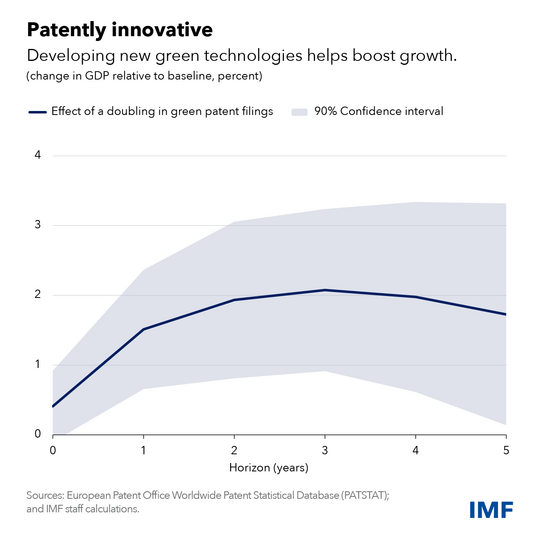
The EU should focus any subsidies on activities where the interventions might have the largest climate benefits. This includes subsidizing the creation of new clean technologies and the deployment of existing ones that are still in their infancy.

To support and accelerate the green transition, capital, labor and knowledge must flow freely to where they are most needed in the single market. The Commission has estimated that an additional 4 trillion euros in investment is needed between 2021 and 2030 to meet the EU’s 2030 emission-reduction goals, three-quarters of which needs to be privately financed. Faster progress toward a strong Capital Markets Union remains a priority as it would help ensure sufficient private-sector financing for the green transition across the bloc. On the labor side, the Commission’s plan is encouraging as it would help better integrate labor markets within the EU and provide more training in clean-tech sectors. These aims are critical, as the green transition will require workers to have the right mix of skills and are able to move from shrinking industries to growing ones. It is also welcome that the EU has reaffirmed its commitment to using part of the new carbon pricing revenues from the road transport and building sectors for a new Social Climate Fund, which will support vulnerable households during the energy transition.

Author:

Alfred Kammer, Director of the European Department at the International Monetary Fund 

Compliments of the IMF.The post IMF | Europe, And the World, Should Use Green Subsidies Cooperatively first appeared on European American Chamber of Commerce New York [EACCNY] | Your Partner for Transatlantic Business Resources.

EACC

ECB | Interview with Christine Lagarde, President of the ECB, conducted by Shogo Akagawa on 8 May 2023

You repeatedly mentioned at the last press conference that the inflation outlook continues to be “too high for too long”. How strong is the upside risk of inflation in the eurozone?
There are factors that can induce significant upside risks to the inflation outlook. And we are still in a situation where uncertainty about the path of inflation is high, so we have to be extremely attentive to those potential risks, the exact list of which you will find in our latest monetary policy statement, in particular in relation to wage increases in various European countries.
We now see waves of strikes across Europe. How serious is the risk of a wage-price spiral as a second-round effect?
The protests, collective bargaining and, in some cases, strikes that we observe in Europe are not surprising, because last year was one where real wages went down significantly. And there is now a process of catching up and making up for the lost ground in real wage terms.
The numbers appear large on the face of it. Take for example the recent wage agreements in Germany and Spain, which are both in double digits over a period of two and three years respectively. It’s a catch-up process that is taking place, but we have to remain very vigilant.
Europe’s macroeconomic situation now seems to be better. Do you think the eurozone could avoid recession and that the growth rate will remain positive?
We do not have a recession in our baseline projection for 2023, and we are in a better position than what we feared six months ago. Back then everybody was talking about at least a technical recession, and we have avoided that over the winter.
This is attributable to various factors, but two are key: first, the fall in energy prices; second, the easing of the supply bottlenecks, which have impacted manufactured goods in particular. We’re seeing that easing in shipping, the price of freight, delays indicated by corporations, the level of inventories – all of these indicators are pointing in the same direction. And if you add to that some still-lagging effects of the recovery that took place a few months ago, we have a series of factors which point to more positive growth than we had anticipated. But we still have a lot of uncertainty out there, including what will happen in Russia’s war of aggression against Ukraine and some emerging signs of weakness in demand for manufactured goods.
How significant do you think geopolitical risk is for Europe’s future? Are you concerned about the impact on energy supplies of the Russian aggression?
Even without any Russian supplies, the European position is solid. We went through the winter season without rationing, without massive disruption. That was down to three factors. First, in part, the mild weather. Second, our ability to find alternative sources of supply, particularly gas. And third, the capacity of Europeans to actually reduce their demand. But we have to be attentive, and energy remains one of the uncertainties that can affect future output as well as inflation numbers.
How long will you keep your tightening cycle? Can we exclude a rate hike in the autumn?
Given the process that we have adopted and the environment in which we operate, we’ve decided two things: one, we will be data-dependent; and two, our reaction function will determine the data that will be important to us. Our reaction function will be anchored in the inflation outlook, the dynamics of underlying inflation and the strength of monetary policy transmission, and this will dictate our decisions going forward.
Between core inflation and headline inflation, which is the most important statistic for the European Central Bank (ECB) to analyse monetary policy?
Headline inflation is the measure that we target and that we have agreed will determine whether or not we deliver price stability. This is because what ultimately matters are the prices that people directly experience, and that means we need to target a measure that includes food and energy. That’s our thermometer, that’s what we are committed to doing.
We do, however, look at measures of underlying inflation. “Core” is one such measure, but there are also others – for example, those that exclude more volatile items or focus more on domestic inflation pressures. And why do we filter inflation in that way? It’s to arrive at the “heart” of inflation, the most persistent element in those price indexes that can help us understand where headline inflation is likely to settle in the medium term. That’s a good way to identify in real time whether our policy action is actually biting, and whether we see supporting evidence that, yes, we have attacked inflation hard enough.
There is some criticism that the ECB reacted too late when beginning to raise interest rates. What is your response?
We were coming from ten years of very accommodative monetary policy. But we completely changed tack – and rapidly. We started changing our policies already in December 2021, when we announced that we would discontinue net asset purchases under the pandemic emergency purchase programme (PEPP) and gradually reduce net asset purchases under the asset purchase programme (APP). We later announced that we would conclude net purchases under the APP and started rate hikes in July 2022. Since then we have raised rates by 375 basis points in less than a year – the fastest increase in our history. So we have moved in a very deliberate and decisive way in order to fight inflation. Could it have been done a little earlier? Possibly. Would it have made a huge difference? Probably not. What I know is that we are determined to tame inflation, to bring it back to our 2% medium-term target in a timely manner, and we have made a sizeable adjustment already. But we still have more ground to cover.
Regarding the APP, do you think it is necessary to go further and start selling assets? Regarding the PEPP, the ECB intends to reinvest until at least the end of 2024. Do you have any plans to accelerate the end of these reinvestments?
We have just announced that we expect to discontinue the reinvestments under the APP as of July 2023. Nothing further has been discussed by the Governing Council – neither a proposal to sell assets under the APP, nor a change to the forward guidance that we have given in relation to the PEPP. We have also mentioned that we would use flexibility in relation to the PEPP, if necessary to facilitate the smooth transmission of monetary policy, and there is no change to that at all.
What lessons can you draw from the financial market turmoil triggered by Credit Suisse and US banks, and how do you account for them in financial regulation and ECB stress tests of European banks? What do you think of risks from non-banks?
A first lesson, probably, will be that we have to apply the existing regulatory framework scrupulously. I’m talking here about Basel III. Second, the Basel III set of rules needs to apply to a large set of banking institutions, not to a narrow group. Third, supervision needs to be intrusive and as granular as possible. Fourth, the Financial Stability Board and the Basel Committee on Banking Supervision should look very carefully at the non-bank financial sector to make sure that we do not have significant risks on the horizon.
How do you deal with Additional Tier 1 (AT1) bonds?
Concerning AT1, in the EU we have clarified that we have a pecking order which requires equity holders to be the first port of call in the event of losses. And we have made clear that there is no possibility for this to be changed, even by contractual arrangement, because it’s the Capital Requirements Directive that applies throughout the EU.
When do you plan to launch the digital euro? Is 2027 the goalpost for launching?
The next step will be in October 2023 when the Governing Council will have to decide whether we move into the next phase – experimenting with the digital euro. During that next phase we will be checking all the potential errors, the potential traps, the potential shortfalls, the way in which it will operate on a cross-border basis. After this phase is over, the decision will be made to finally launch it or not. I don’t have a set date, but it would not surprise me if it was 2026 or 2027.
Compared to the Bank of Japan, the Federal Reserve System or the Bank of England, one of the characteristics of the ECB is that the eurozone includes smaller markets that depend on communicating with bigger markets. Is fighting euro scepticism a difficulty in your job?
You are right that in Europe we have a fragmented capital market. We do not yet have a capital markets union, and it’s an added difficulty because we are talking to multiple markets that are smaller than the market Governor Ueda is talking to – he is talking primarily to the Tokyo market – and then of course to all the other markets in the world, because we’re not addressing only one geographic market. Markets are cross-border.
You now have 20 Member States in the eurozone, which could increase in the future. Is there any dilemma, as you always have to seek consensus in your Governing Council?
I think overall, in very tough and uncertain times, in almost all cases, we have managed to rally enough consensus around the table. I would like to think that it is because of me, but I think it has more to do with the fact that we are all driven by the same objective, which is our mandate. We are all driven by the public interest of the European Union and the euro area, and we are prepared to make compromises. There are different perspectives and intellectual backgrounds as well as macroeconomic circumstances. If you look at, for instance, Latvia and compare it with Malta, you are talking about completely different inflation rates. The structure of the German economy is different from that of Italy or Spain. This has to do with the way in which those economies were built over the course of history. It is that very rich diversity that comes together around the table to form a common view on the optimal policy to arrive at price stability. And so far it’s worked. And it’s also my way of working; I’m not a dictatorial central bank governor.
The G7, especially Europe, has a role in leading the discussion on sanctions against Russia. How can the effectiveness of sanctions be improved? How can the ECB contribute to this?
We can spot unusual flows of funds in and out and we can mention to the appropriate authorities what we observe. That’s our contribution to the sanctions. In addition to finding loopholes, it’s important for the Member States and the European Commission to identify the ways in which some people try to circumvent and to bypass the sanctions so that they can be implemented with full efficiency.
What impact will “greenflation” and “decarbonisation” have on monetary policies in the long term?
In the long run, if our economies rely more substantially on renewable energies, the impact will be disinflationary. But in the short term, we know that investments will be needed in significant amounts, both to invest in these renewable energy production facilities and also to invest in fossil energy – such as liquified natural gas terminals – in order to transition smoothly to the green energy that everybody is calling for. So, in the first instance, there is likely to be an element of price increases as a result of this massive flow of investment.
In the very short term, what has caused energy prices to go up is not so much green policies but the increase in electricity prices caused by the sudden cut-off of Russian gas. So, the contribution to high prices is to be found in the fossil fuel industry, not “greenflation”.
Over the past decade the political pressure on central banks, including the ECB, has been increasing, because the central bank can avoid parliamentary decisions and react very quickly. Could this lead to difficulties in maintaining independence?
Number one, the independence of the ECB is enshrined in the Treaty that founded the EU. It’s in the hardest law that we can have. And it’s very, very specifically mentioned that European leaders cannot try to influence me or my colleagues in any particular shape or form. This would be against the law. Second, we have a mandate, which assigns us one objective, not two like at the Federal Reserve. Our objective is price stability. And third, I’m accountable to the European Parliament. Every quarter I present our policy decisions, our assessment of the macroeconomic situation, and I take all the questions that they have for me to explain and document and justify the decisions that we’ve made. So you have a combination of independence, narrow mandate and accountability, and the three of them form the operational framework in which we function.
Compliments of the European Central Bank.The post ECB | Interview with Christine Lagarde, President of the ECB, conducted by Shogo Akagawa on 8 May 2023 first appeared on European American Chamber of Commerce New York [EACCNY] | Your Partner for Transatlantic Business Resources.