EACC

Joint EU-US Statement on the Global Methane Pledge

Today, Executive Vice-President Frans Timmermans, who leads the EU’s international negotiations on climate, and Special Presidential Envoy for Climate John Kerry hosted a virtual ministerial meeting to mobilise further support for the Global Methane Pledge. The co-convenors and Executive Director of the United Nations Environment Programme Inger Andersen affirmed the critical importance of rapidly reducing methane emissions as the single most effective strategy to reduce near-term global warming and keep the goal of limiting warming to 1.5 degrees Celsius within reach.
Following initial announcement of support by Argentina, Ghana, Indonesia, Iraq, Italy, Mexico and the United Kingdom at the MEF, 24 new countries announced today that they will join the Global Methane Pledge. The new supporters are Canada, Central African Republic, Congo-Brazzaville, Costa Rica, Cote d’Ivoire, Democratic Republic of the Congo, Federated States of Micronesia, France, Germany, Guatemala, Guinea, Israel, Japan, Jordan, Kyrgyz Republic, Liberia, Malta, Morocco, Nigeria, Pakistan, Philippines, Rwanda, Sweden, and Togo. With these commitments, 9 of the world’s top 20 methane emitters are now participating in the Pledge, representing about 30% of global methane emissions and 60% of the global economy.
In addition, more than 20 philanthropies announced combined commitments of over $200 million to support implementation of the Global Methane Pledge.
Background
At the Major Economies Forum on Energy and Climate (MEF) on September 17, 2021, President Ursula von der Leyen and President Joe Biden announced, with support from seven additional countries, the Global Methane Pledge—an initiative to be launched at the World Leaders Summit at the 26th UN Climate Change Conference (COP26) this November in Glasgow, United Kingdom.
Methane is a potent greenhouse gas and, according to the latest report by the Intergovernmental Panel on Climate Change, accounts for about half of the 1.0 degree Celsius net rise in global average temperature since the pre-industrial era, making methane action an essential complement of energy sector decarbonisation.
Countries joining the Global Methane Pledge commit to a collective goal of reducing global methane emissions by at least 30 percent from 2020 levels by 2030 and moving towards using highest tier IPCC good practice inventory methodologies to quantify methane emissions, with a particular focus on high emission sources. Successful implementation of the Pledge would reduce warming by at least 0.2 degrees Celsius by 2050.
The European Union, the United States, and other early supporters will continue to enlist additional countries to join the Global Methane Pledge, ahead of its formal launch at COP26.
Compliments of the European Commission.
The post Joint EU-US Statement on the Global Methane Pledge first appeared on European American Chamber of Commerce New York [EACCNY] | Your Partner for Transatlantic Business Resources.

EACC

U.S. FED Speech | Goodbye to All That: The End of LIBOR

Speech by Vice Chair for Supervision Randal K. Quarles at The Structured Finance Association Conference, Las Vegas, Nevada |
Now that business travel has started to pick back up as we emerge from the COVID event, a prosaic but insistent problem has reappeared: what to read on a long plane flight. Like most of you, I try to get some work done—but, also like most of you, out of an amalgam of security concerns and indolence, I often don’t succeed. Something must improve the hours, but Kant is a little heavy, P.G. Wodehouse a little light, and T.S. Eliot looks like you’re just showing off. So, over the last few weeks, I’ve been re-reading Joan Didion while making my way from point A to point B: Slouching Toward Bethlehem, The White Album, and Where I Was From. As it turns out, Joan Didion is a particularly apt author to be reading on the way to this conference—not because the conference is being held in Las Vegas, although her four-page summation of this “most extreme and allegorical of American settlements” is a classic. But rather, because a nearly constant theme of her writing is change: how hard it is to recognize that things have changed; how hard it is to come to terms with it once recognized; how insistent people can be that surely, they will be OK.
And given that introduction, I’m sure you have now guessed what I intend to talk to you about today: LIBOR, the benchmark formerly known as the London Interbank Offered Rate. LIBOR was the principal benchmark used to set interest rates for a vast number of commercial loans, mortgages, securities, derivatives, and other products. For a number of years—certainly at least since July of 2017, and really for several years before—it has been clear that LIBOR would end, but some believed it was not clear exactly when LIBOR would end. And, as a result, many market participants have continued to use LIBOR as if that end date would surely be in some indefinitely distant future, as if LIBOR would remain available forever.
Earlier this year, however, things changed, and changed significantly. Two things happened which together make clear that LIBOR will no longer be available for any new contracts after the end of this year, just 86 days from now. First, the United Kingdom’s Financial Conduct Authority (FCA), which regulates LIBOR, and ICE Benchmark Administration (IBA), which administers LIBOR, announced definitive end dates for LIBOR.1 No U.S. dollar LIBOR tenors will be available after June 30, 2023.2
So, now there was a definitive and immovable date fixed for the end of LIBOR. However, the second thing that happened made clear that long before that end date in 2023, LIBOR would not be available for any new contracts after the end of this year. Following the FCA and IBA announcements about the end of LIBOR, the Federal Reserve and other regulators published guidance making clear that we will focus closely on whether supervised institutions stop new use of LIBOR by the end of this year—86 days from now.
If LIBOR will not be available for new contracts, what is the point of IBA continuing to provide USD LIBOR quotes until mid-2023? Those LIBOR quotes will allow many existing contracts to mature according to their terms, thus greatly reducing the costs and risks of this transition. Otherwise, many banks would have had to re-negotiate hundreds of thousands of loan contracts before December 31, an almost impossible task. But the whole process only works if no new LIBOR contracts are written while the legacy contracts are allowed to mature. So, those new LIBOR contracts will not be made. Change is difficult, but it is inescapable.
What is LIBOR, and Why is it Going Away?
LIBOR was intended to be a measure of the average interest rate at which large banks can borrow in wholesale funding markets for different periods of time, ranging from overnight to one month, three months, and beyond. LIBOR is an unsecured rate, which means that it measures interest rates for borrowings that are made without collateral and therefore include some credit risk.
At first blush, it may seem peculiar that a borrowing rate for banks in London has been used so widely. Why, for example, are more than $1 trillion of residential mortgages in the United States tied to LIBOR? The answer is that, over time, LIBOR’s pervasiveness became self-reinforcing. Lenders, borrowers, and debt issuers relied on LIBOR because, first, everyone else used LIBOR, and second, they could hedge their LIBOR exposures in liquid derivatives markets. Today, USD LIBOR is used in more than $200 trillion of financial contracts worldwide.
Federal Reserve officials have described LIBOR’s flaws on numerous occasions.3 The principal problem with LIBOR is that it was not what it purported to be. It claimed to be a measure of the cost of bank funding in the London money markets, but over time it became more of an arbitrary and sometimes self-interested announcement of what banks simply wished to charge for funds. That might not have become such a debacle had it been clear to everyone what the ground rules were, but the ground rules for LIBOR were anything but clear.
As a result of subsequent changes to the process, LIBOR panel banks now provide evidence of actual transactions where possible. A fundamental problem, however, is that LIBOR has been unable to separate itself from its perception as a measure of bank funding costs, yet the market on which LIBOR is based—the unsecured, short-term bank funding market—dwindled after the 2008 financial crisis. This means that, for many LIBOR term rates, banks must estimate their likely cost of such funding rather than report the actual cost.
Many LIBOR panel banks are uncomfortable estimating their funding costs in producing a benchmark perceived by many to measure actual funding costs. As a result, the great majority of the panel banks have determined that they will not continue participating in the process. This is why the FCA and IBA have announced definitive end dates for LIBOR.
I should note here that regulators have warned about LIBOR-related risks for many years. Beginning in 2013, the U.S. Financial Stability Oversight Council and the international Financial Stability Board, which I currently chair, expressed concern that the decline in unsecured short-term funding by banks could pose serious structural risks for unsecured benchmarks such as LIBOR.4 To mitigate these risks and promote a smooth transition away from LIBOR, the Federal Reserve convened the Alternative Reference Rates Committee (ARRC) in November 2014.5 As I will describe further in a moment, the ARRC has worked to facilitate the transition from LIBOR to its recommended alternative, the Secured Overnight Financing Rate (SOFR).
Supervisory Efforts
In November 2020, the Federal Reserve, Office of the Comptroller of the Currency (OCC), and Federal Deposit Insurance Corporation (FDIC) sent a letter to the banking organizations we regulate noting that, after 2021, the use of LIBOR in new transactions would pose safety and soundness risks.6 Accordingly, we encouraged supervised institutions to stop new use of LIBOR as soon as is practicable and, in any event, by the end of this year. The letter also noted that new contracts entered into before December 31, 2021, should either use a reference rate other than LIBOR or have robust fallback language that includes a clearly defined alternative reference rate after LIBOR’s discontinuation.
Recently, a number of institutions have asked what would qualify as “new” use of LIBOR after 2021. We are working with other agencies to provide additional guidance about this issue. In my view, however, “new” use of LIBOR would include any agreement that creates additional LIBOR exposure for a supervised institution or extends the term of an existing LIBOR contract.
Earlier this year, the Federal Reserve issued another supervisory letter that provided guidance concerning supervised institutions’ LIBOR transition plans.7 As the end of LIBOR approaches, Federal Reserve examiners have intensified their focus on supervised institutions’ transition planning. In general, institutions of all sizes have acknowledged year-end as the stop date for new LIBOR contracts and are operationally prepared to offer alternative rates. However, based on data from the second quarter of 2021, we estimate that large firms used alternative rates for less than 1 percent of floating rate corporate loans and 8 percent of derivatives. To be ready for year-end, lenders will have to pick up the pace, and our examiners expect to see supervised institutions accelerate their use of alternative rates.
Transitioning to Alternative Rates
A handful of firms have said that they may want more time to evaluate potential alternative rates. There is no more time, and banks will not find LIBOR available to use after year-end no matter how unhappy they may be with their options to replace it. I would note that the ARRC has been publishing tools to facilitate the use of SOFR for almost four years.8 SOFR is a broad measure of the cost of borrowing cash overnight, collateralized by Treasury securities. It rests on one of the deepest and most liquid markets in the world. It is calculated transparently by the Federal Reserve Bank of New York, engendering market confidence. And it can be used for all types of transactions. Notably, the ARRC recently recommended SOFR term rates, which will facilitate the transition from LIBOR to SOFR for market participants who wish to use a forward-looking rate.9 Given the availability of SOFR, including term SOFR, there will be no reason for a bank to use LIBOR after 2021 while trying to find a rate it likes better.
This is especially true for capital markets products. As I described recently in remarks to the Financial Stability Oversight Council, it is critical that capital markets and derivatives markets transition to SOFR. Market participants have expressed nearly universal agreement that this is the right replacement rate for such products.10 The ARRC did not recommend any other rate for capital markets or derivatives, and market participants should not expect such rates to be widely available.
Loans, however, are different from derivatives and capital markets products, and raise different issues. With respect to loans, the Federal Reserve, OCC, and FDIC issued a letter last year explaining that we have not endorsed a specific replacement rate.11 We have not changed that guidance. A bank may use SOFR for its loans, but it may also use any reference rate for its loans that the bank determines to be appropriate for its funding model and customer needs. But a bank will not find LIBOR available after year-end, even if it doesn’t want to use SOFR for loans and hasn’t chosen a different alternative reference rate. Reviewing banks’ cessation of LIBOR use after year-end will be one of the highest priorities of the Fed’s bank supervisors in the coming months. If market participants do use a rate other than SOFR, they should ensure that they understand how their chosen reference rate is constructed, that they are aware of any fragilities associated with that rate, and—most importantly—that they use strong fallback provisions.
To conclude, I emphasize that market participants should be ready to stop using LIBOR by the end of 2021.12 One-week and two-month USD LIBOR will end in only 12 weeks. The remaining USD LIBOR tenors will end in mid-2023, but the LIBOR quotes available from January 2022 until June 2023 will only be appropriate for legacy contracts. Use of these quotes for new contracts would create safety and soundness risks for counterparties and the financial system. We will supervise firms accordingly.
Market participants should act now to accelerate their transition away from LIBOR. The reign of LIBOR will end imminently, and it will not come back. To return to where we started, the year of magical thinking is over.
Compliments of the U.S. Federal Reserve Board.

1. See https://www.fca.org.uk/news/press-releases/announcements-end-libor and https://ir.theice.com/press/news-details/2021/ICE-Benchmark-Administration-Publishes-Feedback-Statement-for-the-Consultation-on-Its-Intention-to-Cease-the-Publication-of-LIBOR-Settings/default.aspx. Return to text
2. One-week and two-month U.S. dollar LIBOR tenors will end as of December 30, 2021. IBA will cease publishing all remaining U.S. dollar LIBOR rates after June 30, 2023. Return to text
3. See https://www.federalreserve.gov/newsevents/speech/quarles20190410a.htm, https://www.federalreserve.gov/newsevents/speech/powell20140904a.htm, and https://www.federalreserve.gov/newsevents/testimony/vanderweide20210415a.htm. Return to text
4. See Financial Stability Oversight Council, 2013 Annual Report (PDF) (Washington: Department of the Treasury, 2013). See also Financial Stability Board, Reforming Major Interest Rate Benchmarks (PDF) (Basel, Switzerland: Financial Stability Board, July 2014). Return to text
5. The ARRC’s voting members are private sector firms, but the Federal Reserve and other official sector entities serve as ex-officio members of the ARRC. Return to text
6. See https://www.federalreserve.gov/newsevents/pressreleases/bcreg20201130a.htm. Return to text
7. See SR 21-7, “Assessing Supervised Institutions’ Plans to Transition Away from the Use of the LIBOR.” Earlier this year, I gave a speech that described this supervisory letter in detail. See also https://www.federalreserve.gov/newsevents/speech/quarles20210322a.htm. Return to text
8. The Federal Reserve Bank of New York began publishing SOFR in April 2018. Return to text
9. See https://www.newyorkfed.org/medialibrary/Microsites/arrc/files/2021/ARRC_Press_Release_Term_SOFR.pdf. Return to text
10. See https://www.federalreserve.gov/supervisionreg/files/quarles-libor-presentation-20210611.pdf. Return to text
11. See https://www.federalreserve.gov/supervisionreg/srletters/SR2025.htm. Return to text
12. The Federal Reserve recognizes that market participants cannot fix some legacy LIBOR contracts. In particular, there are approximately $10 trillion of so-called “tough” legacy contracts that mature after LIBOR ends, but lack workable fallback language to address the end of LIBOR. The Federal Reserve welcomes efforts in Congress to craft federal legislation that would provide a workable fallback for these contracts. Return to text

EACC

OECD | International community strikes a ground-breaking tax deal for the digital age

Major reform of the international tax system finalised today at the OECD will ensure that Multinational Enterprises (MNEs) will be subject to a minimum 15% tax rate from 2023.
The landmark deal, agreed by 136 countries and jurisdictions representing more than 90% of global GDP, will also reallocate more than USD 125 billion of profits from around 100 of the world’s largest and most profitable MNEs to countries worldwide, ensuring that these firms pay a fair share of tax wherever they operate and generate profits.
Following years of intensive negotiations to bring the international tax system into the 21st century, 136 jurisdictions (out of the 140 members of the OECD/G20 Inclusive Framework on BEPS) joined the Statement on the Two-Pillar Solution to Address the Tax Challenges Arising from the Digitalisation of the Economy. It updates and finalises a July political agreement by members of the Inclusive Framework to fundamentally reform international tax rules.
With Estonia, Hungary and Ireland having joined the agreement, it is now supported by all OECD and G20 countries. Four countries – Kenya, Nigeria, Pakistan and Sri Lanka – have not yet joined the agreement.
The two-pillar solution will be delivered to the G20 Finance Ministers meeting in Washington D.C. on 13 October, then to the G20 Leaders Summit in Rome at the end of the month.
The global minimum tax agreement does not seek to eliminate tax competition, but puts multilaterally agreed limitations on it, and will see countries collect around USD 150 billion in new revenues annually. Pillar One will ensure a fairer distribution of profits and taxing rights among countries with respect to the largest and most profitable multinational enterprises. It will re-allocate some taxing rights over MNEs from their home countries to the markets where they have business activities and earn profits, regardless of whether firms have a physical presence there.  Specifically, multinational enterprises with global sales above EUR 20 billion and profitability above 10% – that can be considered as the winners of globalisation – will be covered by the new rules, with 25% of profit above the 10% threshold to be reallocated to market jurisdictions.
Under Pillar One, taxing rights on more than USD 125 billion of profit are expected to be reallocated to market jurisdictions each year. Developing country revenue gains are expected to be greater than those in more advanced economies, as a proportion of existing revenues.
Pillar Two introduces a global minimum corporate tax rate set at 15%.  The new minimum tax rate will apply to companies with revenue above EUR 750 million and is estimated to generate around USD 150 billion in additional global tax revenues annually. Further benefits will also arise from the stabilisation of the international tax system and the increased tax certainty for taxpayers and tax administrations.
“Today’s agreement will make our international tax arrangements fairer and work better,” said OECD Secretary-General Mathias Cormann. “This is a major victory for effective and balanced multilateralism. It is a far-reaching agreement which ensures our international tax system is fit for purpose in a digitalised and globalised world economy. We must now work swiftly and diligently to ensure the effective implementation of this major reform,” Secretary-General Cormann said.
Countries are aiming to sign a multilateral convention during 2022, with effective implementation in 2023. The convention is already under development and will be the vehicle for implementation of the newly agreed taxing right under Pillar One, as well as for the standstill and removal provisions in relation to all existing Digital Service Taxes and other similar relevant unilateral measures. This will bring more certainty and help ease trade tensions. The OECD will develop model rules for bringing Pillar Two into domestic legislation during 2022, to be effective in 2023.
Developing countries, as members of the Inclusive Framework on an equal footing, have played an active role in the negotiations and the Two-Pillar Solution contains a number of features to ensure that the concerns of low-capacity countries are addressed. The OECD will ensure the rules can be effectively and efficiently administered, also offering comprehensive capacity building support to countries which need it.
Further information on the continuing international tax reform negotiations is also available at: https://oe.cd/bepsaction1.
Highlights Brochure
Frequently Asked Questions
Contacts:

Pascal Saint-Amans, Director of the OECD Centre for Tax Policy and Administration | Pascal.Saint-Amans@oecd.org

Lawrence Speer | Lawrence.Speer@oecd.org

OECD Media Office | news.contact@oecd.org

Compliments of the OECD.
The post OECD | International community strikes a ground-breaking tax deal for the digital age first appeared on European American Chamber of Commerce New York [EACCNY] | Your Partner for Transatlantic Business Resources.

EACC

EU Plenary highlights: energy prices, tax revelations, Arctic

MEPs discussed solutions to the current energy price hikes as well as new tax avoidance revelations during October’s first plenary session.
Energy prices
Parliament approved an update of the selection rules for energy projects eligible for EU funding to support making cross-border energy infrastructure more sustainable. In a debate with Energy Commissioner Kadri Simson, MEPs stressed the urgent need to support vulnerable households in the EU faced with record high gas and electricity prices.
Tax revelations
MEPs discussed the Pandora papers revelations, documenting global tax avoidance and tax evasion, and slammed governments’ inability to properly reform outdated tax laws.
Arctic
Arctic states and the international community should preserve the Arctic as an area of low tension and constructive cooperation, Parliament said in a resolution adopted on Wednesday, underlining the the EU’s commitment to long-term sustainable and peaceful development of the region.
Gender-based violence and abortion rights
MEPs adopted a report calling for urgent measures to protect victims of domestic violence in custody battles. The report highlights the surge in violence by a partner during the pandemic and the difficulties in accessing support services and justice. Members also adopted a resolution expressing solidarity with the women of Texas and all the others involved in legal challenges regarding the recent restrictions on abortion.
Road safety
Road safety measures, including a 30 km/h speed limit in residential areas and zero-tolerance for drink-driving, are the way to reach zero deaths on EU roads by 2050, MEPs said in a resolution adopted on Wednesday.
EU-US relations
In a resolution on future EU-US relations, MEPs called for better coordination on China to avoid tensions, but also advocated strategic EU autonomy in defence and economic relations.
Cyber security and artificial intelligence
A common cyber defence policy and substantial EU cooperation on cyber capabilities are among the key issues needed for the development of a deeper and enhanced European Defence Union, MEPs stressed in a report adopted on Thursday. In a separate report, they demanded strong safeguards when artificial intelligence tools are used for law enforcement or border controls in order to prevent discrimination and ensure the right to privacy.
Belarus
Parliament urged EU countries to further strengthen targeted economic sanctions keeping the focus on the  main Belarusian sectors, in a resolution adopted on Thursday, and expressed solidarity with Lithuania, Poland and Latvia, as well as other EU countries targeted by the regime’s attempts to direct migrants and refugees towards the EU’s external borders.
Compliments of the European Parliament. 
The post EU Plenary highlights: energy prices, tax revelations, Arctic first appeared on European American Chamber of Commerce New York [EACCNY] | Your Partner for Transatlantic Business Resources.
EACC

EU Environment Council, 6 October 2021

Main results
EU environment ministers met in Luxembourg to exchange views on the Fit for 55 package, prepare the COP26 climate summit and discuss the new EU forest strategy for 2030. The Council adopted its position at first reading on modifications to the Aarhus Regulation. Ministers also discussed the current surge in energy prices.
COP26 climate summit
Ministers started the meeting with a discussion on the preparations for the United Nations Framework Convention on Climate Change (UNFCCC) meeting to be held from 31 October to 12 November in Glasgow (COP26). The Council adopted conclusions setting the EU’s position at the meeting.

The world is currently not on course to keep global warming below 1,5 degrees. Many more collective efforts are needed to keep our planet’s temperature within safe limits. In COP26 the EU will call on all parties to the Paris Agreement to come forward with ambitious national emission reduction targets and for developed countries to step up international climate finance. With the conclusions adopted today, the EU not only has the willpower, but a strong mandate to lead the discussions in the right direction – the direction of protecting the planet for the benefit of all and standing on the side of those that are most vulnerable to climate change.
Andrej Vizjak, Slovenian Minister of the Environment and Spatial Planning

The conclusions call upon all parties to come forward with ambitious Nationally Determined Contributions (NDCs) and recognise the need to step up adaptation efforts collectively.
The Council recalls that the EU and its Member States are the world’s leading contributors of climate finance. The conclusions reconfirm their commitment to step up the mobilisation of international climate finance and invite other developed countries to scale up their contributions.
The Council also lays down the EU’s position as regards the finalisation of the Paris Rulebook, in particular the voluntary cooperation under Article 6 and a common timeframe for NDCs.

Council sets EU’s position for COP26 climate summit (press release, 6 October 2021)

Fit for 55 package
EU environment ministers held a first formal debate on the Fit for 55 package, with a particular focus on initiatives that fall under the remit of the Environment Council. These proposals aim to amend the:

EU Emissions Trading System
Effort Sharing Regulation
Land use, land-use change and forestry Regulation
Regulation setting CO2 emission standards for cars and vans
and to establish a new Social Climate Fund

Due to the cross-cutting nature of the package, we can expect discussions to be complex and – realistically – to take some time. In general, Member States welcome the ‘Fit for 55%’ package as it aims to provide the concrete means for the EU to fulfil its increased climate ambition. Understanding the interlinkages between the files plays a vital role in assessing whether and how all parts of the package contribute to an overall balance.
Andrej Vizjak, Slovenian Minister of the Environment and Spatial Planning

The Fit for 55 package aims to bring EU climate policies into line with the EU’s objective of reaching climate neutrality by 2050 and its target to reduce net greenhouse gas emissions by at least 55% by 2030 compared to 1990 levels.
The package consists of a series of closely interconnected proposals either amending existing pieces of legislation or establishing new initiatives across a range of policy areas and economic sectors.
The debate focussed on the balance and interlinkages between the various proposals, as well as on their contribution to the EU’s increased climate ambition. Ministers gave their views on the distribution of efforts between and within both Member States and different economic sectors involved, and on the impact of the proposals on citizens. The debate addressed in particular the extension of emissions trading to buildings and road transport.

Fit for 55 package – exchange of views

EU Forest Strategy
Ministers held an exchange of views on the new EU forest strategy for 2030. The strategy is one of the flagship initiatives of the European Green Deal and builds on the EU biodiversity strategy for 2030. It aims to contribute to achieving the EU’s climate and biodiversity objectives.
The debate focussed mainly on whether the new EU forest strategy reflects the Council conclusions on the Biodiversity Strategy for 2030 and whether it provides a good basis for the EU to lead globally by positive example on sustainable forest management. The Council will adopt conclusions on the new forest strategy in the Agriculture and Fisheries Council in November.

New forest strategy 2030 – exchange of views
Council adopts conclusions on the biodiversity strategy for 2030 (press release, 23 October 2020)

Access to Justice (Aarhus Regulation)
The Council adopted its position at first reading on an amendment to the Aarhus Regulation on access to justice in environmental affairs. The adoption of the Council’s position follows a provisional agreement reached with the European Parliament in July 2021 and is the final step of the adoption procedure.

Aarhus Regulation – Council adopts its position at first reading (press release, 6 October 2021)

Other matters
At the request of Greece, Spain and Poland, ministers discussed the current increase in energy prices.
The issue has been put on the agenda of the European Council on 21-22 October. The Commission will come forward with a Communication on the rising energy prices ahead of the discussions in the European Council.

Information from Greece
Information from Spain
Information from Poland

The Commission informed ministers about a report on the implementation of Regulation (EU) No 528/2012 concerning biocidal products. Belgium provided information on the need for a coordinated action against PFAS and Germany informed ministers about a ministerial conference on marine litter and plastic pollution in Geneva, co-convened by Ecuador, Germany, Ghana and Vietnam with support of the UNEP Secretariat.
Compliments of the Council of the EU.
The post EU Environment Council, 6 October 2021 first appeared on European American Chamber of Commerce New York [EACCNY] | Your Partner for Transatlantic Business Resources.
Read More
EACC

IMF | When It Comes to Public Finances, Credibility Is Key

Ending the health crisis and addressing its immediate fallout remains the top priority, but governments would also benefit from committing to fiscal responsibility.
From the outset of the COVID-19 pandemic, governments have extended massive fiscal support that has saved lives and jobs. As a result, public debt has reached a historic high, although it is expected to decrease marginally in the next few years. These developments raise questions about how high debt can go without being disruptive.

Commitment to budget discipline and clear communication of policy priorities pays off.

Addressing the health emergency remains crucial, especially in countries where the pandemic is not yet under control, and fiscal support will be invaluable until the recovery is on a strong footing. The appropriate timing for starting to reduce deficits and debt will depend on country-specific conditions.
But governments also need to consider fiscal risks and the vulnerability to future crises. Fortunately, interest rates have been very low globally. But there is no guarantee this will last.
Greater predictability
Our new Fiscal Monitor argues that committing to sound public finances, with a credible set of rules and institutions to guide fiscal policy, can facilitate fiscal policy decisions at the current juncture. When lenders trust that governments are fiscally responsible, they make it easier and cheaper for countries to finance deficits. This buys time and makes debt stabilization less painful. For instance, when budget plans are credible (as measured by how close professional forecasters’ projections are to official announcements), borrowing costs can fall temporarily by as much as 40 basis points. And even for governments that do not borrow from markets, fiscal credibility can attract private investment and foster macroeconomic stability.
Governments can signal their commitment to fiscal sustainability while addressing the ongoing crisis in various ways, such as undertaking structural fiscal reforms (for example, subsidy or pension reform) or adopting budget rules and establishing institutions that are geared toward promoting fiscal prudence.
Unwelcome debt increases
When governments conceive and put in place budget rules and institutions, they should strive to consider all risks to the public finances. Debt sometimes increases beyond what is forecast in the baseline. These jumps typically range between 12 and 16 percent of GDP at five-year projection horizons, our research shows. Underlying such negative shocks are disappointing medium-term GDP growth and other drivers of debt, including bailouts of businesses and exchange rate depreciation. Many countries now face heightened fiscal risks as a result of record loans, guarantees, and other measures taken to protect firms and jobs from the fallout of COVID-19.
Such shocks put pressure on budgets and fiscal institutions such as fiscal rules, which need to be flexible to allow for larger deficits when needed. Well-designed risk mitigation strategies—such as restrictions on loan eligibility or limits on loan size and maturity—can reduce these risks, or limit fiscal costs if they materialize. But these frameworks must also ensure steadfast debt reduction in good times, so that fiscal support can be deployed again in the future.
Budgetary rules and institutions
A robust set of budgetary rules and institutions should seek to achieve three overarching goals: sustainability; economic stabilization; and, for fiscal rules in particular, simplicity. However, it is difficult to fulfill all three goals at once.
Although simple numerical rules can sometimes be rigid, we show that they promote fiscal prudence. For instance, countries that follow debt rules generally manage to reverse debt jumps of 15 percent of GDP in about 10 years in the absence of new shocks—significantly faster than countries that do not follow debt rules. Numerical rules need not rely only on debt: other indicators, such as the interest bill or the net worth of the government, can complement traditional debt and deficit indicators. Procedural rules offer more flexibility than numerical fiscal rules, but it may be harder for governments to communicate and monitor compliance without numerical targets, particularly in the absence of sound fiscal institutions.

Our research shows that a country’s commitment to budget discipline and clear communication of policy priorities—backed by transparency about government spending and revenues—pays off. Many countries suspended their fiscal rules in 2020 so as to rightly increase health care and social spending to address the pandemic. Our analysis of newspapers shows that media reporting of the suspension of fiscal rules was more positive in places with higher fiscal transparency.
Strong budget rules and institutions, backed by clear communication and fiscal transparency, enhance credibility. That, in turn, improves access to credit and secures more room for maneuver in times of crisis. Ultimately, fiscal frameworks are only effective if they have sufficient political support. Even so, they help focus discussions and can thus help reach political consensus on credible fiscal policies.
Authors:

Raphael Espinoza
Vitor Gaspar
Paolo Mauro

Compliments of the IMF.
The post IMF | When It Comes to Public Finances, Credibility Is Key first appeared on European American Chamber of Commerce New York [EACCNY] | Your Partner for Transatlantic Business Resources.

EACC

Use of artificial intelligence by the police: MEPs oppose mass surveillance

Humans should supervise AI systems and algorithms should be open
Ban private facial recognition databases, behavioural policing and citizen scoring
Automated recognition should not be used for border control or in public spaces

To combat discrimination and ensure the right to privacy, MEPs demand strong safeguards when artificial intelligence tools are used in law enforcement.
In a resolution adopted by 377 in favour, 248 against and 62 abstentions, MEPs point to the risk of algorithmic bias in AI applications and emphasise that human supervision and strong legal powers are needed to prevent discrimination by AI, especially in a law enforcement or border-crossing context. Human operators must always make the final decisions and subjects monitored by AI-powered systems must have access to remedy, say MEPs.
Concerns about discrimination
According to the text, AI-based identification systems already misidentify minority ethnic groups, LGBTI people, seniors and women at higher rates, which is particularly concerning in the context of law enforcement and the judiciary. To ensure that fundamental rights are upheld when using these technologies, algorithms should be transparent, traceable and sufficiently documented, MEPs ask. Where possible, public authorities should use open-source software in order to be more transparent.
Controversial technologies
To respect privacy and human dignity, MEPs ask for a permanent ban on the automated recognition of individuals in public spaces, noting that citizens should only be monitored when suspected of a crime. Parliament calls for the use of private facial recognition databases (like the Clearview AI system, which is already in use) and predictive policing based on behavioural data to be forbidden.
MEPs also want to ban social scoring systems, which try to rate the trustworthiness of citizens based on their behaviour or personality.
Finally, Parliament is concerned by the use of biometric data to remotely identify people. For example, border control gates that use automated recognition and the iBorderCtrl project (a “smart lie-detection system” for traveller entry to the EU) should be discontinued, say MEPs, who urge the Commission to open infringement procedures against member states if necessary.
Quote
Rapporteur Petar Vitanov (S&D, BG) said: “Fundamental rights are unconditional. For the first time ever, we are calling for a moratorium on the deployment of facial recognition systems for law enforcement purposes, as the technology has proven to be ineffective and often leads to discriminatory results. We are clearly opposed to predictive policing based on the use of AI as well as any processing of biometric data that leads to mass surveillance. This is a huge win for all European citizens.”
Compliments of the European Council.
The post Use of artificial intelligence by the police: MEPs oppose mass surveillance first appeared on European American Chamber of Commerce New York [EACCNY] | Your Partner for Transatlantic Business Resources.

Read More
EACC

IMF | Inflation Scares in an Uncharted Recovery

A key question is what combination of events could cause persistently faster price gains.
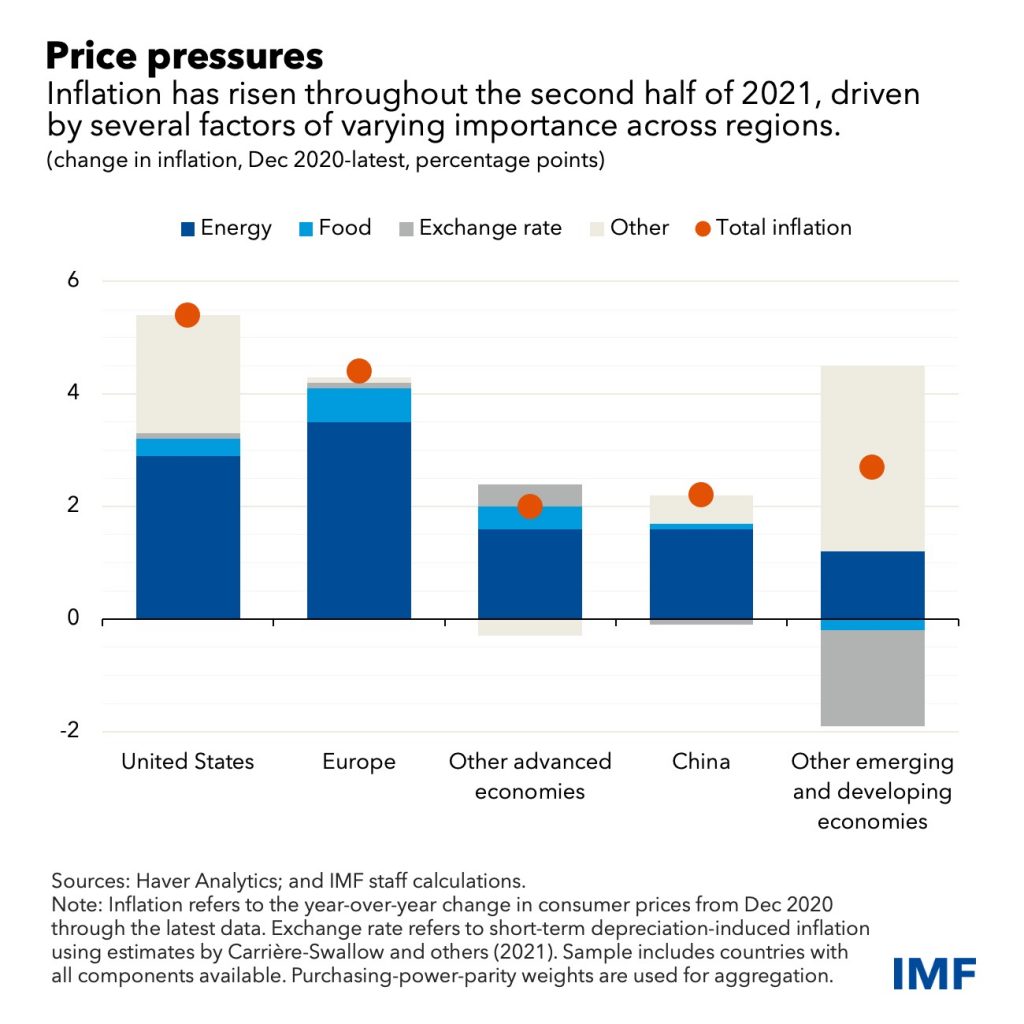
The economic recovery has fueled a rapid acceleration in inflation this year for advanced and emerging market economies, driven by firming demand, supply shortages, and rapidly rising commodity prices.
We forecast in our latest World Economic Outlook that higher inflation will likely continue in coming months before returning to pre-pandemic levels by mid-2022, though risks of an acceleration do remain.

Policymakers must walk a fine line between patient support for the recovery and being ready to act quickly.

The good news for policymakers is that long-term inflation expectations are well anchored, but economists still disagree about how enduring the upward pressure for prices will ultimately be.
Some have said government stimulus may push unemployment rates low enough to boost wages and overheat economies, possibly de-anchoring expectations and resulting in a self-fulfilling inflation spiral. Others estimate that pressures will ultimately be transitory as a one-time surge in spending fades.
Inflation dynamics and recovering demand
We examine if headline consumer price index inflation has moved in line with unemployment. Although the pandemic period poses many challenges to estimating this relationship, the unprecedented disturbance doesn’t seem to have substantially altered this relationship.
Advanced economies are likely to face moderate near-term inflation pressure, with the impact softening over time. Estimates of the relationship between slack, the amount of resources in an economy that aren’t being used, and inflation for emerging markets instead seem to be more sensitive to the inclusion of the pandemic period in the estimation sample.
Anchoring expectations
Inflation during the pandemic has been well anchored, according to measures of long-term expectations known as breakevens drawn from government bonds in 14 nations. These closely watched gauges have been stable so far during both the crisis and the recovery, though uncertainty about the outlook remains.
A key question is what combination of conditions could cause a persistent spike in inflation, including the possibility that expectations become unanchored and help spark a self-fulfilling upward spiral for prices.
Such episodes in the past have been associated with sharp exchange-rate depreciations in emerging markets and have often followed surging fiscal and current account deficits. Longer-term government spending commitments and external shocks could also contribute to expectations becoming de-anchored, especially in economies with central banks that aren’t believed to be able or willing to contain inflation.
Moreover, even when expectations are well anchored, a prolonged overshoot of the inflation target that policymakers have set could cause a de-anchoring of expectations.
Sectoral shocks
The pandemic has triggered large price movements in some sectors, notably food, transportation, clothing, and communications. Strikingly, the dispersion or variability in prices across sectors has so far remained relatively subdued by recent historical standards, especially compared with the global financial crisis. The reason is relatively smaller and shorter-lived swings in fuel, food, and housing prices post the pandemic, which are the three largest components of consumption baskets, on average.
Our forecast is that annual inflation in advanced economies will peak at 3.6 percent on average in the final months of this year before reverting in the first half of 2022 to 2 percent, in line with central bank targets. Emerging markets will see faster increases, reaching 6.8 percent on average then easing to 4 percent.
The projections, however, come with considerable uncertainty, and inflation may be elevated for longer. Contributing factors could include surging housing costs and prolonged supply shortages in advanced and developing economies, or food-price pressure and currency depreciations in emerging markets.
Food prices around the world jumped by about 40 percent during the pandemic, an especially acute challenge for low-income countries where such purchases make up a big share of consumer spending.
Simulations of several extreme risk scenarios show prices could rise significantly faster on continued supply chain disruptions, large commodity price swings, and a de-anchoring of expectations.
 Policy implications
When expectations become de-anchored, inflation can quickly take off and be costly to rein back in. Ultimately, central bank policy credibility and price expectations are difficult to precisely define, and any assessment of anchoring can’t be decided entirely based on relationships in historical data.
Policymakers therefore must walk a fine line between remaining patient in their support for the recovery and being ready to act quickly. Even more importantly, they must establish sound monetary frameworks, including triggers for when they would reduce support for the economy to rein in unwelcome inflation.
These thresholds for action could include early signs of de-anchoring inflation expectations, including forward-looking surveys, unsustainable fiscal and current account balances, or sharp currency swings.
Case studies show that while strong policy action has often tamed inflation and expectations for it, sound and credible central bank communication also played an especially crucial role in anchoring views. Authorities must be alert to triggers for a perfect storm of price risks that could be individually benign but when combined may lead to significantly more rapid increases than predicted in the IMF’s forecasts.
Finally, a key feature of the outlook is that there are significant differences across different economies. Faster inflation in the United States, for example, is projected to help drive the acceleration for advanced economies, though pressures in the euro area and Japan are estimated to remain relatively weak.
Compliments of the IMF.
The post IMF | Inflation Scares in an Uncharted Recovery first appeared on European American Chamber of Commerce New York [EACCNY] | Your Partner for Transatlantic Business Resources.

Read More
EACC

IMF | How Investment Funds Can Drive the Green Transition

Sustainable investment funds need to be scaled up to support a successful transition to a green economy
The transition to net-zero greenhouse gas emissions requires unprecedented change by companies and governments, as well as additional investment of as much as $20 trillion over the next two decades. Strong fiscal policies, complemented by a broad range of regulatory and financial policies, will be necessary to facilitate the green transition.
The world’s $50 trillion investment fund industry, especially funds with a sustainability focus, can play an important role financing the transition to a greener economy and helping to avoid some of the most perilous effects of climate change, according to our recent analysis as part of the IMF’s Global Financial Stability Report.

‘Net flows into sustainable funds increased notably in 2020.’

Sustainable funds differ from conventional funds because they have a sustainability objective while also seeking financial returns. Within this broad class of funds, some funds are more narrowly focused on the environment, and a further subcategory is concerned with climate change mitigation specifically.
Climate stewardship and firm financing
The positive role of funds comes directly from their ability to influence the corporate sector. Through stewardship, which includes direct engagement with firms and proxy voting, funds can effect changes in firms’ sustainability practices. For example, earlier this year, activist investors stunned the investment and energy industries by winning seats on Exxon Mobil’s board as part of their bid to change its climate strategy.
The latest Global Financial Stability Report shows how investment funds have stepped up proxy voting behavior with firms on climate-related matters. Conventional investment funds voted in favor of almost 50 percent of climate-related shareholder resolutions in 2020, up from about 20 percent in 2015. Funds with a sustainability focus had an even stronger track record, voting in favor of about 60 percent of such resolutions, and even close to 70 percent in the case of environment-themed funds.

Moreover, the growing popularity of investing in sustainable funds means more capital available to firms with a high sustainability rating, boosting firms’ bonds and shares issuance.
Still too small
However, even though sustainability is becoming mainstream in investment strategies, sustainable investment funds still represent only a small fraction of the investment fund universe. At the end of 2020, funds with a sustainability label totaled about $3.6 trillion, representing only 7 percent of the overall investment fund sector. Funds with a specific climate focus accounted for a meager $130 billion of that total.
Still, an emerging trend sees sustainable investment funds growing faster than conventional peers. Net flows into sustainable funds increased notably in 2020, and climate-themed funds grew especially fast, surging by a staggering 48 percent of assets under management.

Boosting sustainable and climate funds
So what can policymakers do to help the sustainable investment fund sector be more impactful?
First, strengthen the global climate information architecture, which includes data, disclosures, and sustainable finance classifications, both for firms and investment funds. For example, better classification systems for funds, where fund labels and taxonomies are uniformly used and understood, helps to summarize a fund’s investment strategy and its overall approach to engagement and stewardship. In fact, our analysis shows that labels have become an increasingly important driver of fund flows—especially in the retail segment of the market.
To this end, the IMF, together with the World Bank and the OECD, aims to develop principles for such classification systems to harmonize existing approaches and support the development of sustainable finance markets.
Second, proper regulatory oversight needs to be in place to prevent “greenwashing,” that is, ensure that labels fairly represent funds’ investment objectives. This, in turn, increases market confidence and further boosts flows into sustainable funds.
Third, once those elements are in place, tools to channel savings toward funds that enhance the transition become important. For example, enhanced eligibility of climate-themed funds for favorable tax treatment in savings products (such as retirement plans or life insurance products) could help complement other climate-change-mitigation measures, such as carbon taxes.
Authors:

Fabio M. Natalucci is a Deputy Director of the Monetary and Capital Markets Department

Felix Suntheim is a Financial Sector Expert in the Global Financial Stability Analysis Division of the IMF’s Monetary and Capital Markets Department

Jérôme Vandenbussche is deputy division chief in the IMF’s Monetary and Capital Markets Department

Compliments of the IMF.
The post IMF | How Investment Funds Can Drive the Green Transition first appeared on European American Chamber of Commerce New York [EACCNY] | Your Partner for Transatlantic Business Resources.

EACC

EU-US Trade and Technology Council Inaugural Joint Statement

Section 1.  Pittsburgh Statement

The EU-US Trade and Technology Council (TTC) met for the first time in Pittsburgh on 29 September 2021. It was co-chaired by European Commission Executive Vice President Margrethe Vestager, European Commission Executive Vice President Valdis Dombrovskis, US Secretary of State Antony Blinken, US Secretary of Commerce Gina Raimondo and US Trade Representative Katherine Tai. The European Union and the United States reaffirm the TTC’s objectives to: coordinate approaches to key global technology, economic, and trade issues; and to deepen transatlantic trade and economic relations, basing policies on shared democratic values.

We support the continued growth of the EU-US technology, economic and trade relationship and cooperation in addressing global challenges. We intend to collaborate to promote shared economic growth that benefits workers on both sides of the Atlantic, grow the transatlantic trade and investment relationship, fight the climate crisis, protect the environment, promote workers’ rights, combat child and forced labour, expand resilient and sustainable supply chains, and expand cooperation on critical and emerging technologies. We stand together in continuing to protect our businesses, consumers, and workers from unfair trade practices, in particular those posed by non-market economies that are undermining the world trading system.

We share a strong desire to drive the digital transformation that spurs trade and investment, benefits workers, protects the environment and climate, strengthens our technological and industrial leadership, sets high standards globally, boosts innovation, and protects and promotes critical and emerging technologies and infrastructure. We intend to cooperate on the development and deployment of new technologies in ways that reinforce our shared democratic values, including respect for universal human rights, advance our respective efforts to address the climate change crisis, and encourage compatible standards and regulations. We intend to cooperate to effectively address the misuse of technology, to protect our societies from information manipulation and interference, promote secure and sustainable international digital connectivity, and support human rights defenders.

We seek inclusive economic growth that benefits all of our people, and intend to make a particular focus on inclusive growth for middle class and lower income people on both sides of the Atlantic. We also have a particular focus on opportunities for small and medium-sized enterprises.

The cooperation and exchanges of the TTC are without prejudice to the regulatory autonomy of the European Union and the United States and should respect the different legal systems in both jurisdictions. Cooperation within the TTC is intended to feed into coordination in multilateral bodies, including in the WTO, and wider efforts with like-minded partners, with the aim of promoting democratic and sustainable models of digital and economic governance.

To strengthen our cooperation, we identified the following areas of joint work over the coming months, with the intent of achieving concrete outcomes on these issues by the time of our next meeting.

Section 2.  Pittsburgh outcomes

As a demonstration of our shared commitment to make progress on the objectives of the TTC, the European Union and the United States have identified the following outcomes in specific areas, the details of which are further reflected in Annexes I-V.

We believe that our openness to foreign investment is essential for economic growth and innovation. We also face common challenges in addressing related risks. We intend to maintain investment screening in order to address risks to national security and, within the European Union, public order. We recognise that our investment screening regimes should be accompanied by the appropriate enforcement mechanisms. Furthermore, investment screening regimes should be guided by the principles of non-discrimination, transparency, predictability, proportionality, and accountability, as set forth in relevant OECD guidelines. We also intend to engage with partner countries and stakeholders on investment screening.

We recognise the importance of effective controls on trade in dual-use items. Such export controls are necessary to ensure compliance with our international obligations and commitments. We affirm that a multilateral approach to export controls is most effective for protecting international security and supporting a global level-playing field. We note that the potential applications of emerging technologies in the defence and security field raise important concerns, and recognise the need to address these risks. We have determined shared principles and areas for export control cooperation, including in export control capacity-building assistance to third countries, and recognise the importance, where appropriate and feasible, of prior consultations to ensure that the application of export controls is transparent and equitable for EU and US exporters.

The European Union and the United States consider that artificial intelligence (AI) technologies have the potential to bring significant benefits to our citizens, societies and economies. AI technologies can help tackle many significant challenges that we face, and they can improve the quality of our lives. The European Union and the United States acknowledge that AI technologies yield powerful advances but also can threaten our shared values and fundamental freedoms if they are not developed and deployed responsibly or if they are misused. The European Union and the United States affirm their willingness and intention to develop and implement AI systems that are innovative and trustworthy and that respect universal human rights and shared democratic values.

The European Union and the United States reaffirm our commitment to building a partnership on the rebalancing of global supply chains in semiconductors with a view to enhancing respective security of supply as well as their respective capacity to design and produce semiconductors, especially, but not limited to, those with leading-edge capabilities. This partnership should be balanced and of equal interest for both sides. We underline the importance of working together to identify gaps in the semiconductor value chain, and strengthening our domestic semiconductor ecosystems.

With respect to global trade challenges, we intend to work closely together to address non-market, trade-distortive policies and practices, improve the effectiveness of our respective domestic measures that address those policies and practices, and explore ways to combat the negative effects of such policies and practices in third countries. We also intend to work together to maintain competitive, free, and fair transatlantic commerce in new and emerging technologies, by avoiding new and unnecessary barriers to trade in these technologies, while always respecting the European Union’s and the United States’ regulatory autonomy and promoting openness and transparency. In these and other efforts, we intend to maintain a particular focus on using and coordinating the use of our trade policy tools. We aim to protect workers and labour rights, and combat forced and child labour. We intend to address relevant trade, climate, and environmental issues.

We acknowledge the importance of and share a commitment to consulting closely with diverse stakeholders on both sides of the Atlantic as we undertake our work in the TTC. Robust engagement with business, thought leaders, labour organizations, non-profit organizations, environmental constituencies, academics, and other stakeholders that form the civil society at large is essential to this work. We intend to separately make available points of contact, where stakeholders may submit their inputs, comments and views. Moreover, regular exchanges with the stakeholders are to be organised through diverse channels, both at the level of working groups and political principals, as well as by each of the respective parties or jointly. This is to encourage the transatlantic stakeholder community to provide common proposals on the work pursued by the TTC.

Section 3.  Future scope of work
The European Union and the United States ask that each of the working groups established under the TTC carry forward important work to strengthen our relationship and cooperation. Specifically, we ask that the working groups, by our next meeting, focus on the following:

Working Group 1 – Technology Standards: The Technology Standards working group is tasked to develop approaches for coordination and cooperation in critical and emerging technology standards including AI and other emerging technologies. The European Union and the United States support the development of technical standards in line with our core values, and recognise the importance of international standardisation activities underpinned by core WTO principles. The European Union and the United States aim to identify opportunities for collaborative proactive action and to defend our common interests in international standards activities for critical and emerging technologies. As such, we plan to develop both formal and informal cooperation mechanisms to share information regarding technical proposals in specified technology areas and seek opportunities to coordinate on international standards activities. We look forward to fostering participation in standards organizations for civil society organizations, startups, small and medium sized enterprises in emerging technologies.

Working Group 2 – Climate and Clean Tech: Given the great importance of technology to address environmental challenges and connected market opportunities, the Climate and Clean Tech working group is tasked to identify opportunities, measures and incentives to support technology development, transatlantic trade and investment in climate neutral technologies, products and services, including collaboration in third countries, research and innovation, and to jointly explore the methodologies, tools, and technologies for calculating embedded greenhouse gas emissions in global trade.

Working Group 3 – Secure Supply Chains: Alongside the dedicated track on semiconductors, the Secure Supply Chains working group is tasked to focus on advancing respective supply chain resilience and security of supply in key sectors for the green and digital transition and for securing the protection of our citizens. A first focus will be on clean energy, pharmaceuticals, and critical materials. In connection with these sectors, the working group is tasked to seek to: increase transparency of supply and demand; map respective existing sectoral capabilities; exchange information on policy measures and research and development priorities; and cooperate on strategies to promote supply chain resilience and diversification. The dedicated track on semiconductor issues will initially focus on short-term supply chain issues. Cooperation on mid- and long-term strategic semiconductor issues will begin in the relevant TTC working groups ahead of the next TTC meeting.

Working Group 4 – Information and Communication Technology and Services (ICTS) Security and Competitiveness: The Information and Communications Technology and Services working group is tasked to continue to work towards ensuring security, diversity, interoperability and resilience across the ICT supply chain, including sensitive and critical areas such as 5G, undersea cables, data centres, and cloud infrastructure. The working group is tasked to explore concrete cooperation on development finance for secure and resilient digital connectivity in third countries. The working group is tasked to seek to reinforce cooperation on research and innovation for beyond 5G and 6G systems. The European Union and the United States, in close cooperation with relevant stakeholders, could develop a common vision and roadmap for preparing the next generation of communication technologies towards 6G. The group is also tasked to discuss data security.

Working Group 5 – Data Governance and Technology Platforms: The Data Governance and Technology Platforms working group is tasked to exchange information on our respective approaches to data governance and technology platform governance, seeking consistency and interoperability where feasible. We intend to exchange information and views regarding current and future regulations in both the European Union and the United States with a goal of effectively addressing shared concerns, while respecting the full regulatory autonomy of the European Union and the United States. We have identified common issues of concern around: illegal and harmful content and their algorithmic amplification, transparency, and access to platforms’ data for researchers as well as the democratic responsibility of online intermediaries. We have also identified a shared interest in using voluntary and multi-stakeholder initiatives to complement regulatory approaches in some areas. We are committed to transatlantic cooperation regarding platform policies that focus on disinformation, product safety, counterfeit products, and other harmful content. We plan to engage with platform companies to improve researchers’ access to data generated by platforms, in order to better understand and be able better to address systemic risks linked to how content spreads online. We also plan to engage in a discussion on effective measures to appropriately address the power of online platforms and ensure effective competition and contestable markets. The working group is also tasked to discuss, alongside other working groups, common approaches on the role of cloud infrastructure and services.

Working Group 6 – Misuse of Technology Threatening Security and Human Rights: The Misuse of Technology to Threaten Security and Human Rights working group is tasked to combat arbitrary or unlawful surveillance, including on social media platforms; explore building an effective mechanism to respond to Internet shutdowns, in conjunction with the G7 and others likeminded countries; work to protect human rights defenders online; and increase transatlantic cooperation to address foreign information manipulation, including disinformation, and interference with democratic processes, while upholding freedom of expression and privacy rights. The working group is tasked to address social scoring systems and to collaborate on projects furthering the development of trustworthy AI.

Working Group 7 – Export Controls: The Export Controls working group is tasked to engage in technical consultations on legislative and regulatory developments and exchange information on risk assessments and licensing good practices, as well as on compliance and enforcement approaches, promote convergent control approaches on sensitive dual-use technologies, and perform joint industry outreach on dual-use export controls.

Working Group 8 – Investment Screening: The Investment Screening working group is tasked to focus on exchanging information on investment trends impacting security, including strategic trends with respect to industries concerned, origin of investments, and types of transactions; on best practices, including with respect to risk analysis and the systems for risk mitigation measures with a focus on sensitive technologies and related sensitive data, which may include personal data; and together with other groups, including Export Controls, develop a holistic view of the policy tools addressing risks related to specific sensitive technologies. The working group is expected to conduct a joint virtual outreach event for stakeholders.

Working Group 9 – Promoting Small- and Medium-sized Enterprises (SME) Access to and Use of Digital Tools: The use of digital tools is a key enabler for SMEs to innovate, grow and compete. Its uptake varies significantly across sectors and regions. Beyond training and education gaps and market access barriers, SMEs face challenges regarding access to technologies, data, and finance. We are committed to ensuring access to digital tools and technologies for SMEs in both the European Union and the United States. Working Group 9 is tasked to launch outreach activities that will offer opportunities for SMEs and underserved communities, and their representatives, to share their needs, experience, strategies and best practices with policymakers on both sides of the Atlantic with a view to ensuring a better understanding of the barriers to their digital empowerment. Additionally, through a series of listening sessions with SMEs and underserved communities, as well as the resulting analysis and reporting, the working group is tasked to develop recommendations for EU and US policymakers to implement that will help to accelerate access to and the uptake of digital technologies.

Working Group 10 – Global Trade Challenges: Consistent with the attached statement on global trade challenges, Working Group 10 is tasked to focus on challenges from non-market economic policies and practices, avoiding new and unnecessary technical barriers in products and services of emerging technology, promoting and protecting labour rights and decent work, and, following further consultations, trade and environment issues.

Annex I
Statement on Investment Screening

The European Union and the United States believe that openness to foreign investment is essential for economic growth and innovation. They take note of the very significant volume of investments, exceeding four trillion euros / dollars linking companies on both sides of the Atlantic, which illustrates the strength of the transatlantic partnership.

The European Union and the United States intend to continue to protect themselves from risk arising from certain foreign investment through investment screening focused on addressing risks to national security and, within the European Union, public order as well.

The European Union and the United States recognise that investment screening regimes should be based on legislative or regulatory frameworks accompanied by the appropriate enforcement mechanisms.

Furthermore, drawing on best practices, investment screening regimes should be guided by the principles of non-discrimination, transparency of policies and predictability of outcomes, proportionality of measures, and accountability of implementing authorities, as set forth in the Guidelines for Recipient Country Investment Policies Relating to National Security, adopted by the OECD Council in May 2009.

The European Union and the United States envisage to meet periodically, through the TTC Investment Screening Working Group and other appropriate channels, to exchange information on investment trends and best practices related to effective investment screening implemented in line with the above principles, while respecting confidentiality limitations. In particular, the European Union and the United States intend to explore the following work-streams:

Exchanges on investment trends impacting security, including strategic trends with respect to industries concerned, origin of investments, and types of transactions;
Exchanges on best practices, i.e. risk analysis and the systems for risk mitigation measures, with a focus on sensitive technologies, issues related to access to sensitive data, which may include personal data; and
Holistic view of the policy tools addressing risks related to specific sensitive technologies.

The European Union and the United States also intend to maintain lines of communication with stakeholders on these issues and engage with other partners globally on investment screening.

The working group intends to conduct a joint virtual outreach event for stakeholders. 

Annex II
Statement on Export Control Cooperation
Principles

The European Union and the United States recognise the importance of effective controls on trade in dual-use items, including transfers in sensitive technologies. Such controls are necessary to ensure compliance with our international obligations and commitments, in particular regarding non-proliferation of weapons of mass destruction and preventing destabilising accumulations of conventional weapons, regional peace, security, stability and respect for human rights and international humanitarian law, as well as our joint security and foreign policy interests.
The European Union and the United States understand that a multilateral approach to export controls is most effective for protecting international security and supporting a global level-playing field. They reiterate their commitment to working with partners and allies, where appropriate, to coordinate and broaden the global response, promoting a multilateral rules-based trade and security system founded on transparency, reciprocity, and fairness.

The European Union and the United States note that the potential applications of emerging technologies in the defence and security field raise important legal, ethical, and political concerns and recognise the need to address risks associated with the trade in emerging technologies.

The European Union and the United States share concerns that technology acquisition strategies, including economic coercive measures, and civil-military fusion policies of certain actors undermine security interests, and challenge the objective assessment of risks by the competent authorities and the effective implementation of rules-based controls in line with internationally-agreed standards.

The European Union and the United States are of the view that export controls should not unduly disrupt strategic supply chains and should be consistent with the applicable exceptions of the General Agreement on Tariffs and Trade. The European Union and the United States recognise the importance, where appropriate and feasible, of consultations prior to the introduction of controls outside the multilateral regimes, in particular to ensure that the application of export controls is transparent and equitable for EU and US exporters.

The European Union and the United States acknowledge the need for controls on trade in certain dual-use items, in particular technologies, including cyber-surveillance technologies that may be misused in ways that might lead to serious violations of human rights or international humanitarian law.

The European Union and the United States also recognise the responsibility of the private sector, as well as public R&D institutions, under export control rules as well as the importance of raising awareness in the private and the research sectors, and that promoting cooperation and self-regulation is integral to effective export controls. They are committed to working closely in partnership with the private sector and public R&D institutions in that regard.

Against this backdrop the Export Control Working Group under the Trade and Technology Council, building on the on-going EU-US Export Control Dialogue, provides a dedicated forum enabling the European Union and the United States to enhance cooperation on export controls in order to address evolving security risks and challenges associated with trade in strategic dual-use technologies to destinations warranting greater scrutiny, while ensuring that export controls are consistent with joint innovation and technology development.

Cooperation areas
The European Union and the United States intend to enhance their cooperation in the following areas:

Technical consultations on current and upcoming legislative and regulatory developments to promote the global convergence of controls and ensure legal security for EU and US companies, including regular adjustments to control lists and specific license exceptions/General Export Authorisations, development of guidelines, as well as relevant regulatory developments in third countries;

Technical consultations and development of convergent control approaches on sensitive dual-use technologies, as appropriate;

Information exchange on risks associated with:

the export of sensitive technologies to destinations and entities of concern, exchange of good practice on the implementation and licensing for listed or non-listed sensitive items;
technology transfers and dual-use research of concern and exchange of best practices to support the effective application of controls while facilitating research collaboration between EU and US research organizations;

Technical consultations on compliance and enforcement approaches (i.e. legal and regulatory basis, institutional and administrative arrangements) and actions;

Capacity building assistance to third countries to develop appropriate capabilities to implement guidelines and lists of multilateral export control regimes, appropriate export control policies and practices, as well as relevant enforcement measures; and,

Technical consultations regarding multilateral and international cooperation, including prior to the introduction of controls outside the multilateral regimes, as appropriate.

Next Steps
To implement these Principles and initiate the Consultations, the Export Control Working Group is tasked to:

Conduct a joint EU-US virtual outreach event for stakeholders on October 27, 2021. This event is expected to begin the process of soliciting input from stakeholders on steps to achieve the Principles and specific topics for the Working Group to address in the Cooperation areas, and
Meet to identify an initial set of specific topics to address in its Technical Consultations following the TTC.

Annex III
Statement on AI

The European Union and the United States believe that artificial intelligence (AI) technologies have the potential to bring substantial benefit to our citizens, societies and economies. AI can help tackle significant challenges societies face, transform industries, and improve the quality of our lives.

The European Union and the United States acknowledge that AI-enabled technologies have risks associated with them if they are not developed and deployed responsibly or if they are misused.

The European Union and the United States affirm their willingness and intention to develop and implement trustworthy AI and their commitment to a human-centred approach that reinforces shared democratic values and respects universal human rights, which they have already demonstrated by endorsing the OECD Recommendation on AI. Moreover, the European Union and the United States are founding members of the Global Partnership on Artificial Intelligence, which brings together a coalition of like-minded partners seeking to support and guide the responsible development of AI that is grounded in human rights, inclusion, diversity, innovation, economic growth, and societal benefit.

The European Union and the United States are committed to working together to ensure that AI serves our societies and economies and that it is used in ways consistent with our common democratic values and human rights. Accordingly, the European Union and the United States are opposed to uses of AI that do not respect this requirement, such as rights-violating systems of social scoring.

The European Union and the United States have significant concerns that authoritarian governments are piloting social scoring systems with an aim to implement social control at scale. These systems pose threats to fundamental freedoms and the rule of law, including through silencing speech, punishing peaceful assembly and other expressive activities, and reinforcing arbitrary or unlawful surveillance systems.

The European Union and the United States underline that policy and regulatory measures should be based on, and proportionate to the risks posed by the different uses of AI.

The United States notes the European Commission’s proposal for a risk-based regulatory framework for AI. The framework defines high-risk uses of AI, which are to be subject to a number of requirements. The EU also supports a number of research, innovation and testing projects on trustworthy AI as part of its AI strategy.

The European Union notes the US government’s development of an AI Risk Management Framework, as well as ongoing projects on trustworthy AI as part of the US National AI Initiative.
We are committed to working together to foster responsible stewardship of trustworthy AI that reflects our shared values and commitment to protecting the rights and dignity of all our citizens. We seek to provide scalable, research-based methods to advance trustworthy approaches to AI that serve all people in responsible, equitable, and beneficial ways.

Areas of cooperation
The European Union and the United States want to translate our common values into tangible action and cooperation for mutual benefit.

The European Union and the United States are committed to the responsible stewardship of trustworthy AI and intend to continue to uphold and implement the OECD Recommendation on Artificial Intelligence. The European Union and the United States seek to develop a mutual understanding on the principles underlining trustworthy and responsible AI.

The European Union and the United States intend to discuss measurement and evaluation tools and activities to assess the technical requirements for trustworthy AI, concerning, for example, accuracy and bias mitigation.

The European Union and the United States intend to collaborate on projects furthering the development of trustworthy and responsible AI to explore better use of machine learning and other AI techniques towards desirable impacts. We intend to explore cooperation on AI technologies designed to enhance privacy protections, in full compliance with our respective rules, as well as additional areas of cooperation to be defined through dedicated exchanges.

The European Union and the United States intend to jointly undertake an economic study examining the impact of AI on the future of our workforces, with attention to outcomes in employment, wages, and the dispersion of labour market opportunities. Through this collaborative effort, we intend to inform approaches to AI consistent with an inclusive economic policy that ensures the benefits of technological gains are broadly shared by workers across the wage scale.

Annex IV
Statement on Semiconductor Supply Chains

The European Union and the United States reaffirm their willingness to build a partnership on the rebalancing of global supply chains in semiconductors with a view to enhancing their respective security of supply as well as respective capacity to design and produce semiconductors, especially, but not limited to, those with leading-edge capabilities. This partnership should be balanced and of equal interest to both sides. It will initially focus on short-term supply chain issues. Cooperation on mid- and long-term strategic semiconductor issues will begin in the relevant TTC working groups ahead of the next TTC Meeting.

We acknowledge that semiconductors are the material basis for integrated circuits that are essential to modern-day life and underpin our economies. As such, semiconductors power virtually every sector of the economy, including energy, healthcare, agriculture, consumer electronics, manufacturing, defence, and transportation. They determine the characteristics of the products into which they are embedded, including security, computing power, privacy, trust, energy performance and safety.

The COVID-19 pandemic has further increased the importance of semiconductors. They have enabled remote health care, medical research, working and studying from home and electronic commerce. Through the pandemic, shortages of certain semiconductors have highlighted the importance of ensuring stable, resilient and robust supply chains for these vital products.
We recognise that the semiconductor supply chain, from raw materials, design and manufacturing to assembly, testing and incorporation into end products, is extremely complex and geographically dispersed. The development and production of semiconductors include multiple countries, with some very concentrated segments. The European Union and the United States have some important respective strengths as well as ongoing significant mutual dependencies, and common external dependencies.

We share the view that promoting supply chain transparency, in partnership with industry and all relevant stakeholders, is essential to strengthening investment and addressing the supply and demand imbalance in the semiconductor industry. With the goal of identifying bottlenecks pertaining to supply and demand across the various segments of the semiconductor supply chain, we intend to enhance cooperation on measures to advance transparency and communication in the semiconductor supply chain.  To this end, we intend to engage with our respective stakeholders in discussions of relevant measures.

In the short-term, we underline the importance of jointly identifying gaps and vulnerabilities, mapping capacity in the semiconductor value chain, and strengthening our domestic semiconductor ecosystems, from, research, design to manufacturing, with a view to improving resilience, through consultation with stakeholders, and the right incentives.

We share the aim of avoiding a subsidy race and the risk of crowding out private investments that would themselves contribute to our security and resilience.
Without prejudice to cooperation with our likeminded partners, we intend to focus on reducing existing strategic dependencies throughout the supply chain, especially through a diversification of the supply chain and increased investment.

We intend to work jointly so that any investment made on our territories is done in full respect of our respective security of supply.

Annex V
Statement on Global Trade Challenges
The European Union and the United States intend to initially focus on the following specific objectives in the Global Trade Challenges Working Group.
Trade Policy Cooperation towards Non-Market Economies (NMEs)
In paragraph 22 of the Joint Statement issued following their June 15, 2021 summit meeting, President Biden, President Michel, and President von der Leyen stated:
“We intend to work cooperatively on efforts to achieve meaningful World Trade Organization (WTO) reform and help promote outcomes that benefit our workers and companies…..We intend to seek to update the WTO rulebook with more effective disciplines on industrial subsidies, unfair behaviour of state-owned enterprises, and other trade and market distorting practices.”
As a complement to this cooperation, the European Union and the United States intend to focus in the Global Trade Challenges Working Group on responding to the challenges posed by non-market economies cited in the June 15 Joint Statement.
The European Union and the United States, as democratic market economies, share a number of core values, including with respect to human and labour rights, environmental protection, the rule of law, non-discrimination, regulatory transparency, market-based commerce, and the freedom to innovate and to have innovations protected.
We intend to work together in the Global Trade Challenges Working Group to ensure that our trade policies support these and other shared values, including by promoting them internationally and by resisting challenges to these values in global commerce arising from non-market distortive policies and practices.
Among the actions the European Union and the United States intend to take in the Global Trade Challenges Working Group with respect to this objective are the following:

Share information on non-market distortive policies and practices that pose particular challenges for EU and US workers and businesses, both across sectors and in relation to specific sectors in which we have identified certain risks, with the goal of developing strategies for mitigating or responding to those policies, practices, and challenges. Non-market practices that raise concerns include – but are not limited to – forced technology transfer; state-sponsored theft of intellectual property; market-distorting industrial subsidies, including support given to and through SOEs, and all other types of support offered by governments; the establishment of domestic and international market share targets; discriminatory treatment of foreign companies and their products and services in support of industrial policy objectives; and anti-competitive and non-market actions of SOEs.
The European Union and the United States recognise that domestic measures that each takes on its own can play a critical role in ensuring that trade policy supports market-based economies and the rule of law. This recognition is without prejudice to the views that either of them may have with respect to the appropriateness of any particular measure.

To improve the use and effectiveness of such domestic measures, the European Union and the United States intend to:

Make an inventory of the growing number of domestic measures that the European Union and the United States each already employ, and exchange information on the operation and effectiveness of those measures and on any plans for future measures; and,
To the extent practicable or deemed desirable by both the European Union and the United States, consult or coordinate on the use and development of such domestic measures, with a view to increasing their effectiveness and mitigating collateral consequences for either the European Union or the United States from any such measure developed.

Exchange information on the impact of non-market, distortive policies and practices in third countries and explore ways of working together and with other partners with a view to addressing the negative effects of such policies and practices, which can undermine development goals and have a negative impact on EU and US commerce in those countries.

Avoiding New and Unnecessary Barriers to Trade in New and Emerging Technologies 
The European Union and the United States recognise and respect the importance of regulation of goods and services to achieve legitimate policy objectives. They are also aware that such regulations may have unintended consequences and result in barriers to trade between them and that such barriers, once implemented, can be challenging to remove. Consequently, the European Union and the United States intend to work to identify and avoid potential new unnecessary barriers to trade in products or services derived from new and emerging tech, while ensuring that legitimate regulatory objectives are achieved.
This work will fully respect each side’s regulatory autonomy and regulatory system, and will promote the highest level of openness and transparency and welcome input from all interested stakeholders.
Cooperation on Trade and Labour 
The European Union and the United States intend to promote together and in an inclusive way the protection of fundamental labour rights, including by combatting the scourge of forced and child labour, with each side using relevant trade policies and tools, including FTAs and unilateral measures, such as preference and other programs, and cooperating in the ILO, WTO, and other appropriate multilateral fora. Both sides intend to promote responsible business conduct, with the aim of enhancing the sustainability of global value chains. In pursuit of these objectives, we intend to:

Share information and best practices on trade measures related to the respect for fundamental labour rights and prevention of forced and child labour, including implementation and enforcement; new initiatives of each side, with a view to developing additional and joint ways to prevent forced labour; and the effectiveness of labour enforcement tools, with a view to improving them.

Cooperate and jointly support work in multilateral fora to promote fundamental labour rights, including to combat child and forced labour, and including in the WTO fisheries subsidies negotiations.

Discuss the impact of technology on labour markets, working conditions, and worker rights, including policy issues related to the “gig” economy, worker surveillance, and labour conditions throughout supply chains.

Exchange information on the implementation of labour provisions in our respective trade agreements.

Cooperation on Trade-Related Environmental and Climate Policies and Measures  
The European Union and the United States underline the positive role that trade can play in addressing environmental challenges such as climate change, achieving climate neutrality, and supporting the transition to a more circular economy. The European Union and the United States intend to consult on the inclusion of trade-related climate and environment issues in the work plan of the Global Trade Challenges Working Group.
Consultation with Stakeholders
The European Union and the United States welcome input from and dialogue with business, trade unions, consumer organizations, and environmental and other non-government organizations on the work of the Global Trade Challenges Working Group, including joint input from transatlantic groupings of stakeholders.
Compliments of the European Commission.
The post EU-US Trade and Technology Council Inaugural Joint Statement first appeared on European American Chamber of Commerce New York [EACCNY] | Your Partner for Transatlantic Business Resources.