EACC

Green Deal: New proposals to make sustainable products the norm and boost Europe’s resource independence

The Commission is presenting today a package of European Green Deal proposals to make sustainable products the norm in the EU, boost circular business models and empower consumers for the green transition. As announced in the Circular Economy Action Plan, the Commission is proposing new rules to make almost all physical goods on the EU market more friendly to the environment, circular, and energy efficient throughout their whole lifecycle from the design phase through to daily use, repurposing and end-of-life.
The Commission is also presenting today a new strategy to make textiles more durable, repairable, reusable and recyclable, to tackle fast fashion, textile waste and the destruction of unsold textiles, and ensure their production takes place in full respect of social rights.
A third proposal aims to boost the internal market for construction products and ensure that the regulatory framework in place is fit for making the built environment deliver on our sustainability and climate objectives.
Finally, the package includes a proposal on new rules to empower consumers in the green transition so that consumers are better informed about the environmental sustainability of products and better protected against greenwashing.
With today’s proposals, the Commission is presenting the tools to move to a truly circular economy in the EU: decoupled from energy- and resource dependencies, more resilient to external shocks and respectful of nature and people’s health. The proposals build on the success of EU’s existing Ecodesign rules, which have brought remarkable reductions in EU’s energy consumption and significant savings to consumers. In 2021 alone, existing ecodesign requirements saved consumers €120 billion. The rules have also led to a 10% lower annual energy consumption by the products in scope. By 2030, the new framework can lead to 132 mtoe of primary energy savings, which corresponds roughly to 150 bcm of natural gas, almost equivalent to EU’s import of Russian gas. 
Making sustainable products the norm
The proposal for a Regulation on Ecodesign for Sustainable Products addresses product design, which determines up to 80% of a product’s lifecycle environmental impact. It sets new requirements to make products more durable, reliable, reusable, upgradable, reparable, easier to maintain, refurbish and recycle, and energy and resource efficient. In addition, product-specific information requirements will ensure consumers know the environmental impacts of their purchases. All regulated products will have Digital Product Passports. This will make it easier to repair or recycle products and facilitate tracking substances of concern along the supply chain. Labelling can be introduced as well. The proposal also contains measures to end the destruction of unsold consumer goods, as well as expand green public procurement and provide incentives for sustainable products.
Today’s proposal extends the existing Ecodesign framework in two ways: first, to cover the broadest possible range of products; and second, to broaden the scope of the requirements with which products are to comply. Setting criteria not only for energy efficiency, but also for circularity and an overall reduction of the environmental and climate footprint of products will lead to more energy and resource independence and less pollution. It will strengthen the Single Market, avoiding diverging legislation in each Member State, and create economic opportunities for innovation and job creation, notably in remanufacturing, maintenance, recycling and repair. The proposal will set a framework and a process through which the Commission, working in close cooperation with all those concerned, will progressively set out requirements for each product or group of products.
Together with this proposal, the Commission has also adopted an Ecodesign and Energy Labelling Working Plan 2022-2024 to cover new energy-related products, update and increase the ambition for products that are already regulated, as a transitionary measure until the new regulation enters into force. It notably addresses consumer electronics (smartphones, tablets, solar panels) – the fastest growing waste stream.
To support the deployment of sustainable products across the EU market, targeted sectoral initiatives are also presented today. The EU Strategy for Sustainable and Circular Textiles and the revision of the Construction Products Regulation will address two priority product groups with significant impacts.
Sustainable and circular textiles
European consumption of textiles has the fourth highest impact on the environment and climate change, after food, housing and mobility. It is also the third highest area of consumption for water and land use, and fifth highest for the use of primary raw materials.
The EU Strategy for Sustainable and Circular Textiles sets out the vision and concrete actions to ensure that by 2030 textile products placed on the EU market are long-lived and recyclable, made as much as possible of recycled fibres, free of hazardous substances and produced in respect of social rights and the environment. Consumers will benefit longer from high quality textiles, fast fashion should be out of fashion, and economically profitable re-use and repair services should be widely available. In a competitive, resilient and innovative textiles sector, producers have to take responsibility for their products along the value chain, including when they become waste. In this way, the circular textiles ecosystem will be thriving, and be driven by sufficient capacities for innovative fibre-to-fibre recycling, while the incineration and landfilling of textiles has to be reduced to the minimum.
The specific measures will include ecodesign requirements for textiles, clearer information, a Digital Product Passport and a mandatory EU extended producer responsibility scheme. It also foresees measures to tackle the unintentional release of microplastics from textiles, ensure the accuracy of green claims, and boost circular business models, including reuse and repair services. To address fast fashion, the Strategy also calls on companies to reduce the number of collections per year, take responsibility and act to minimise their carbon and environmental footprints, and on Member States to adopt favourable taxation measures for the reuse and repair sector. The Commission will promote the shift also with awareness-raising activities.
The Strategy also aims to provide support to and accompany the textiles ecosystem throughout its transformative journey. Therefore, the Commission is launching today the co-creation of a transition pathway for the textiles ecosystem. This is an essential collaborative tool to help the ecosystem to recover from negative impacts of the Covid-19 pandemic which have been affecting companies in their daily operations for the last two years. It will also strengthen their capacities to withstand both a fierce global competition and future shocks for their long-term survival. All the actors are encouraged to take active part in the co-creation process through their commitments on circularity and circular business models, actions to strengthen sustainable competitiveness, digitalisation and resilience, and identification of specific investments needed for the twin transition.
The construction products of tomorrow
The construction ecosystem represents almost 10% of EU value added, and employs around 25 million people in over 5 million firms. The construction products industry counts 430,000 companies in the EU, with a turnover of €800 billion. These are mainly small and medium-size enterprises. They are a key economic and social asset for local communities in European regions and cities.
Buildings are responsible for around 50% of resource extraction and consumption and more than 30% of the EU’s total waste generated per year. In addition, buildings are responsible for 40% of EU’s energy consumption and 36% of energy-related greenhouse gas emissions.
The revision of the Construction Products Regulation will strengthen and modernise the rules in place since 2011. It will create a harmonised framework to assess and communicate the environmental and climate performance of construction products. New product requirements will ensure that the design and manufacture of construction products is based on state of the art to make these more durable, repairable, recyclable, easier to re-manufacture.
It will also make it easier for standardisation bodies to do their work of creating common European standards. Together with enhanced market surveillance capacities and clearer rules for economic operators along the supply chain, this will help to remove obstacles to the free movement of the internal market. Finally, the revised Regulation will offer digital solutions to reduce administrative burdens, particularly on SMEs, including a construction products database and a Digital Products Passport.
Members of the College said:
Executive Vice-President for the European Green Deal Frans Timmermans said: “It’s time to end the model of ‘take, make, break, and throw away’ that is so harmful to our planet, our health and our economy. Today’s proposals will ensure that only the most sustainable products are sold in Europe. They allow consumers to save energy, repair and not replace broken products, and make smart environmental choices when they are shopping for new ones. This is how we bring balance back in our relationship with nature and reduce our vulnerability to disruptions in global supply chains.”
Commissioner for the Internal Market Thierry Breton said: “European consumers rightly expect more environment-friendly and longer-lasting products. More sustainability and resource efficiency also means more resilience when a crisis disrupts our industrial supply chains. By harnessing the potential of the Single Market, making the most of digital tools and improving market surveillance, we will maximise opportunities for businesses and consumers alike. Greater resource and energy efficiency in the construction and textile sectors in particular will generate highly skilled jobs across Europe.”
Commissioner for the Environment, Oceans and Fisheries Virginijus Sinkevičius said: “Our circular economy proposals kick off an era where products will be designed in a way that brings benefits to all, respects the boundaries of our planet and protects the environment. Giving a longer lifespan to the phones we use, to the clothes we wear and to many other products will save money for European consumers. And at the end of their life products will not be a source of pollution, but of new materials for the economy, decreasing the dependency of European businesses on imports.” 
Compliments of the European Commission.
The post Green Deal: New proposals to make sustainable products the norm and boost Europe’s resource independence first appeared on European American Chamber of Commerce New York [EACCNY] | Your Partner for Transatlantic Business Resources.
EACC

European Commission and United States Joint Statement on Trans-Atlantic Data Privacy Framework

The European Commission and the United States announce that they have agreed in principle on a new Trans-Atlantic Data Privacy Framework, which will foster trans-Atlantic data flows and address the concerns raised by the Court of Justice of the European Union in the Schrems II decision of July 2020.
The new Framework marks an unprecedented commitment on the U.S. side to implement reforms that will strengthen the privacy and civil liberties protections applicable to U.S. signals intelligence activities.  Under the Trans-Atlantic Data Privacy Framework, the United States is to put in place new safeguards to ensure that signals surveillance activities are necessary and proportionate in the pursuit of defined national security objectives, establish a two-level independent redress mechanism with binding authority to direct remedial measures, and enhance rigorous and layered oversight of signals intelligence activities to ensure compliance with limitations on surveillance activities.
The Trans-Atlantic Data Privacy Framework reflects more than a year of detailed negotiations between the U.S. and E.U. led by Secretary of Commerce Gina Raimondo and Commissioner for Justice Didier Reynders. It will provide a durable basis for trans-Atlantic data flows, which are critical to protecting citizens’ rights and enabling trans-Atlantic commerce in all sectors of the economy, including for small and medium enterprises.  By advancing cross-border data flows, the new framework will promote an inclusive digital economy in which all people can participate and in which companies of all sizes from all of our countries can thrive.
The announcement is another demonstration of the strength of the U.S.-EU relationship, in that we continue to deepen our partnership as a community of democracies to ensure both security and respect for privacy and to enable economic opportunities for our companies and citizens.  The new Framework will facilitate further U.S.-EU cooperation, including through the Trade and Technology Council and through multilateral fora, such as the Organisation for Economic Cooperation and Development, on digital policies.
The teams of the U.S. Government and the European Commission will now continue their cooperation with a view to translate this arrangement into legal documents that will need to be adopted on both sides to put in place this new Trans-Atlantic Data Privacy Framework. For that purpose, these U.S. commitments will be included in an Executive Order that will form the basis of the Commission’s assessment in its future adequacy decision.
For more information
Factsheet Trans-Atlantic Data Privacy Framework 
Compliments of the European Commission.
The post European Commission and United States Joint Statement on Trans-Atlantic Data Privacy Framework first appeared on European American Chamber of Commerce New York [EACCNY] | Your Partner for Transatlantic Business Resources.

EACC

Joint readout by the European Council and the United States

Today, the European Council was joined by President Joseph R. Biden, Jr. of the United States.
The leaders discussed the coordinated and united response of the European Union and the United States to Russia’s unprovoked and unjustified military aggression in Ukraine.
They reviewed their ongoing efforts to impose economic costs on Russia and Belarus, as well as their readiness to adopt additional measures and to stop any attempts to circumvent sanctions.
Leaders discussed the urgent needs caused by Russia’s aggression, committed to continuing providing humanitarian assistance, including to neighboring countries hosting refugees, and underscored the need for Russia to guarantee humanitarian access to those affected by or fleeing the violence.
Leaders welcomed the opening of international investigations, including by the Prosecutor of the International Criminal Court, and ongoing efforts to gather evidence of atrocities.
In addition, leaders discussed EU-U.S. cooperation to reduce dependence on Russian fossil fuels, accelerate the transition to clean energy, as well as the need to respond to evolving food security needs worldwide.
The leaders also concurred on the importance of strengthening democratic resilience in Ukraine, Moldova, and the wider Eastern partnership region.
Finally, leaders underscored the importance of enhancing transatlantic security and defence, including through robust NATO-EU cooperation as described in the EU’s Strategic Compass.
Contact:

Barend Leyts, Spokesperson for the European Council President | press.president@consilium.europa.eu

Compliments of the European Council.
The post Joint readout by the European Council and the United States first appeared on European American Chamber of Commerce New York [EACCNY] | Your Partner for Transatlantic Business Resources.

Read More
EACC

EU Commission outlines options to mitigate high energy prices with common gas purchases and minimum gas storage obligations

Following up rapidly on the REPowerEU Communication and the Versailles Declaration, the Commission has set out ideas today for collective European action to address the root causes of the problem in the gas market and ensure security of supply at reasonable prices for next winter and beyond. Leaders will continue the discussion on these options at this week’s European Council.
Commissioner for Energy, Kadri Simson, said: “Global and European energy markets are going through turbulent times, particularly since the Russian invasion of Ukraine. Europe needs to take swift action to ensure our energy supply for next winter, and to alleviate the pressure of high energy bills on our citizens and businesses. Today’s proposals are another step forward in our intensive work on this front.”
The Commission is tabling a legislative proposal today, introducing a minimum 80% gas storage level obligation for next winter to ensure security of energy supply, rising to 90% for the following years. To address concerns about continued high energy prices, the Commission has also adopted a Communication setting out the options for market intervention at European and national level, and assessing the pros and cons of each option.
EU partnerships with third countries to collectively purchase gas and hydrogen can improve resilience and bring down prices. The Commission stands ready to create a Task Force on common gas purchases at EU level. By pooling demand, the Task Force would facilitate and strengthen the EU’s international outreach to suppliers to help secure well-priced imports ahead of next winter. The Task Force would be supported by Member States representatives in a Steering Board. A joint negotiation team led by the Commission would hold talks with gas suppliers, and would also prepare the ground for future energy partnerships with key suppliers, looking beyond LNG and gas. It would be inspired by the experience from the COVID-19 pandemic, where EU wide action was crucial to guarantee sufficient supplies of vaccines for all. 
A legislative proposal for securing winter gas storage
The Commission has accelerated its work since the Versailles Summit and presented today a legislative proposal requiring Member States to ensure that their underground gas storage is filled up to at least 80% of capacity by 1 November 2022, rising to 90% for the following years, with intermediary targets from February to October. Operators of storage sites should report the filling levels to national authorities. Member States should monitor the filling levels on a monthly basis and report to the Commission.
Gas storage facilities are critical infrastructure to ensure security of supply. A new mandatory certification of all storage system operators will avoid potential risks resulting from outside influence over critical storage infrastructure, meaning that non-certified operators will have to give up ownership or control of EU gas storage facilities. In addition, for a gas storage facility to close down its operations it would need to have an authorisation from the national regulator. To incentivise the refilling of EU gas storage facilities, the Commission is proposing a 100% discount on capacity-based transmission tariffs at entry and exit points of storage facilities.
Emergency measures on energy prices and gas storage
The Commission has been taking action since last Summer to mitigate the impact of high energy prices on households and businesses. Two weeks ago, President von der Leyen committed to present concrete exceptional short-term options by the end of the month to tackle the contagion of gas prices on the electricity market. The Commission has brought forward its work to feed into this week’s meeting of the European Council, and presented today a Communication setting out those options.
Several options for emergency measures to limit the impact of high electricity prices have been put forward by Member States. However, all options on the table carry costs and drawbacks. The short-term options on the electricity price can be broadly grouped in two categories:

As the Communication notes, there is no single easy answer to tackle high electricity prices, given the diversity of situations among Member States in terms of their energy mix, market design, and interconnection levels. The Commission is laying out the pros and cons of different approaches for the further consideration of European Leaders, and is ready to take forward its work as appropriate. While many of the options above address the symptoms, it is important to tackle the root causes of the current high electricity prices, with collective European action on the gas market.
The Commission will table its detailed REPowerEU plan and assess options to optimise the electricity market design in May, and stands ready to propose an EU energy savings plan. The Commission is also considering providing guidance to Member States on how to make best use of targeted country-specific derogations under the Energy Taxation Directive.
Background
The Commission’s ‘Energy Prices Toolbox‘ from last October has helped Member States to mitigate the impact of high prices on vulnerable consumers and it remains an important framework for national measures. On 8 March, the Commission presented additional guidance to Member States, confirming the possibility to regulate prices for end consumers in exceptional circumstances, and setting out how Member States can redistribute revenue from high energy sector profits and emissions trading to consumers. A new State Aid Temporary Crisis Framework was adopted today, enabling support for undertakings directly or indirectly affected by the economic impacts of the war in Ukraine, in the form of limited direct grants, liquidity support and aid for increased gas and electricity costs.
In Versailles on 10-11 March 2022, EU leaders agreed to phase out the EU dependency on Russian gas, oil and coal imports as soon as possible and invited the Commission to put forward a plan to ensure security of supply and affordable energy prices during the next winter season by end of March. In parallel, the EU leaders committed to urgently address and consider concrete options, building on the Communication of 8 March 2022, for dealing with the impact of increased energy prices on our citizens and business, especially our vulnerable citizens and SMEs, including at the next meeting of the European Council on 24-25 March 2022.
Compliments of the European Commission.
The post EU Commission outlines options to mitigate high energy prices with common gas purchases and minimum gas storage obligations first appeared on European American Chamber of Commerce New York [EACCNY] | Your Partner for Transatlantic Business Resources.

Read More
EACC

IMF | Special Purpose Entities Shed Light on the Drivers of Foreign Direct Investment

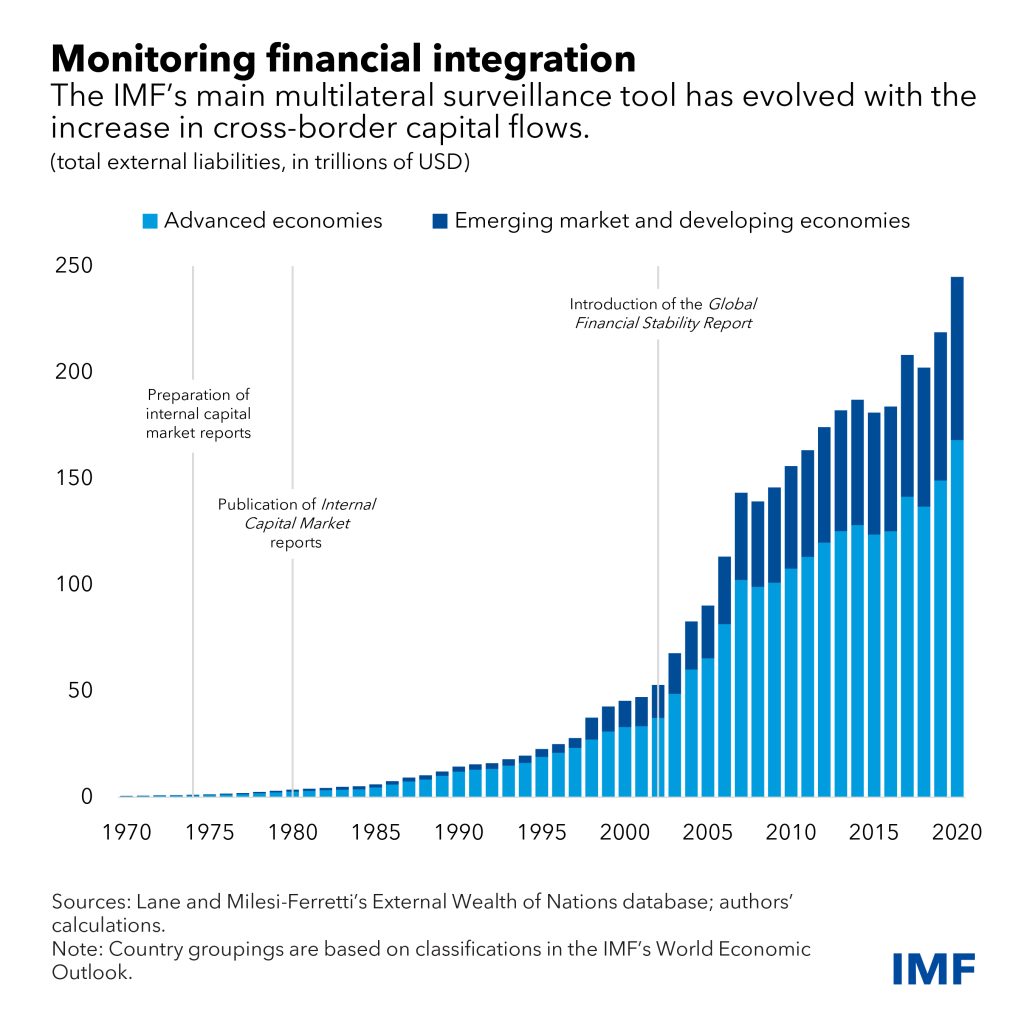
Conventional wisdom on capital flows holds that foreign direct investment is for the long-term, while securities and other flows may be more volatile. However, as Olivier Blanchard and Julien Acalin showed, a large proportion of measured foreign direct investment can be flows going in and out of a country on their way to a final destination. What explains this? The answer is special purpose entities (SPEs).
SPEs are legal entities set up to obtain specific advantages from a host economy, in which they have little to no employment, physical presence, or production. They are usually set up to benefit from low taxes but can be established for other reasons such as easier access to capital markets, financial services, and skilled workforces. Because they have little to no impact on the economy, these financial flows can distort the true picture of economic activity provided by foreign direct investment numbers. Directly measuring flows from SPEs helps resolve this.
A new IMF database for the first time measures cross-border flows and positions of SPEs resident in 26 participating economies, based upon an international definition. Using the database our Chart of the Week breaks down foreign direct investment in these economies. Foreign direct investment positions channeled through resident SPEs in some places are remarkably high, in Luxembourg they are 45 times the size of its economy, it’s 30 times in Mauritius, and 28 times in Bermuda.

As outlined in a recent IMF Blog, some of the world’s top recipients of foreign direct investment have large financial stocks that include those channeled through SPEs. To this end, this new database is a major step toward improving the transparency and comparability of external sector statistics by filling the data gaps, including to better understand the prospective changes due to the new global corporate tax agreement.
The database reflects an internationally-agreed methodology as endorsed by the IMF Committee on Balance of Payments Statistics in a 2018 report. It complements SPE statistics disseminated by the Organisation for Economic Co-operation and Development (OECD) and the European Union statistical office, Eurostat, for their member countries.
This database release will be followed by annual updates featuring increased country coverage, including for EU economies where reporting of SPE data will become mandatory this year.

Authors: Evrim Bese Goksu, Theo Bikoi, and Padma Hurree Gobin.

See the original article here.

With compliments of the IMF.
The post IMF | Special Purpose Entities Shed Light on the Drivers of Foreign Direct Investment first appeared on European American Chamber of Commerce New York [EACCNY] | Your Partner for Transatlantic Business Resources.

EACC

Digital Markets Act (DMA): agreement between the Council and the European Parliament

The Council and the Parliament today reached a provisional political agreement on the Digital Markets Act (DMA), which aims to make the digital sector fairer and more competitive. Final technical work will make it possible to finalise the text in the coming days.
The DMA defines clear rules for large online platforms. It aims to ensure that no large online platform that acts as a ‘gatekeeper’ for a large number of users abuses its position to the detriment of companies wishing to access such users.
Which platforms are considered gatekeepers?
The Council and the European Parliament agreed that for a platform to qualify as a gatekeeper, firstly it must either have had an annual turnover of at least €7.5 billion within the European Union (EU) in the past three years or have a market valuation of at least €75 billion, and secondly it must have at least 45 million monthly end users and at least 10 000 business users established in the EU.
The platform must also control one or more core platform services in at least three member states. These core platform services include marketplaces and app stores, search engines, social networking, cloud services, advertising services, voice assistants and web browsers.
To ensure that the rules laid down in the regulation are proportionate, SMEs are exempt from being identified as gatekeepers, apart from in exceptional cases. In order to ensure the progressive nature of the obligations, the category of ‘emerging gatekeeper’ is also provided for; this will enable the Commission to impose certain obligations on companies whose competitive position is proven but not yet sustainable.
Gatekeepers will have to:

ensure that users have the right to unsubscribe from core platform services under similar conditions to subscription
for the the most important software (e.g. web browsers), not require this software by default upon installation of the operating system
ensure the interoperability of their instant messaging services’ basic functionalities
allow app developers fair access to the supplementary functionalities of smartphones (e.g. NFC chip)
give sellers access to their marketing or advertising performance data on the platform
inform the European Commission of their acquisitions and mergers

But they can no longer:

rank their own products or services higher than those of others (self-preferencing)
reuse private data collected during a service for the purposes of another service
establish unfair conditions for business users
pre-install certain software applications
require app developers to use certain services (e.g. payment systems or identity providers) in order to be listed in app stores

What if a gatekeeper does not play by the rules?
If a gatekeeper violates the rules laid down in the legislation, it risks a fine of up to 10% of its total worldwide turnover. For a repeat offence, a fine of up to 20% of its worldwide turnover may be imposed.
If a gatekeeper systematically fails to comply with the DMA, i.e. it violates the rules at least three times in eight years, the European Commission can open a market investigation and, if necessary, impose behavioural or structural remedies.
What if the platform does not agree that it is a gatekeeper?
If a platform has good arguments against its designation as a gatekeeper, it can challenge the designation by means of a specific procedure that enables the Commission to check the validity of those arguments.
Who makes sure that gatekeepers stick to the rules?
To ensure a high degree of harmonisation in the internal market, the European Commission will be the sole enforcer of the regulation. The Commission can decide to engage in regulatory dialogue to make sure gatekeepers have a clear understanding of the rules they have to abide by, and to specify their application where necessary.
An advisory committee and a high-level group will be set up to assist and facilitate the work of the European Commission. Member states will be able to empower national competition authorities to start investigations into possible infringements and transmit their findings to the Commission.
To make sure that gatekeepers do not undermine the rules set out in the DMA, the regulation also enforces anti-circumvention provisions.
Link to the Digital Services Act (DSA)
The co-legislators agreed that, whereas economic concerns deriving from a gatekeeper’s data collection will be addressed in the DMA, wider societal concerns should be tackled in the Digital Services Act (DSA). An agreement on the DSA is also expected shortly.
The DSA and the DMA will be the two pillars of digital regulation which respects European values and the European model, and will define a framework adapted to the economic and democratic footprint of digital giants.
Background
The European Commission presented a digital services package comprising the Digital Services Act (DSA) and a Digital Markets Act (DMA) in December 2020.
On 25 November 2021, less than a year after the start of negotiations in the Council, member states unanimously agreed on the Council’s position on the DMA.
Next steps
The provisional agreement reached today is subject to approval by the Council and the European Parliament. The regulation must be implemented within six months after its entry into force.
On the Council’s side, the presidency aims to submit the agreement to the Permanent Representatives Committee (Coreper) for endorsement shortly.

European Commission proposal for a digital markets act
Council’s general approach
European parliament’s position
Original Press Release

Compliments of the European Council.
The post Digital Markets Act (DMA): agreement between the Council and the European Parliament first appeared on European American Chamber of Commerce New York [EACCNY] | Your Partner for Transatlantic Business Resources.

EACC

Orrick | The European Antitrust Enforcers’ Response to the Russia/Ukraine Crisis

After the various measures taken by countries, international organizations and companies to pressure Russia to stop its aggression against Ukraine, it is now the turn of the antitrust enforcers of the European Competition Network (ECN) to make their contribution. They did so by publishing a joint statement on 22 March, in which they indicated that they would be pragmatic, if not flexible, in assessing the behaviour adopted by companies in response to the severe difficulties encountered in connection with the war. They emphasised that cooperation between companies to address war disruptions – for example to ensure the supply, purchase and fair distribution of scarce products and inputs, or to try to minimise the consequences of compliance with EU sanctions – would likely not be considered problematic under antitrust law. The European Antitrust Enforcers also added that they would not actively pursue those temporary and necessary cooperation measures, and that they would provide informal guidance to companies that had doubts about the compliance of such cooperation. However, the Commission pointed out that they would be ruthless with companies that take advantage of the crisis to collude at the expense of free competition. This initiative is reminiscent of the one they adopted in response to the COVID-19 crisis, which was perceived with some relief by companies placed under unprecedented constraints.
The full statement:
Joint statement by the European Competition Network (ECN) on the application of competition law in the context of the war in Ukraine:
• We, the ECN, join the European Council in its statement of 24 February 2022 (link), to condemn in the strongest possible terms Russia’s unprecedented military aggression against Ukraine. We
stand firmly by Ukraine and its people as they face this war. We are fully aware of the social and economic consequences for Ukraine as well as for the EU/EEA.
• As stated in our joint statement on the application of competition law during the COVID crisis, the different EU/EEA competition instruments have mechanisms to take into account, where
appropriate and necessary, market and economic developments. Competition rules ensure a level playing field between companies. This objective remains relevant also in a period when companies and the economy as a whole suffer from crisis conditions.
• The ECN understands that this extraordinary situation may trigger the need for companies to address severe disruptions caused by the impact of the war and/or of sanctions in the Internal
Market. This may include for example cooperation in order to (i) ensure the purchase, supply and fair distribution of scarce products and inputs; or (ii) mitigate severe economic
consequences including those arising from compliance with sanctions imposed by the EU.
• Considering the current circumstances, cooperation measures to mitigate the effect of severe disruptions would likely either not amount to a restriction of competition under Article 101
TFEU/53 EEA or generate efficiencies that would most likely outweigh any such restriction. In any event, in the current circumstances, the ECN will not actively intervene against strictly
necessary and temporary measures specifically targeted at avoiding the aforementioned severe disruptions caused by the impact of the war and/or of sanctions in the Internal Market.
• If companies, on the basis of their self-assessment, have doubts about the compatibility of such cooperation initiatives with EU/EEA competition law, they can reach out to the Commission, the
EFTA Surveillance Authority or the national competition authority concerned any time for informal guidance.
• At the same time, it is of utmost importance to ensure that essential products (for example energy, food, raw materials) remain available at competitive prices and that the current crisis is
not used to undermine a competitive level playing field between companies. The ECN will therefore not hesitate to take action against companies taking advantage of the current situation by entering into cartels or abusing their dominant position.
View the original statement
Compliments of Orrick Herrington & Sutcliffe LLP – a member of the EACCNY.
The post Orrick | The European Antitrust Enforcers’ Response to the Russia/Ukraine Crisis first appeared on European American Chamber of Commerce New York [EACCNY] | Your Partner for Transatlantic Business Resources.

EACC

OECD | New results on the prevention of tax treaty shopping show progress continues with the implementation of international tax avoidance measures

The implementation of the BEPS package to tackle international tax avoidance continues to progress, as the OECD releases the latest peer review report assessing the actions taken by jurisdictions to prevent tax treaty shopping and other forms of treaty abuse under Action 6 of the OECD/G20 BEPS Project.
This peer review process, which includes data on tax treaties concluded by each of the 139 jurisdictions that were members of the OECD/G20 Inclusive Framework on BEPS on 31 May 2021, was the first to be carried out under the revised methodology forming the basis of the assessment of the Action 6 minimum standard.
The fourth peer review report (also available in French) reveals that members of the OECD/G20 Inclusive Framework on BEPS are respecting their commitment to implement the minimum standard on treaty shopping. It further demonstrates that the BEPS Multilateral Instrument (MLI) has been the tool used by the vast majority of jurisdictions that have begun implementing the BEPS Action 6 minimum standard, and that the MLI has continued to significantly expand the implementation of the minimum standard for the jurisdictions that have ratified it.
The impact and coverage of the MLI are expected to rapidly increase as jurisdictions continue their ratifications and as other jurisdictions with large tax treaty networks consider joining it. To date, the MLI covers 99 jurisdictions and over 1 800 bilateral tax treaties.
As one of the four minimum standards, BEPS Action 6 identified treaty abuse, and in particular treaty shopping, as one of the principal sources of BEPS concerns. Treaty shopping typically involves the attempt by a person to access indirectly the benefits of a tax agreement between two jurisdictions without being a resident of one of those jurisdictions. To address this issue, all members of the OECD/G20 Inclusive Framework on BEPS have committed to implementing the BEPS Action 6 minimum standard and participate in annual peer reviews to monitor its accurate implementation.
More on the BEPS Action 6 peer review and monitoring process

Compliments of OECD.
The post OECD | New results on the prevention of tax treaty shopping show progress continues with the implementation of international tax avoidance measures first appeared on European American Chamber of Commerce New York [EACCNY] | Your Partner for Transatlantic Business Resources.

EACC

Speech by Commissioner Gentiloni at the University of Oxford – Turning point: the implications of Putin’s war for Europe’s economic and political choices

“Check against delivery”

Good morning, it is a pleasure and an honour to be with you today, albeit virtually. Let me thank Professor Schleiter for the welcome and Professor Ruggeri for this interesting background, and of course Dr Garavoglia for organising this event.
When I first received this invitation, back in December, circumstances were very different. The European economy was on a path of strong growth, supported by the rollout of our unprecedented recovery plan, Next Generation EU – which remains of course a key priority.
I would have much preferred to centre my intervention on the challenges of Europe’s post-pandemic economy. Yet, our world has fundamentally, and tragically, changed since then.
Two years since the start of the pandemic, we have been plunged into another crisis, since 24 February.
The focus of today’s event has thus had to shift to the incalculable suffering of the Ukrainian people and the consequences for the European Union of Putin’s senseless war.
We should make no mistake. This is not just an attack on Ukraine, an independent European sovereign, democratic state. It is an attack on all the values we hold dear – democracy, freedom and the rule of law.
Yuval Noah Harari recently argued that what is at stake in Ukraine is the direction of human history. It is about whether the implausibility of war among superpowers painstakingly built in the aftermath of the Second World War will hold; or whether this signals a return to the law of the jungle and the realism of Thucydides: the notion that “the strong do what they will and the weak suffer what they must”.
[Economic implications]
The European economy entered this crisis on a solid footing, on the back of a strong recovery and an improving pandemic situation.
GDP was back at pre-pandemic levels. Unemployment had reached record lows. Accumulated savings were high. And business and consumer surveys were indicating growing confidence.
There were, of course, a number of challenges: notably rising energy prices and supply chain disruptions, both contributing to mounting inflation.
Still, it seemed these challenges would subside over the course of this year.
On 10 February, I presented our winter economic forecast, which projected 4% growth in 2022 for the EU as a whole.
The war will inevitably have an impact on the European economy and aggravate the challenges we were already facing, as a result of three factors:

significantly higher commodity prices, notably gas and oil, but also wheat prices, among others;
deteriorating supply disruptions and broken trade links; and
higher uncertainty, affecting both economic and financial sector confidence.

Indeed, commodities markets have seen large swings, both for energy and agricultural commodities.Oil and gas prices continue to be very volatile and remain at levels last seen in 2008. The price of wheat and sunflower oil has skyrocketed, as Russia and Ukraine are major grain exporters. These trends raise concerns about food security, particularly in developing countries. Egypt, for example, imports around 85% of its wheat from Russia and Ukraine. Somalia is already suffering from drought.
And this emergency will grow in the coming weeks and months.
Spiralling commodity prices will put further pressure on an already high consumer inflation. In February, inflation in the euro area increased to 5.9% from 5.1% in January, driven by energy –  energy inflation was 32% in February – but also food prices. The large increases in energy and unprocessed food prices we are seeing will certainly add further price pressures.
The conflict is also exacerbating existing global supply chain disruptions in terms of both lack of raw materials and price hikes. Explicit embargoes, implicit bans and voluntary withdrawal from trade are affecting prices as well as quantities of traded goods. For example, two of the largest container shipping companies, Maersk and MSC, have suspended their operations with Russia. The decision to close the airspace to Russia will increase the cost of flying cargo from Europe to Asia, potentially making some routes commercially unviable. So we are strongly supporting our sanctions decisions and we have to be honest with our citizens that this strategy that is not without a price.
Several industries in the EU and around the world will face important setbacks, as Russia is an important exporter of a wide range of raw materials. The production of semiconductors, batteries, steel and other goods relies on supplies from Russia.
The budgetary impact of the crisis will also be important: providing economic and material support to Ukraine, assistance to the millions of refugees that have poured into Europe and continued support to the economy to deal with high energy prices are all set to weigh on Member States’ budgets.
All in all, while at this stage it is still too early to quantify the precise impact of the war in Ukraine on our economy, it is increasingly clear that the 4% growth we had forecast will have to be revised downwards. And I will present our spring forecast on 16 May.
Just by how much, depends on our policy response. Our task is now to ensure that the recovery is not derailed completely and the European economy only suffers a deceleration.
The coordination of our economic and fiscal policies has a key role to play in this respect. It is what enabled us to weather the COVID-19 crisis successfully, all in all. We are now confronted with a very different crisis, but there are similarities too.
Both the pandemic – which, by the way, is not completely over – and the war in Ukraine are huge external shocks with potentially different outcomes across the EU.
Indeed, all Member States will be impacted, but some Member States will be more impacted than others, because of their dependence on Russian energy, their economic structures, their geographic location and the different impact of refugee flows, and on their fiscal space.
So we need a common response also to tackle the risk of divergence within the EU. This is why we must stand ready to adjust our policies to the rapidly changing circumstances.
At the start of the pandemic, the EU activated the General Escape Clause of the Stability and Growth Pact, meaning that our fiscal rules were temporarily suspended. And they are still suspended. Together with the temporary State aid framework we introduced, this allowed Member States to provide unprecedented support to their economies, which was crucial to avoid an even bigger recession. The rate of bankrupticies in 2020-21 was much lower than in the prveious decade – this is just to show the amount of support provided in this period. At the same time the ECB launched its pandemic emergency purchase programme.
And through the smart deployment of short-time work schemes, supported through the EU’s €100bn SURE instrument, the impact on jobs was far more contained than it would otherwise have been.
If our national and EU policy responses remain effectively coordinated, if monetary and fiscal policies remain complementary, and if we remain agile and ready to adjust as needed, I believe we can ensure that the recovery remains on track. We should avoid the discourse about stagflation becoming a self-fulfilling prophecy.
In this confrontation, the resilience of our economy is crucial not just to protect our citizens, but also to protect our democracies and our model of European society. Because that is what is at stake now.
[Political implications]
During the COVID crisis, the EU rediscovered a sense of solidarity and support for the countries hardest hit by the pandemic. Now the EU is again showing strong solidarity – with Ukraine and with the Ukrainian people fleeing their country and seeking refuge in Europe.
Yet, for the EU this must also be the time for autonomy. Because this crisis is a wake-up call for Europe to reduce dependencies in strategic sectors and strengthen its autonomy.
To some extent, the pandemic had already prompted this broader rethink, especially with regard to reassessing our supply chains in key areas. But the war has drastically accelerated this process, in particular in the fields of energy and defence.
So globalisation will be reshaped by this crisis. We need a new and more secure globalisation, not a revival of protectionism. And the balance will not be an easy one to find.
[Energy]
Ninety percent of the gas we consume in Europe is imported, and Russia provides almost half of those imports, in varying levels across Member States. Russia also accounts for 27% of oil imports and 46% of coal imports.
When one side of this trading relationship suddenly begins to use energy as a weapon, the relationship becomes untenable and must change completely. The European Union will not be blackmailed.
Earlier this month, the Commission announced a bold plan to reduce our overdependence on Russian energy imports – what we have called REPowerEU.
The goal is to slash EU demand for Russian gas by two thirds before the end of the year, and to make Europe independent from Russian fossil fuels by 2027. As President von der Leyen said, this must be backed by the necessary national and European resources.
[Affordability]
Energy prices were already soaring since last year, as the recovery drove up global demand and was not matched by increased supply. As we have seen, they have continued to rise since Russia’s invasion. Businesses and households are seeing this first hand in their utility bills. It is already hurting the economy.
High energy prices harm business competitiveness and impact low income households most severely. The European Central Bank estimated that the energy price shocks would reduce GDP growth by around 0.5 percentage points in 2022 – but this was before the invasion.
With the new REPowerEU plan we are now looking at ways to protect the economy, such as a new temporary State aid framework that we will deliver tomorrow. We have made clear that in the current context no option should be off the table, including setting regulated prices, which we are discussing.
[Security of supply]
Energy prices follow the laws of supply and demand, and part of their recent rise is due to uncertainty over future supplies from Russia. So enhancing our security of supply is key to reducing dependencies and keeping prices affordable.
Even in case of full disruption of supplies from Russia, our current gas supplies are sufficient for this winter heating season. However, we need to ensure the refilling of storage ahead of the next winter heating season.
Gas storage usually supplies 25-30% of EU gas consumed in winter. We will put forward a legislative proposal to achieve higher gas storage levels. It will establish a 90% filling target by 1October of each year, which will make us better prepared for the winters.
We are also looking to diversify our gas supplies, via higher Liquefied Natural Gas and pipeline imports from non-Russian suppliers.
In recent months, the Commission began to engage with a range of partners around the world, such as the US, Norway, Algeria and Qatar, which are already among our main suppliers, as well as others, like Egypt, Korea, Japan, Nigeria, Turkey, Israel. These discussions have intensified in recent weeks.
[Accelerating the green transition]  
Boosting imports from other suppliers is one way to secure alternatives to Russian gas in the short-term. But make no mistake: the best way to ensure we can meet our energy needs is to diversify our energy sources and reduce our dependency on fossil fuels altogether.
This brings me to the last key objective of the REPowerEU plan, which is to accelerate the green transition.
The case for a rapid clean energy transition has never been stronger and clearer. The EU is already a global leader in this respect. The European Green Deal sets a target for climate neutrality by 2050 and a 55% reduction of CO2 emissions by 2030.
And last year we presented concrete measures to achieve these goals – the so-called Fit for 55 package.
Given the current situation, we need to do more, and we need to do it faster. It would be a mistake to put on hold the green transition while we face this crisis and we must avoid doing that.
The EU’s new strategy to reduce our reliance on Russian energy is clearly an ambitious one. Meeting our goals will not be easy, but our analysis shows it can be done.
If we succeed, we will have addressed a key source of vulnerability, kept prices in check, secured alternative supplies and provided a decisive push to meeting our climate targets, all the while depriving the Kremlin of a significant source of revenue.
[Defence]
The war in Ukraine also marks a turning point for Europe’s defence policy and for the transatlantic relationship. The German Chancellor referred to it as a Zeitenwende, a turn in the times.
Positions that were held for decades have shifted in a matter of days.
Countries like Germany, with traditionally low defence spending and a long-standing policy of blocking weapons from being sent into conflict zones, announced a radical increase of the defence budget, a special fund of €100bn and the delivery of anti-tank weapons to Kyiv.
In others like Finland or Sweden, historically neutral and very cautious about joining NATO, polls have shown for the first time a majority of the population in favour of NATO membership.
Meanwhile, the EU unanimously agreed a €1bn fund to deliver arms and other equipment to a country that is under attack – this is also a first in our history.
At the recent summit in Versailles, EU leaders committed to bolster our defence capabilities, pledging to: substantially increase defence expenditure; develop joint projects and joint procurement of defence capabilities within the EU; increase investments in technologies and innovation for security and defence; and further develop our defence industry.
Russia’s invasion of a country bordering NATO has also strengthened the transatlantic alliance, after a few rocky years.
The Versailles Declaration stresses that the EU’s efforts in this field are complementary to NATO, which remains the foundation of collective defence for its members.
Indeed, where would we be now if the Baltic states or Poland were not in NATO? NATO’s eastward expansion has actually put us in a better place to deal with Putin’s history of aggressing Russia’s neighbours.
Boosting our defence capabilities will require significant investments in our industrial and technological base.
The new defence investment needs come on top of those to deliver on the green transition, for which we will have to mobilise an estimated additional 520 billion each year – of course mostly private investment.
Such investments are crucial to increase our autonomy in these strategic sectors. German Finance Minister Christian Lindner has called them “investments in our freedom”.
Financing them will require a more supportive framework of fiscal rules and potentially new tools at the European level.
[Conclusion]
Two years after the start of the pandemic, we are again at a historic crossroads, for both Europe and the world, and our transatlantic alliance.
After the dissolution of the Soviet Union, Francis Fukuyama famously wrote that humanity had reached “the end of history”, which he defined as “the universalization of Western liberal democracy as the final form of human government”.
For years now, Putin’s regime has sought to sow divisions within our societies and undermine our model of Western liberal democracy. The invasion of the Ukraine is the biggest threat yet. As President Zelensky said, Russia is seeking to build a wall in eastern Europe between freedom and bondage.
And the autocratic model – this is not only Russia – is challenging our model of societies based on liberty and democracy.
But Putin miscalculated. It turned out that the Ukrainians were determined to fight for their freedom, and the West did not stand idly by.
His plans have badly backfired: the EU is as united as ever. Together with our allies, we have agreed on unprecedented sanctions that are crippling Russia’s economy. And countries that Moscow considers within its orbit – Ukraine first of all, but also Georgia and Moldova too – have applied for EU membership.
We will continue to support Ukraine to prevent this new wall from being raised and build a bridge for those countries that share our values and want to join the European family.
At the same time, this crisis is an opportunity to shape the EU’s future direction.
If we maintain the same unity and ambition that we have shown during the pandemic, I am confident that a new Europe can be born out of this crisis. A stronger, more secure and more sustainable Europe. A quiet superpower that lives up to the aspirations of its citizens and especially of its youth.

Thank you.
The post Speech by Commissioner Gentiloni at the University of Oxford – Turning point: the implications of Putin’s war for Europe’s economic and political choices first appeared on European American Chamber of Commerce New York [EACCNY] | Your Partner for Transatlantic Business Resources.

EACC

EU restrictive measures in response to the crisis in Ukraine

EU adopts fourth package of sanctions against Russia
On 15 March 2022, the EU decided to impose a fourth package of economic and individual sanctions in response to Russia’s military aggression against Ukraine. The new measures include a prohibition on:
● all transactions with certain state-owned enterprises
● the provision of credit rating services to any Russian person or entity
● new investments in the Russian energy sector

The Council expanded the list of persons connected to Russia’s defense and industrial base, on whom tighter export restrictions were imposed regarding dual-use goods, and goods and technology which might contribute to Russia’s technological enhancement of its defense and security sector. The EU also introduced:
● trade restrictions for iron, steel and luxury goods
● sanctions on an additional 15 individuals and 9 entities

Since March 2014, the EU has progressively imposed restrictive measures in response to the:
● illegal annexation of Crimea in 2014
● decision to recognise the non-government controlled areas of Donetsk and Luhansk oblasts as independent entities in 2022
● unprovoked and unjustified military aggression against Ukraine in 2022The EU has imposed different types of restrictive measures:
● diplomatic measures
● individual restrictive measures (asset freezes and travel restrictions)
● restrictions on economic relations with Crimea and Sevastopol, and with the non-government controlled areas of Donetsk and Luhansk
● economic sanctions
● restrictions on media
● restrictions on economic cooperationBelow you can find more information on each type of restrictive measures.
Diplomatic measures
In 2014, the EU-Russia summit was cancelled and EU member states decided not to hold regular bilateral summits with Russia. Bilateral talks with Russia on visa matters, as well as on the new agreement between the EU and Russia, were suspended.
Instead of the G8 summit in Sochi, a G7 meeting was held – without Russia – in Brussels on 4-5 June 2014. Since then, meetings have continued within the G7 process.
EU countries also supported the suspension of negotiations over Russia’s joining the Organisation for Economic Co-operation and Development (OECD) and the International Energy Agency (IEA).
In February 2022, following Russia’s military aggression against Ukraine, the EU decided that diplomats, other Russian officials and business people are no longer able to benefit from visa facilitation provisions, which allow privileged access to the EU. This decision doesn’t affect ordinary Russian citizens.
Individual restrictive measures
> Asset freezes and travel restrictions
877 people and 62 entities are subject to an asset freeze and a travel ban because their actions have undermined Ukraine’s territorial integrity, sovereignty and independence. The list of sanctioned persons and entities are kept under constant review and are subject to periodic renewals by the Council.
These measures were introduced in March 2014. They were last extended until 15 September 2022.
List of persons and entities under EU restrictive measures over the territorial integrity of Ukraine (Official Journal of the EU)
> Misappropriation of Ukrainian state funds
In March 2014, the Council decided to freeze the assets of individuals responsible for the misappropriation of Ukrainian state funds. These measures were last extended in March 2020 until 6 March 2022.
Restrictions on economic relations with Crimea and Sevastopol
The Council adopted restrictive measures in response to the illegal annexation of Crimea and Sevastopol by the Russian Federation.
The measures apply to EU nationals and EU-based companies. Their scope is limited to the territory of Crimea and Sevastopol.
These measures include:
● an import ban on goods
● restrictions on trade and investment related to certain economic sectors and infrastructure projects
● a prohibition on supplying tourism services
● an export ban on certain goods and technologies
On 21 June 2021, the Council extended these measures until 23 June 2022.
Restrictions on economic relations with non-government controlled areas of Donetsk and Luhansk​
The Council adopted restrictive measures in response to the decision by the Russian Federation to proceed with the recognition of the non-government controlled areas of Donetsk and Luhansk oblasts in Ukraine as independent entities, and the ensuing decision to send Russian troops into these areas.
The scope of the measures is limited to the non-government controlled territories of Donetsk and Luhansk oblasts. These measures include:
● an import ban on goods
● restrictions on trade and investment related to certain economic sectors
● a prohibition on supplying tourism services
● an export ban on certain goods and technologies

These measures are in place until 24 February 2023.
Economic sanctions targeting exchanges with Russia in specific economic sectors
In July and September 2014, the EU imposed economic sanctions targeting exchanges with Russia in specific economic sectors.
In March 2015, EU leaders decided to align the existing sanctions regime to the complete implementation of the Minsk agreements, which was scheduled for the end of December 2015. Since this did not happen, the Council extended the economic sanctions until 31 July 2016.
The economic sanctions have been extended successively for six months at a time since 1 July 2016. The decision to extend them was made each time following an assessment of the implementation of the Minsk agreements. The economic sanctions are currently extended until 31 July 2022.
These sanctions target the financial, trade, energy, transport, technology and defense sectors. They include:
● restricted access to EU primary and secondary capital markets for certain Russian banks and companies
● a ban on transactions with the Russian Central Bank and the Central Bank of Belarus
● a SWIFT ban for seven Russian banks and three Belarusian banks
● a prohibition on the provision of euro-denominated banknotes to Russia and Belarus
● a ban on the overflight of EU airspace and on access to EU airports by Russian carriers of all kinds
● a ban on exports to Russia of goods and technology in different sectors (including the aviation, space, oil refining and metallurgical industries)
● a ban on export to Russia of dual-use goods for military use
● an export and import ban on arms
Sanctions on Russia Today and Sputnik
On 2 March 2022, the EU approved the suspension of the broadcasting activities in the EU of Sputnik and Russia Today until the aggression against Ukraine is brought to an end and until the Russian Federation and its associated outlets cease conducting disinformation and information manipulation actions against the EU and its member states.
Sputnik and Russia Today are under the permanent direct or indirect control of the authorities of the Russian Federation and are key to promoting and supporting the military aggression against Ukraine and to destabilising its neighbouring countries.
EU imposes sanctions on state-owned outlets RT/Russia Today and Sputnik’s broadcasting in the EU (press release, 2 March 2022)
Measures concerning economic cooperation
Restrictions on economic cooperation were introduced by EU leaders in July 2014:
● the European Investment Bank (EIB) was requested to suspend the signing of new financing operations in the Russian Federation
● EU member states agreed to coordinate their positions within the European Bank for Reconstruction and Development (EBRD) Board of Directors with a view to also suspending the financing of new operations
● the implementation of EU bilateral and regional cooperation programmes with Russia was re-assessed and certain programmes suspended
 

Infographic – EU sanctions against Russia over UkraineTimeline

Compliments of the European Council.
The post EU restrictive measures in response to the crisis in Ukraine first appeared on European American Chamber of Commerce New York [EACCNY] | Your Partner for Transatlantic Business Resources.