EACC

VAT fraud clampdown: International scam with memory cards uncovered in The Netherlands

The criminal network defrauded Dutch tax authorities of an estimated €9 million
On 10 February 2021, the investigation service of the Dutch tax authorities -FIOD (Fiscale Inlichtingen en OpsporingsDienst) busted a criminal network involved in international VAT fraud with electronic devices traded via an online company. Fraudsters established a complex trading scheme with Secure Digital (SD) memory cards for electronic devices, which is believed to have defrauded the Dutch treasury of an estimated €9 million between 2017 and 2019. The international sting involved the collaboration of judicial and law enforcement authorities in Croatia, Czech Republic, Hungary, and Poland with the support of Europol and Eurojust. During the action day, investigators carried out thirteen house searches and seized communications equipment and documents.
A COMPLEX MISSING TRADER INTRA-COMMUNITY FRAUD (MTIC)
The illegal VAT scheme consisted in the suspicion of a fake trading circuit of memory cards involving a string of companies in the EU. The criminal gang purchased SD cards with VAT from Dutch companies identified as missing traders. The goods were then sold to companies in Croatia, and the Czech Republic and exempted of VAT according to intra-EU tax rules. To evade tax payment, the scheme finally used conduit companies based in Croatia and Poland to sell back the VAT-exempt goods to the missing traders in the Netherlands.
The organised crime group also used “buffers” to conceal the illicit transaction chain. These companies purchased the SD cards from the missing traders and only paid VAT on a small margin made from the transactions. As a common practice in MTIC fraud the payment for the transactions was made in advance. It is believed that over the past three years, at least eight missing traders in the Netherlands were involved in this fraud. The criminal gang integrated this so-called ‘VAT carousel fraud’ into the regular commercial activity of an online company selling electronic devices in order to avoid paying VAT.
EUROPOL SUPPORT
Europol actively supported the operation by providing analytical support and operational coordination for an effective cross-border cooperation. Moreover, Europol deployed a mobile office in the field to support the Dutch authorities in real-time.
Europol’s European Financial and Economic Crime Centre (EFECC) helps with identifying and dismantling organised criminal networks involved in cross-border VAT fraudand the tracing and confiscating of the proceeds of MTIC fraud. MTIC is committed through a chain of linked companies when the fraudsters sell goods or services from one EU country to another, taking advantage of the fact that it is legitimate not to charge VAT on such cross-border transactions. MTIC scammers obtain €60 billion in criminal profits every year in the EU by avoiding the payment of VAT or by corruptly claiming repayments of VAT from national authorities.
Compliments of Europol.
The post VAT fraud clampdown: International scam with memory cards uncovered in The Netherlands first appeared on European American Chamber of Commerce New York [EACCNY] | Your Partner for Transatlantic Business Resources.

EACC

Plenary highlights: Covid-19 recovery, vaccines, circular economy

MEPs approved the EU’s key instrument to help countries recover from Covid-19, debated the vaccines situation and called for tighter recycling rules.

Covid recovery
On Tuesday, MEPs approved the Recovery and Resilience Facility, designed to help EU countries recover from the Covid-19 pandemic.
The impact of Covid-19 on young people and sport
MEPs called on the Commission and EU countries to do more to prevent the pandemic affecting young people and the sports sector in a report adopted on Wednesday.
Vaccinations
In a debate on Wednesday, MEPs said the EU should take measures to boost the production of vaccines.
Relief measures for aviation sector
To support the transport sector during the coronavirus crisis, MEPs agreed to extend rules for the use of airport slots to prevent empty flights and prolonged the validity of some licences used in the transport sector on Wednesday.
Circular Economy Action Plan
The Parliament called for tighter recycling rules and binding 2030 targets for materials use and consumption in a resolution adopted on 9 February 2021. The report represents Parliament feels should be included in the European Commission’s proposed Circular Economy Action Plan to achieve a circular economy by 2050.
Reducing inequalities
On Tuesday, MEPs called for a minimum wage, equal labour conditions for platform workers and a better work-life balance in order to fight inequality and in-work poverty.
Human trafficking
In a report adopted on Tuesday, MEPs called on the EU to step up the fight against human trafficking and strengthen protection for victims.
Social media and democracy debate
On Wednesday, MEPs called on the EU to regulate social media to protect freedom of expression while limiting harmful content.
Russia
On Tuesday, MEPs hit out at the Council for failing to adequately react to Russia’s aggressive policies and criticised EU foreign policy chief Josep Borrell for his recent visit to Moscow.
Myanmar
On Thursday MEPs called for democracy in Myanmar to be restored and demanded the unconditional release of all those illegally arrested followed Sunday’s military coup.
Abortion ban in Poland
In a debate on Tuesday morning, MEPs condemned the rollback on abortion rights in Poland following the entry into force of the Constitutional Tribunal’s ruling.

Compliments of the European Parliament

The post Plenary highlights: Covid-19 recovery, vaccines, circular economy first appeared on European American Chamber of Commerce New York [EACCNY] | Your Partner for Transatlantic Business Resources.

EACC

Speech | The role of central banks in the greening of the economy

Paris, 11 February 2021 | Speech by François Villeroy de Galhau, Governor of the Banque de France |
I would like to welcome you to the Banque de France for this 5th edition of the Rencontres on “Climate Change and Sustainable Finance”, organised jointly with Option Finance. Central banks’ commitment to the climate cause may seem obvious today, and this despite the urgency of addressing the Covid pandemic.  But it was not the case five years ago, and few issues have seen such a rapid and massive change in mindset and initiative. At the Banque de France and increasingly within the Eurosystem, we are driven by a simple but tenacious ambition: to do our utmost to support and add to the collective action in the fight against global warming. We cannot do everything – nothing will replace an appropriate carbon price and therefore, let me be clear, a carbon tax in one form or another. But we can do a lot. The Banque de France spearheaded the creation of the Network for Greening the Financial System (NGFS), which was launched in Paris in December 2017 and is chaired by our Dutch colleague Frank Elderson. This network – which has already achieved a lot regarding the supervision of banks and insurance companies – now counts more than 80 members, including the US Federal Reserve since 15 December 2020. Since 2019, the Banque de France has also been the first Eurosystem central bank to publish a full report on its responsible investment policy; we are committed to completely exiting coal by 2024. Our European Central Bank, for its part, has been, under the leadership of Christine Lagarde, the first central bank to include the fight against climate change in its strategic review.
Today supervision, responsible investment, support to green finance, which Bruno Le Maire has just forcefully stressed… and tomorrow the greening of monetary policy itself: this morning, I would like to explore together with you this new frontier that lies before us. It is perhaps the least obvious one, but one of the most important. The journey will sometimes be a little technical – I agree – but the roadmap will be all the more precise. I will first come back to the meaning of our monetary action in the face of climate change (I). I will then present three concrete levers for acceleration (II).
I. Why must the Eurosystem act on climate change?
Should monetary policy be “greened”? The subject easily gives rise to heated debate: on the one hand, there are the “conservatives” – not to mention the climate sceptics – who are concerned only about central banks’ action against inflation, and denounce the risks of “politicisation” and “mission creep”. And on the other hand, there are the activists who are calling for a change of mandate, with a focus on the fight against climate change and the conversion of instruments – including the American movement for a “Green QE”. In my opinion, the truth is simpler and stronger. The Eurosystem’s consideration for climate change is neither an abuse of its mission, nor a mere militant conviction or a fad; it is an imperative that we must pursue in the very name of our current mandate and to ensure the smooth implementation of monetary policy.
1.1 In the very name of our mandate
Without even having to mention our “secondary” objectives, which include environmental protection, climate change is linked to the core of the Eurosystem’s monetary mandate: price stability. Shocks related to climate change are potentially difficult to manage for central banks because of their stagflationary nature, as they may result in both upward pressure on prices and a slowdown in activity. Transitional policies – which bring about taxation changes, such as a carbon tax, or regulatory changes – can affect prices, notably energy prices, generate inflationary pressures and weigh on activity, as is already the case in the automotive sector. In addition to transition risks, climate events are already having increasingly visible effects on activity and food prices. The price of wheat has currently reached a historic high, partly for climate reasons. In Europe itself, the drought in the summer of 2018 had caused the Rhine to drop to a historically low level and slowed growth in Germany by disrupting river transport.
In the longer term, climate change will weigh on the potential growth of our economies. Numerous studies show that higher temperatures reduce labour productivity by about 2% for every degree above 25°C. According to simulations by the Banque de France, real GDP in Europe is expected to be 2 to 6% lower in 2050, in the event of a disorderly rather than orderly climate transition.
1.2 For the smooth implementation of monetary policy
Climate risk is also a source of financial risk. It is therefore essential, as my colleague and friend Jens Weidmann, President of the Bundesbank, says, that “central banks […] practice what they preach” for the banks they supervise, i.e. better factor climate risk into their own operations. Moreover, preserving financial stability is a prerequisite for ensuring the smooth transmission of monetary policy, as the NGFS also recently recalled.
Let’s face it: the ECB’s balance sheet is “exposed” to climate risk through the securities it purchases and the assets pledged as collateral by banks, to an extent that is insufficiently taken into account. This is primarily due to the lack of comprehensive and standardised information that is needed for all economic agents to factor in climate risk. I will come back to this need for standardisation later. But more fundamentally, the difficulties in pricing climate risk are due to the very characteristics of these risks, and in particular to what we call “green swans”, which generate radical uncertainty and whose consequences can be systemic. In this respect, market neutrality – which guides the execution of our market operations – should not put a brake on carbon neutrality. Market operations are conducted in a neutral manner as long as they comply with the central banks’ risk control rules. And yet, climate risk is precisely a financial risk that is currently insufficiently measured by markets.
Another difficulty is often put forward, but it can be overcome: the fact that climate risk is long-term, while many of our risk measures are short- to medium-term. This is a real technical challenge: the “probability of default” is usually one year; our economic forecasts cover a two to three-year horizon. We must therefore work to “lengthen” our measures, but the fact that a “tragedy of the horizon” exists is not a call for a status quo. On the contrary! Climate change calls for early and resolute action as the benefits of corrective measures will essentially only be felt in the longer term.
II. How should the central bank intervene?
How can this be concretely achieved? Let me start by stressing a key point: the Eurosystem’s highly accommodative monetary policy is already helping to finance the transition thanks to very low interest rates and abundant liquidity. Green investment will have to be very significant, we are aware of this, – with more than EUR 1,000 billion in public and private investment planned as part of the European Green Deal; but never has monetary policy been so favourable for achieving this. The greening of the central bank’s actions does not therefore require a further easing of monetary policy, but rather a recalibration of its tools. By next September, we will decide within the Governing Council on the conclusions of our “Strategic Review”. To contribute to this debate, I would today like to present our ambitions in the form of a simple triptych: forecast, disclose and incorporate climate risk.
2.1 Forecast, and therefore model
First ambition: to deepen our understanding of the effects of climate change not only on prices but also on growth, both over the business cycle and over much longer time horizons. We are not starting from scratch! Much progress has already been made, notably driven by the NGFS. Our models already incorporate, over a three-year horizon, the effects of tax measures to facilitate the transition, such as the carbon tax. However, changes in the behaviour of economic agents are more difficult to take into account, even though – via expectations – their economic consequences could be felt well before their implementation. We will also need to further examine the impact of the energy sector on economic dynamics, particularly on international trade or the valuation of certain financial assets. Beyond the monetary policy horizon, it is important to assess the impact of climate risk on potential growth and its consequences on the central bank’s policy space to achieve its primary objective. I am referring in particular to the long-term effects of more frequent and more severe extreme climate events on capital accumulation, the labour market and migration flows.
2.2 Disclose, and, for this, impose our standards
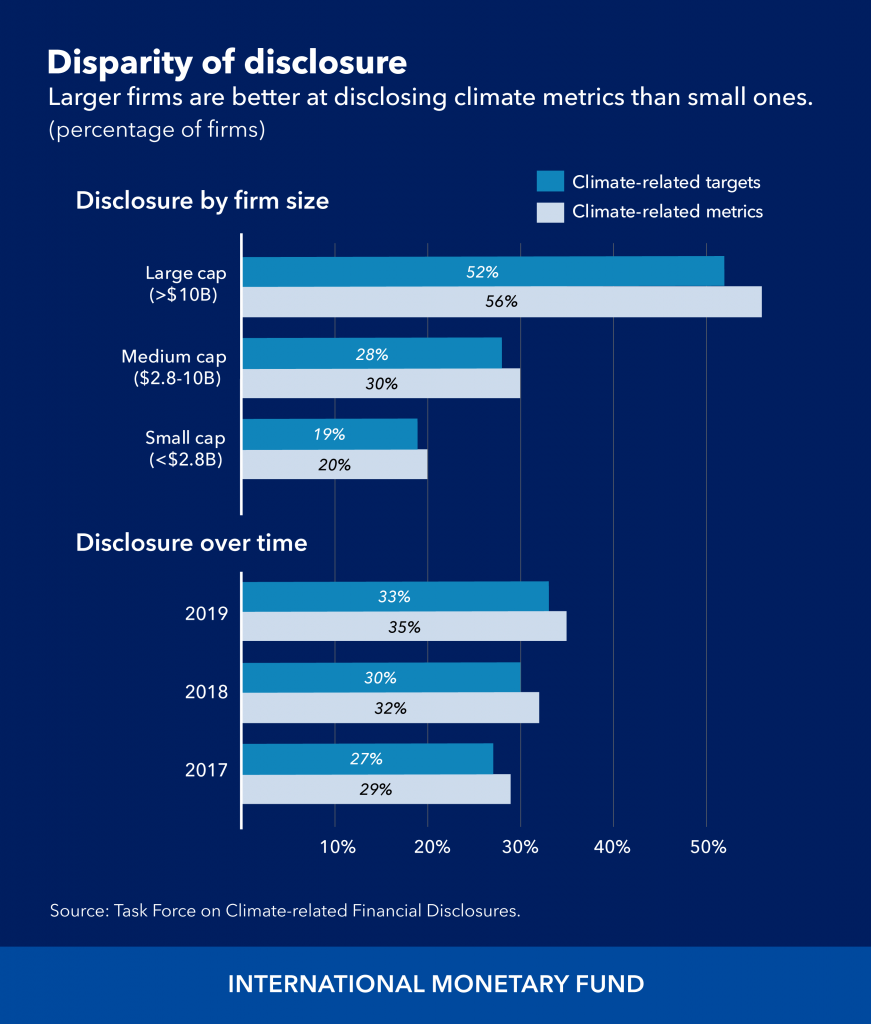
This brings me to our second ambition: imposing transparency on all our counterparties, not only financial but also corporate, for both collateral and asset purchase programmes. This transparency is a prerequisite for better risk assessment. To do so, I believe that the Eurosystem should require issuers to disclose their climate-related exposures using a metric that needs to be harmonised. As far as the rating agencies themselves are concerned, we could decide to only work with those that include climate-related risks sufficiently.
This transparency requirement goes hand in hand with a harmonised regulatory framework. I repeat, and I regret to say that neither in Europe, nor even in France, are we today in a position to compare – and therefore to correctly assess – the heterogeneous data published by financial institutions and companies.  From this perspective, the standardisation of data and the draft Non-Financial Reporting Directive – which will be discussed this year – for adoption hopefully next year, under the French Presidency – will be the battle to be fought in 2021. And it would be unacceptable – at a time when progress on climate change is moving in the right direction and Europe has won the first round of climate-related values – for Europe to lose the second round, i.e. that of measuring these values using standards and published data.
2.3 Incorporate climate risk, into order to reduce it in all of our operations and in the economy
The third part of our triptych, the very core of our activity, and the most powerful: reducing our climate risk in concrete terms, through our asset purchase and collateral policies. This ambition requires great dexterity; but it is rooted in a conviction: we have in our hands the tools to move forward, concretely, strongly.
I propose to start decarbonising the ECB’s balance sheet in a pragmatic, gradual and targeted manner for all corporate assets, whether they are held on the central bank’s balance sheet (purchases) or taken as collateral, without including government securities. There are at least two arguments for such a priority: 1/ it is very difficult to differentiate between the climate policies of the euro area countries. 2/ Conversely, non-financial corporations are clearly identified as players whose activities are the most carbon intensive. Thanks to their transparency efforts, we now know how to calculate climate indicators for more than 90% of the value of corporate bonds eligible with the Eurosystem. We also know how to do this for the bank loans of the largest debtors, which are also the most important in climate terms. The second step would be to extend the decarbonisation strategy to securities issued by financial institutions. To achieve this, banks will need to be able to assess their indirect emissions, generated by the activities they finance.
After determining the scope, the decarbonisation method remains to be defined. I believe that we should seek to achieve an adjustment of the valuation of all these assets according to the climate transition risk. This solution has the considerable advantage of avoiding the threshold effects that would result in simply excluding certain securities. Ultimately, we will be able to and must directly measure the additional financial risk associated with climate risk, and reduce the value of the assets accordingly: this is notably the aim of all the climate stress test methods that we are now actively working on at the Banque de France and the ACPR, such as in the framework of the NGFS.
But pending their actual completion, we could choose a good “proxy” for this financial risk, namely climate alignment; i.e. aligning assets and firms with the 2°C trajectory set by the Paris Agreement. More specifically, the Eurosystem could use indicators that measure the effort that an issuer makes over a given period to reduce its carbon emissions compared with its peers in the same economic sector. Here, we have most of the data. The most advanced 2° alignment methodologies, even if they have yet to be finalised, are advantageous in that they take into account both past efforts and future commitments to reduce “carbon” emissions over a predetermined horizon. This sector-specific and dynamic assessment over time provides a greater incentive and would prevent all issuers in carbon-intensive sectors from being blindly “punished” (contrary to an exclusion-based approach).
For collateral, this asset valuation adjustment could be directly applied. But our ambition must equally apply at least as much to corporate bond purchase programmes. Here, we are obliged to purchase assets at the market price; but I believe it is possible and desirable to recalibrate the purchase limits per company (tilting) on the basis of climate criteria. For instance, the Eurosystem could limit its securities purchases from issuers whose climate performance is not compatible with the Paris agreement. Conversely, securities issued by “aligned” companies could be purchased in larger quantities. This approach, applying to all companies and our Corporate Sector Purchase Programme, would be more comprehensive than a Green QE, whose quantitative impact would be lower because it would be targeted at green bonds only.
This action programme is ambitious: in the fight against global warming, the Eurosystem would thus target the direct effects – better conducting its monetary policy and reducing its own risks – as well as the indirect effects – steering the behaviour of companies and financial institutions, through its disclosure policy, as well as its asset purchase and collateral policies. And this programme is demanding: it requires in-depth work on our macroeconomic models as well as on the climate assessment of assets. But we can make this decision quickly – by the end of this year – and then implement it in three to five years. Then the Eurosystem, together with the European Central Bank, under the impetus created by Christine Lagarde, and the Banque de France, will be the pioneers in this global fight. We must do so, in the very name of our mandate.
However, the central banks alone will not be able to do enough. Let us transform this fight into an opportunity, that of a combination of fiscal, monetary and structural policies within the framework of a genuine green policy-mix combining carbon prices, public investment, sector-specific rules and monetary action. “The future is not what will happen to us, but what we are going to do. It calls us, or rather it pulls us to it,” said Bergson. There is still time to prove him right.
Compliments of the Banque de France.
The post Speech | The role of central banks in the greening of the economy first appeared on European American Chamber of Commerce New York [EACCNY] | Your Partner for Transatlantic Business Resources.
EACC

Winter 2021 Economic Forecast: A challenging winter, but light at the end of the tunnel

Europe remains in the grip of the coronavirus pandemic. The resurgence in the number of cases, together with the appearance of new, more contagious strains of the coronavirus, have forced many Member States to reintroduce or tighten containment measures. At the same time, the start of vaccination programmes throughout the EU provides grounds for cautious optimism.
Economic growth poised to recover as containment measures ease
The Winter 2021 Economic Forecast projects that the euro area economy will grow by 3.8% in both 2021 and 2022. The forecast projects that the EU economy will grow by 3.7% in 2021 and 3.9% in 2022.
The euro area and EU economies are expected to reach their pre-crisis levels of output earlier than anticipated in the Autumn 2020 Economic Forecast, largely because of the stronger than expected growth momentum projected in the second half of 2021 and in 2022.
After strong growth in the third quarter of 2020, economic activity contracted again in the fourth quarter as a second wave of the pandemic triggered renewed containment measures. With those measures still in place, the EU and euro area economies are expected to contract in the first quarter of 2021. Economic growth is set to resume in the spring and gather momentum in the summer as vaccination programmes progress and containment measures gradually ease. An improved outlook for the global economy is also set to support the recovery.
The economic impact of the pandemic remains uneven across Member States and the speed of the recovery is also projected to vary significantly.
Inflation outlook to remain subdued
The forecast projects that inflation in the euro area is set to increase from 0.3% in 2020 to 1.4% in 2021, before moderating slightly to 1.3% in 2022. The inflation forecast for the euro area and the EU has increased slightly for 2021 compared to the autumn but is, overall, expected to remain subdued. The delayed recovery is set to continue dampening aggregate demand pressures on prices. In 2021, it will be temporarily pushed up by positive base effects in energy inflation, tax adjustments – especially in Germany – and the impact of pent-up demand hitting some remaining supply constraints. In 2022, as supply adjusts and base effects taper out, inflation is expected to moderate again.
High uncertainty and significant risks remain
Risks surrounding the forecast are more balanced since the autumn, though they remain high. They are mainly related to the evolution of the pandemic and the success of vaccination campaigns.
Positive risks are linked to the possibility that the vaccination process leads to a faster-than-expected easing of containment measures and therefore an earlier and stronger recovery. Also, NextGenerationEU, the EU’s recovery instrument of which the centrepiece is the Recovery and Resilience Facility (RRF), could fuel stronger growth than projected, since the envisaged funding has – for the most part – not yet been incorporated into this forecast.
In terms of negative risks, the pandemic could prove more persistent or severe in the near-term than assumed in this forecast, or there could be delays in the roll-out of vaccination programmes. This could delay the easing of containment measures, which would in turn affect the timing and strength of the expected recovery. There is also a risk that the crisis could leave deeper scars in the EU’s economic and social fabric, notably through widespread bankruptcies and job losses. This would also hurt the financial sector, increase long-term unemployment and worsen inequalities.
Members of the College said:
Valdis Dombrovskis, Executive Vice-President for an Economy that Works for People said: “Today’s forecast provides real hope at a time of great uncertainty for us all. The solid expected pick-up of growth in the second half of this year shows very clearly that we are turning the corner in overcoming this crisis. A strong European response will be crucial to tackle issues such as job losses, a weakened corporate sector and rising inequalities. We will still have a great deal to do to contain the wider socio-economic fallout. Our recovery package will go a long way to supporting the recovery, backed up by vaccination roll-out and a likely upswing in global demand.”
Paolo Gentiloni, Commissioner for Economy said: “Europeans are living through challenging times. We remain in the painful grip of the pandemic, its social and economic consequences all too evident. Yet there is, at last, light at the end of the tunnel. As increasing numbers are vaccinated over the coming months, an easing of containment measures should allow for a strengthening rebound over the spring and summer. The EU economy should return to pre-pandemic GDP levels in 2022, earlier than previously expected – though the output lost in 2020 will not be recouped so quickly, or at the same pace across our Union. This forecast is subject to multiple risks, related for instance to new variants of COVID-19 and to the global epidemiological situation. On the other hand, the impact of Next Generation EU should provide a strong boost to the hardest-hit economies over the coming years, which is not yet integrated into today’s projections.”
Background
The Winter 2021 Economic Forecast provides an update of the Autumn 2020 Economic Forecast which was presented in November 2020, focusing on GDP and inflation developments in all EU Member States.
This forecast is based on a set of technical assumptions concerning exchange rates, interest rates and commodity prices, with a cut-off date of 28 January 2021. For all other incoming data, including assumptions about government policies, this forecast takes into consideration information up until and including 2 February. Unless policies are credibly announced and specified in adequate detail, the projections assume no policy changes.
Crucially, the forecast hinges upon two important technical assumptions concerning the pandemic. First, it assumes that after a significant tightening in the fourth quarter of 2020, containment measures remain strict in the first quarter of 2021. The forecast assumes that containment measures will then begin to ease towards the end of the second quarter, and then more markedly in the second half of the year when the most vulnerable and an increasing share of the adult population should have been vaccinated. Second, it assumes that containment measures will remain marginal towards the end of 2021 with only targeted sectoral measures still present in 2022.
The incorporation of NextGenerationEU, including the RRF, in the forecast remains in line with the usual no-policy-change assumption and is unchanged from the Autumn Forecast. The forecast only incorporates those measures that have either been adopted or credibly announced and specified in sufficient detail, notably in national budgets. In practice, this means that the economic projections of only a few Member  States  take account of some measures expected to be financed under RRF.
This forecast takes into account that the EU and the United Kingdom agreed on a Trade and Cooperation Agreement, which is provisionally in application since 1 January 2021 and which includes a Free Trade Agreement (FTA).
The European Commission’s next forecast will be the Spring 2021 Economic Forecast in May 2021.
Compliments of the European Commission.
The post Winter 2021 Economic Forecast: A challenging winter, but light at the end of the tunnel first appeared on European American Chamber of Commerce New York [EACCNY] | Your Partner for Transatlantic Business Resources.

Read More
EACC

How e-Government Services Can Pay Dividends

The ability to renew your passport or driver’s license, pay a tax bill, or access government data with the click of a button or swipe of a screen, anytime and anywhere, has grown more important during the COVID-19 pandemic to prevent the spread of the virus. Beyond the obvious efficiency and transparency gains that digital government services provide, “e-government” can actually make an economy more attractive to foreign investors.
Recent IMF staff research has linked―for the first time―the accessibility of government information and services online to the volume of foreign direct investment a country receives. For many countries, this positive impact is likely to be stronger as the pandemic pushes governments to provide even more services and information online.
A review of foreign direct investment inflows in 178 host countries over a period of roughly 16 years finds that the presence of e-government services appears to stimulate the inflow of foreign direct investment. Specifically, countries that implement and adopt strong information and communication technologies, regardless of their level of development, are found to attract more inflows compared to countries with weaker internet access. As our chart of the week shows, the positive connection between e-government and foreign direct investment is clear.
The findings, at the same time, expose yet another potential point of divergence, namely the still vast global digital divide and technological disparities between higher and lower income economies. Many people worldwide still do not have access to the internet. According to the 2020 United Nations’ E-Government Development Index about half of the 193 countries covered by the index score below the world average of 0.60, while the average index score for countries in Africa is almost one-third lower than the index average. Denmark, the Republic of Korea, and Estonia lead the world in providing e-government services and electronic dissemination of information. Still, a number of developing countries such as Bhutan, Bangladesh, and Cambodia have become leaders in the development of e-government infrastructure. Those nations advanced from the middle group of countries in the index to become some of the highest ranked among developing countries in 2020.
This research suggests that countries should focus on the development of e-government services as part of their strategy for attracting more foreign direct investment. But in order to reduce the divide between higher- and lower-income economies and provide digital services to all people, governments need to push for better information and communications technology infrastructure. This is a critical component for effective e-government services. In tandem, governments should work to make the internet accessible, affordable, and secure to all.
Author:

Ali Al-Sadiq is a senior economist in the Western Hemisphere Department of the IMF

Compliments of the IMF.
The post How e-Government Services Can Pay Dividends first appeared on European American Chamber of Commerce New York [EACCNY] | Your Partner for Transatlantic Business Resources.

EACC

EU Parliament gives go-ahead to €672.5 billion Recovery and Resilience Facility

Biggest building block of the Next Generation EU stimulus package
€672.5 billion in grants and loans to curb the effects of the pandemic
Funds will support key policy areas such as green transition, digital transformation, crisis preparedness as well as children and youth
Respect for rule of law and the EU’s fundamental values a prerequisite to receive funding

On Wednesday, Parliament approved the Recovery and Resilience Facility, designed to help EU countries tackle the effects of the COVID-19 pandemic.
The regulation on the objectives, financing and rules for accessing the Recovery and Resilience Facility (RRF) was adopted with 582 votes in favour, 40 against and 69 abstentions. The RRF is the biggest building block of the €750 billion Next Generation EU recovery package.
Curbing the effects of pandemic
€672.5 billion in grants and loans will be available to finance national measures designed to alleviate the economic and social consequences of the pandemic. Related projects that began on or after 1 February 2020 can be financed by the RRF, too. The funding will be available for three years and EU governments can request up to 13% pre-financing for their recovery and resilience plans.
Eligibility to receive funding
To be eligible for financing, national recovery and resilience plans must focus on key EU policy areas – the green transition including biodiversity, digital transformation, economic cohesion and competitiveness, and social and territorial cohesion. Those that focus on how institutions react to crisis and supporting them to prepare for it, as well as policies for children and youth, including education and skills, are also eligible for financing.
Each plan has to dedicate at least 37% of its budget to climate and at least 20% to digital actions. They should have a lasting impact in both social and economic terms, include comprehensive reforms and a robust investment package, and must not significantly harm environmental objectives.
The regulation also stipulates that only member states committed to respecting the rule of law and the European Union’s fundamental values can receive money from the RRF.
Dialogue and transparency
To discuss the state of the EU recovery and how the targets and milestones have been implemented by member states, the European Commission, which is responsible for monitoring the implementation of the RRF, may be asked to appear before Parliament’s relevant committees every two months. The Commission will also make an integrated information and monitoring system available to the member states to provide comparable information on how funds are being used.
Quotes
Siegfried MUREŞAN (EPP, RO), one of the lead MEPs involved in the negotiations said during the debate on Tuesday: “Today’s vote means that money will go to people and regions affected by the pandemic, that support is coming to fight this crisis and to build our strength to overcome future challenges. The RRF will help to modernise our economies and to make them cleaner and greener. We have set the rules on how to spend the money but left them flexible enough to meet the different needs of member states. Finally, this money must not be used for ordinary budgetary expenditures but for investment and reforms.”
Eider GARDIAZABAL RUBIAL (S&D, ES), one of the lead negotiators said: “The RRF is the correct response to the impact of the virus. It has two aims: in the short-term, to recover by supporting gross national income (GNI), investments and households. In the long-term, this money is going to bring about change and progress to meet our digital and climate goals. We will ensure that the measures will alleviate poverty and unemployment, and will take into account the gender dimension of this crisis. Our health systems will also become more resilient”.
Dragoș PÎSLARU (Renew, RO), one of the lead MEPs involved, said: “Europe’s destiny is in our hands. We have a duty to deliver recovery and resilience to our youth and children, who will be at the centre of the recovery. One of the RRF’s six pillars is dedicated especially to them, which means investing in education, reforming with them in mind and doing our bit for youth to help them get the skills they will need. We do not want the next generation to be a lockdown generation”.
Next steps
Once Council has also formally approved the regulation, it will enter into force one day after its publication in the Official Journal of the EU.
Contact:

Dorota Kolinska, Press Officer | dorota.kolinska[at]europarl.europa.eu

Compliments of the European Parliament
The post EU Parliament gives go-ahead to €672.5 billion Recovery and Resilience Facility first appeared on European American Chamber of Commerce New York [EACCNY] | Your Partner for Transatlantic Business Resources.

EACC

Federal Reserve Board announces the second extension of a rule to bolster the effectiveness of the Small Business Administration’s Paycheck Protection Program (PPP)

The Federal Reserve Board on Tuesday announced the second extension of a rule to bolster the effectiveness of the Small Business Administration’s (SBA) Paycheck Protection Program (PPP). Like the earlier extensions, this one will temporarily modify the Board’s rules so that certain bank directors and shareholders can apply to their banks for PPP loans for their small businesses.
To prevent favoritism, the Board limits the types and quantity of loans that bank directors, shareholders, officers, and businesses owned by these persons can receive from their affiliated banks. However, these limits have prevented some small business owners from accessing PPP loans—especially in rural areas.
The SBA clarified last year that PPP lenders can make PPP loans to businesses owned by their directors and certain shareholders, subject to certain limits, and without favoritism. The Board’s rule extension will allow those individuals to apply for PPP loans, consistent with SBA’s rules and restrictions. The extension only applies to PPP loans.
The Board is providing the rule extension to allow banks to continue to make PPP loans to a broad range of small businesses within their communities. The SBA explicitly has prohibited banks from prioritizing or providing favorable processing time to PPP loan applications from a director or equity holder, and the Board will administer the rule extension accordingly.
The rule extension is effective immediately and applies to PPP loans made through March 31, 2021. Comments will be accepted for 45 days after publication in the Federal Register.
Contact:

For media inquiries, call 202-452-2955

Compliments of the U.S. Federal Reserve.

The post Federal Reserve Board announces the second extension of a rule to bolster the effectiveness of the Small Business Administration’s Paycheck Protection Program (PPP) first appeared on European American Chamber of Commerce New York [EACCNY] | Your Partner for Transatlantic Business Resources.

EACC

ECB | Speech: Evolution or revolution? The impact of a digital euro on the financial system

Speech by Fabio Panetta, Member of the Executive Board of the ECB, at a Bruegel online seminar |

Throughout history, innovations in money have challenged and altered the structure of the financial system. Time and time again, innovations have given rise to debates about the risks they pose and the rewards they bring, as well as the role of central banks in building confidence in money.
Paper banknotes are a case in point. As they were easy to carry, they made commerce more straightforward. But their success did not come easily. Attempts by central banks to issue banknotes in the 17th century resulted in too many being issued and even defaults, raising questions about their effects on stability and, ultimately, on the credibility of the sovereign. Yet modern banknotes eventually enhanced the benefits of central banking for society at large.[1]
Similar debates emerged with the rise of bank deposits in the 19th century. Advances in recording and communication technologies helped deposits become popular, consolidating the role of banks in money creation. But this also raised awareness that confidence in money depends on the stability of bank deposits, leading central banks to take on the role of lender of last resort.
In today’s discussion on the digitalisation of payments, these debates sound familiar. Some fear that digitalisation, if not properly governed, could crowd out cash over time, create instability and even threaten monetary sovereignty. Central banks are therefore considering whether they should innovate themselves, by offering sovereign money in digital form to the public at large.
At the ECB we are considering whether to issue – alongside euro banknotes – a digital euro: a digital form of money that, just like cash and unlike other means of payment, would be a claim on the central bank instead of a claim on a private intermediary.
But we must fully understand the economic, financial and societal implications of issuing a digital euro: we should consider how we can achieve the benefits while preserving the stability of the financial system and meeting the needs of Europeans.
Today, I will discuss the main effects a digital euro could have on banking intermediation, financial stability and the international financial system. And I will consider some key design options that could address the risks involved.
Benefits in the context of the digitalisation of financial services
The increased use of the internet, supported by rapidly growing computing power, has affected the entire economy. In the field of payments and financial services, the past decade has seen a rising number of providers and innovative technologies and products.[2]
At the same time, we have seen a profound shift in payment preferences, with the use of cash in retail payments declining.[3] Even before the pandemic, one in two Europeans said they would prefer to pay digitally in a shop.[4] The pandemic has accelerated this trend.[5] This is the first reason why we are working on a digital euro: combining the safety of central bank money and the convenience of a digital means of payment in order to satisfy consumer preferences.
Another reason is that while digitalisation generates greater efficiency and lower costs, it may also pose risks for consumers and the financial sector.
The global tech giants – or big techs – are setting the pace of change in the provision of financial services in various ways. They are seeking to sidestep traditional distribution networks – including payment systems – through their control of social media, online marketplaces and mobile technologies.[6] This could lead to the rapid and large-scale take-up of the financial services offered by big techs, both domestically and across borders.[7] Big techs are also seeking to expand the reach and improve the quality of financial intermediation through the large-scale processing of proprietary consumer data generated by their core activities.[8] They could use such data to reduce the information asymmetry that lies at the heart of financial intermediation.[9]
Data-driven models could jeopardise privacy and pose the risk of personal information being misused. Moreover, integration with other services provided by big tech companies may threaten competition through tying, bundling, cross-subsidisation and winner-takes-all dynamics.[10] This could crowd out traditional intermediaries and reduce competition in financial markets, limiting consumer choice. In Europe, the expansion of big tech companies could make us dependent on technologies governed elsewhere.[11] Finally, big techs may contribute to a rapid take-up of stablecoins both domestically and across borders, which could create systemic risks and even endanger monetary sovereignty.[12]
A potential answer to these trends – higher demand for digital payments and a possible dominant role of large, foreign service providers – is for central banks themselves to go digital in order to preserve money as a public good.[13]
A digital euro would aim to support digitalisation while continuing to give people choice in how they pay and ensuring their payments remain competitive and secure. It would be designed to be safe, costless, easily accessible and simple to use, thereby supporting financial inclusion. It would have the protection of privacy as a key priority, thereby helping to maintain trust in payments. We have in fact already analysed privacy-enhancing techniques, and we will continue to do so in the coming months.[14]
A digital euro would be available to households, firms, merchants and financial intermediaries for payments across the euro area, thereby helping to unify the European market. And it would increase consumer choice, reduce transaction costs and support the digitalisation of the economy, while making sure that central bank money remains at the core of the financial system, underpinning stability.
Our objective would be to make a digital euro interoperable with private payment solutions, so that it could be accessed through them. It would thus level the playing field by making it possible for all market participants – bank and non-bank intermediaries and fintechs – to offer, at a lower cost, products that allow people to pay instantly.
A digital euro could also act as a catalyst at the international level. By ensuring interoperability with foreign digital currencies, including other central bank digital currencies (CBDCs), it could create much needed efficiency gains in cross-border payments[15], lowering their costs.
Potential unwarranted effects on the financial system
In the broader debate and in some responses to our public consultation[16], a number of concerns have been raised about the potential impact of a digital euro on the financial system.
Paradoxically, a digital euro may prove too successful.[17] If it is not properly designed, its main strengths – safety and liquidity – could affect monetary and financial stability on three fronts: first, financial intermediation and capital allocation in normal times; second, financial stability in times of crisis; and third, the functioning of the international financial system. Let me consider each of these in turn.
Effects on financial intermediation and capital allocation in normal times
A digital euro could affect financial intermediation in several ways. It could attract payments activity from banks and reduce their payments-related income and customer information. It could also attract deposits, especially if it were offered without limits on individual holdings and at such attractive conditions that the public moved large amounts of deposits from commercial banks to central banks.
The concern is that this could lead to less stable and more costly funding, lower bank profitability and, ultimately, lower lending, constraining the financing of the real economy. I would make two points here.
First, the risk of bank disintermediation depends on the design features of a digital euro. We can and should design it in ways that prevent this risk. I will come back to this crucial issue in more detail.
Second, the ECB does not plan to interact directly with potentially hundreds of millions of users of a digital euro. We simply would not have the capacity or the resources to do so. Financial intermediaries – in particular banks – would provide the front-end services, as they do today for cash-related operations. We would provide safe money, while financial intermediaries would continue to offer additional services to users.
Furthermore, beyond such design adaptations, economic thinking on the possible impact of a digital euro on financial intermediation is not clear cut. In fact, recent analyses emphasise that we should look at the broader economic implications of adopting a CBDC.
One consideration is that introducing a CBDC is by itself neutral in terms of the allocation of capital in the economy.[18] In fact, a shift from bank deposits into CBDC would merely change the composition of banks’ funding sources, with fewer private sector deposits and more central bank funding.[19]
Another consideration is that a digital euro could improve the allocation of capital by facilitating access to payments and reducing transaction costs, thereby helping to unlock business opportunities.[20] It could also enhance competition in banks’ funding markets. To the extent that funding markets are not perfectly competitive, a central bank digital currency could reduce the market power of commercial banks and improve contractual terms for customers, with little effect on the volume of outstanding deposits and loans.[21]
Potential effects in times of crisis
The risks to financial intermediation of issuing a digital euro are potentially more pronounced in times of crisis. This is the second way in which a digital euro could affect the financial system.
A digital euro would give access to a safe liquid asset which – unlike cash and in the absence of design-related constraints – could potentially be held in large volumes and at no cost. Indeed, if not properly designed, in times of crisis a digital euro could accelerate “digital runs” away from commercial banks towards the central bank. This risk could even be self-fulfilling, leading savers to reduce their bank deposits and amplifying volatility in normal times too.[22]
For this risk to materialise, a number of lines of defence – such as deposit insurance, supervision and the lender of last resort – would have to fail or be perceived to be insufficient in the light of how easy it would be to convert deposits into safe central bank money. Moreover, a digital euro could provide additional tools to counter such risks to financial stability. For example, it could provide the central bank with real-time information on deposit flows, enabling a swift reaction if needed.
But overall, the risk that a digital euro could have adverse effects in times of crisis cannot be ruled out. A digital euro should therefore be designed in a way that enables this risk to be strictly controlled, as I will discuss in more detail shortly.
Impact on the international monetary system
The third way in which a digital euro could have an impact on the financial system is at the cross-border level. Depending on whether it would be accessible to non-residents and interoperable with non-euro payment systems, a digital euro could also have far-reaching implications for the rest of the world.
A digital euro accessible to non-residents could make the single currency more attractive as a safe means of payment for retail transactions across borders. It could help tackle inefficiencies in cross-border payment infrastructures and make it easier to transfer remittances.
But if a digital euro were not designed in a way that prevented it from being used as a form of investment, these benefits would come with the risk of amplifying international shocks. The fact that a digital euro would be very liquid may lead to foreign investors using it disproportionately and rebalancing much more forcefully into or away from it in response to shocks. Indeed, recent research suggests that, in the presence of a CBDC, shocks could result in greater exchange rate fluctuations and have a stronger effect on foreign financial conditions. This, in turn, could force foreign central banks to become more responsive to international spillovers.[23]
Conversely, these dynamics mean that the absence of a digital euro could make Europe more vulnerable to international developments: widespread adoption of digital currencies by foreign central banks could make the European economy and financial system more sensitive to shocks from abroad.
Design and policy options
To obtain the benefits of a digital euro – such as the ability to guarantee privacy in digital payments, financial inclusion and universal access – it would need to be carefully designed. Potential design features were reviewed in the Eurosystem’s report[24] and will be assessed in depth by the Task Force that is studying the launch of a digital euro. Only when all issues have been addressed will we make a decision about whether or not to issue a digital euro.
A comprehensive analysis of such design features goes beyond the scope of this seminar. I will therefore limit my comments today to the features that are necessary to preserve the stability of the financial system, leaving comments on other crucial issues for another time.
A digital euro should be an efficient means of payment, domestically and internationally. But crucially, in order to preserve stability, it should be designed in a way that prevents it from being used as a form of investment. A number of possible design features could satisfy these principles.
One option would be to limit the amount of digital euro individual users can hold.[25] This would prevent large inflows of bank deposits – as well as volatile portfolio inflows from abroad – into the central bank. One way of doing this, while allowing the digital euro to be used for large transactions, would be to require incoming funds in excess of a user’s limit to be redirected to a bank account. The link between private money and digital euro accounts would avoid fragmentation of a user’s liquidity and would also be useful for outgoing payments. Large outgoing transactions could be conducted by transferring a combination of digital euro and private money.
Another option would be to set a penalising remuneration on individual users’ digital euro holdings above a certain threshold.[26] Up to that threshold, amounts held in digital euro would never be subject to negative interest rates and would thus never be treated less favourably than cash. Above that threshold, remuneration would be set so that larger digital euro holdings are only worthwhile to make larger payments and not on an ongoing basis as a form of investment.
In identifying the appropriate threshold, one would need to strike the right balance between unlocking the benefits of a digital euro as a means of payment and mitigating risks of disintermediation or even bank runs. As a yardstick, a threshold of €3,000 would be more than the amount of cash most citizens hold today[27] and would be above the average monthly wage in most euro area countries.
Tiered remuneration could provide a less distorting way to disincentivise large digital euro holdings. At the same time, it could present implementation challenges. For example, in times of crisis it could be necessary to adjust the remuneration of the digital currency, but this could signal that the central bank is anticipating financial tensions, leading to self-fulfilling instability.
Similar design features would have to be applied to the use of a digital euro by non-residents. This would stop a digital euro replacing other forms of investment and facilitating currency substitution in countries outside the euro area. In any event, international cooperation on design, cross-border use and interoperability would be key to reap the potential benefits of CBDCs for cross-border payments, while addressing risks to the international financial system.
Conclusion
Let me conclude. Just as banknotes were an important innovation for central banks and bank deposits gave commercial banks a greater role in intermediation, the ongoing digitalisation of money and payments is challenging the established structure of the financial system.
A digital euro represents a natural evolution in response to this transformation – not only to underpin efficiency and innovation, but also to preserve the role of the central bank in offering safe means of payment. Throughout history, this safety has proven to be crucial in maintaining public confidence in money and, ultimately, in the State. A key goal of a digital euro should therefore be to preserve a fine balance between sovereign and private money to ensure payments remain stable and efficient.
But as the past has taught us, if innovations in central bank money are not well designed, they can become a source of financial disruption. To avoid any unintended effects and reap the full benefits of a digital form of central bank money, we will carefully consider all aspects of its design.
Our recent public consultation on a digital euro is part of this exercise. In the spring we will publish an analysis of the replies we received. This analysis will provide important input into our decision, towards the middle of the year, about whether or not to formally launch a project to prepare for the issuance of a digital euro.
As our work on a digital euro moves forward, the views of citizens, businesses, banks and all stakeholders will continue to be of utmost importance in ensuring that a digital euro would be optimally designed and, ultimately, serve Europeans well.

Compliments of the European Central Bank.
The post ECB | Speech: Evolution or revolution? The impact of a digital euro on the financial system first appeared on European American Chamber of Commerce New York [EACCNY] | Your Partner for Transatlantic Business Resources.

EACC

USCIS Modifies H-1B Selection Process to Prioritize Wages

Rule Expected to Protect the Economic Interests of American Workers |
WASHINGTON—U.S. Citizenship and Immigration Services has announced a final rule that will modify the H-1B cap selection process, amend current lottery procedures, and prioritize wages to protect the economic interests of U.S. workers and better ensure the most highly skilled foreign workers benefit from the temporary employment program.
Modifying the H-1B cap selection process will incentivize employers to offer higher salaries, and/or petition for higher-skilled positions, and establish a more certain path for businesses to achieve personnel needs and remain globally competitive.
“The H-1B temporary visa program has been exploited and abused by employers primarily seeking to fill entry-level positions and reduce overall business costs,” said USCIS Deputy Director for Policy Joseph Edlow. “The current H-1B random selection process makes it difficult for businesses to plan their hiring, fails to leverage the program to compete for the best and brightest international workforce, and has predominately resulted in the annual influx of foreign labor placed in low-wage positions at the expense of U.S. workers.”
This effort will only affect H-1B registrations (or petitions, if the registration process is suspended) submitted by prospective petitioners seeking to file H-1B cap-subject petitions. It will be implemented for both the H-1B regular cap and the H-1B advanced degree exemption, but it will not change the order of selection between the two as established by the H-1B registration final rule.
The final rule will be effective 60 days after its publication in the Federal Register. DHS previously published a notice of proposed rulemaking on Nov. 2, 2020, and carefully considered the public comments received before deciding to publish the proposed regulations as a final rule.
Compliments of the U.S. Citizenship & Immigration Services.
The post USCIS Modifies H-1B Selection Process to Prioritize Wages first appeared on European American Chamber of Commerce New York [EACCNY] | Your Partner for Transatlantic Business Resources.

EACC

OECD | Services trade restrictions increased in 2020, compounding COVID-19 economic shock

The global regulatory environment for services trade became more restrictive in 2020, with new barriers compounding the shock of the COVID-19 pandemic on exporters, according to a new OECD report.
OECD Services Trade Restrictiveness Index (STRI): Policy trends up to 2021 shows an increasing pace in the erection of new barriers to services trade across all major sectors. New restrictions are affecting services traded through a range of commercial establishments, in sectors including computer services, commercial banking and broadcasting. Global services trade fell by 24% in the third quarter of 2020 compared to a year ago, a small uptick from the 30% year-on-year decline registered in the second quarter.
While the overall trend was toward greater restrictiveness, governments around the world did lower barriers to cross-border digital trade in 2020, as part of the overarching policy response to the COVID-19 pandemic. More facilitation measures for digital trade were issued than in previous years, helping remote working and online business operations.
“We have experienced a major shift in trade during the pandemic,” OECD Secretary-General Angel Gurría said. “Transport and travel have collapsed, but digitally-delivered trade and enabling services such as telecommunications have contributed to the resilience of our economies. Lifting restrictions to trade in services will be critical as governments seek to put the global economy on the road to a strong, inclusive and sustainable recovery.”
The report, which covers services trade regulations in 48 countries, representing more than 80% of global services exports, identifies top performers in terms of regulatory best practices, including Czech Republic, Latvia, the Netherlands, Japan, Lithuania and the United Kingdom. It also highlights recent reform efforts in Brazil, China, Iceland, Indonesia and Kazakhstan.
National and collective action to ease barriers to services trade can reduce trade costs for firms that provide services across borders. On average across sectors and countries, services trade costs could decline by more than 15% after 3-5 years if countries could close half of the regulatory gaps with best performers. An ambitious services trade agenda, including new services market access commitments in comprehensive trade and investment agreements, can drive such gains, the report said.
Contacts:

John Drummond, Head of the Trade in Services Division of the OECD Trade and Agriculture Directorate| John.Drummond@oecd.org

Lawrence Speer, OECD Media Office | lawrence.speer@oecd.org

Compliments of the OECD.
The post OECD | Services trade restrictions increased in 2020, compounding COVID-19 economic shock first appeared on European American Chamber of Commerce New York [EACCNY] | Your Partner for Transatlantic Business Resources.