


CAROUSEL OF PRODUCTS
Eingerless gloves in camel

Variable product example
CAROUSEL OF POSTS
European Parliament | Digital Euro: MEPs Want to Ensure Sovereignty, Privacy and Financial Stability
Secure, private and free-to-use means of payment, both online and offline
Privacy safeguards built in
Limits to individual holding, pilot testing and coordinated public awareness campaigns
The digital euro would offer citizens and businesses a private, secure and innovative way to pay, while reducing reliance on non-EU providers.
On Tuesday, the Economic and Monetary Affairs Committee adopted its position on the single currency package, consisting of three files. The one on the establishment of the digital euro was adopted by 43 votes to 14, with 1 abstention.
The digital euro would be a new, electronic form of money issued by the European Central Bank (ECB) and would work online and offline. Online payments would be processed through an account-based system, while offline payments would work directly via local storage devices. The offline functionality would be equivalent to using physical cash, as losing the device would mean losing the offline money with no refund possible.
Privacy
Privacy-by-design and privacy-by-default principles would be built into the digital euro. Cutting-edge technologies, such as “zero-knowledge proofs”, would allow transactions to be verified without exposing personal data, which would be processed only to the extent strictly necessary for the system to function. The ECB would not have access to personal identification data.
Distribution model
All payment service providers (PSPs), including banks, e-money providers, post offices, and regulated crypto-asset providers, could distribute the digital euro across the EU. Most businesses would be required to accept it. Exceptions would apply to the self-employed, and small and micro enterprises that do not accept other digital payments.
Temporary refusals, such as during a power outage, would also be allowed under specific conditions. Visitors, tourists and, in some cases, people living outside the euro area would also be able to use it.
Fees and charges
Basic services, such as opening an account, holding and managing funds, and getting at least one payment instrument, would be free of charge. PSPs could charge for extra services, with the exception of account maintenance inactivity penalties or service bundling. Fees for merchant and inter-provider would be capped, while offline payments would be entirely fee-free.
Financial stability and holding limits
To protect the financial system, there would be a cap on how many digital euros any individual could hold. MEPs proposed the EU ceiling should be set by the Commission, based on ECB recommendations, and reviewed at least every two years. MEPs want the Parliament to have full decision-making powers in this process.
Businesses would not be allowed to hold digital euros, except to accumulate incoming payments for up to 24 hours. Crucially, the digital euro would not earn or cost any interest.
Seamless launch and the ECB’s role
MEPs want to ensure that the ECB’s role would be kept separate from its monetary policy functions. Before the launch, the ECB should finalise a rulebook, build the infrastructure, run real-life pilot tests, and iron out liability rules with particular attention to offline risks, like double-spending. Once authorised, a roll-out period of at least 24 months would follow, giving banks, providers, and users time to prepare. Governments and providers would also run awareness campaigns.
The single currency package
A second file on the provision of digital euro services by payment services providers incorporated in member states whose currency is not the euro, adopted by 43 votes to 9, with 6 abstentions, would allow banks and PSPs from non-euro EU countries to distribute the digital euro, subject to the same rules, while the ECB would retain the power to restrict access and use. Non-euro EU member states would also need to appoint a national authority to monitor any impact on their own currency.
A third file, on legal tender of euro banknotes and coins, adopted by 46 votes to 4, with 8 abstentions, would oblige euro area countries to keep cash accessible and plan for digital payment disruptions. Businesses would not be allowed to ban cash through “no cash” signs or standard contract terms. Member states would also need to check cash availability regularly, with special attention to vulnerable groups, such as the elderly, low-income individuals, and the unbanked.
Quote
Rapporteur Fernando Navarrete Rojas (EPP, ES) said: “With the single currency package, we are protecting citizens’ freedom to choose how they pay. We are strengthening access to and acceptance of cash, while making central bank money available in digital form. The digital euro will complement cash, never replace it. No one should be forced away from cash, and no one should be left without a secure, resilient and genuinely European digital payment option.
“Europe does not have to choose between the digital euro and successful private payment solutions. We need both to work together. The agreement rightly recognises the dual approach: existing standards and infrastructure should be reused wherever possible. This will allow European payment solutions to connect to a common acceptance infrastructure and become interoperable across borders.
“The agreement also ensures that privacy will be built into the digital euro from the outset. Europeans will gain a secure digital payment option while remaining in control of both their money and their personal data.”
Next steps
The negotiating mandates for the three texts will be announced at the start of the July plenary session. The final legislation will have to be negotiated with the Council before coming into force.
Compliments of the European Parliament The post European Parliament | Digital Euro: MEPs Want to Ensure Sovereignty, Privacy and Financial Stability first appeared on European American Chamber of Commerce New York [EACCNY] | Your Partner for Transatlantic Business Resources.
ECB | AI and the US Labour Market: Effects on Employment Growth
The impact of AI on job growth can be both positive and negative, as highlighted in recent literature on the subject. A well-known framework developed by Acemoglu and Restrepo (2018) distinguishes between the positive effect new technologies have on employment growth by enabling higher productivity, and the negative effect they create owing to job displacement, with the net impact on a country’s employment depending on the relative importance of those effects. Empirically assessing the impact of AI on employment at this early stage is difficult (Lane, 2026). Hampole et al. (2025) show that while in the United States firm-wide adoption of AI generates positive employment effects, these effects mask substantial heterogeneity across occupational groups. Initial evidence for the European Union suggests that firms that adopt AI technologies experience higher productivity gains, without the technology replacing labour in the short term (Aldasoro et al., 2026). This aligns with recent ECB survey findings that firms with high levels of AI adoption or AI-related investment are more likely to employ additional staff (Lebastard and Sondermann, 2026).
In the United States, the number of jobs in occupations with a high AI substitution risk has fallen in recent years. Applying an index developed by Pizzinelli et al. (2023) to measure AI substitution risk, each occupation is categorised into one of three categories, corresponding to a low, medium and high risk of AI substitution.[3] A calculation of average employment growth for each of those categories in the United States suggests that employment in jobs with a high risk of AI substitution (e.g. economists, graphic designers) declined on average by more than 4% between 2019 and 2025 (Chart A).[4] By contrast, employment in jobs with a low risk of AI substitution (e.g. electricians, high school teachers) increased by 13% over the same period. As a consequence, the composition of US employment has changed. The share of low-risk jobs in total US employment has increased from 23% to 25%, while the share of high-risk jobs has dropped from 35% to 33%.
Chart A
Employment growth and share in total employment of occupations grouped by AI substitution risk – United States
(percentages)
Sources: Bureau of Labor Statistics, Pizzinelli et al. (2023) and ECB staff calculations.
An empirical analysis confirms that AI has already led to a reallocation of jobs within the US labour market. The impact of AI substitution risk on employment growth is estimated using the same classification of occupations by level of AI substitution risk as before. The analysis uses a difference-in-difference approach and separately estimates the impact of an occupation’s risk of AI substitution on its employment growth for each year (2020-2025) compared with the base year (2019). It also includes a constant and sector-specific fixed effects corresponding to three-digit North American Industry Classification System (NAICS) subsectors, controlling for shocks (e.g. COVID-19), sector-specific developments and unobserved heterogeneities.[5] The results indicate a growing wedge between job growth in occupations with a high AI substitution risk compared with occupations with a low AI substitution risk (Chart B).[6] All else being equal, between 2019 and 2025 jobs with a high substitution risk grew by around 15 percentage points less than jobs with a low substitution risk. This is in line with studies showing that AI is affecting job growth for specific occupational sub-groups. Overall, while the consequences of AI for aggregate employment to date remain inconclusive, the analysis finds that it has had a relative impact on US employment growth since 2019.[7] This impact has accelerated since the launch of ChatGPT in late 2022.
Chart B
Impact of AI on US employment growth – difference between high and low risk of substitution
(percentage points)
Sources: Bureau of Labor Statistics, Pizzinelli et al. (2023) and ECB staff calculations.
Notes: The line shows the estimated relative impact of AI exposure on employment growth for each year compared with 2019. The model uses a difference-in-difference approach and separately estimates the impact of an occupation’s risk of AI substitution on its employment growth for each year (2020-2025) compared with the base year (2019). The top and bottom 1% of employment growth have been winsorised to control for outliers. The model also includes a constant and sector-specific fixed effects corresponding to three-digit NAICS subsectors. Results have been rescaled to indicate the difference between high and low AI substitution risk. The shaded area corresponds to the 95% confidence interval.
The relative impact of AI on job growth has not yet translated into significant differences in wage growth. As is the case for employment effects, although the impact of AI on wages and inequality is fiercely debated in the literature, empirical evidence of it is scarce. Using the same methodology as before, an analysis of median hourly wage growth by occupation reveals that AI substitution risk has had no significant impact on wage growth since 2019 (Chart C).[8] Over time, as the labour market continues to adjust and AI tools become more generative, income effects may be more pronounced.[9]
Chart C
Impact of AI on US wage growth – difference between high and low risk of substitution
(percentage points)
Sources: Bureau of Labor Statistics, Pizzinelli et al. (2023) and ECB staff calculations.
Notes: The line shows the estimated relative impact of AI exposure on median hourly wage growth for each year compared with 2019. The model uses a difference-in-difference approach and separately estimates the impact of an occupation’s risk of AI substitution on its wage growth for each year (2020-2025) compared with the base year (2019). The model also includes a constant and sector-specific fixed effects corresponding to three-digit NAICS subsectors. Results have been rescaled to indicate the difference between high and low AI substitution risk. The shaded area corresponds to the 95% confidence interval.
References
Acemoglu, D. and Restrepo, P. (2018), “The Race between Man and Machine: Implications of Technology for Growth, Factor Shares, and Employment”, American Economic Review, American Economic Association, Vol. 108(6), pp. 1488-1542.
Aldasoro, I., Gambacorta, L., Pal, R., Revoltella, D., Weiss, C. and Wolski, M. (2026), “AI Adoption, Productivity and Employment: Evidence from European Firms”, BIS Working Papers, No 1325, Bank for International Settlements.
Brynjolfsson, E., Chandar, B. and Chen, R. (2025), “Canaries in the Coal Mine? Six Facts about the Recent Employment Effects of Artificial Intelligence”, Stanford Digital Economy Lab.
Felten, E., Raj, M. and Seamans, R. (2021), “Occupational, industry, and geographic exposure to artificial intelligence: A novel dataset and its potential uses”, Strategic Management Journal, 42(12), pp. 2195-2217.
Hampole, M., Papanikolaou, D., Schmidt, L.D.W. and Seegmiller, B. (2025), “Artificial Intelligence and the Labor Market”, NBER Working Papers, No 33509, National Bureau of Economic Research.
Hui, X., Reshef, O. and Zhou, L. (2023), “The Short-Term Effects of Generative Artificial Intelligence on Employment: Evidence from an Online Labor Market”, CESifo Working Paper Series, No 10601, CESifo.
Lane, P.R. (2026), “AI and the euro area economy”, Keynote Speech at the ECB-SAFE-RCEA International Conference on the Climate-Macro-Finance Interface (3CMFI), European Central Bank, Frankfurt, 23 March.
Lambert, P. and Schindler, Y. (2026), “The Broken Ladder: AI, Remote Work, and Early-Career Hiring”, May, SSRN.
Lebastard, L. and Sondermann, D. (2026), “Artificial Intelligence: Friend or Foe for Hiring in Europe Today?”, The ECB Blog, European Central Bank, 4 March.
Massenkoff, M. and McCrory, P. (2026), “Labor Market Impacts of AI: A New Measure and Early Evidence”, Anthropic Economic Research.
Pizzinelli, C., Panton, A.J., Mendes Tavares, M., Cazzaniga, M. and Longji, L. (2023), “Labor Market Exposure to AI: Cross-country Differences and Distributional Implications”, IMF Working Papers, No 2023/216, International Monetary Fund.
The box focuses on the labour market effects of AI adoption on the demand side and does not explicitly capture potential employment gains arising from the supply side, such as job creation linked to investment in AI development and deployment.
See, for example, Brynjolfsson et al. (2025) for an analysis of US payroll data. Note that Lambert and Schindler (2026) question the finding that generative AI is replacing junior workers. They find that exposure to generative AI is strongly correlated with another post-pandemic shock: working from home.
Pizzinelli et al. (2023) adapt the widely used index created by Felten et al. (2021) by factoring in the complementarity of occupations to AI, assuming that a lower complementarity to AI coupled with a high exposure to AI bears a higher risk of AI substitution and therefore job loss. For example, according to this extended index, a computer programmer and a computer science teacher have the same exposure to AI. However, as AI is more complementary to the teacher’s tasks, the teacher has a lower risk of job substitution than the computer programmer. Pizzinelli et al. call their index “complementarity-adjusted AI occupational exposure”. For ease of reading, it is referred to as “AI substitution risk” in this box. It should also be noted that AI does not only include large language models, but also other – earlier available – applications such as image recognition and automated translation.
As the focus lies on recent developments, the last pre-pandemic year (2019) is taken as the base year for the analysis. However, AI is likely to have already impacted the US labour market prior to 2019.
For example, a decline in manufacturing jobs might be unrelated to AI and instead be driven by other structural developments such as offshoring. As some manufacturing jobs run a high risk of AI substitution (e.g. inventory management or order picking), such a decline could mistakenly be attributed to AI.
It should be noted that the framework does not explicitly control for AI adoption.
Massenkoff and McCrory (2026) undertake a similar analysis for US unemployment rates and find no significant rise in the unemployment of workers in the most exposed occupations. This could also point to a reallocation of jobs within the US labour market.
The impact of AI on wages also depends on labour supply and demand dynamics, which cannot be distinguished in the framework used here.
In one of the few available empirical studies in this area, Hui et al. (2024) assess the impact generative AI models have had on freelancers registered on a large online hiring platform since 2022 and find reductions in both the employment and earnings of highly affected occupations.
Compliments of the European Central Bank The post ECB | AI and the US Labour Market: Effects on Employment Growth first appeared on European American Chamber of Commerce New York [EACCNY] | Your Partner for Transatlantic Business Resources.
IMF | The Energy Shock Is Testing Government Budgets
As governments move quickly to shield people and businesses from the energy shock caused by the war in the Middle East, early evidence suggests many countries are resorting to untargeted and potentially expensive policies amid tight budgets. If the recent peace talks lead to a quick normalization of trade and oil flows, and prices go back to their historic trends, the challenge for many governments will be how unwind this support.
A new IMF Global Policy Tracker has recorded nearly 900 policy measures introduced across about 170 countries since the beginning of the war, both in advanced and emerging and developing economies. Fiscal measures dominate the response with governments cushioning the impact of higher energy prices by limiting pass-through to consumers and firms.
The tracker illustrates an important pattern. The composition and sequencing of today’s policies broadly resemble those deployed during the 2022 energy shock. But for many countries, circumstances are not the same: debt service burdens are rising for many countries and fiscal space remains limited, amid an environment of heightened uncertainty and recurrent shocks. Also, the exposures and disruptions of the current energy shock differ from the previous shocks. Both make policy design more consequential.
One shock, different responses
Our new tracker shows that, in advanced economies, almost half of the measures are subsidies to energy producers and distributors. Another third are cuts to fuel excise taxes aimed at containing retail price increases. European countries, for example, have leaned heavily on fiscal and pricing measures to cushion households.
Meanwhile, emerging economies have deployed a more varied policy mix. In addition to fiscal measures, which account for around half of recorded policies, many have used price controls—such as fuel price caps or adjustments to pricing formulas—and other administrative interventions. In the Middle East and Central Asia, monetary and financial tools play a larger role, alongside fiscal expansion in oil-exporting economies. African countries rely more on pricing and supply-side measures, while parts of Asia have turned to demand management, including conservation and rationing. The Western Hemisphere region shows a more mixed approach.
Policy space also matters. Countries with higher levels of debt and heightened fiscal risks, including emerging market economies, have relied more on pricing measures and demand suppression, including through fuel rationing, mandated remote work, and travel restrictions.
A group of countries has taken a more fiscally sustainable yet politically difficult path: allowing administered prices to rise, scaling back subsidies, or suspending price-smoothing mechanisms. These choices preserve price signals and contain fiscal costs, but they also require strong safety nets (or new interventions, such as containing public transportation tariffs) to protect vulnerable households.
Noble, but potentially costly and risky intentions
The dominance of price containment policies reflects a common objective: to cushion households and firms from a sharp increase in energy costs. Yet a large share of measures described as temporary lack clear expiration dates or fiscal cost estimates. This is how interim support can become permanent: extended incrementally, difficult to unwind, and increasingly costly if prices remain elevated. It is just one of several risks:
Fiscal costs can escalate quickly. Broad-based subsidies and tax cuts are expensive, particularly when extended beyond the initial phase of a shock. Price caps by oil importing countries risk becoming impossible to finance if global fuel prices escalate further.
Costs do not disappear when they are not visible in standard government fiscal accounts. Pricing measures that compress margins—especially in state-owned energy companies—can generate losses that later surface as contingent liabilities on the public balance sheet.
More subtly, widespread suppression of price pass-through can weaken adjustment at the global level. When many countries simultaneously shield consumers, demand responds less, contributing to tighter markets and potentially higher global prices. Individually rational policies can collectively amplify the shock.
Finally, by spending more freely now, governments will limit their scope to take further action if, for example, we see an escalation of the conflict, more energy disruptions, or other shocks. The more fiscal space is used today on broad price support, the less remains available tomorrow to respond to new challenges.
Protect people, not prices
Energy shocks force policymakers to choose if adjustment happens via prices or is absorbed by budgets. The early responses so far show a clear preference for containing prices. That is understandable. But if sustained, it risks higher fiscal costs and distorted incentives, especially if energy prices eventually normalize.
The alternative is less politically palatable but more fiscally responsible and sustainable: allow prices to adjust and ensure fiscal interventions are temporary and targeted. Some countries are already moving in this direction. Others would be well advised to follow suit.
In an uncertain, shock-prone world, keeping powder dry matters as much as acting quickly. The principle remains simple: protect people, not prices.
Compliments of the International Monetary Fund The post IMF | The Energy Shock Is Testing Government Budgets first appeared on European American Chamber of Commerce New York [EACCNY] | Your Partner for Transatlantic Business Resources.
World Bank | Coal’s Unexpected Comeback: Middle East Conflict Drives a Return to Coal Power
Australian thermal coal prices reached $150/mt in early June, fueled by supply disruptions in China, export uncertainty in Indonesia, and rising summer electricity demand, before retreating sharply after the announcement of an end to military operations in the Middle East. Earlier in March, prices jumped about 20 percent (m/m), as the outbreak of conflict in the Middle East and the disruption of natural gas shipments pushed power generators toward coal. Prices stayed elevated through April and May as conflict in the Middle East persisted.
Global coal consumption edged up in 2025 (y/y), and demand is now set to hold firm in 2026 as conflict-driven energy disruptions reshape power generation. Last year’s gains were concentrated in Eurasia and the United States, where consumption expanded by 10 percent on stronger power demand tied partly to surging data-center activity and substitution away from costlier natural gas. In China and India, the two largest consumers, robust solar, wind, and hydropower generation held coal demand in check, while European Union demand edged down. In 2026, global thermal coal demand is projected to stay roughly flat, partly compensating for interrupted gas supplies from the Middle East. Increases are expected to center in China and, especially, India, where governments are turning to domestic coal to shore up energy security; U.S. consumption is seen holding steady after last year’s increase, while Europe’s continues to decline—though more slowly than before the conflict.
Global thermal coal supply was little changed in 2025, and production is set to decline by roughly 1 percent in 2026 while still meeting demand. Output gains in China, North America, and Eurasia last year offset cuts by Australia and Indonesia, the two main exporters. Notably, both China and India intensified efforts to substitute domestic production for imports to bolster energy security—a shift that may prove durable, leaving exporters to adjust to shrinking international demand. In 2026, Asia Pacific supply is expected to decline, mainly because of Indonesia’s lower production targets, while India’s output surges and China’s rises moderately in response to conflict-related trade disruptions. European production continues to shrink, while output in the United States holds steady. International coal trade is forecast to ease as Indonesia restrains the volumes available for export. Adding to supply-side pressure, diesel shortages and soaring diesel prices stemming from the Gulf conflict are lifting producer costs and, in extreme cases, capping output.
The Australian coal price is projected to rise 20 percent in 2026 (y/y) to average $130/mt before falling 12 percent in 2027, with risks to the forecast broadly balanced. The forecast assumes that conflict-related disruptions to Middle Eastern energy supply keep coal substituting for natural gas in power generation, particularly across Asia Pacific and Europe. Upside risks dominate the near term: extended delays in natural gas trade normalizing after the reopening of the Strait of Hormuz would prolong the surge in coal-fired generation, while broader-than-expected AI-driven electricity demand could bring underutilized coal plants back online in China and the United States. In that case, U.S. consumption could again exceed its assumed trend decline. The main downside risks run the other way: stronger-than-expected renewable generation—especially if the sharp rise in Chinese and Indian solar and wind output in 2025 continues—and any unexpected rebound in Indonesian exports would pull prices below the baseline.
Compliments of the World Bank The post World Bank | Coal’s Unexpected Comeback: Middle East Conflict Drives a Return to Coal Power first appeared on European American Chamber of Commerce New York [EACCNY] | Your Partner for Transatlantic Business Resources.
European Commission | 2026 State of the Digital Decade Report Shows Progress but Urges Closing Structural Gaps to Reach 2030 Goals
The report comes as the Commission published the last Special Eurobarometer, showing that an overwhelming majority of Europeans rank digital policy as a top EU priority, firmly backing a more autonomous European digital future.
The Digital Decade Policy Programme serves as the EU’s strategic compass for advancing and investing in Europe’s digital competitiveness and sovereignty. The report evaluates progress made by the EU in its digitalisation across the board, including in critical infrastructures, digitalisation of business, digital skills, and digitalisation of public services. This year, the report goes beyond stocktaking, outlining priority reforms and investments at EU and Member States level in an attempt to guide digital funding allocations in the next EU Multiannual Financial Framework.
2026: progress and remaining gaps
The report shows that progress has been made in the following areas: with regard to the deployment of basic connectivity infrastructure, 96.8% of households now have basic 5G coverage. However, certain high-capacity bands and ‘Fibre-to-the-Premises’ deployment lag behind.
With regard to the basic adoption of advanced digital technologies by businesses, 46.7% of EU enterprises use cloud computing, 39.9% apply data analytics, and nearly 20% deploy artificial intelligence (adoption jumped by 48% in 2025 compared to the previous year). An example is in the healthcare sector, where it leads with AI-powered medical imaging, improving early detection, faster diagnoses, and better patient outcomes.
Finally, over 60% of Europeans now have at least basic digital skills.
Gaps do, however, remain. In the field of semiconductors the EU accounts for only 9% of the global semiconductor market – far from the 2030 target of 20%. The same can be said about computing capacity. While edge node deployment is on track to meet the 2030 Digital Decade target ahead of schedule, computing capacity still lags significantly behind demand.
Furthermore, despite significant progress in the domain of cybersecurity, Europe remains structurally dependent on non-EU cybersecurity suppliers, with European companies underrepresented in global cybersecurity leadership.
There is also a shortage in ICT skills. Specialists represented just 5% of employment in 2025 – half the 2030 target of 10%. Women accounted for under 20% of employed ICT specialists, a figure that has not changed since 2024, despite soaring demand – especially in cloud security, cybersecurity, data management and software development.
Finally, when it comes to advanced tech adoption, SMEs face persistent barriers in data, skills, integration and resources, making it harder for them to adopt and scale advanced digital solutions.
A Commission study shows that coordinated EU action in digital delivers high returns. Every €1 spent in digital policy under NextGenerationEU will generate €1.50 in economic output within the EU and €2 for the global economy as a whole (incl. the EU) until the end of 2030. This is far above the average in other policy areas. These investments in digital generate spillover effects both across borders and across sectors of the economy.
Recommendations: closing structural gaps and mobilising investments for 2030 and beyond
The report provides clear recommendations for both the EU and Member States to continue scaling efforts, in a time where nearly half of the public budget included in the Digital Decade national roadmaps will be phased out by 2026. To avoid stalling progress, the report urges to secure funding continuity post-2026 to bridge the gap, scale up successful projects (e.g. European Digital Infrastructure Consortia (EDICs), Important Projects of Common European Interest (IPCEIs) and strengthen EU-level coordination (e.g. through Multi-Country Projects) to prevent market fragmentation and uneven implementation.
Eurobarometer: Public support for EU’s digital policy
A Special Eurobarometer survey, conducted between February and March 2026, shows 79% of Europeans rank digital policy as a top EU priority in shaping the future. The Eurobarometer explores how citizens’ attitudes have evolved in a year marked by rapid technological change and intense policy debates on digital rights.
Citizens are firmly behind a more autonomous European digital future, prioritising investment in EU-developed infrastructure (85%) and reduced dependency on third-country technology (82%). 80% think it is important to make the EU a global leader in technological infrastructures. Furthermore, 58% of Europeans would switch to an EU provider even at a higher cost. The top five factors encouraging switching to an EU-based provider include: greater security and reliability (50%), better protection of personal data (49%), clearer rules and consumer protection (39%), reduced dependence on non-EU countries (33%), supporting the EU economy and competitiveness (30%).
Europeans believe that digital health (55%), green technologies (50%), faster connectivity (42%) and AI (39%) will have the most positive impact for the next decade.
Around four in ten citizens use generative AI at least weekly, and among those who do, nearly seven in ten report increased usage over the past year. 80% think the development of AI should be carefully regulated, even if it means AI developers face some constraints.
Concerns about the harmful use of digital technologies is widespread and increasing: 92% of citizens want stronger protection for children online, 87% agree that online manipulation (disinformation, deepfakes, AI-generated content, foreign interference) poses a threat to democracy, and feel personally impacted by fake news and disinformation (53%), misuse of personal data (47%) and insufficient minor protection on platforms (41%).
Next steps
Through the 2026 State of the Digital Decade report, the Commission calls on Member States to update their National Digital Decade Roadmaps with concrete measures, while ensuring stronger alignment with the next Multiannual Financial Framework, notably in the context of the preparation of the National and Regional Partnership Plans and the future EU Competitiveness Fund. The first discussions with Member States will take place at the Digital Day and Digital Decade Board meeting organised in Nicosia by the Cyprus Presidency of the Council of the EU on 18 and 19 June.
In 2027, the Commission will review the Digital Decade Policy Programme targets to ensure they reflect the adopted legislations, align with the changing digital landscape and fulfil the EU’s priorities and ambitions. The revision will modernise, simplify and extend the framework beyond 2030.
Compliments of the European Commission The post European Commission | 2026 State of the Digital Decade Report Shows Progress but Urges Closing Structural Gaps to Reach 2030 Goals first appeared on European American Chamber of Commerce New York [EACCNY] | Your Partner for Transatlantic Business Resources.
European Parliament | EU-US Trade: Parliament Gives its Green Light to Tariff Legislation
Sunset clause: tariff preferences set to expire on 31 December 2029, unless renewed
Clear conditions set on tariff reductions on steel and aluminium derivatives
Safeguard mechanism to protect EU industry and agricultural sector
Sunset clause
The main regulation on industrial and agri-food imports will expire on 31 December 2029. By 30 June 2029, the Commission will make a comprehensive assessment of its trade effects on EU industry, agriculture and small and medium-sized enterprises, and of changes in trade patterns with third countries, accompanied by a legislative proposal to prolong the regulation’s duration, if appropriate.
Steel and aluminium derivatives
In August 2025, the US added 407 product categories to the list of derivative steel and aluminium products subject to tariffs. Parliament considered that these new tariffs increased the level of trade instability and pushed for this issue to be addressed in the main regulation. As a consequence of this, the Commission will now be able to suspend tariff preferences if by 31 December 2026 the US continues to apply a tariff rate higher than 15% on EU steel and aluminium derivatives. The Commission will report to the European Parliament and to the Council, by 1 December 2026, on the tariff treatment of steel and aluminium derivatives.
Strengthened suspension clause
The Commission will also be able to suspend tariff preferences if the United States fails to address the EU’s concerns regarding the tariff treatment of Union exports which until 24 February 2026 benefitted from the 15% all-inclusive tariff ceiling.
Safeguard mechanism
Parliament and Council also agreed to establish a safeguard mechanism should tariff preferences granted to the US lead to increases in imports that threaten to cause serious injury to EU industry, including the agricultural sector. The Commission will be able to start an investigation on its own initiative, or on the basis of information provided by one or more member states or by the European Parliament. The Commission will also report to the Parliament and the Council on a quarterly basis on changes in trade volumes and values of US exports of the goods covered by this legislation.
Quote
Bernd Lange (S&D, DE), International Trade Committee Chair and standing rapporteur for the US, said: “Despite the pressure, Parliament stood its ground throughout these negotiations. Our determination has paid off, delivering a stronger agreement for European businesses and citizens and far more robust guardrails than originally envisaged.”
“By translating the EU’s commitments in the joint statement into law, this regulation becomes part of the EU’s defensive toolbox: it not only strengthens and stabilises EU-US trade relations, but it also gives the EU the ability to respond if the United States fails to uphold its side of the bargain. Thanks to Parliament’s firm stance, the final text now contains a far stronger safety net, including a robust suspension clause, a sunset clause, a safeguard clause, enhanced review mechanisms and stronger democratic oversight.”
“Having the right tools are only half of the job. Political will is also needed. We will continue to closely watch the implementation of this agreement. If the US side breaches either the letter or the spirit of the Turnberry agreement, Parliament will insist that the Commission makes full and timely use of every instrument provided by this regulation and the wider EU toolkit. A stable and prosperous transatlantic partnership can only succeed if both sides remain committed to it.”
Next steps
Once approved by the Parliament, it will be the Council’s turn to formally approve the agreed texts. The new legislation will then enter into force on the day after its publication in the EU’s Official Journal.
Background
On 27 July 2025, in Turnberry, Scotland, US President Donald Trump and European Commission President Ursula von der Leyen reached a deal on tariff and trade issues, outlined in a joint statement. On 28 August 2025, the Commission published two legislative proposals aimed at implementing the tariff-related aspects of the statement.
Compliments of the European Parliament The post European Parliament | EU-US Trade: Parliament Gives its Green Light to Tariff Legislation first appeared on European American Chamber of Commerce New York [EACCNY] | Your Partner for Transatlantic Business Resources.
IMF | Global Economy Endures War Shock—So Far
More than three months into the war in the Middle East, the global economy appears to be holding up. Commodity prices, inflation and expectations for it, and financial conditions have all been impacted—but not yet in ways that signal a global slowdown. And we have seen strong economic momentum in the world’s biggest economies, the United States and China.
But an overall resilient global picture masks significant disparities. Even among advanced economies, some countries and communities have been harder hit. And in Africa, the negative impacts are more conspicuous. Meanwhile, with the prolonged closure of the Strait of Hormuz and infrastructure in the Middle East damaged by the fighting, uncertainty and risks remain high.
We will provide an updated analysis of this global picture on July 8, in our next World Economic Outlook Update.
Drivers of global resilience so far
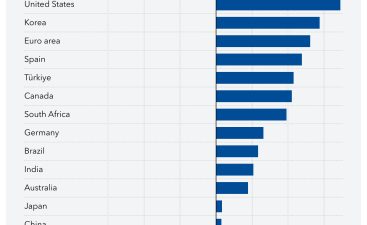
At the conflict’s outset, our immediate concern was the impact on energy prices and knock-on effects on inflation. And they have been considerable. Oil prices are 30 percent higher than pre-war levels. Yet that is lower than was seen earlier in the conflict, despite the straits’ prolonged closure.
Some countries, such as China, have been able—for now—to cushion the disruption by tapping deep oil reserves. This has also helped with demand pressures in otherwise hard-hit Asia. Increased production and refinery utilization outside the Gulf, although not sufficient to offset the shock, have also contained the increase in oil prices. In addition, actions to dampen demand or limit the price passthrough have mitigated the impact so far. But, here too, there are limits to how long countries can manage the higher budgetary costs and higher external financing requirements.
In many economies, higher oil prices are nonetheless contributing to a pickup in headline inflation. That is concerning—but not the full story. It is also important to consider whether people and businesses expect a more persistent erosion of their purchasing power. And these medium-term expectations generally remain well anchored. That’s an encouraging sign of confidence in central banks’ commitment to price stability.
Financial markets have also proven resilient. Government bond yields have climbed significantly since the war began, but risk assets have rallied on strong earnings, and we see little evidence of a broader flight to safety. By historical standards, financial conditions remain accommodative.
Technology is another bright spot. Strong technology-related investment—particularly in artificial intelligence and data centers—has been a driving force in the countries where economic momentum is holding up. The United States is benefiting from this global technology cycle, as are economies in Asia that have seen stronger technology exports. Most countries, however, are yet to feel the productivity and growth impact of technology, leading to concerns about further economic divergence.
To sum up, the combination of economic resilience and technological advancements have helped to cushion the impact of the energy supply shock on growth at the global level and there have been bright spots within regions. But there are countries that are harder hit, largely depending on geography, degree of energy dependence, and available policy space.
Hardest hit
For war impacts, proximity matters. Oil exporters around the Gulf that are directly affected by the war face steep downward revisions to growth this year, with five out of eight countries seeing outright contractions.
For Europe, which is heavily dependent on imported oil and gas, higher energy prices are weighing on growth and putting upward pressure on inflation, with the ECB recently raising interest rates.
Emerging market economies in Asia are also bearing the brunt—with the relatively higher oil and gas intensity of the economies in the region. They face retail gasoline prices that have increased 40 percent since the war began, while rising government bond yields and currency depreciation and capital outflow pressures have amplified the costs of the shock.
Yet, it is the countries that combine heavy reliance on energy imports with limited policy space that are especially hard-hit.
The strain is especially visible in Africa, where many of these factors are at play. For countries in the region that rely heavily on imports, rising costs are worsening external balances and increasing budgetary pressures—and financing needs.
Several African countries have been managing fuel shortages—including Ethiopia, Malawi, and Zambia—and most are feeling the pain of sharp fuel price increases. In countries such as Lesotho, Rwanda, and Tanzania, gasoline prices have increased by about half since the onset of the war.
Higher energy prices have also driven up fertilizer and food costs, increasing the risk of food insecurity. If disruptions persist, farmers in many low-income countries may struggle. That in turn may further fuel inflation for months to come.
Needed: policy discipline and agility
As we have said before, much depends on the duration and intensity of the energy supply shock. The sooner it is resolved, the better—especially as supply will take time to recover given the significant infrastructure damage—and Sunday’s ceasefire announcement is welcome. But should the conflict or disruptions intensify, this is a clear risk to global growth.
This continued high uncertainty underscores the need for all policymakers to be agile and disciplined. Maintaining price stability is essential. Already, some central banks have begun to tighten to keep inflation expectations anchored.
With borrowing costs rising, fiscal discipline is equally important. Price caps, subsidies and similar interventions may be popular, but they are costly. Fiscal responses should be targeted, temporary, preserve price signals, and well-sequenced to protect the vulnerable without undermining public finances.
This is even more important given the need to make room for the fiscal costs of ensuring that AI-driven growth translates into shared prosperity. That includes both the fiscal costs to address new vulnerabilities, as well as investing in technology and people to ensure that emerging and developing economies are not left behind.
Supporting affected members
While there is much our members can do to cushion the impact of the war, they shouldn’t have to go it alone. The Fund remains as committed as ever to helping our member countries navigate this period of heightened uncertainty. Just as the effects vary across countries and regions, our support is tailored to meet the differentiated needs of our members.
For now, most member countries are asking for clear, candid policy guidance rather than financial support. And we have duly responded—providing tailored policy advice and capacity development. While the risks have not yet receded, embracing the right policies will help provide some relief.
For those countries that need financial support, we are stepping up. We are working with several countries and will soon present to our Executive Board proposals to adjust existing programs in response to the shock. The Gambia has requested an augmentation and program extension. Burkina Faso has reached staff-level agreement on a funding increase to address higher external financing needs. In Ethiopia, we aim to bring forward financing to this year, while we have initiated discussions on a new program with Malawi. Bangladesh also has requested a new program.
That the global economy is so far weathering the shock is cause for reassurance—but not complacency. The IMF remains on high alert. We are also deeply mindful of the economic damage some of our members are already suffering. We will work with them to manage the shock and limit its negative impacts, especially on the vulnerable. Our commitment to our membership is unwavering.
Compliments of the International Monetary FundThe post IMF | Global Economy Endures War Shock—So Far first appeared on European American Chamber of Commerce New York [EACCNY] | Your Partner for Transatlantic Business Resources.
European Council | Global Gateway: Council Adopts Conclusions on the EU’s Global Investment and Partnership Strategy
The Council reaffirmed its role in setting the political direction for Global Gateway, and underlined the need for enhanced involvement of member states and the private sector, improved governance and more effective delivery of the strategy. It also stressed the need for clearer and more transparent project selection, regular reporting, stronger coordination between the Commission, member states and EU delegations, and enhanced monitoring of results and impact.
The conclusions stress that Global Gateway is grounded in European values and high standards, including transparency, good governance, environmental and social sustainability, and respect for human rights and the rule of law. Global Gateway remains fully aligned with global commitments including the 2030 Agenda and its Sustainable Development Goals (SDGs) and the Paris Agreement. Through a Team Europe approach bringing together the EU institutions, member states, financial institutions and the private sector, the strategy aims to deliver high-quality, trusted and secure investments in areas such as digital connectivity, energy, transport, health, education and research. The Council also underlined that Global Gateway supports both partner-country priorities and the EU’s strategic interests, contributing to resilience, competitiveness, economic security, strategic autonomy and more diversified supply chains.
The Council highlights that Global Gateway goes beyond infrastructure investment alone. The strategy combines financing for transformative projects with support for enabling regulatory frameworks, skills development, institutional strengthening and policy cooperation in order to maximise long-term development impact and sustainability. The conclusions also reaffirm the importance of local ownership and equal partnerships, stressing that Global Gateway projects should be aligned with partner countries’ priorities and developed in close consultation with local authorities, civil society and the private sector.
The conclusions also emphasise the importance of increasing the participation of European businesses, including SMEs, and improving communication efforts to strengthen Global Gateway’s visibility and recognition as a trusted EU brand worldwide. The Council calls for continued dialogue with partner countries and stakeholders to ensure that the strategy continues to evolve in line with global challenges and opportunities.
Compliments of the European Council The post European Council | Global Gateway: Council Adopts Conclusions on the EU’s Global Investment and Partnership Strategy first appeared on European American Chamber of Commerce New York [EACCNY] | Your Partner for Transatlantic Business Resources.
World Bank | Middle East Conflict Sends Global Growth to Lowest Rate Since COVID-19
Global growth is forecast to slow to 2.5% in 2026, down from 2.9% in 2025. Forecasts for two-thirds of economies have been downgraded relative to January of this year. Global growth is expected to improve to 2.8% in 2027 but will remain 0.4 percentage point below the average during the 2010s. Weak growth in developing economies has stalled progress toward advanced-economy income levels. By 2028, developing economies other than China and India will have collectively experienced nearly a decade of no progress on narrowing their per capita income gap with advanced economies, the report finds.
“Developing countries have faced a series of challenges over the last decade,” said Ajay Banga, President of the World Bank Group. “The impact differs by country, but the basic test is the same: protect people and preserve stability today, without giving up on growth and jobs tomorrow. In response to the current shock, we are providing liquidity where it is needed now — and we are ready with additional financing, guarantees, and private-sector solutions if pressures deepen. Our job is to help countries steady the ship, keep reforms moving, and emerge stronger on the other side.”
According to the report, the closure of the Strait of Hormuz has severely disrupted energy markets, with Brent crude oil prices projected to average $94 a barrel in 2026, 36% above 2025 levels, assuming the worst disruptions abate in July. Fertilizer prices are forecast to increase significantly this year, with knock-on effects for food prices. Together, these pressures are pushing up global inflation, which is expected to rise to 4.0% this year, up substantially from 3.3% in 2025.
Yet downside risks are significant. If energy supply disruptions prove more severe than currently assumed and are accompanied by substantial financial stress, global growth could fall to just 1.3% in 2026, and inflation would rise to 4.4%.
This year, growth in developing economies is expected to drop to a post-pandemic low of 3.6%, down from 4.4% in 2025, before recovering to 4.2% in 2027. Economies in the Gulf that are directly affected by the conflict are expected to take the biggest hit as their growth tumbles from 3.9% in 2025 to close to zero in 2026. The report predicts growth will rebound in these economies—to about 5% in 2027–28—as trade recovers and spending on reconstruction begins.
The World Bank Group is committed to supporting all developing countries as they confront crises. In response to the conflict in the Middle East, it is immediately making up to $50–60 billion available through existing instruments, including $25 billion of pre-arranged financing. This can support social safety nets for the most vulnerable people, boost fiscal capacity, and provide working capital and liquidity support for firms and farms. To date, over 30 countries are actively working with the World Bank Group to enhance readiness and enable a rapid response to the crisis under this response plan. If the conflict and its economic fallout persist, the World Bank Group can scale up its support to $80–100 billion over 15 months.
South Asia is expected to see the strongest growth of any region in 2026, but even its growth will register a significant slowdown—from 7% in 2025 to 6.3% in 2026, the report finds. Sub-Saharan Africa’s growth is also slowing, with the biggest pressures coming through inflation, including high food prices due to the fertilizer supply shortages and price hikes.
“The conflict has taken a toll on global activity, but every crisis also brings an opportunity,” said Ayhan Kose, the World Bank Group’s Deputy Chief Economist and Director of the Prospects Group. “This moment should be used to strengthen policy frameworks, invest in infrastructure, accelerate business-enabling reforms, and mobilize private capital to support job creation at scale.”
The report’s special-focus chapters examine fiscal challenges in developing economies. About two-thirds of developing economies—and nearly 90% of low-income countries—are commodity exporters. Yet these economies tend to have weaker fiscal positions than other developing economies, as they face more volatile and less diversified revenues. Five years after a positive commodity price shock, much of the revenue windfall is spent, rather than saved to strengthen fiscal positions. To manage commodity price volatility, policy makers should rely on frameworks, such as well-designed fiscal rules and sovereign wealth funds with clear stabilization mandates, alongside improved domestic revenue mobilization and greater economic diversification.
The other chapter explores how rising debt levels are making it harder for countries to respond to crises and invest in long-term development priorities—and driving up borrowing costs in the process. Since 2010, aggregate government debt in developing economies has climbed from under 40% of GDP to over 70%. The analysis finds that the more indebted a country already is, the more sharply its borrowing costs rise with additional debt. The effect is particularly acute in more vulnerable countries. For countries with elevated debt-to-GDP ratios, reducing debt levels can yield meaningful financial rewards: greater fiscal space to invest in infrastructure, health, and education, fueling economic growth and job creation.
Download the full report: https://www.worldbank.org/gep
Compliments of the World Bank The post World Bank | Middle East Conflict Sends Global Growth to Lowest Rate Since COVID-19 first appeared on European American Chamber of Commerce New York [EACCNY] | Your Partner for Transatlantic Business Resources.
IMF | A Stronger Europe for Tougher Times
The world economy—and Europe with it—is hit once more by a shock: this time, the events unfolding in the Middle East.
Before Hormuz closed, Europe’s growth outlook was improving and we at the IMF were getting ready to upgrade our forecasts. Now, we see growth down and inflation up.
But still, some credit where credit is due: it could have been a lot worse. Thanks to its longstanding focus on renewables, Europe is better prepared than many others: more energy efficient, less oil dependent.
Nonetheless, the fact remains that we are cast into an era of shock upon shock, layer upon layer, one on top of the other: Covid, inflation, Russian gas, U.S. tariffs, and now the Middle East. It is like a layer cake, but it definitely doesn’t taste good!
Each shock is a new blow to European growth, to its ability to create jobs and prosperity for its people. And as the shocks overlap and their effects compound, so too does the economic damage.
Let’s face it: it’s a harsh world out there. Europe needs to toughen up.
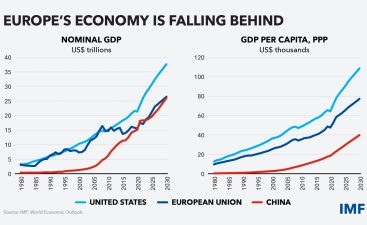
But instead, it keeps lagging. I’m sorry to say it—we are all friends of Europe here—but that is the fact. When I came to Brussels in 2010 as EU Commissioner, Europe had the same nominal GDP as the United States; now, it is significantly lower, while China has caught up to it. After two decades of weak productivity growth, European income per person is 70 percent of America’s, and the gap is widening.
How could this happen? There are many reasons, but one is that far too many successful European innovators end up abroad and far too few new EU firms grow in size to become globally competitive. The average listed EU firm has a market capitalization of about half the U.S. average. And as for European peers to match the American AI “hyperscalers,” there are none to be seen. Europe’s strength—policy predictability—is diminished by regulatory fragmentation and national gold-plating.
With weak growth comes fiscal weakness. National budgets are under ever-increasing strain from long-term spending pressures, including the rising pension and healthcare costs of an aging population, the costs of the energy transition, and defense needs. Relative to now, the increase in annual public spending in these areas could reach 5 percent of GDP by 2040.
And so public debt keeps rising. Without policy action, we estimate the simple-average public debt load of EU member states will more than double to over 130 percent of GDP by 2040. The implication? Fragility. Vulnerability.
Yet the twist is that Europe knows very well what must be done: first, complete the single market, because that is Europe’s competitive edge and its main growth engine; and second, embrace smart budgetary policies to get the fiscal house in order, for strength and resilience.
First point: the single market. It has been repeated many times, but enormous untapped potential remains. For a start, the EU’s population is some 30 percent larger than that of the U.S.—and will grow even further as new members are admitted. So many educated, talented people: an amazing platform for growth.
But right now, Europe is not making the most of its size: far from it. We see too much conflict between EU and national rules and priorities, too many barriers to intra-EU trade, and too much fragmentation in European energy and labor markets.
The result? As Enrico shows us, trade in capital, electricity, and labor within Europe is far too costly. As a practical matter, today’s EU single market still embeds a patchwork of 27 national regimes, often living more in conflict than in harmony.
Europe can do better. The One Europe, One Market program offers an excellent blueprint: over 30 pieces of legislation. A comprehensive blueprint for progress.
The rewards could be substantial. We estimate that if reforms were to reduce internal frictions to levels comparable with the U.S. while member states galvanized national reforms, EU productivity could rise by as much as 20 percent in a decade. That would raise GDP per capita by some 35 percent—or more if paired with reforms in finance.
Higher trend growth would also contain the budgetary pressures that keep building, reducing the fiscal adjustment needed to sustain long-term spending needs.
Faster growth increases tax revenues, reduces safety net outlays, and lowers debt-to-GDP. For the average European economy, even modest growth-enhancing structural reforms could reduce by about one-fifth the fiscal consolidation needed to put debt on a declining path. The more ambitious the pro-growth reforms, the smaller the needed fiscal effort.
And that takes me to the second point I’d like to emphasize: fiscal responsibility.
To be concrete, let me zoom in on one example that is very much in the lens today: defense spending. Given the geopolitical realities, there is a consensus in Europe that it needs to rise substantially, on top of the material increase by more than 2 percent of GDP already delivered in recent years by some EU countries.
But policymakers should take note: there is a right and a wrong way to proceed. At the IMF, our most recent World Economic Outlook included a chapter studying major defense buildups across 164 countries since World War Two. On average, each episode involved about 2.7 percent of GDP in increased defense and security-related spending—similar to what NATO countries are now committed to deliver by 2035.
If such expansion is deficit financed, it leads to higher debt—which many EU countries simply cannot afford given their fiscal space constraints. For these countries especially, it is important that large and permanent increases in defense outlays be delivered in a budget-neutral manner, entailing tough tradeoffs in taxation and nondefense spending.
Equally, governments should strive to execute defense buildups in ways that maximize the uplift to growth. In the near term, larger defense outlays can boost domestic demand, but often with leakages to imports. The bigger question, however, is what happens in the long run. Here, our studies show that the potential boost to growth is modest—but that defense capital spending and defense R&D, if not crowding out other productive investment, can support productivity growth.
Main point: how it is done matters. If member states act alone—duplicating efforts, fragmenting procurement—the payoff would be way smaller. But if they coordinate on R&D and other items, use common procurement and standards, and are open to bidding by companies big and small, then market size expands and productivity can benefit.
This is why instruments such as SAFE—Security Action for Europe—and the EU’s Multiannual Financial Framework are so important. Not only do they pool resources, but they help countries minimize duplication and invest strategically. Done right, larger defense outlays need not increase national debt burdens.
Putting it all together, structural reforms and smart fiscal policy—today illustrated with the example of defense—can deliver.
So let me end by insisting that Europe can do it. Already, it has made huge strides in energy efficiency and energy security. Now, let it use the latest shock and geopolitical realities as a rallying cry to act.
Europe: complete the single market, because the strength of your growth depends on it, and manage long-term spending pressures, including in defense, because resilience depends on it. Be disciplined and firm. Be pragmatic. Build coalitions of the willing. Stop the finger-pointing between national capitals and Brussels. Bring citizens along with the reform effort.
In the spirit of Jacques Delors, you have reinvented yourself before. Toughen up and do it again!
Thank you
Compliments of the International Monetary Fund The post IMF | A Stronger Europe for Tougher Times first appeared on European American Chamber of Commerce New York [EACCNY] | Your Partner for Transatlantic Business Resources.